Combat Profile
Feathered Serpent's Ascension
Kukulkan reshapes the fundamental laws of reality, granting allies transcendent wisdom and reshuffling enemy formations with cyclonic force.
Creator's Breath
All allies gain enhanced clarity and resistance to chaos; winds respond to Kukulkan's will, revealing hidden truths and obscuring enemy sight.
Like Quetzalcoatl, associated with departure and promised return -- a vulnerability to exploitation
“Twice a year, the serpent descends the pyramid. The shadow and the stone align. The god touches the earth. This is not myth. This is engineering.”
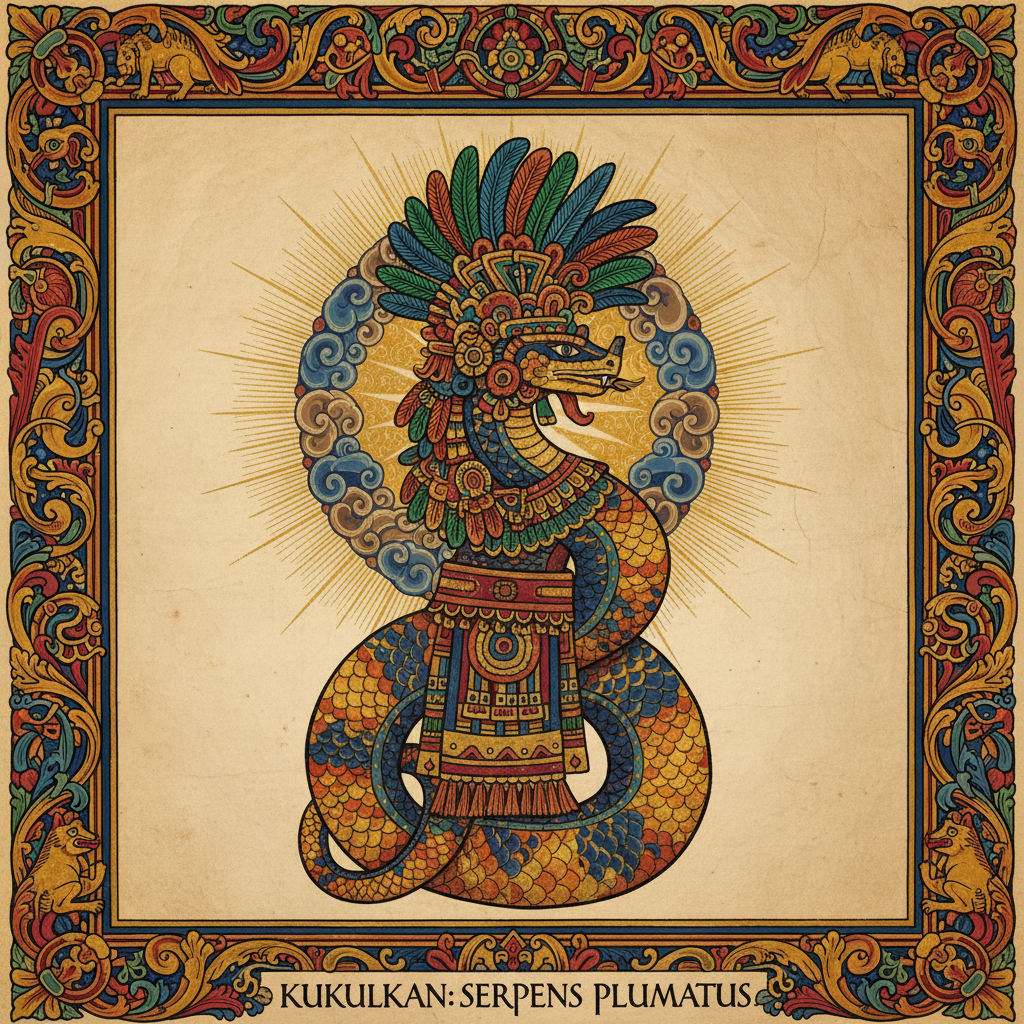
Lore: Kukulkan (Yucatec Maya: k’uk’ul “feathered” + kan “serpent”) is the Maya manifestation of the Feathered Serpent, the most widespread deity concept in Mesoamerica. The feathered serpent combines two fundamental Mesoamerican symbols: the serpent (earth, water, fertility, the underworld) and the quetzal bird (sky, wind, freedom, divinity). A serpent with feathers is a creature that unites earth and sky, matter and spirit, the crawling and the soaring. It is perhaps the most elegant theological symbol in the Americas.
At the pyramid of Kukulkan (El Castillo) at Chichen Itza, the Maya architects created something that transcends the boundary between religion and science. The pyramid has 91 steps on each of its four sides, plus the platform on top: 365 total — one for each day of the solar year. During the spring and autumn equinoxes, the afternoon sun casts a series of triangular shadows down the northwest balustrade that, combined with the carved serpent head at the base, creates the unmistakable image of a massive serpent undulating down the pyramid to the ground. Tens of thousands of people gather each equinox to witness this phenomenon. It is not an accident. It is not a coincidence. The Maya built a temple so precisely aligned with the movements of the sun that the god himself appears as a shadow on the architecture, twice a year, on schedule, for over a thousand years. The pyramid is simultaneously a calendar, a temple, a work of art, and a theophany — a divine appearance enacted by the building itself.
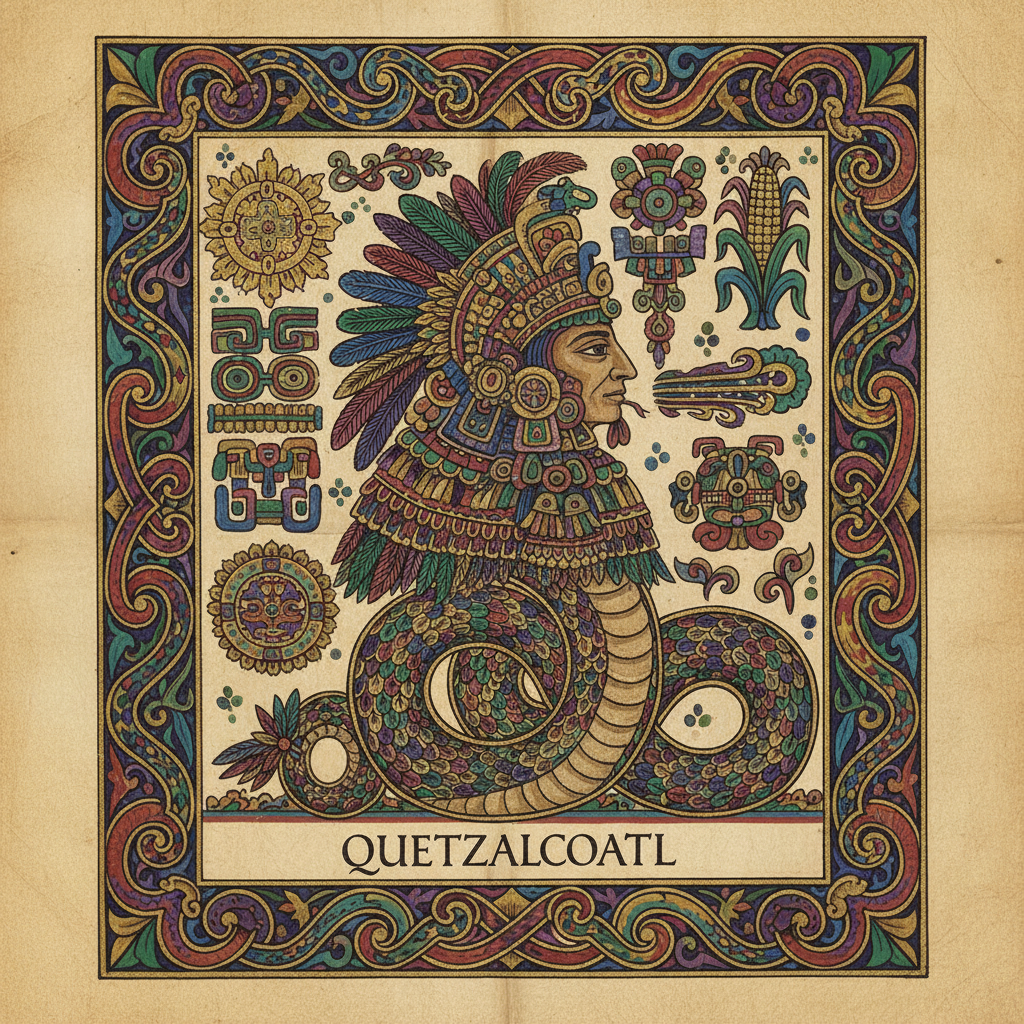
Parallel: The feathered serpent concept spans Mesoamerica: Quetzalcoatl (Aztec), Kukulkan (Maya), Q’uq’umatz (K’iche’ Maya, from the Popol Vuh). The serpent-as-wisdom motif also appears in Biblical Genesis (the serpent in Eden knows things God doesn’t want humanity to know) and in Hindu tradition (Shesha, the cosmic serpent on whom Vishnu rests). The architectural theophany at Chichen Itza has no parallel anywhere in the world — no other culture built a temple where the god physically manifests as a shadow phenomenon on a precise astronomical schedule.
2 min read
The Lords of Xibalba (the underworld lords who oppose all heavenly order)
*Popol Vuh*; *Chilam Balam*; Schele & Freidel, *A Forest of Kings*; Coe, *The Maya*