Combat Profile
Excalibur's Judgment
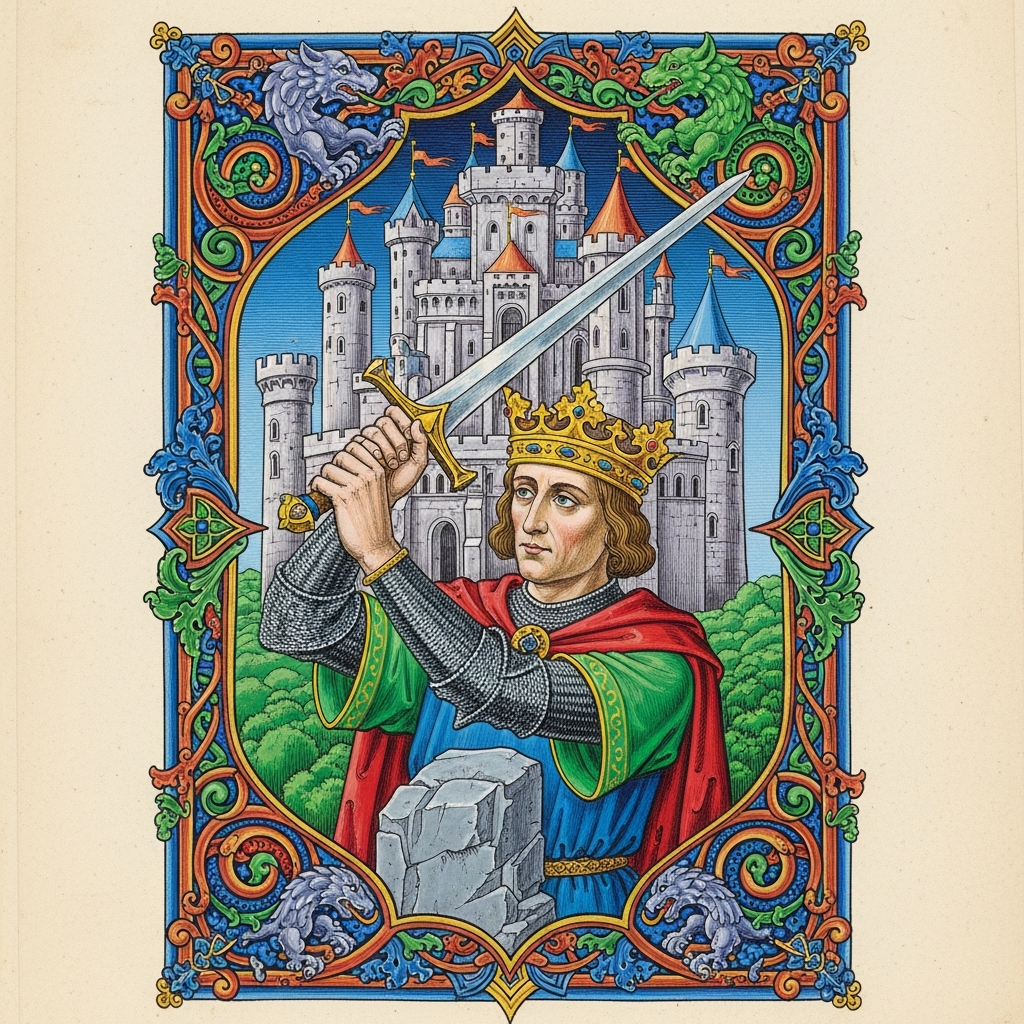
Arthur channels the blade's divine power to strike down a foe with righteous force, dealing damage proportional to his spiritual authority.
Once and Future King
Arthur's presence reinforces order and unity among allies, and he grows stronger when facing overwhelming odds, embodying the prophesied return.
His own sin (the incestuous begetting of Mordred in some versions); inability to see the Lancelot-Guinevere affair until it is too late; the tension between justice and mercy (he cannot punish Guinevere without destroying his kingdom, and cannot forgive her without destroying his authority)
“Yet some men say in many parts of England that King Arthur is not dead, but had by the will of our Lord Jesu into another place; and men say that he shall come again, and he shall win the holy cross.” — Malory, Le Morte d’Arthur
Lore: Arthur is the central figure of the most elaborate mythological cycle in Western Christianity. He is the boy of unknown parentage who proves his divine right by pulling the sword from the stone (or, in some versions, receiving Excalibur from the Lady of the Lake). He unites Britain, defeats the Saxons, builds Camelot, and founds the Round Table — a fellowship of the greatest knights in Christendom, seated as equals with no head seat. His reign is the golden age; Camelot is the closest thing to the New Jerusalem that human effort can build. But it falls. It falls because of sin: Lancelot and Guinevere’s adultery, Arthur’s own past transgression (begetting Mordred), and the pride that made men believe they could build a perfect kingdom by human strength alone. The final battle at Camlann leaves Arthur mortally wounded. He orders Bedivere to return Excalibur to the Lady of the Lake, and three queens (sometimes including Morgan le Fay) carry him by barge to Avalon. The tradition insists he is not dead — he sleeps, and will return when Britain faces its greatest need.
Parallel: Arthur is the Christian David — the divinely anointed king whose kingdom crumbles through personal sin. The “return from Avalon” directly parallels the Second Coming of Christ (Acts 1:11: “This same Jesus, who has been taken from you into heaven, will come back in the same way you have seen him go”). The sleeping hero motif is shared with Fionn mac Cumhaill (Irish), Barbarossa (German), Charlemagne (French), and arguably Christ himself. The sword drawn from the stone parallels the scepter of Judah (Genesis 49:10) — authority that can only belong to the rightful heir.
1 min read
Mordred (his illegitimate son, destined to kill him); the Grail Quest itself (which scatters his knights and empties the Round Table)
Geoffrey of Monmouth, *Historia Regum Britanniae* (~1136); Malory, *Le Morte d'Arthur* (1485); Nennius, *Historia Brittonum* (~800); *Mabinogion* (Welsh tradition)