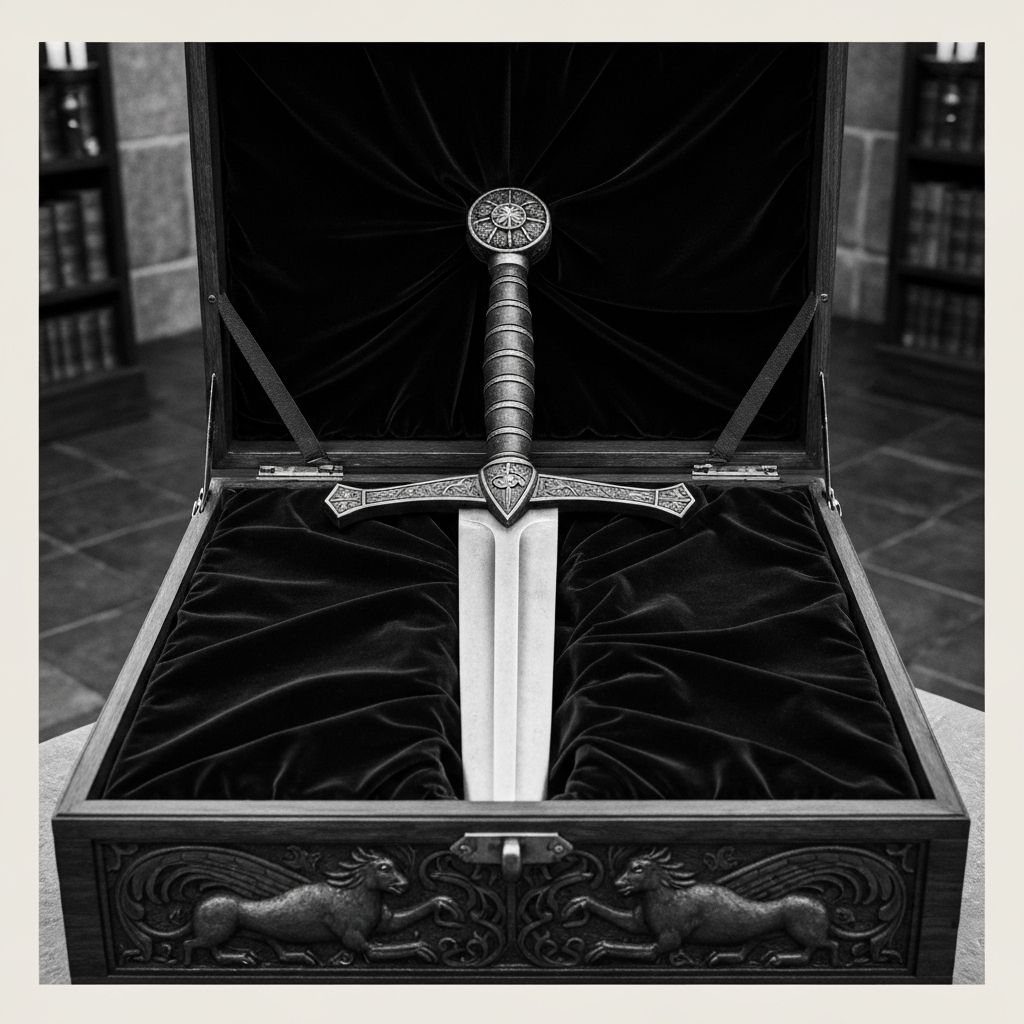
Combat Profile
Cleave of Divine Right
strikes with unmatched force against those who would usurp rightful authority, cutting through all mortal defenses
Scabbard's Blessing
the wielder cannot be mortally wounded while bearing the sheath, and wounds inflicted by the blade itself never truly heal
Can be separated from its bearer (Morgan steals the scabbard, which is the more powerful of the two -- without it, Arthur can be wounded). Must be returned to the Lady of the Lake at the end -- it cannot remain in the mortal world
“Then Sir Bedivere… threw the sword as far into the water as he might; and there came an arm and an hand above the water and met it, and caught it, and so shook it thrice and brandished, and then vanished away the hand with the sword in the water.” — Malory, Le Morte d’Arthur
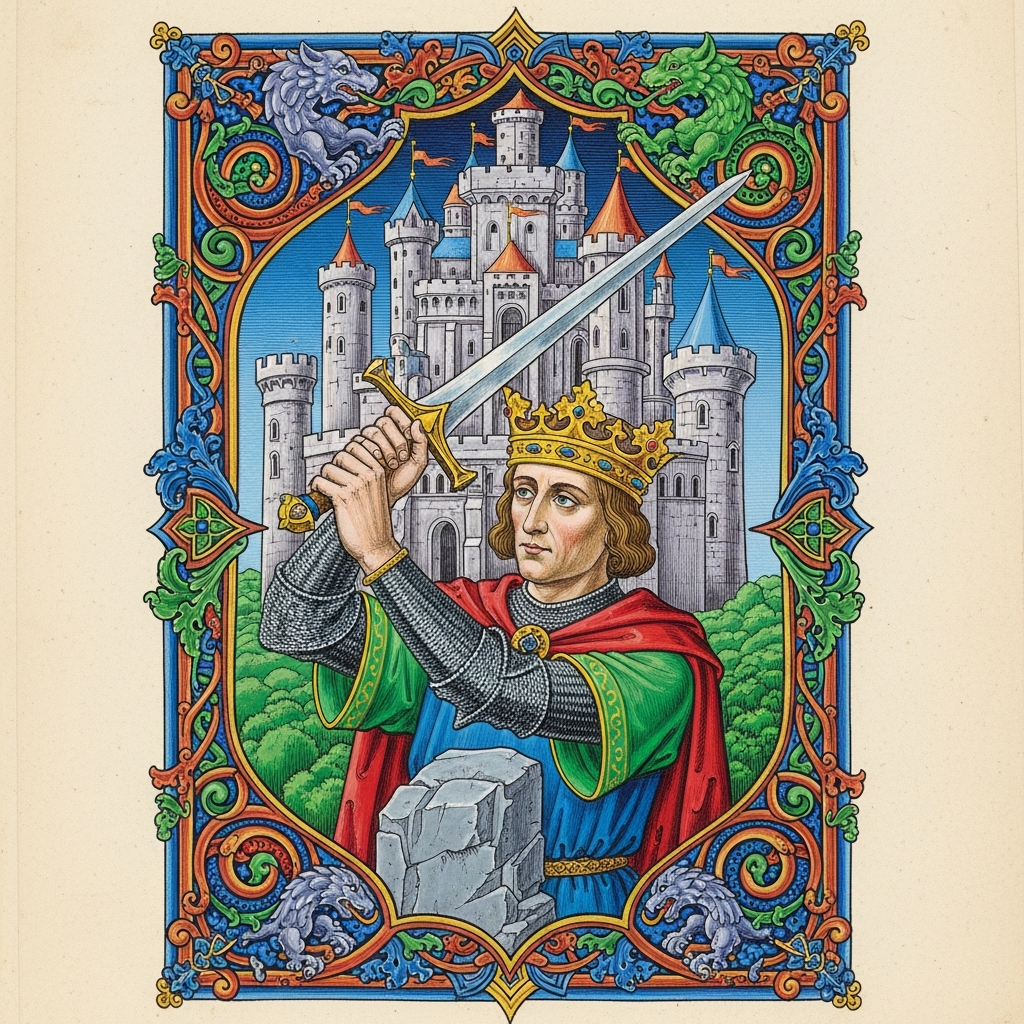
Lore: Excalibur (Caliburn in Geoffrey of Monmouth, Caledfwlch in Welsh) is the sword of rightful kingship. It is sometimes conflated with the Sword in the Stone, but Malory distinguishes them: the Sword in the Stone proves Arthur’s right to rule, while Excalibur is the weapon of that rule, given later by the Lady of the Lake. Its blade blazes with light and its scabbard grants invulnerability. Merlin tells Arthur the scabbard is worth ten of the sword, but Arthur (characteristically) values the weapon over the protection. When Morgan steals the scabbard and throws it into a lake, Arthur becomes mortal — woundable, killable. At the end, the dying Arthur orders Bedivere to return the sword to the water. Bedivere twice hides it, unable to part with something so beautiful. On the third attempt, he throws it — and the hand rises from the lake to reclaim it. The sword came from the water and returns to the water. Authority is given and authority is taken back.
Parallel: Excalibur is the Sword of the Spirit (Ephesians 6:17) — divine authority made manifest as a weapon. It is the scepter of Judah (Genesis 49:10) — the symbol that identifies the rightful ruler. Its return to the Lady of the Lake parallels 1 Corinthians 15:24 — “Then the end will come, when he hands over the kingdom to God the Father.” Earthly authority is always borrowed; it comes from a source beyond the human and must return there. The light of thirty torches recalls the divine radiance (Revelation 21:23 — the city that needs no sun, for the glory of God gives it light).
1 min read
The Lady of the Lake (who gave it and to whom it must return); treachery (Arthur loses the scabbard through Morgan's theft, not through combat)
Geoffrey of Monmouth (as Caliburn); Malory, *Le Morte d'Arthur*; Vulgate Cycle