Combat Profile
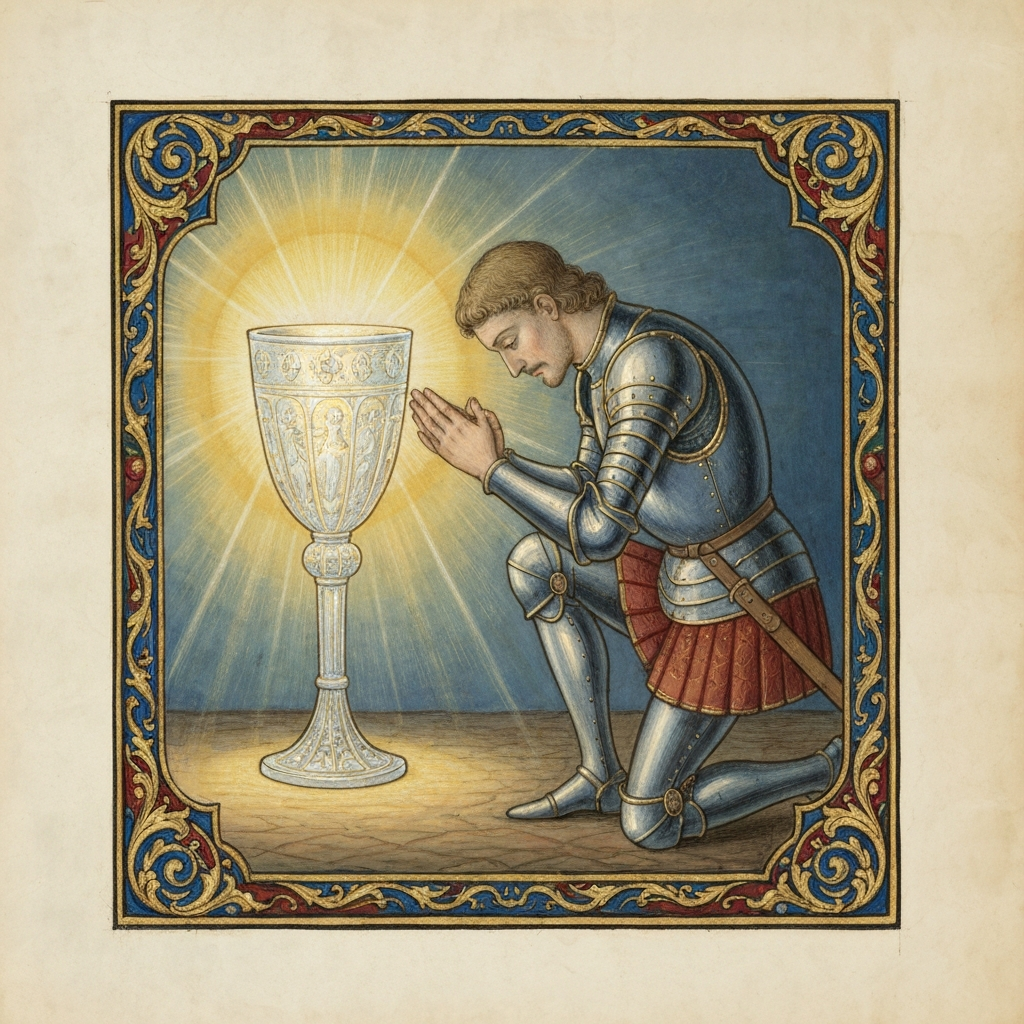
Grail Vision
Perceives hidden truth and divine purpose, granting allies clarity on their spiritual path and immunity to deception for a brief duration.
Holy Innocence
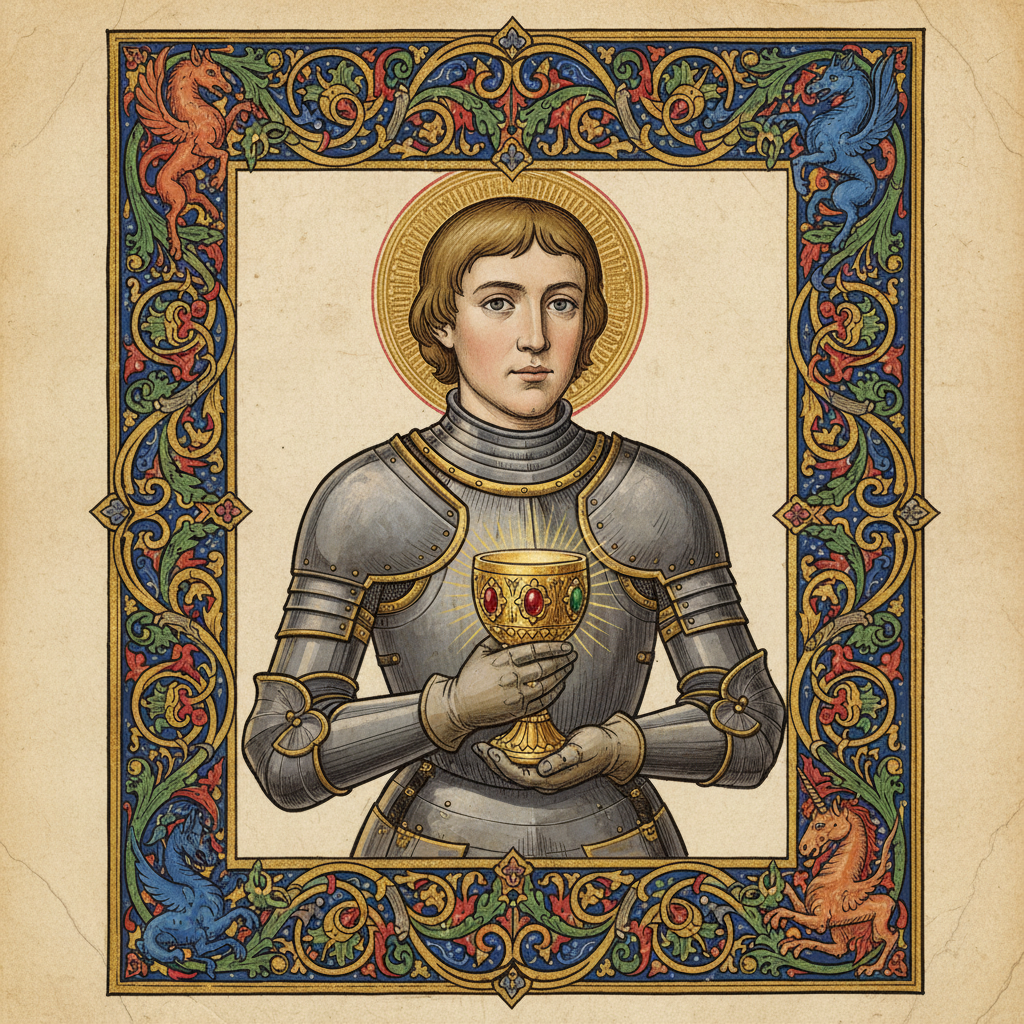
Percival's pure heart shields him and nearby allies from corruption, despair, and dark enchantments, growing stronger as he learns wisdom through trial.
His naivety -- he fails the Grail test the first time because he does not know to ask the right question. His ignorance is both his gift and his obstacle
“Because you did not ask, all these lands shall suffer.” — The Hermit to Percival (Chretien de Troyes)
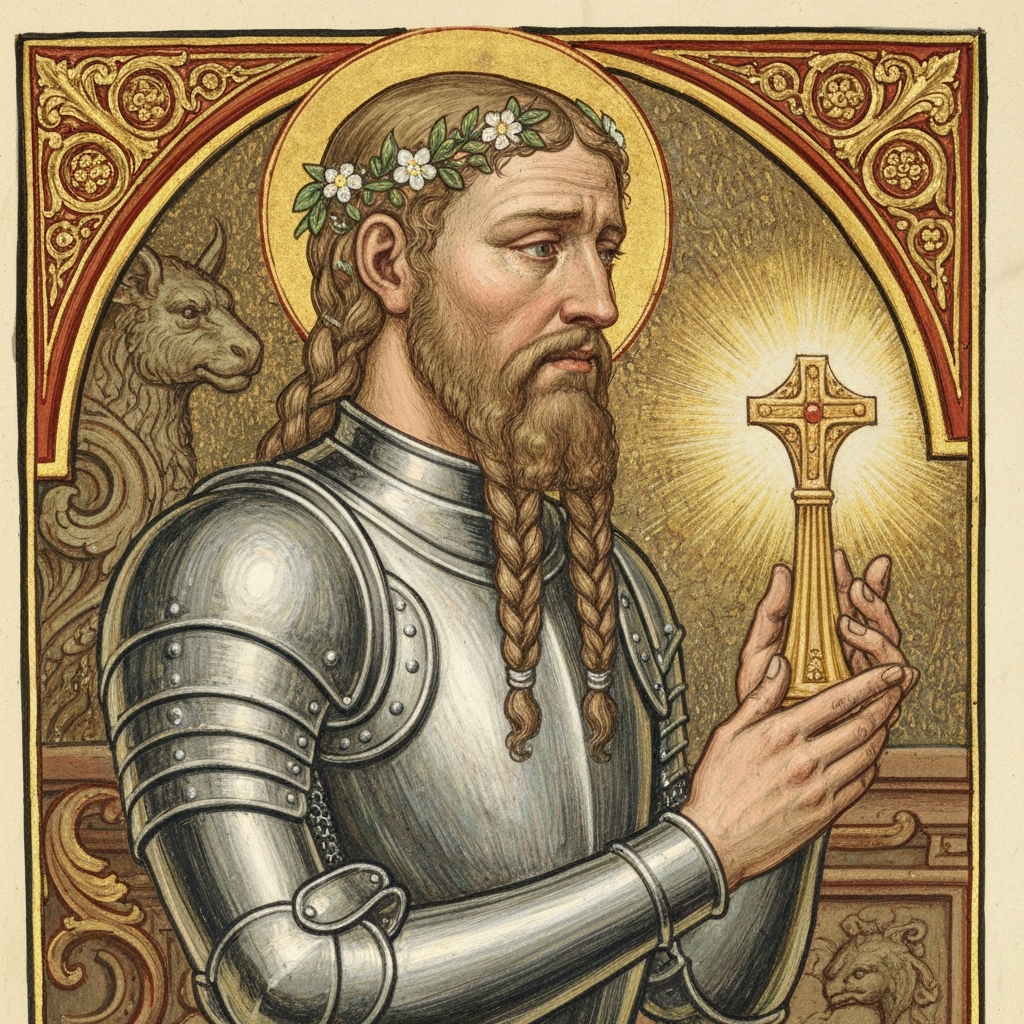
Lore: Percival (Parzival in Wolfram, Peredur in Welsh) is the original Grail hero — Galahad was invented later to supersede him. His story is the Fool’s Journey: a boy raised in total ignorance of the world by a mother terrified of losing him to knighthood (she has already lost her husband and other sons). He sees knights in the forest, thinks they are angels, and rides off to become one. He is laughably naive — he does not know how to use a sword, does not know his own name, wears homespun clothes. But his innocence is also his qualification. At the castle of the Fisher King (the Grail keeper, wounded and unable to die), Percival witnesses the Grail procession — the bleeding lance, the Grail itself, carried past him — but he has been told that a good knight does not ask too many questions. So he says nothing. This silence is the catastrophic failure: the right question (“Whom does the Grail serve?” or “What ails the king?”) would have healed the Fisher King and restored the Wasteland. Percival must spend years in suffering and growth before he can return and ask the question.
Parallel: Percival embodies Matthew 18:3 — “Unless you change and become like little children, you will never enter the kingdom of heaven.” His innocence, not worldly knowledge, qualifies him for the Grail. His failure (not asking the question) parallels the human failure to respond to God’s presence — seeing the divine and not recognizing it, not engaging with it. Wolfram’s Parzival makes the theological dimension most explicit: Percival’s journey is from unconscious innocence through sin and doubt to conscious faith. The Fool in the Tarot (Major Arcana 0) draws directly on the Percival archetype.
1 min read
Worldly sophistication (which can corrupt his innocence); his own hesitation
Chretien de Troyes, *Perceval, the Story of the Grail* (~1190); Wolfram von Eschenbach, *Parzival* (~1210); Vulgate Cycle; Malory