Contents
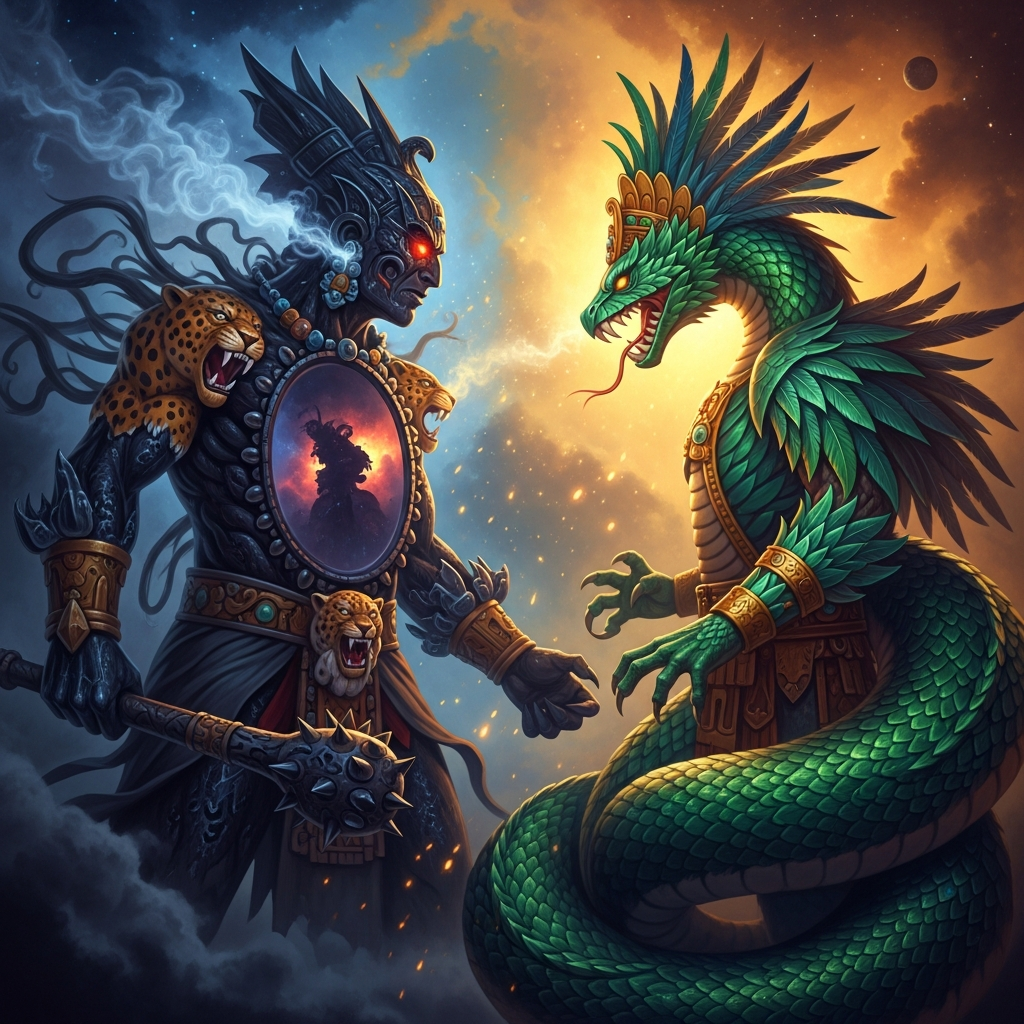
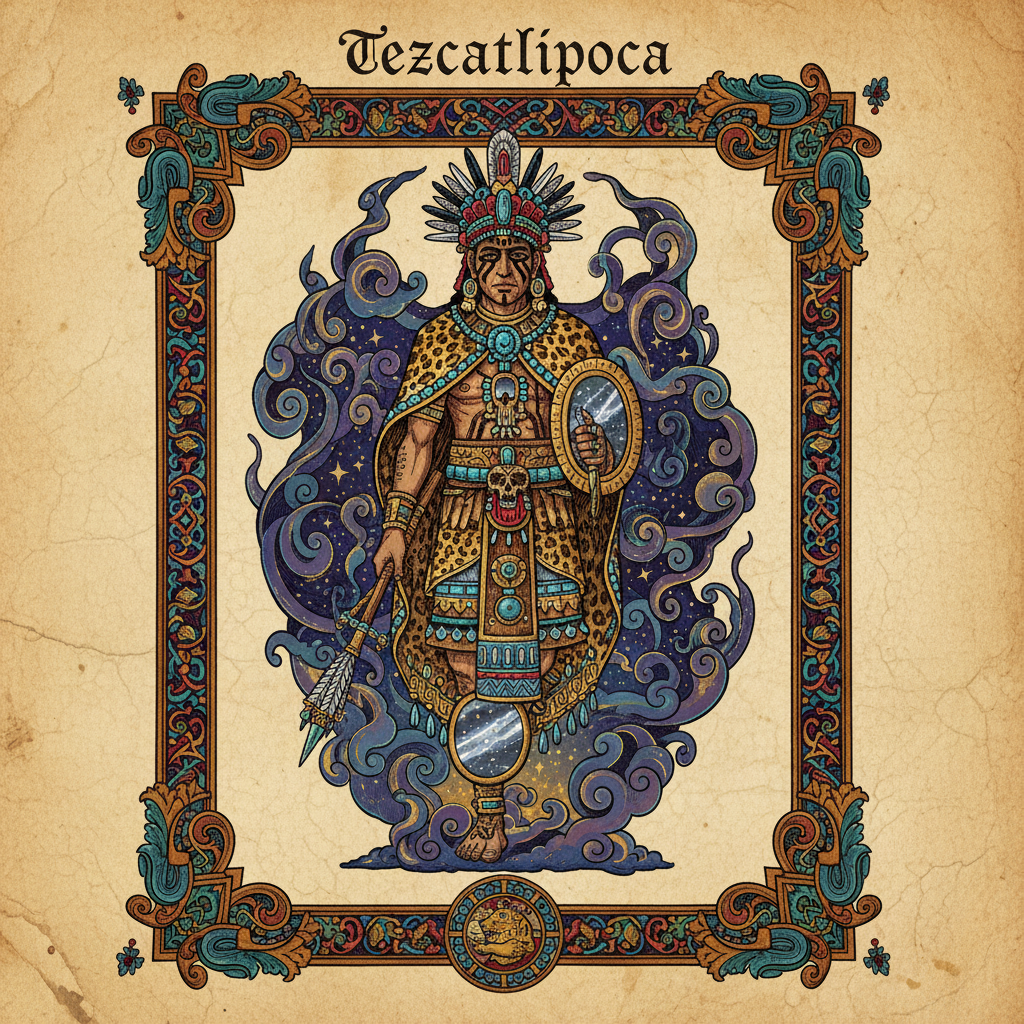
Tezcatlipoca and Quetzalcoatl are eternal rivals whose cosmic war shapes the ages of the world. With a black obsidian mirror, the trickster shows the Feathered Serpent his own ruined face — and the priest-king of Tula falls.
- When
- Mythic time / Toltec era ca. 900–1150 CE
- Where
- Tula (Tollan), and the four quarters of the cosmos
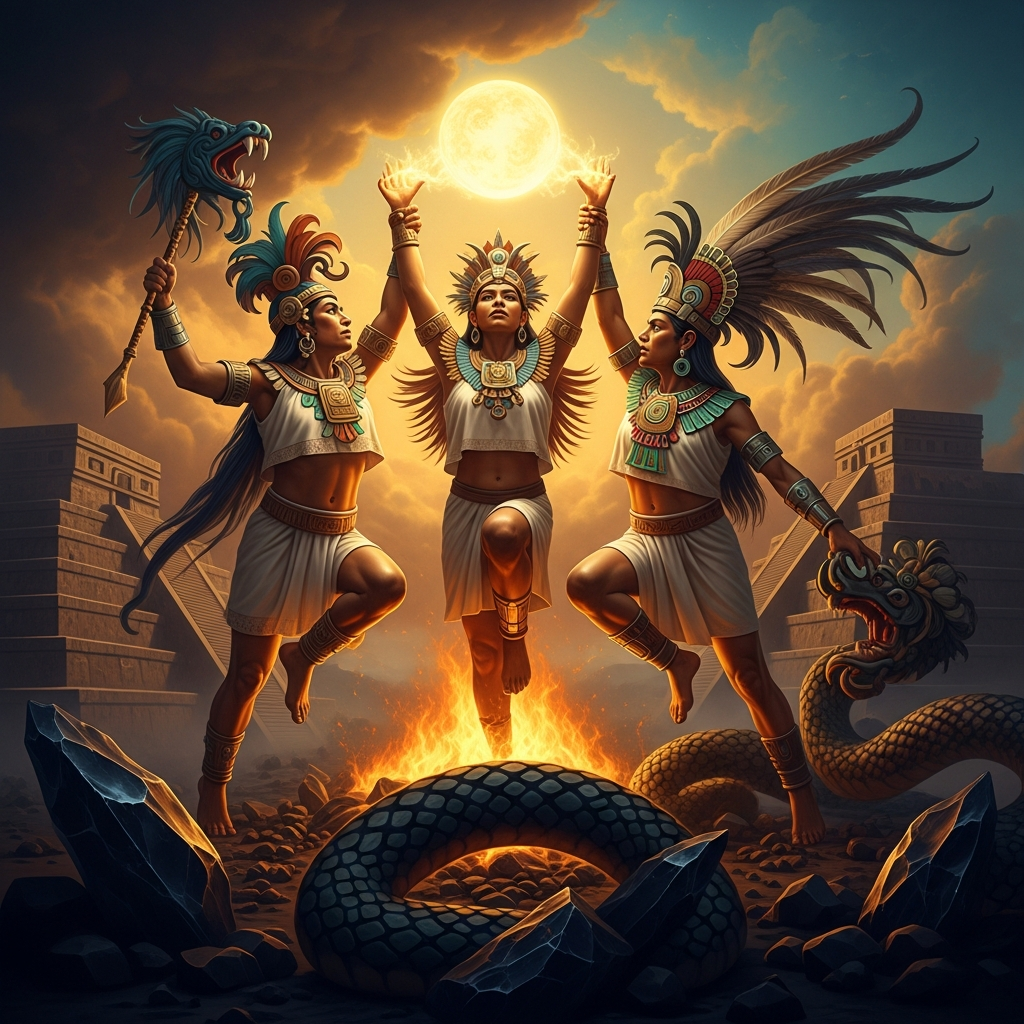
Before there were four directions there were only two, and the two had names: Smoking Mirror and Feathered Serpent. They were brothers and enemies. They were the night sky and the morning star, the jaguar and the wind. Each had ruled the world in his turn, and each had destroyed it. The First Sun was Tezcatlipoca’s, and Quetzalcoatl knocked him into the sea with a club; out of the water Tezcatlipoca rose as a jaguar and ate the people of the earth. The Second Sun was Quetzalcoatl’s, and Tezcatlipoca threw it down with a kick of his foot, and the wind that followed scoured the world bare and turned the survivors into monkeys. So it had gone, age by age, sun by sun. They could not abide one another, and they could not exist apart.
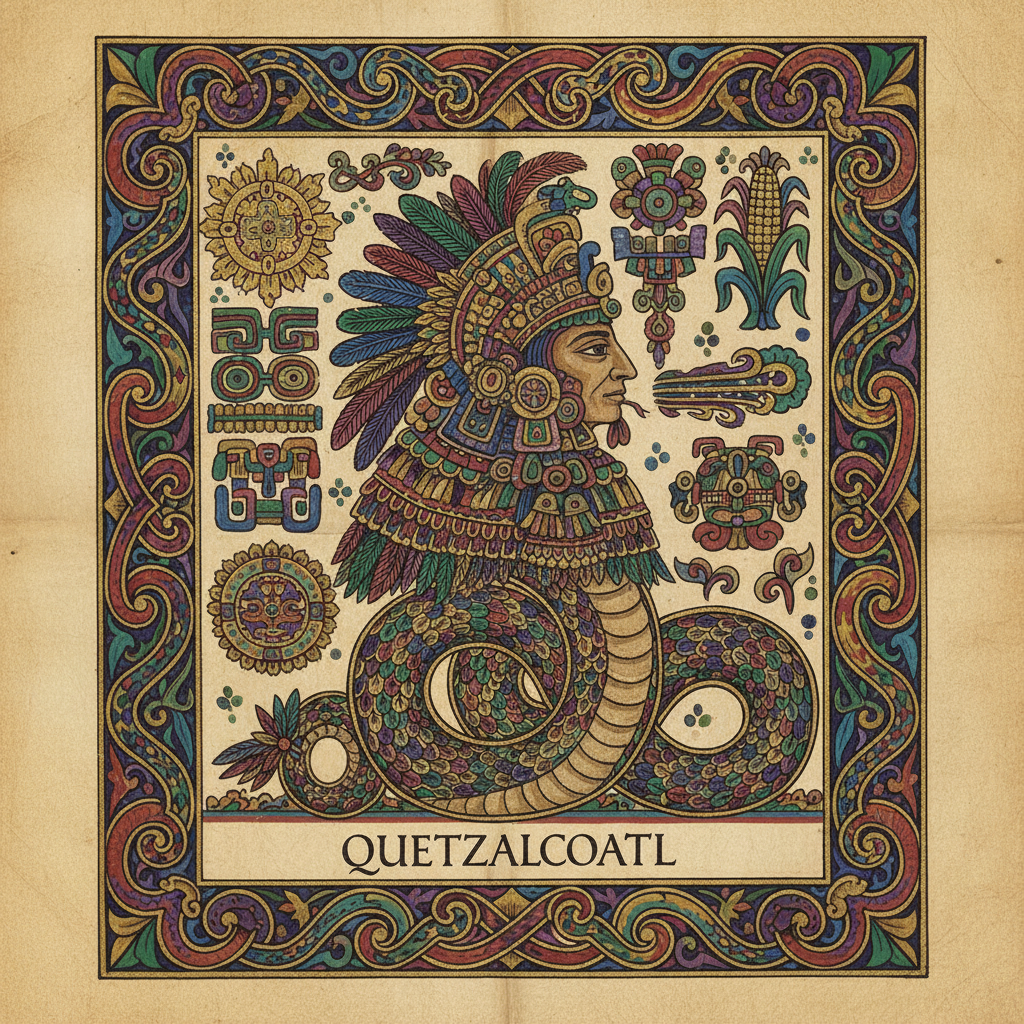
In the time of Tula, when the Toltecs were the most beautiful and learned people on the earth, Quetzalcoatl ruled as priest-king. He wore white, he ate no flesh, he asked his people for the blood of butterflies and snakes only. His city was a city of jade and turquoise; the maize there grew so large a man could not carry one ear, and cotton came from the field already dyed. There was no war. The Feathered Serpent had become forgetful of his brother, and that was the moment Tezcatlipoca had been waiting for.
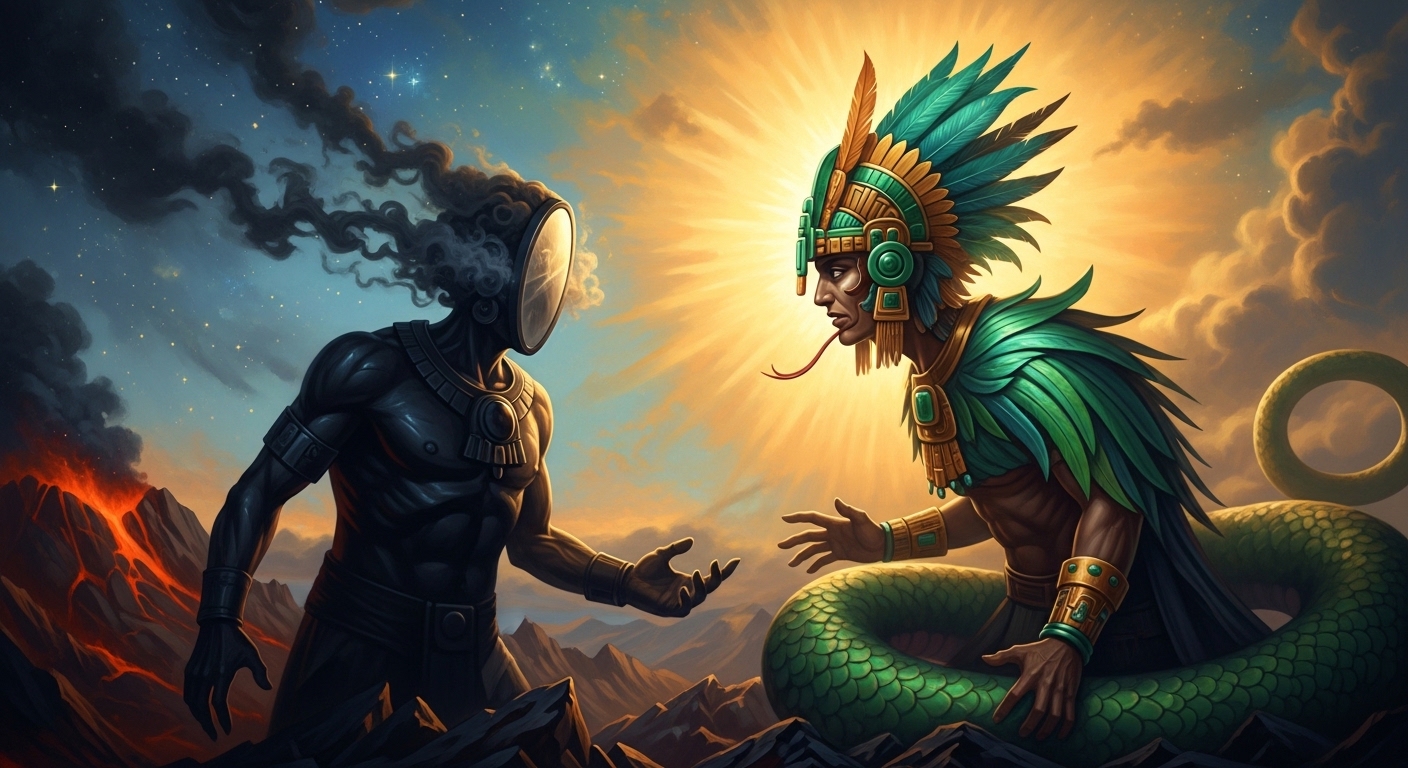
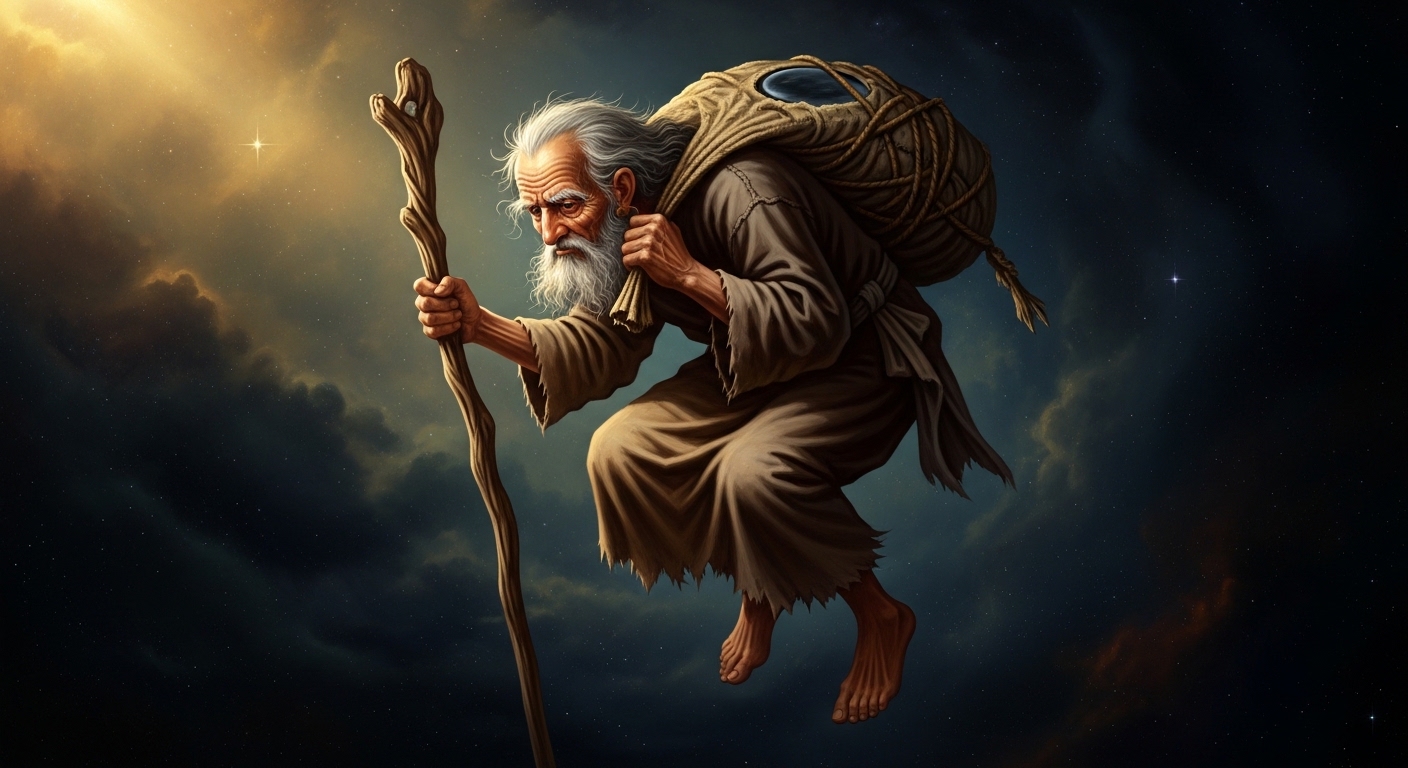
The Smoking Mirror came down from the thirteen heavens disguised as an old sorcerer, with a bundle wrapped in cloth. He came to the door of the priest-king’s house and said he had a gift. Quetzalcoatl was ill that day — the chronicles say he had been ill for some time, with an ailment of the bones. He let the old man in. The bundle, when unwrapped, was a mirror of black obsidian, polished to perfection. Look, said the sorcerer. Behold your own face, lord, that you have not seen.
Quetzalcoatl looked. The mirror gave back what mirrors give: a man with sunken cheeks, with eyelids fallen, with the skin of his throat hanging loose. A man growing old. A man who would die. The Feathered Serpent had not known. He had thought himself ageless because his people called him so. He cried out in horror and covered his face, and Tezcatlipoca, who had been watching this all his long centuries, smiled the smile that never reaches the eye.
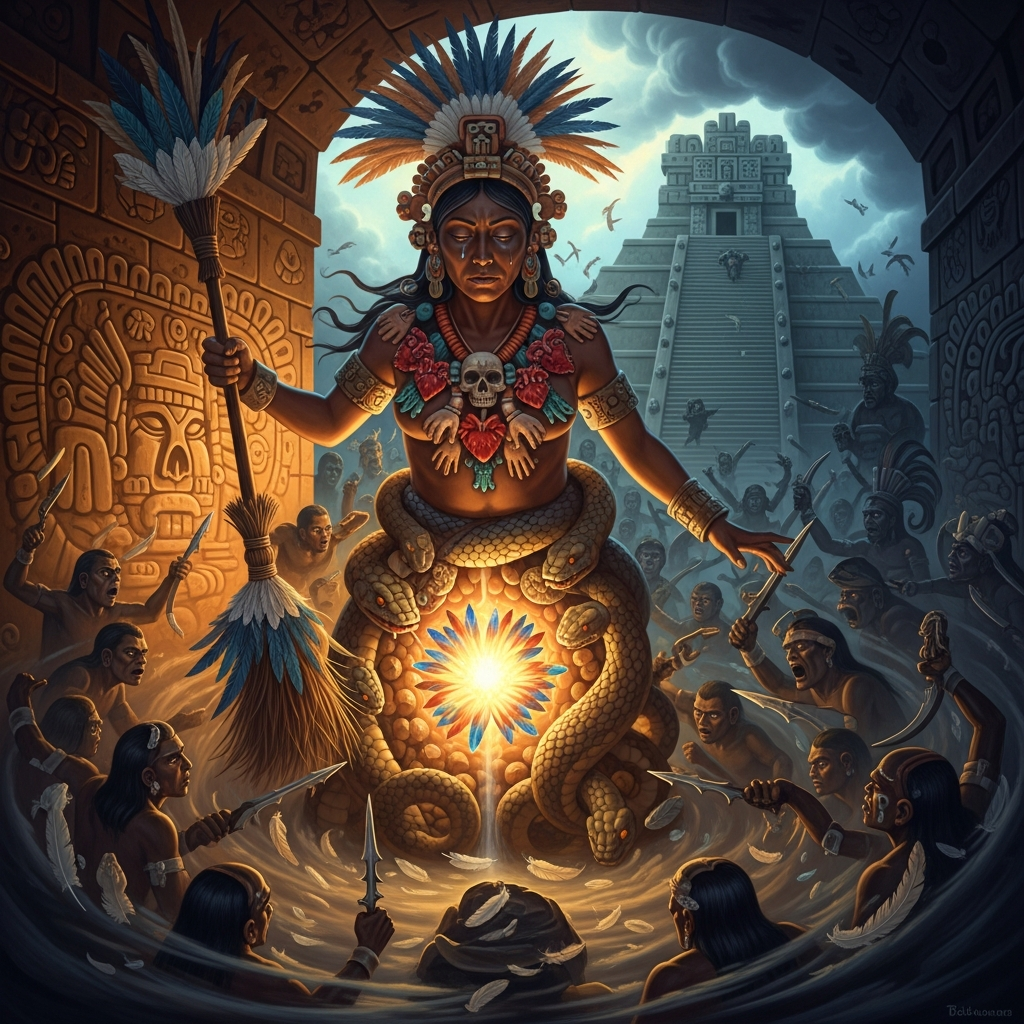
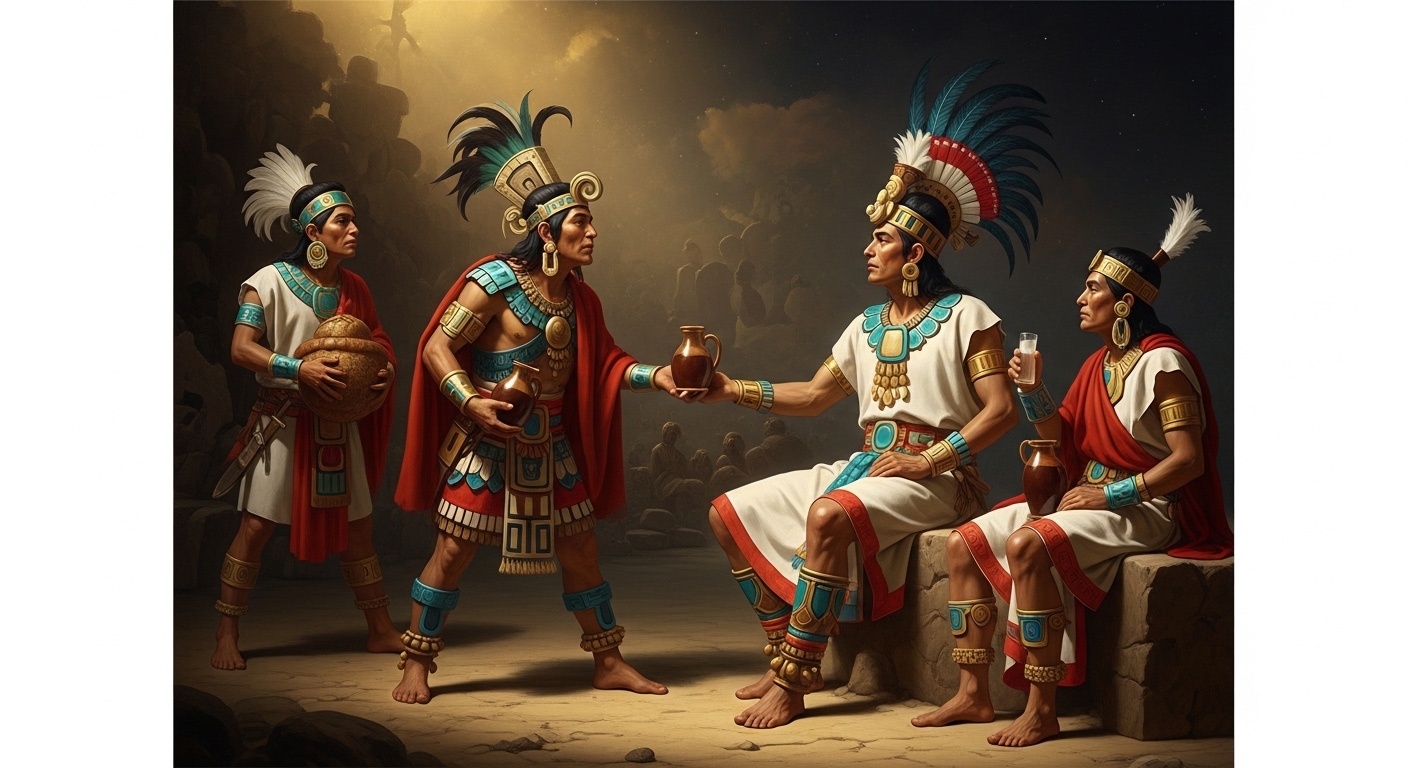
The trickster did not stop there. He brought pulque, the milky beer of the maguey, and he persuaded the abstinent king to drink. Drunk, Quetzalcoatl summoned his sister Quetzalpetlatl, and drunk, they slept together. When morning came and the king understood what he had done, the white cloth of his rule was stained, and Tula could no longer hold him. He gathered his attendants. He burned his stone houses and buried his treasure. He went east, weeping, all the way to the shore of the divine water, and there — the codices disagree — he either set himself on fire and rose as the morning star, or he built a raft of serpents and sailed away, promising to return in a year called One Reed.
This is what the obsidian mirror does. It does not lie; it tells the truth so completely that the one who looks cannot bear it. Tezcatlipoca’s victory is not that he killed his brother. Tezcatlipoca’s victory is that he made the brother do the killing himself. The Feathered Serpent went into exile carrying his own shame, and the Smoking Mirror sat down on the throne of the world, and the wheel of suns kept turning. They will fight again. They are fighting now. The Aztecs knew this and offered blood to both, because the world rides on the friction between them, and any peace between Smoking Mirror and Feathered Serpent would be the end of everything.
Scenes
Echoes Across Traditions
Entities
Sources
- Leyenda de los Soles (1558)
- Florentine Codex, Book 3 (Sahagún)
- Anales de Cuauhtitlán