Rabia: The Woman Who Loved God Without Reason
c. 714-801 CE — early Abbasid Iraq, two generations after the death of the Prophet · Basra, Iraq — the port city on the Shatt al-Arab, the desert at the city's edge where she lived in a small house
Contents
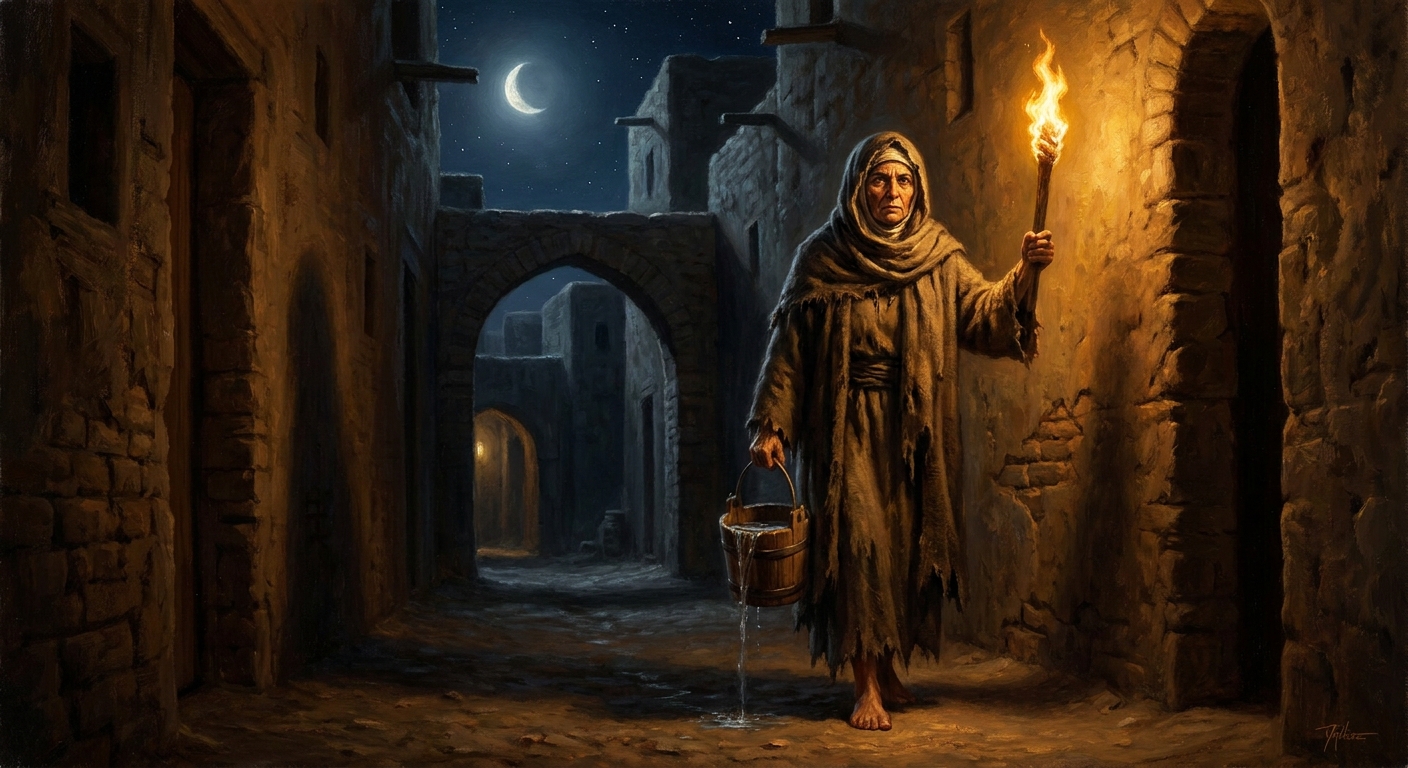
A formerly enslaved woman of eighth-century Basra walks through the marketplace carrying a torch in one hand and a bucket of water in the other — to burn paradise and douse hell, so that human beings might finally love God for himself alone.
- When
- c. 714-801 CE — early Abbasid Iraq, two generations after the death of the Prophet
- Where
- Basra, Iraq — the port city on the Shatt al-Arab, the desert at the city's edge where she lived in a small house
She is six years old when her parents die.
The famine of the late Umayyad period takes both of them in the same year. The hagiographers — writing five centuries later — claim her father had a vision the night she was born: the Prophet appeared to him and said this child would be a saint. The hagiographers also claim her name itself testifies to her position. Rabia means the fourth, because she was the fourth daughter, born when the family had nothing left to give a fourth daughter. The vision and the poverty are both part of the story.
Both parents die. The four sisters are separated. Rabia is taken by — or sold to — a slaver who travels to Basra, the great Iraqi port city on the Shatt al-Arab, the city where the trade winds and the Indian Ocean and the caravan routes cross. He sells her there as a household servant.
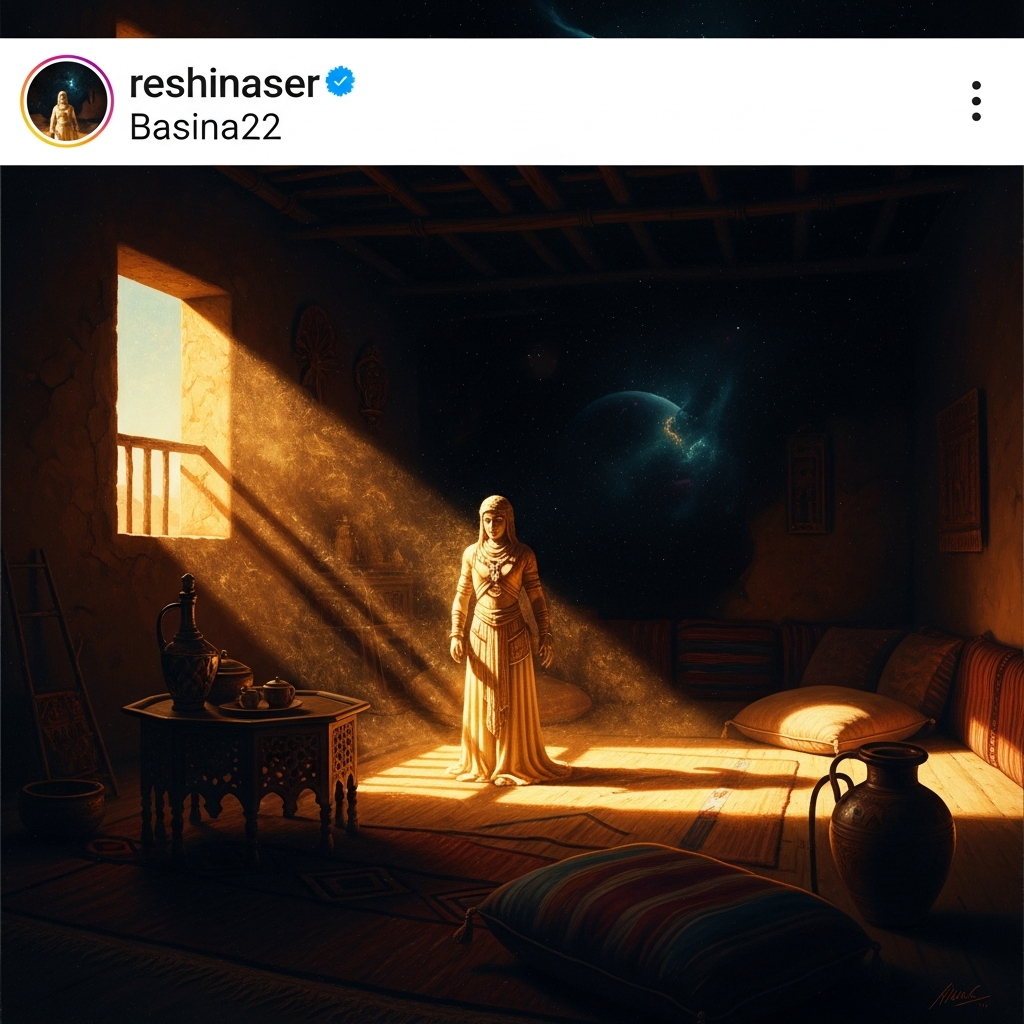
She is, for several years, a slave girl in a Basra household. The hagiographies are not specific about what kind of household. They are very specific about what happens at night. After the master sleeps and the lamps are put out, Rabia rises and prays. She prays through the night. She prays so long that the household, observing her, begins to suspect this is not an ordinary slave. One night the master cannot sleep. He gets up to investigate the noise from the courtyard. He sees her praying with a light hovering above her head — not from any lamp, but from the air itself.
He frees her in the morning.
This story may be a legend. The fact that someone freed her is not. By her late teens she is no longer a slave. She is in the desert at the edge of Basra, in a small house, alone.
She refuses, repeatedly, to leave the small house.
By her thirties she has acquired a reputation. Sufyan al-Thawri, the great jurist of the early Abbasid period, comes to her with theological questions. Hassan al-Basri — the senior religious figure of the city, the man whose ascetic disciplines defined what the next generation would call Sufism — comes to ask for her opinion on points of doctrine. The biographer Attar, writing in the thirteenth century, says: When women come of the rank of men, they are not called women. He intends this as praise. The praise contains its own indictment. Rabia is so consequential that her interlocutors must reclassify her gender to make her tractable. She refuses the reclassification. She insists, throughout her life, that she is a woman who happens to be doing what the men around her have not yet learned how to do.
Marriage proposals begin to arrive.
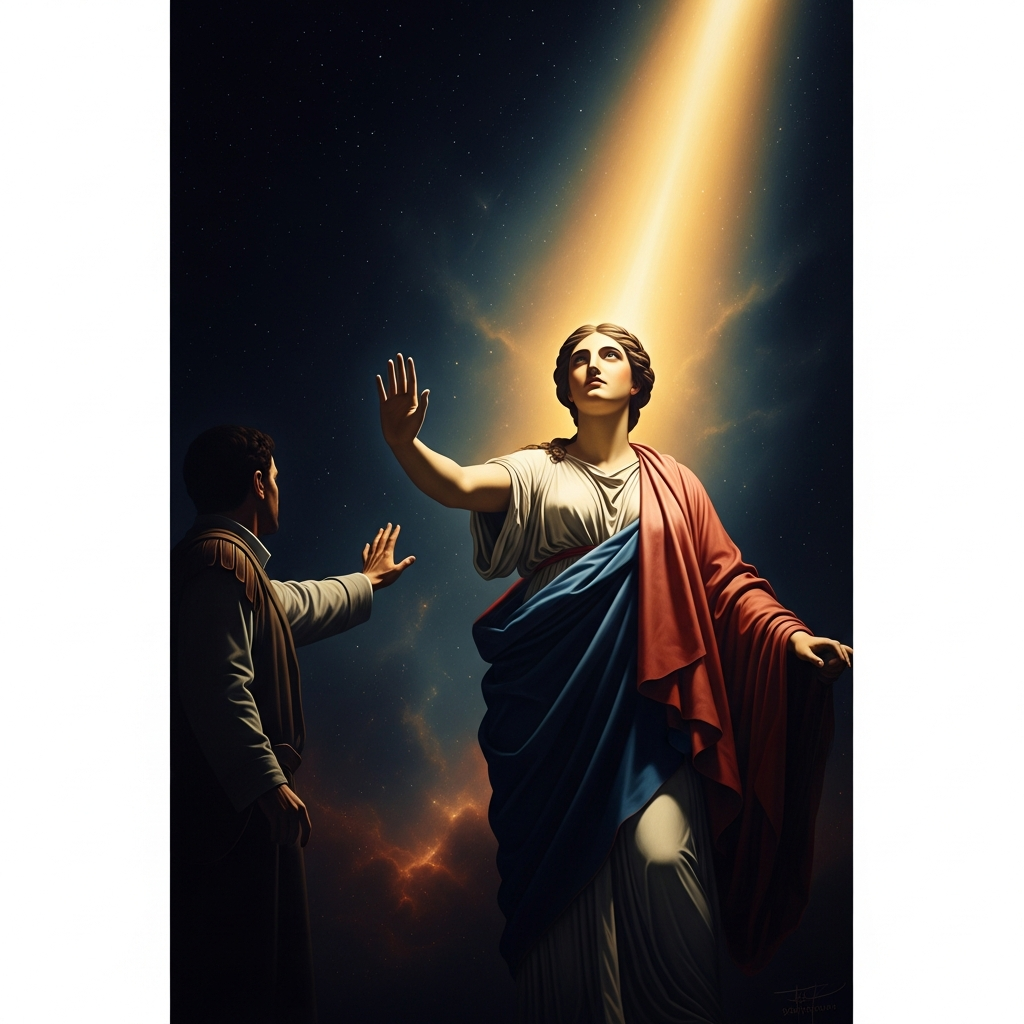
The governor of Basra proposes. He sends his messenger with a list of his wealth: estates in three provinces, slaves, horses, a household ranking. Rabia replies — and the reply is recorded in nearly every hagiography — that the marriage contract requires the husband to be present at the signing, and she is already in the presence of Another. The governor’s messenger does not know how to bring this answer back to the governor. The governor, when he hears it, withdraws.
Hassan al-Basri proposes. He is the most respected religious figure in Basra. He is offering her, in effect, the central position of the city’s spiritual life. Rabia replies that there are four questions the husband must answer before she will consent. When I die, will I die a Muslim? When I am put in the grave and questioned, will I be able to answer? When the books of deeds are distributed, will mine be put in my right hand? When humanity is divided into two groups and led toward heaven and hell, where will I be? Hassan replies, honestly, that these are matters known only to God. Then, says Rabia, how can I marry a man who does not know my fate? Better to be alone with the One who does.
He withdraws.
She is alone. She remains alone for the next sixty years.
The teaching that emerges from this aloneness is what gives Sufism its theological signature.
Before Rabia, Islamic piety in Basra and Kufa is dominated by what the historians call zuhd — renunciation, asceticism — and the renunciation is structured around two emotional axes: fear of hell and hope for paradise. The pious man fasts because he fears the fire. The pious man prays through the night because he hopes for the gardens. The relationship between the human and the divine, in this framework, is fundamentally transactional: I do this; you give me that.
Rabia says: this is not love.
She says: a slave who serves only because she expects payment is not loyal. A wife who stays only because she fears the alternative is not faithful. A worshiper who prays only because she wants paradise is not loving God; she is loving paradise, and using God as the means.
She introduces the term mahabba — love — into the vocabulary of Islamic mysticism, in a sense it has not had before.
She prays the prayer that is recorded everywhere afterward:
O God, if I worship Thee in fear of Hell, burn me in Hell. If I worship Thee in hope of Paradise, exclude me from Paradise. But if I worship Thee for Thy own sake, do not withhold from me Thine eternal beauty.
This is the prayer that breaks the framework. The two motivators of Abrahamic religiosity — punishment and reward — are renounced as inadequate. What is left is naked love, love without contract, love that asks nothing because it has already received everything it could want, which is the presence of the Beloved.
The implications, when other Sufis begin to work them out, are vast. If the goal of religion is not paradise but union, then religion is not a transaction but a courtship. The whole vocabulary of erotic mysticism that will flower in Hafiz and Rumi and Ibn Arabi five centuries later — the cup, the cupbearer, the beloved, the morning breeze, the rose, the nightingale — has its theological warrant here, in the small house outside Basra, in the prayer of a former slave who refused four marriage proposals because she was already taken.
The torch and the bucket.
The story is told in many forms, but the canonical version comes from Attar’s Memorial of the Saints. Rabia is seen walking through the streets of Basra with a flaming torch in one hand and a bucket of water in the other. People stop to watch. They ask her: Where are you going? What is this? She replies: I am going to set fire to paradise and pour water on hell, so that both veils may vanish, and seekers may seek God for himself alone, neither for fear of hell nor for hope of paradise.
It is theater. It is a public action of a kind unusual for a woman of her century. It is also a precise theological statement compressed into an image. The torch and the bucket are the two ends of the framework she is destroying. To burn paradise is to refuse the bargain that turns God into a vending machine for pleasure. To douse hell is to refuse the threat that turns God into an extortionist. What remains, when both veils vanish, is the face that was always there but obscured by the calculation.
The image enters the tradition. By the time Attar records it in the thirteenth century, it is already a fixed element of Rabia’s iconography. By the time the Sufi tradition reaches Rumi, the image has been generalized: the lover does not bargain. By the time Hafiz is writing in the fourteenth century, the image has become a commonplace of Persian poetry. By the time Helene Cixous and the twentieth-century French theorists rediscover Rabia, the image is being read as the foundational gesture of mystical feminism: the woman who, having no rights at all in the social order, asserts an absolute right in the spiritual one.
She lives, by most accounts, into her late eighties.
She is poor. The hagiographies are explicit about this: she had nothing in her house but a brick that served as her pillow, a clay jug, and a reed mat. When pious visitors brought gifts of food, she would distribute them to the poor before nightfall. When pious visitors brought money, she returned it with thanks. She refused, repeatedly, to accept any sort of permanent patronage. She insisted on her own labor. She spun wool. She sold the wool. She lived on what the wool brought her.
She is, when she dies — around 801 CE, in her late eighties — already a saint. The procession to her grave includes most of Basra. She is buried, by tradition, on Jabal al-Tur, a hill outside the city. The grave is later disputed: another tradition places it in Jerusalem, on the Mount of Olives, and a shrine there has been visited for centuries. The dispute is the kind of dispute that follows a saint who has become so important that multiple cities want to claim her bones.
The women of Basra come for centuries to her grave to pray for the things only Rabia can intercede for: barren wombs, runaway daughters, marriages that have hardened into transaction. The men come to ask the same questions Hassan al-Basri came to ask, generations earlier: what is love, and how is it different from need? The poets — the Sufi poets, who arrive in the next two generations and the next two centuries and the next twelve — come to take what she made and turn it into the verses that the entire Persian-speaking world will memorize.
The torch has burned paradise.
The bucket has put out hell.
What is left is the small woman in the desert house, kneeling on a mat of reeds, awake while the city sleeps, in love.
Scenes
Rabia walks through the market of Basra carrying a torch in one hand and a bucket of water in the other — to burn paradise and douse hell
 Generating art…
 She refuses the governor's marriage proposal: the contract requires the husband to be present, and she is already in another's presence
 Generating art…
 In her small desert house at Basra's edge, Rabia prays through the night — for love alone, not paradise, not hell
 Generating art…
 Echoes Across Traditions
Entities
- Rabia al-Adawiyya
- Hassan al-Basri
- Sufyan al-Thawri
- the governor of Basra
- the suitors who proposed marriage
Sources
- Farid ud-Din Attar, *Memorial of the Saints* (*Tadhkirat al-Awliya*), c. 1220, the primary hagiographic source
- Margaret Smith, *Rabi'a the Mystic and Her Fellow-Saints in Islam* (Cambridge, 1928)
- Annemarie Schimmel, *Mystical Dimensions of Islam* (UNC Press, 1975)
- Rkia E. Cornell, *Rabi'a from Narrative to Myth: The Many Faces of Islam's Most Famous Woman Saint* (Oneworld, 2019)
- Charles Upton, *Doorkeeper of the Heart: Versions of Rabi'a* (Threshold, 1988)