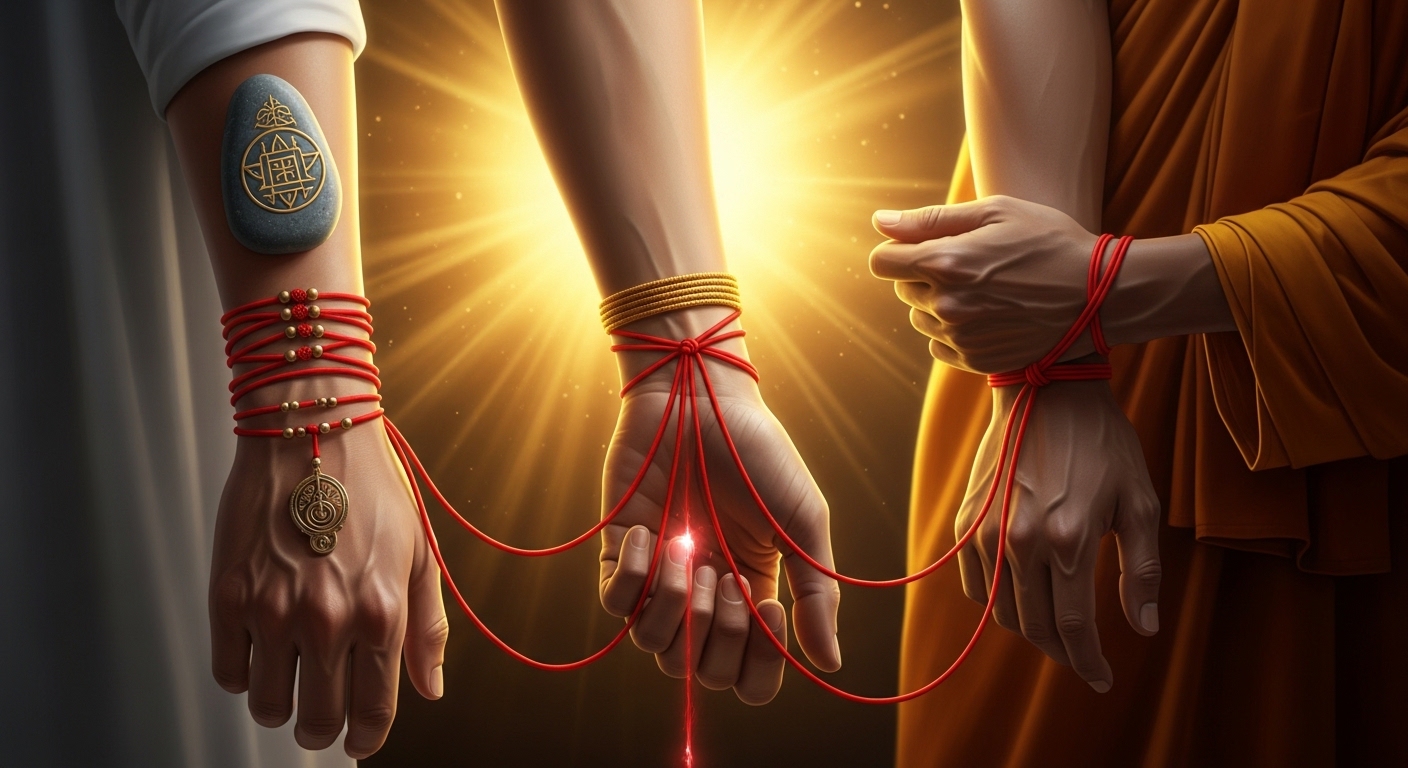
Category: Protection Origin: Jewish Kabbalah, Hindu tradition, East Asia Traditions: Jewish, Hindu, Buddhist, Chinese, Anatolian Risk: Protective
The practice of wearing a red thread on the left wrist appears independently across unconnected traditions, suggesting either diffusion from a common source or parallel development from shared human intuitions about color and protection.
Jewish Kabbalistic tradition: A red thread wound seven times around Rachel’s Tomb in Bethlehem, then cut into bracelets, provides protection against the Evil Eye. Red (adom) is associated with blood, life force, and the divine name Adonai. The left wrist receives negative energy — protecting it protects the heart. This practice was popularized globally by the Kabbalah Centre in the 1990s.
Hindu tradition: The mauli or moli thread (red, sometimes including yellow and gold) is tied by priests during puja — marking the recipient as under divine protection. The left wrist for women; right wrist for men. The thread is often tied during Raksha Bandhan, when sisters tie it on brothers’ wrists, invoking Lakshmi’s protection.
Buddhist tradition: Monks in Tibet and Thailand tie red or saffron threads on devotees after prayers — sai sin in Thai Buddhism — transferring the blessing of the chant into the physical object.
Chinese tradition: The hong xian (red string of fate) connects destined lovers through an invisible bond from birth. The lunar deity Yue Lao ties red strings between souls who will meet. Wearing a red thread also protects newborns from evil spirits.
The convergence: Red is universally associated with blood, life, and vital force. Thread binds — both protects and connects. The left wrist is culturally marked as the receiving side of the body. These three shared intuitions produced nearly identical practices across traditions with no known historical contact.