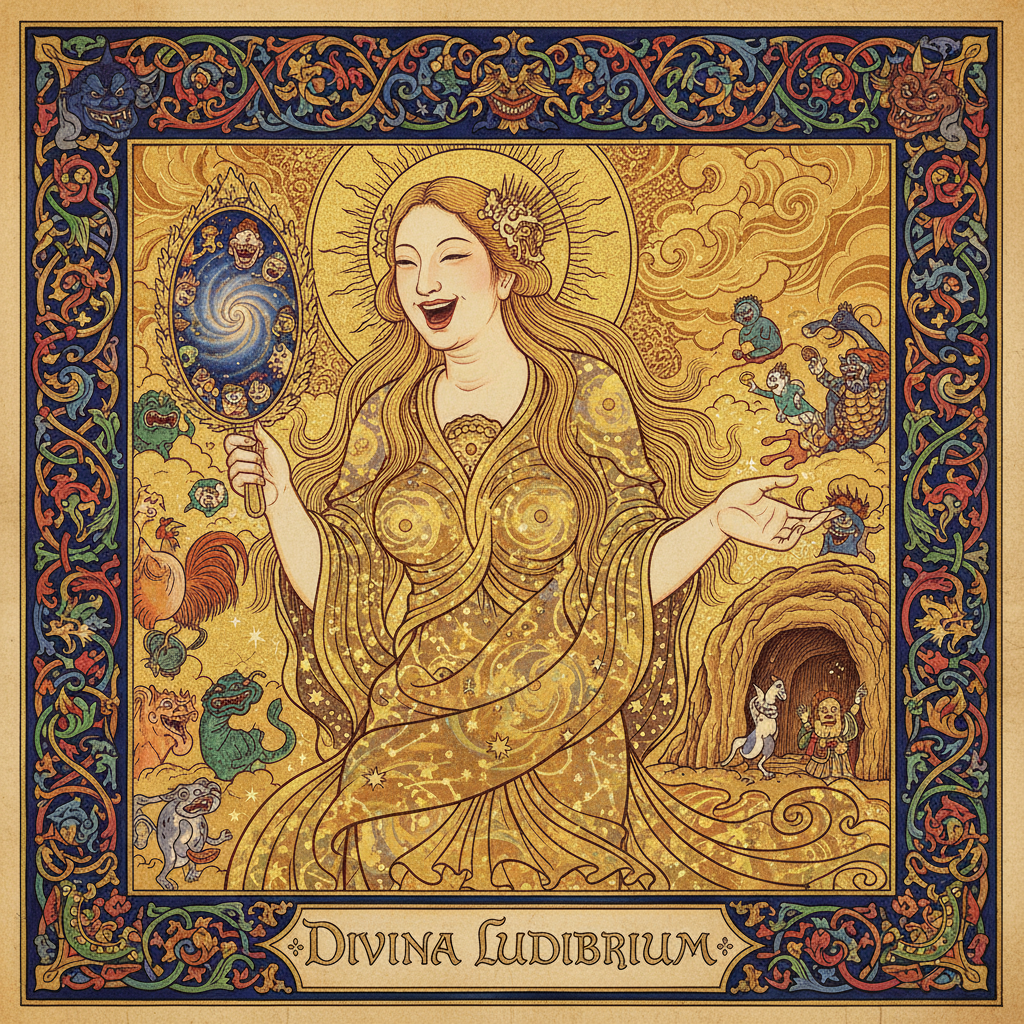
Part of the Bestiary Compendium
Religion is not always solemn. Every culture on Earth has moments where the divine becomes absurd, where the cosmos runs on comedy, where laughter saves the world. Gods get pranked. Tricksters fail spectacularly. Death tells dirty jokes. A flood gets solved by standup comedy.
This is not irreverence. The sacred laugh is one of the oldest religious acts there is. Darkness was defeated by laughter before it was ever defeated by prayer.
The Laughing Gods
| Moment | Tradition | What’s Funny | Why It Matters |
|---|---|---|---|
| Sarah laughs at God | Biblical | God says she’ll have a baby at 90. She laughs. God: “Why did Sarah laugh?” Sarah: “I didn’t laugh.” God: “Yes you did.” | God CAN take a joke. Isaac means “he laughs.” |
| Elijah mocks Baal | Biblical | ”Shout louder! Maybe he’s sleeping. Maybe he’s gone to the bathroom.” | The prophet trash-talks 450 enemy priests. Divine comedy. |
| Amaterasu lured by comedy | Shinto | The sun goddess hid in a cave. Ame-no-Uzume did an outrageous striptease dance. All the gods laughed. Amaterasu peeked out. | Darkness was defeated by LAUGHTER. Not prayer, not force — laughter. |
| Ganesh’s head | Hindu | Shiva beheaded his own son (didn’t recognize him), panicked, grabbed the first animal he saw (elephant), stuck its head on. | The most beloved Hindu god has an elephant head because of a divine screwup. |
| Sun Wukong’s entire existence | Chinese | He crashed a heavenly banquet, ate all the peaches, peed on the Buddha’s finger, demanded a better job title. | The Monkey King is the comic relief of all mythology. |
| Loki gives birth | Norse | Loki transformed into a mare, seduced a stallion, gave birth to Sleipnir (Odin’s 8-legged horse). | The trickster god got pregnant as a horse. Odin RIDES his grandchild. |
| [Coyote](Native American.md)‘s failures | Native American | Coyote tries to fly, tries to seduce the moon, tries to steal the sun — fails hilariously every time. | The trickster’s failures teach more than his successes. |
| Sekhmet stopped by beer | Egyptian | Ra sent Sekhmet to punish humanity. She went TOO berserk. Ra flooded the fields with beer dyed red. She drank it all, passed out. Humanity saved by a hangover. | The most powerful weapon against divine wrath: alcohol. |
| Baron Samedi | Vodou | The lord of death wears a top hat, tells dirty jokes, drinks rum, and smokes cigars. He’s hilarious AND terrifying. | Death doesn’t have to be grim. The Haitian relationship with death is comedic. |
| Krishna steals butter | Hindu | Baby Krishna constantly stole butter from the village women. They complained to his mother. She couldn’t punish him. He’s GOD. | The supreme deity as a naughty toddler. |
| Anansi tricks God | Akan | Anansi the spider told Nyame (God) he could capture a python, a leopard, a hornet swarm, AND a fairy. Nyame laughed. Anansi did it. | Never bet against the trickster. Even God loses. |
| Tiddalik | Aboriginal | The greedy frog drank ALL the water. The animals had to make him LAUGH to release it. An eel did a silly dance. He laughed. Water everywhere. | The Aboriginal flood was solved by standup comedy. |
| St. Lawrence on the grill | Catholic | Being roasted alive: “Turn me over, I’m done on this side.” | The patron saint of comedians. Martyrdom with a punchline. |
The Six Types of Sacred Humor
| Type | Examples | What It Reveals |
|---|---|---|
| The prank that creates | Loki’s pranks produce Sleipnir, Mjolnir, golden hair | Comedy is generative — chaos births new things |
| The laugh that saves | Amaterasu, Tiddalik — laughter literally rescues the world | Joy is a cosmic force, not a frivolity |
| The mockery that defeats | Elijah vs Baal, Anansi vs Nyame | Humor exposes the powerless god behind the curtain |
| The divine screwup | Ganesh’s head, Obatala drunk while making humans | Gods fail. The cosmos absorbs it. The story continues. |
| The trickster’s failure | Coyote’s disasters, Anansi sometimes losing | Failure is the real teacher. The loss is the lesson. |
| Death as comedy | Baron Samedi, St. Lawrence, the Irish Wake tradition | The funniest thing is that we’re all going to die |
Why Sacred Humor Matters
The solemnity of religion is well-documented. The comedy is often forgotten. This is a mistake.
Laughter appears at the exact moments where the sacred is most vulnerable. Sarah laughs at the impossible. The gods laugh at Ame-no-Uzume to coax the sun back. The animals laugh at the eel’s dance to save the water. Laughter doesn’t mock the divine — it invites it back.
The trickster is the theological immune system. When a system becomes too rigid, too self-important, too convinced of its own gravity, the trickster breaks in and makes everyone laugh. Coyote fails so humans can see how to succeed. Loki creates problems so the gods have to solve them. Anansi tricks God so the spider’s people get the stories. The comedy is the correction.
And then there’s the screwup theology. Shiva decapitated his own son. Obatala got drunk and made crooked humans. Ra’s appointed destroyer got too enthusiastic and had to be stopped with beer. These are not accidents in the stories — they’re the point. A god who can make mistakes and fix them is a god you can actually talk to.
The Profiles
Sarah and the Impossible Promise
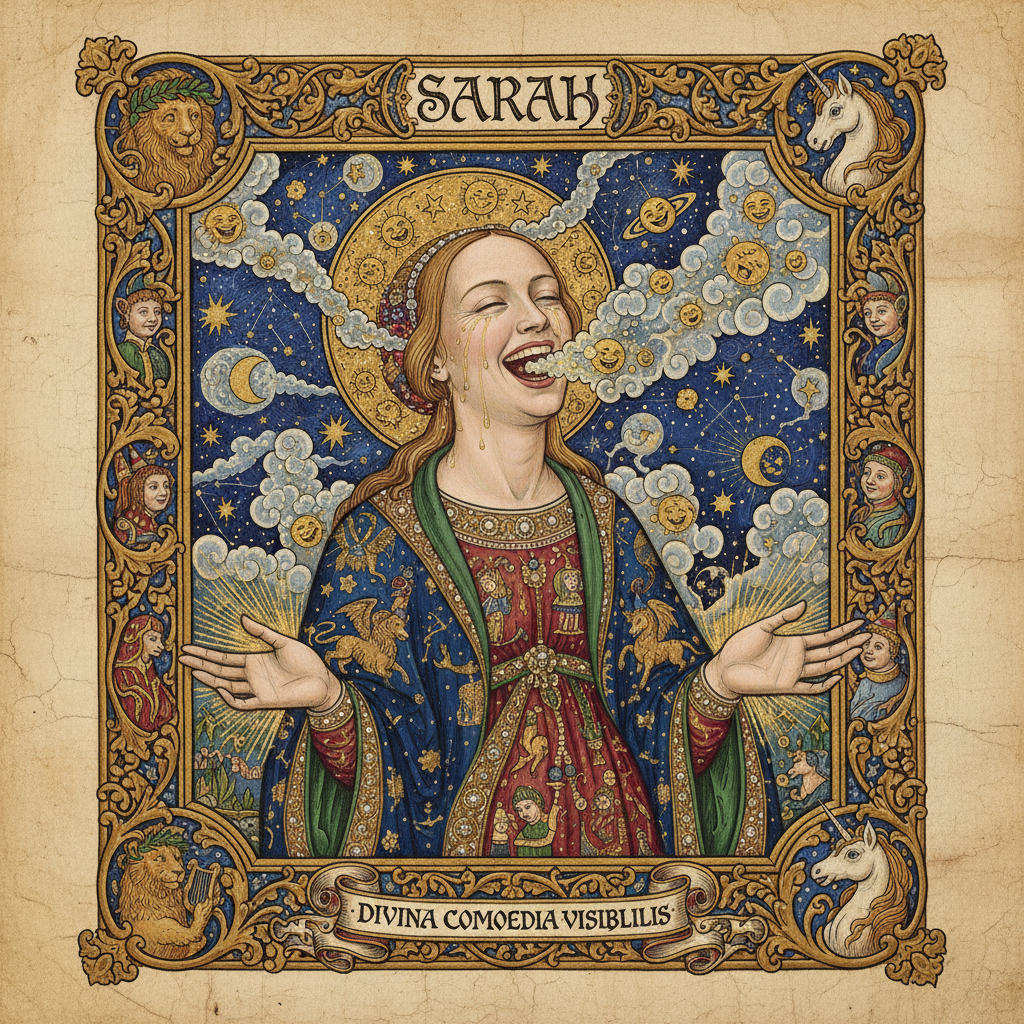
Sarah was ninety years old. Abraham was a hundred. When the three mysterious visitors told Abraham that his wife would bear a son within the year, Sarah was listening from inside the tent. She laughed.
The Hebrew is specific: she laughed inwardly, a private, incredulous laugh at the gap between the promise and reality. Then God asked: “Why did Sarah laugh?” She panicked and denied it: “I didn’t laugh.” God said: “Yes you did.”
The remarkable thing is what God does next. He doesn’t rebuke her. He doesn’t revoke the promise. He names the son Yitzhak — “he laughs.” He makes the laughter permanent, baked into the child’s name. Every time someone said “Isaac,” they were saying “the one who came from a laugh.”
God heard her laugh, confronted her about it, and then chose to commemorate it forever. This is not a god who demands performed solemnity. This is a god who can handle doubt that sounds like a laugh.
The Punchline: Isaac means “he laughs.” The patriarch of nations is named after his mother’s incredulous snort at God’s promises.
Elijah vs. the 450 Prophets of Baal
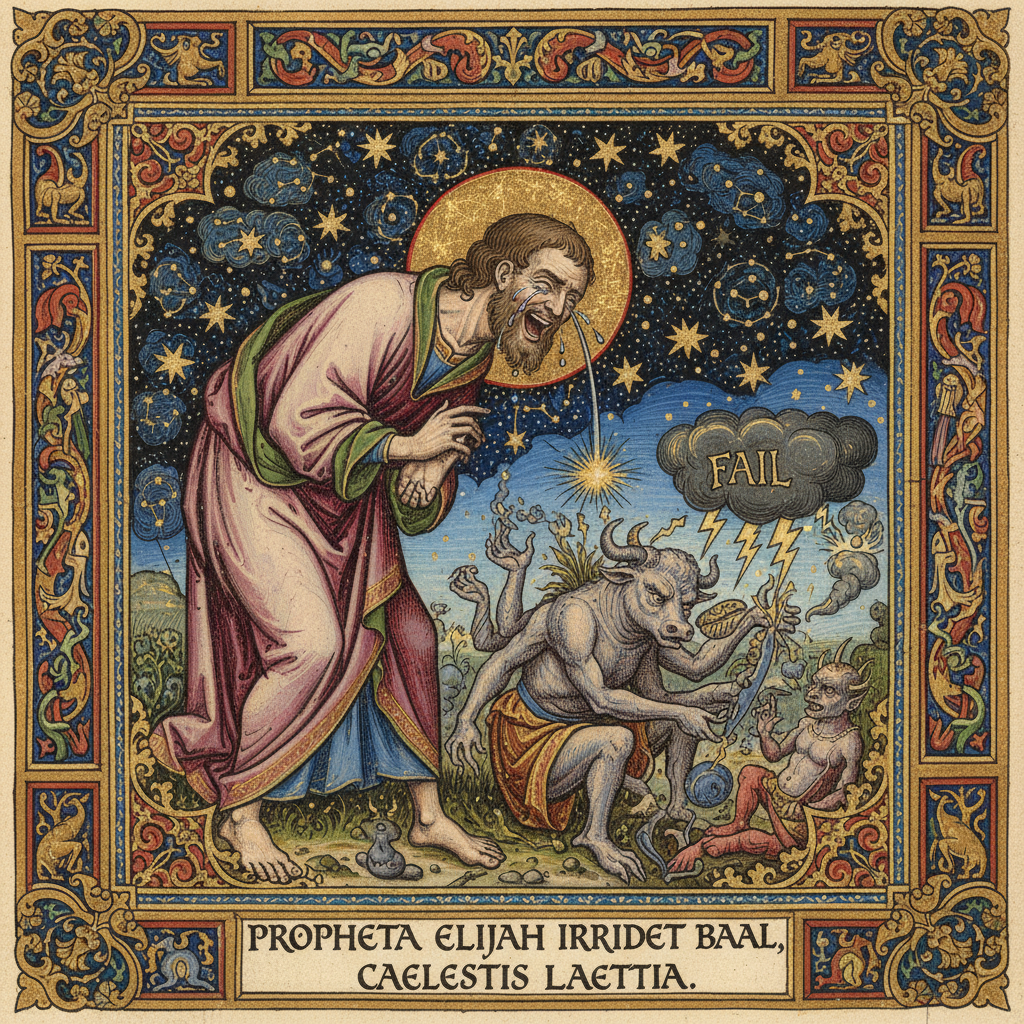
Mount Carmel, 9th century BCE. The contest: which deity could call down fire to consume a sacrifice? The 450 prophets of Baal went first. They danced. They chanted. They cut themselves. Baal did not answer.
Then Elijah started talking.
“Shout louder! Surely he is a god! Perhaps he is deep in thought, or busy, or traveling. Maybe he is sleeping and must be awakened.” — 1 Kings 18:27
The Hebrew phrase translated “busy” (ki sig lo) is a euphemism. Modern scholars are fairly confident Elijah was suggesting Baal had gone to the bathroom. The prophet is standing in front of 450 enemy priests, their god silent, and he is trash-talking.
This is holy mockery. The laughter deflates the false god. The crowd watching sees: the priests scream, they cut themselves, they perform every ritual — and nothing happens. Elijah pours water on his altar three times (just to make it harder), calls on YHWH once, and fire falls. The contrast lands exactly because of the comedy that preceded it.
The Punchline: Elijah’s mockery is part of the theology. The false god doesn’t answer because there’s nothing there to answer. The joke is the argument.
Ame-no-Uzume and the Cave of the Sun
Amaterasu, the sun goddess, had retreated into a cave. Her brother Susanoo’s rampages had become unbearable. Without her, the world fell into darkness. Crops failed. Demons walked freely. The eight million gods gathered outside the cave and didn’t know what to do.
Then Ame-no-Uzume climbed onto an overturned tub, stamped on it, and performed an increasingly outrageous dance — eventually disrobing entirely. The eight million gods burst out laughing.
Amaterasu heard the laughter from inside the cave. It made no sense. The world was dark. Why was everyone laughing? She cracked the rock door open to look.
That crack of light was all they needed. The god Tajikarawo grabbed the door and pulled it open. Amaterasu was welcomed back. Light returned to the world.
The darkness was defeated not by force, not by prayer, not by negotiation — by comedy. Ame-no-Uzume’s dance, the gods’ helpless laughter, the sun goddess’s curiosity about what could possibly be funny in a lightless world. The laugh literally saved creation.
The Punchline: Ame-no-Uzume became the goddess of dawn, celebration, and the arts. The patron deity of comedy and performance saved the world.
How Ganesh Got His Head
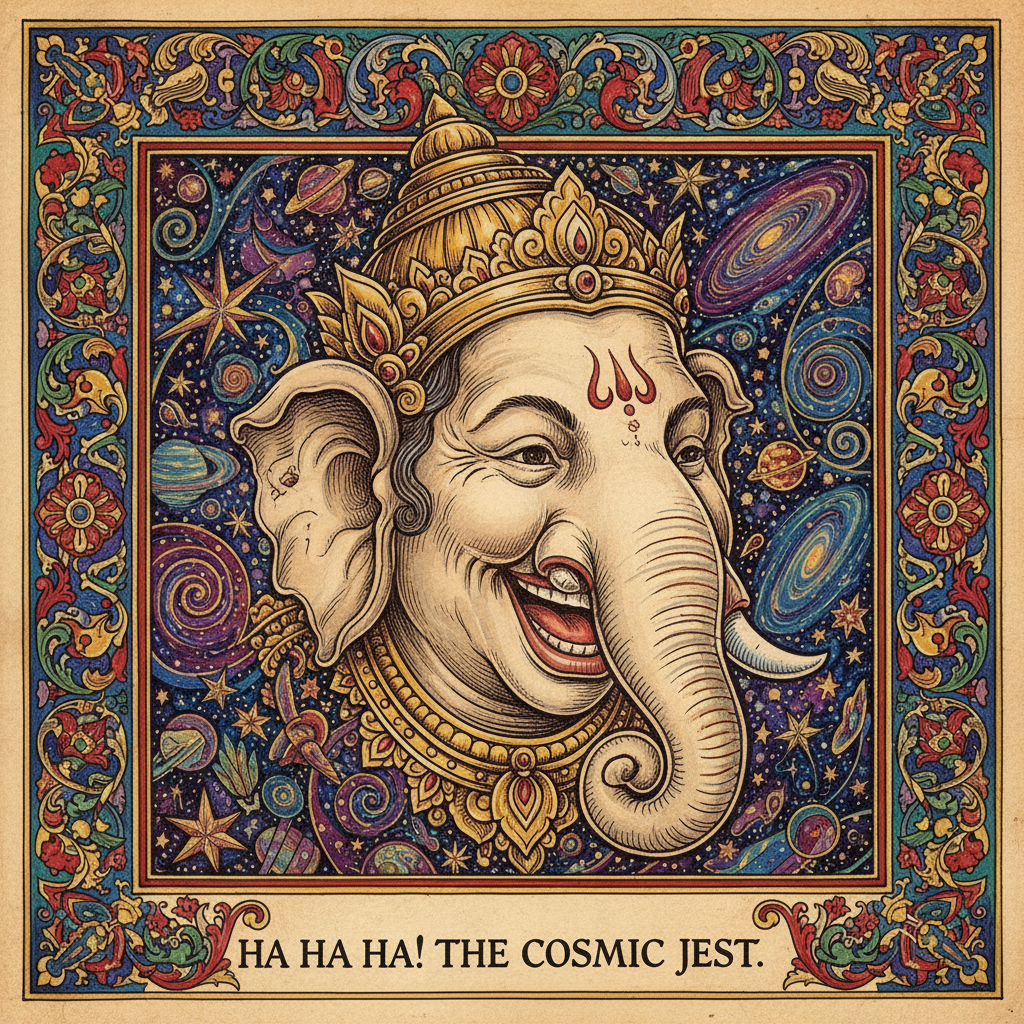
The most beloved god in the Hindu pantheon — worshipped before every undertaking, remover of obstacles, lord of beginnings, patron of wisdom and writing — has an elephant head because his father had an accident.
Parvati created Ganesh from turmeric paste while Shiva was away. She set him to guard her door while she bathed. Shiva returned, didn’t recognize the boy, and when Ganesh refused to let him pass — Shiva beheaded him.
Parvati’s grief was catastrophic. Shiva, realizing his error, sent his soldiers to find a replacement head: the first creature they encountered whose head faced north. They found a single-tusked elephant. Shiva placed the elephant’s head on Ganesh’s body and restored his life.
This is the origin story of the god most Hindus invoke first in any ritual. He is beloved, powerful, and wise. He also has an elephant head because his father killed him by accident and had to improvise a fix. The divine screwup is not a footnote — it is foundational.
The Punchline: Ganesh’s elephant head is considered auspicious, a mark of divine wisdom. The cosmic screw-up became the most beloved form in the tradition.
Sun Wukong, the Monkey Who Would Not Behave
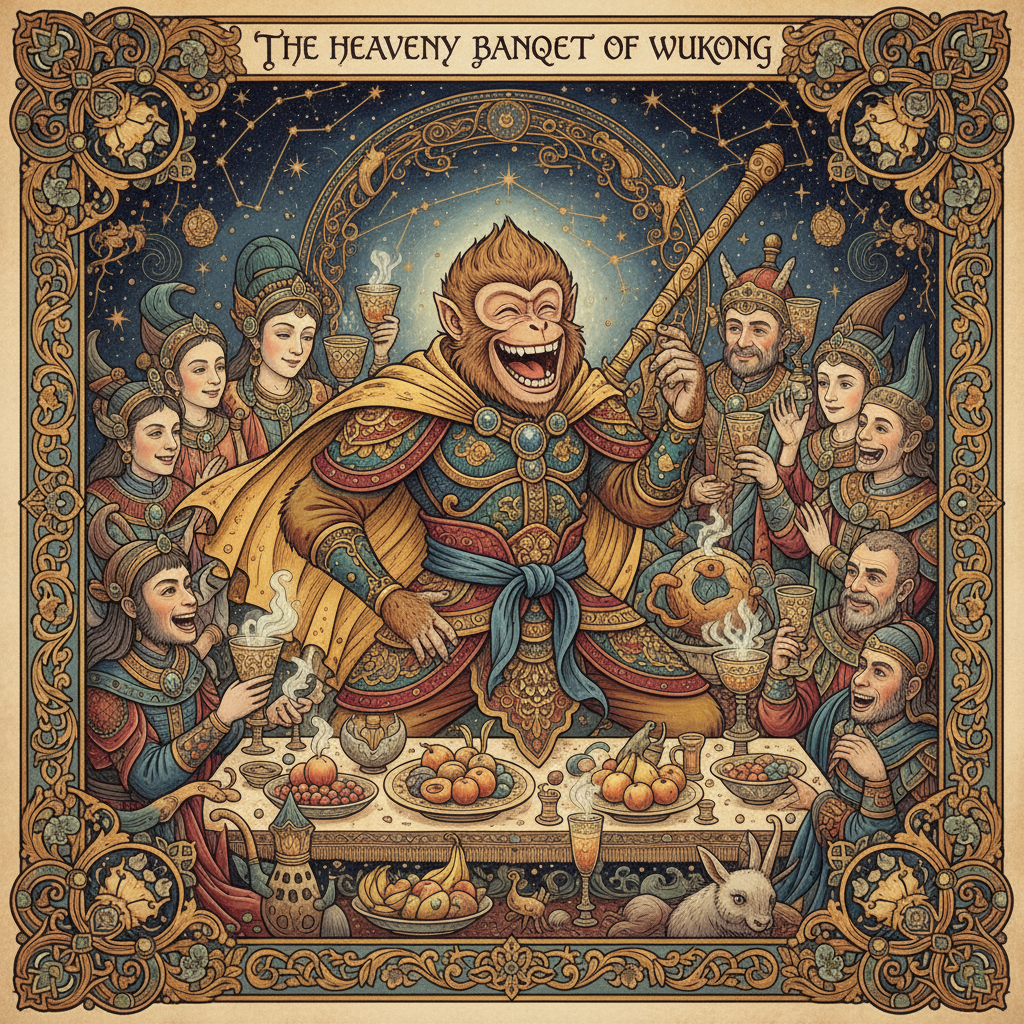
The Jade Emperor made a tactical error: he invited Sun Wukong to heaven. Over the course of his divine employment, Wukong ate all the peaches of immortality from the Queen Mother’s garden (they take thousands of years to ripen), crashed a heavenly banquet he wasn’t invited to and ate all the food, drank all of Laozi’s immortality elixir, and when the Jade Emperor tried to execute him, survived every attempt because he had already eaten everything that could make him immortal.
When they finally asked him to stop, he demanded the title “Great Sage Equal of Heaven.” When given a lesser position, he felt disrespected and declared war on the celestial bureaucracy.
The Buddha eventually ended the chaos by betting Wukong he couldn’t jump out of his palm. Wukong flew to the end of the universe — and found five pillars, which he marked with his name (and urinated on for emphasis). He flew back triumphant. Buddha opened his palm to show the five pillars were his fingers. Wukong had never left.
He spent the next 500 years under a mountain.
The Punchline: The most powerful warrior in all mythology was defeated by being tricked into urinating on the Buddha’s hand.
Loki the Mare
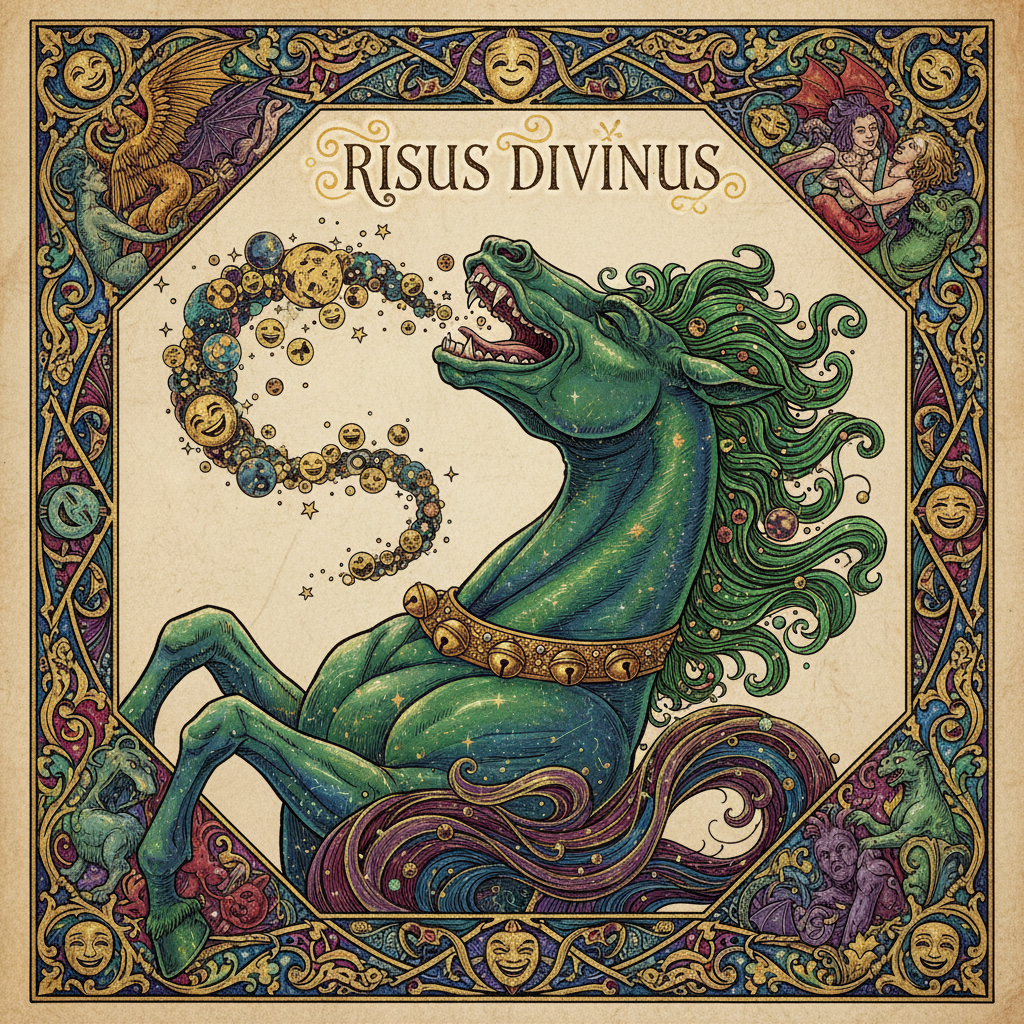
The gods hired a builder to construct their fortress wall, and when they couldn’t pay his price, Loki suggested they make an impossible deadline. The builder agreed — with his horse, Svadilfari, doing the hauling. The horse was supernaturally strong. The deadline was going to be met.
In a panic, the gods turned to Loki: you caused this, you fix it. Loki transformed into a mare. He trotted up to Svadilfari and was, apparently, extremely distracting. Svadilfari broke his traces and chased Loki through the forest all night. Without his horse, the builder couldn’t finish. The deadline was missed.
Some months later, Loki returned to Asgard leading a foal: Sleipnir, an eight-legged horse of supernatural speed. The finest horse in any of the nine worlds. He gave Sleipnir to Odin.
Odin rode his grandchild.
This is mentioned in the Prose Edda with the same matter-of-fact tone as the construction of the wall. The Norse storytellers apparently considered it simply a thing that happened. Loki got pregnant. A very good horse resulted. Moving on.
The Punchline: Odin’s warhorse, on which he rides into Ragnarok, exists because Loki had a one-night stand with a stallion.
Coyote and the Art of Failing Magnificently
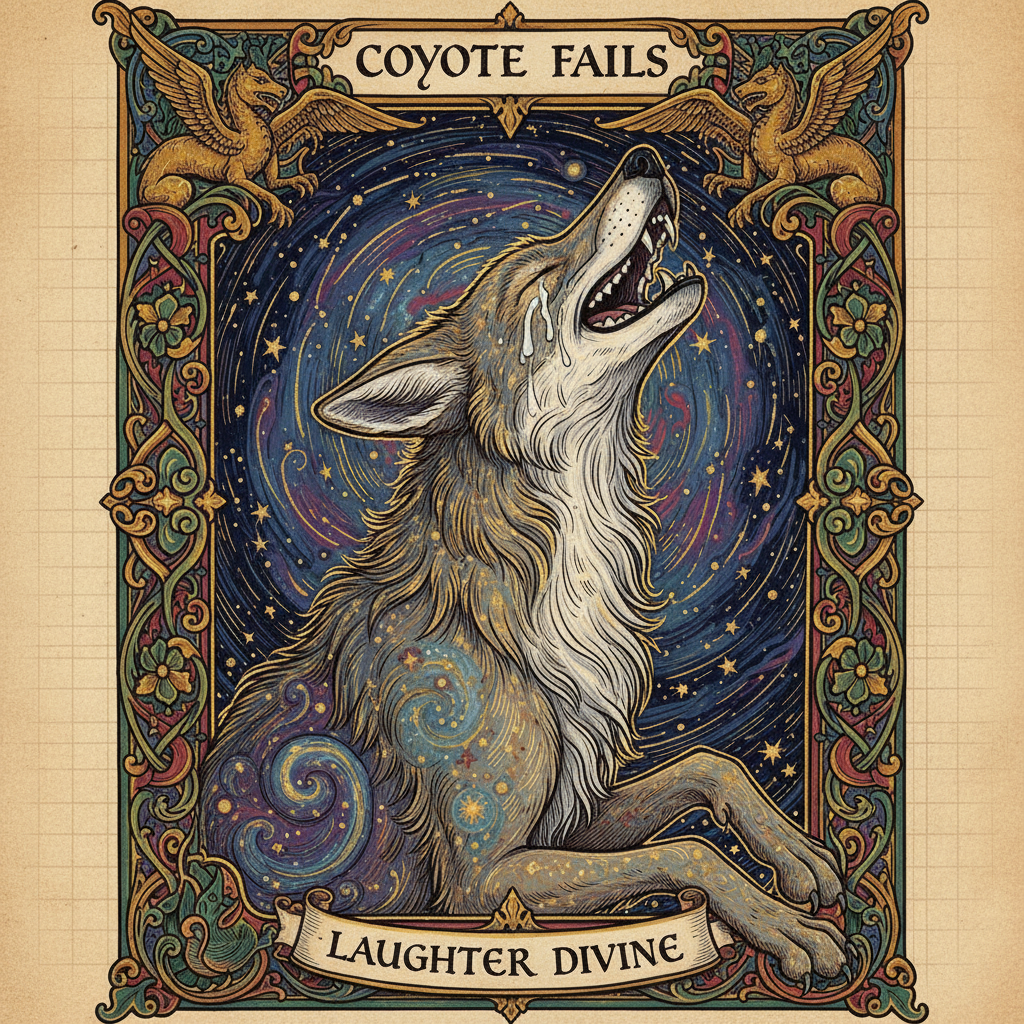
Coyote is the trickster of many Native American traditions, and across hundreds of stories, he is consistently, magnificently, instructively terrible at achieving his goals. He wants to fly: he convinces birds to lend him feathers, launches himself off a cliff, and falls. He wants to seduce the moon: he tries various approaches, all humiliating. He wants to steal the sun, steal fire, steal the stars — and usually ends up dead, dismembered, or covered in something unpleasant.
Coyote always comes back. Death is a temporary inconvenience. He shakes himself off, looks around, and immediately spots the next thing he shouldn’t do.
The failures are the pedagogy. Coyote doesn’t teach by succeeding — he teaches by failing in ways that illuminate exactly what not to do. The lesson isn’t “don’t reach for impossible things.” It’s something more complicated: here is what happens when you let desire run ahead of wisdom; now you know; don’t forget.
Some traditions say Coyote wept over his own failures — not from shame, but because the absurdity of existence moved him to tears. He finds himself funny. That’s the final lesson.
The Punchline: Coyote’s greatest wisdom is that he doesn’t stop trying. The failures accumulate. He comes back. This is considered holy.
How Beer Saved Humanity
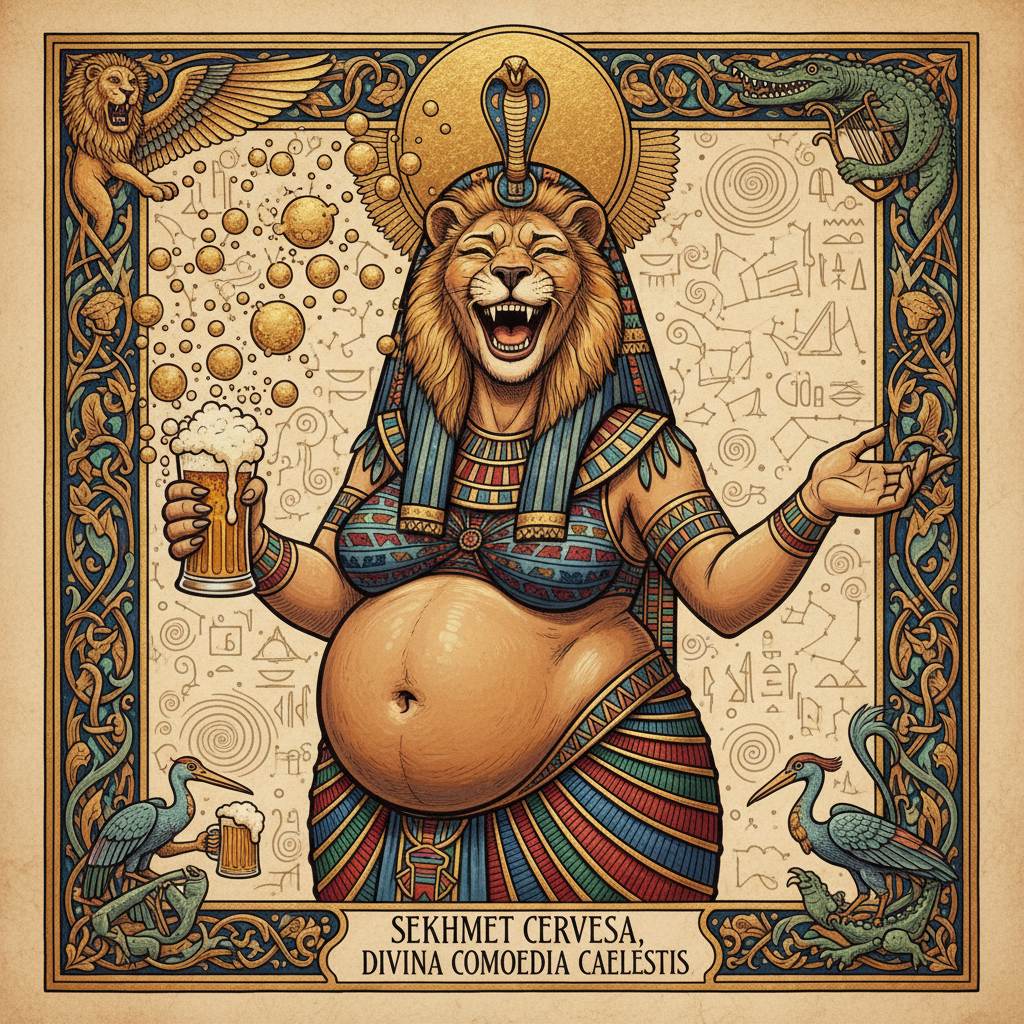
Ra, aged and disrespected, sent Sekhmet to punish the humans who mocked him. Sekhmet — the lion-headed goddess of war, disease, and destruction — went to work. The fields ran red. Humanity was nearly gone.
Ra changed his mind. He wanted to stop her. There was one problem: Sekhmet had gotten a taste for it.
The solution was 7,000 jars of beer dyed red with ochre. Ra’s people poured it across the fields while Sekhmet slept. She woke, saw what looked like a sea of blood, and drank it all. She passed out. She woke up gentle. She never remembered what she had done.
Humanity was saved by a hangover.
This story is not a footnote. It was part of the Festival of Sekhmet, an annual ceremony in which humans ritually got drunk in imitation of the goddess. The excess was the ritual. The comedy is the theology: the most terrifying force in the Egyptian pantheon was neutralized by her own appetite, and humans have been celebrating that fact ever since.
The Punchline: The religious festival involved everyone getting extremely drunk. This was mandatory.
Baron Samedi, Lord of Death and Comedy
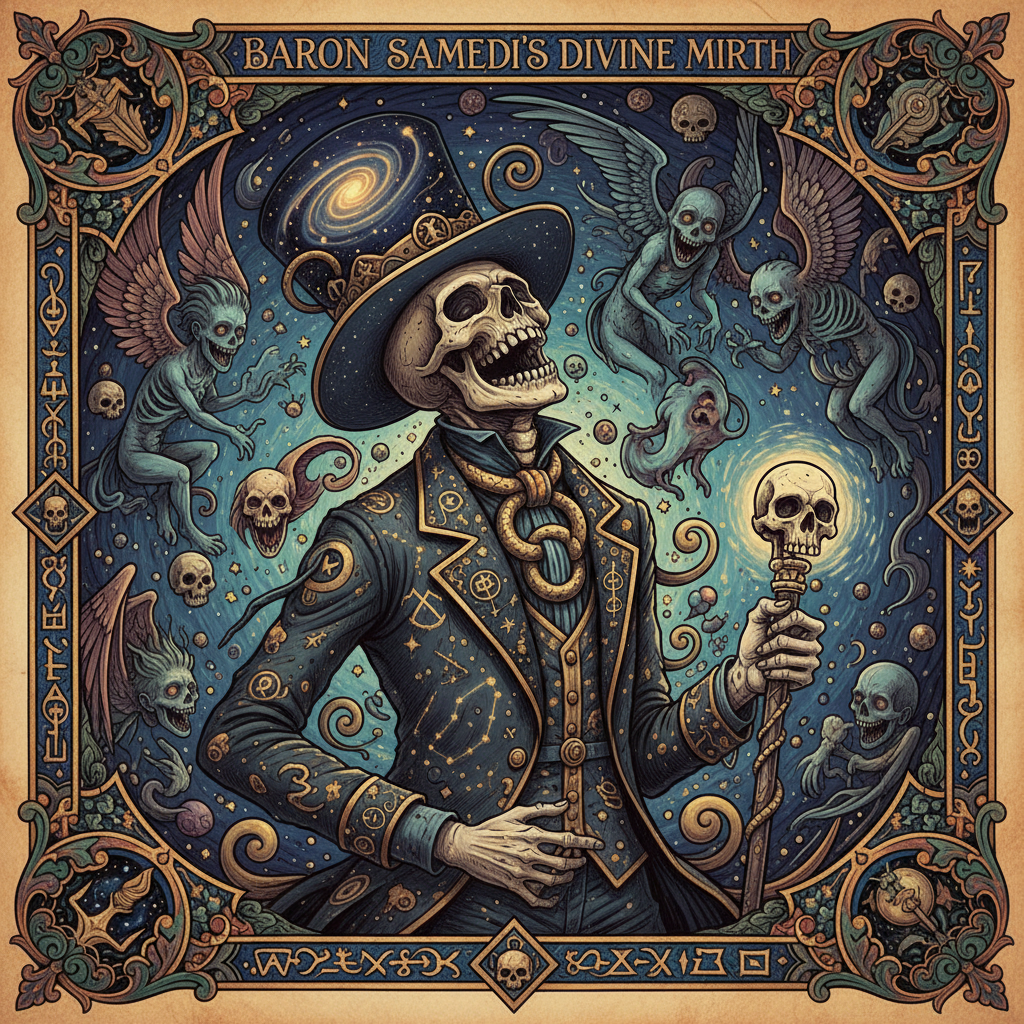
In Haitian Vodou, the lord of death is Baron Samedi. He wears a black tailcoat and top hat, has cotton plugs in his nostrils (corpse preparation), speaks with a nasal voice, smokes cigars, drinks rum, and tells filthy jokes at the worst possible moments.
He is also one of the most powerful lwa (spirits) in the entire pantheon. He decides who dies and when. He can cure any illness — if he feels like it. He is invoked by the dying, by the sick, and by those seeking justice. He is not a figure of fear. He is a figure of tremendous, terrifying vitality.
Baron Samedi’s comedy is theological. Death, in Haitian Vodou, is not the end of a story — it is a transformation, a crossing, an embrace with someone who already loves you. The Baron jokes at death because death is not the enemy. The cigar, the rum, the dirty joke — these are the gestures of a man who has seen everything and remains, improbably, delighted to be here.
The top hat matters. Baron Samedi dresses like the European death-figure (the colonial undertaker) and makes that figure ridiculous. He wore the costume of oppression and turned it into a party hat.
The Punchline: The lord of death loves life more than anyone. His laughter is a theological argument that death is not the worst thing.
Baby Krishna and the Butter Crisis
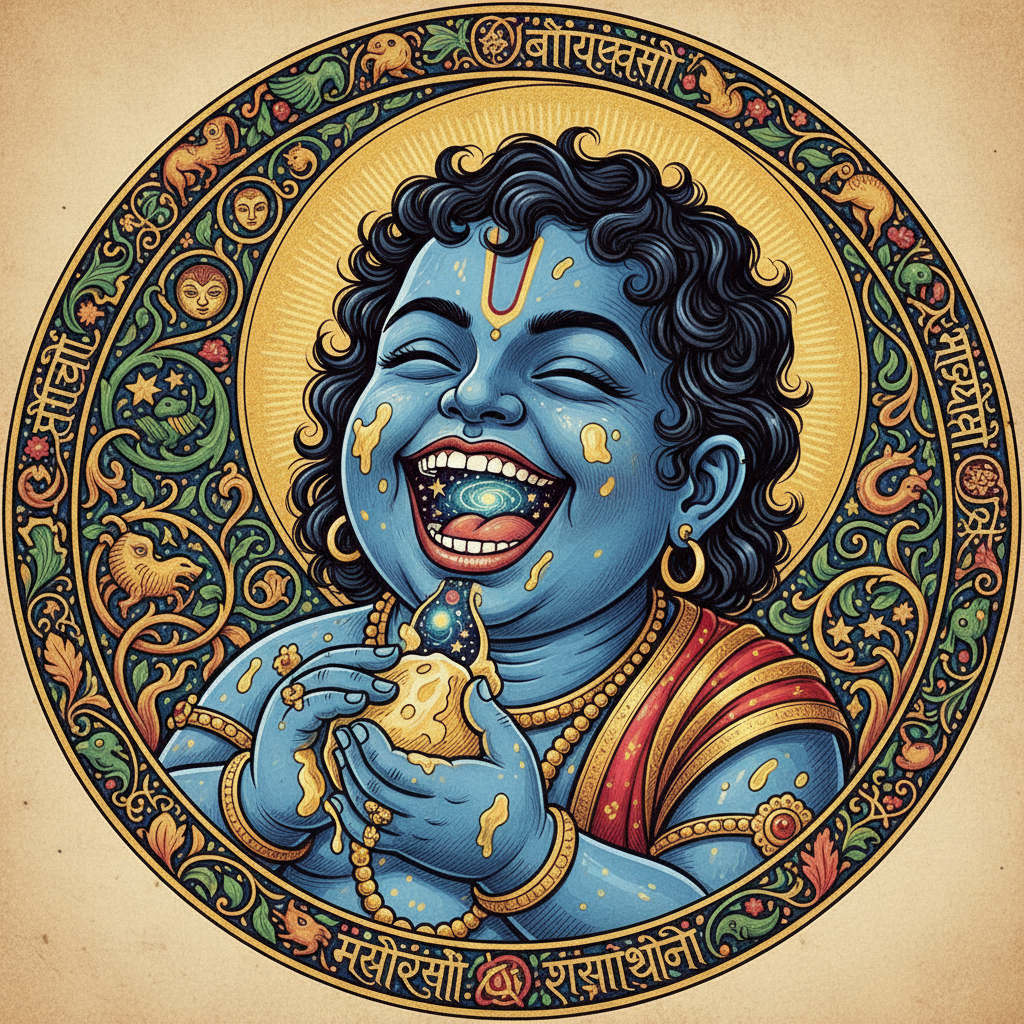
Before he was the speaker of the Bhagavad Gita, before he was the divine strategist of the Mahabharata, Krishna was a toddler in Vrindavan who could not stop stealing butter.
The village women would store their butter in pots hung from the ceiling to keep it out of reach. Krishna learned to form human pyramids with other children to climb up, knock the pots down, eat the butter, and feed the rest to the monkeys. When the women complained to his mother Yashoda, she tried to catch him and tie him up. He let her tie him — but the rope was always two finger-widths too short, however long she made it.
When she finally caught him and demanded he open his mouth, she looked inside and saw the entire universe.
This is the full theological joke: the supreme deity, who contains all of creation within himself, had just been stealing butter. Yashoda saw the cosmos and immediately went back to worrying about the butter pots. The domestic and the cosmic occupy the same space. The divine is in the toddler’s laugh as much as it is in the infinite.
The Punchline: God, who contains the universe, really just wanted the butter.
Anansi Bets Everything (and Wins)
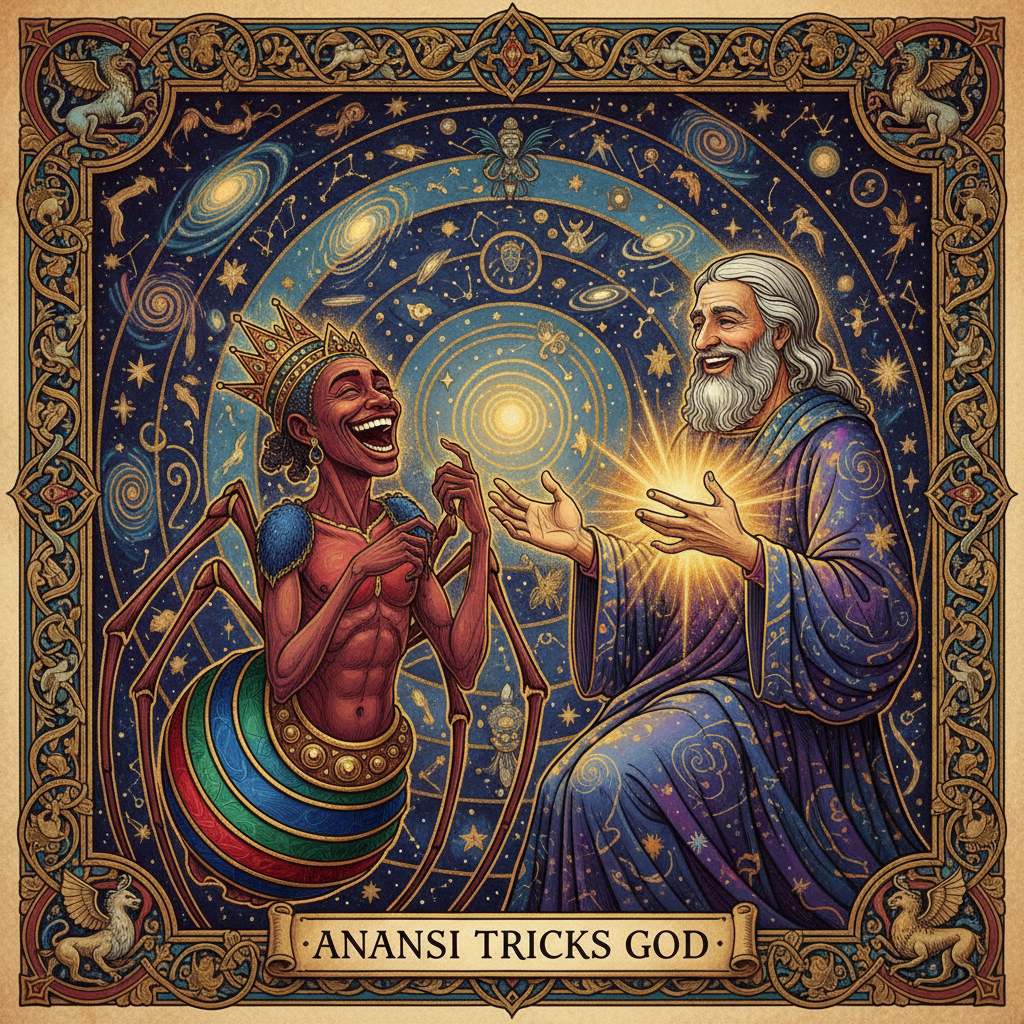
Anansi the spider wanted to buy all the stories of the world from Nyame, the sky god. Nyame named his price as a joke: capture Onini the python, Osebo the leopard, the Mmoboro hornets, and Mmoatia the fairy. It was impossible. Nyame laughed.
Anansi agreed to the terms.
He caught the python by convincing it to lie beside a straight stick to settle a debate about its length (it let itself be tied to the stick). He caught the leopard in a pit covered with leaves. He captured the hornets by pretending it was raining and offering his gourd as shelter (they flew in; he sealed it). He caught the fairy with a tar doll that trapped her when she struck it.
He brought everything to Nyame. Nyame paid: all the stories in the world now belong to Anansi. When you tell a story, you are using property that a spider tricked God into handing over.
The story is sometimes told as a children’s tale. This undersells it. Anansi demonstrates that the small, clever, and resourceful can outmaneuver the large and powerful. Nyame didn’t lose because he was weak — he lost because he laughed at the wrong person.
The Punchline: Never underestimate the spider. Even God lost that bet.
Tiddalik and the First Standup Comedy
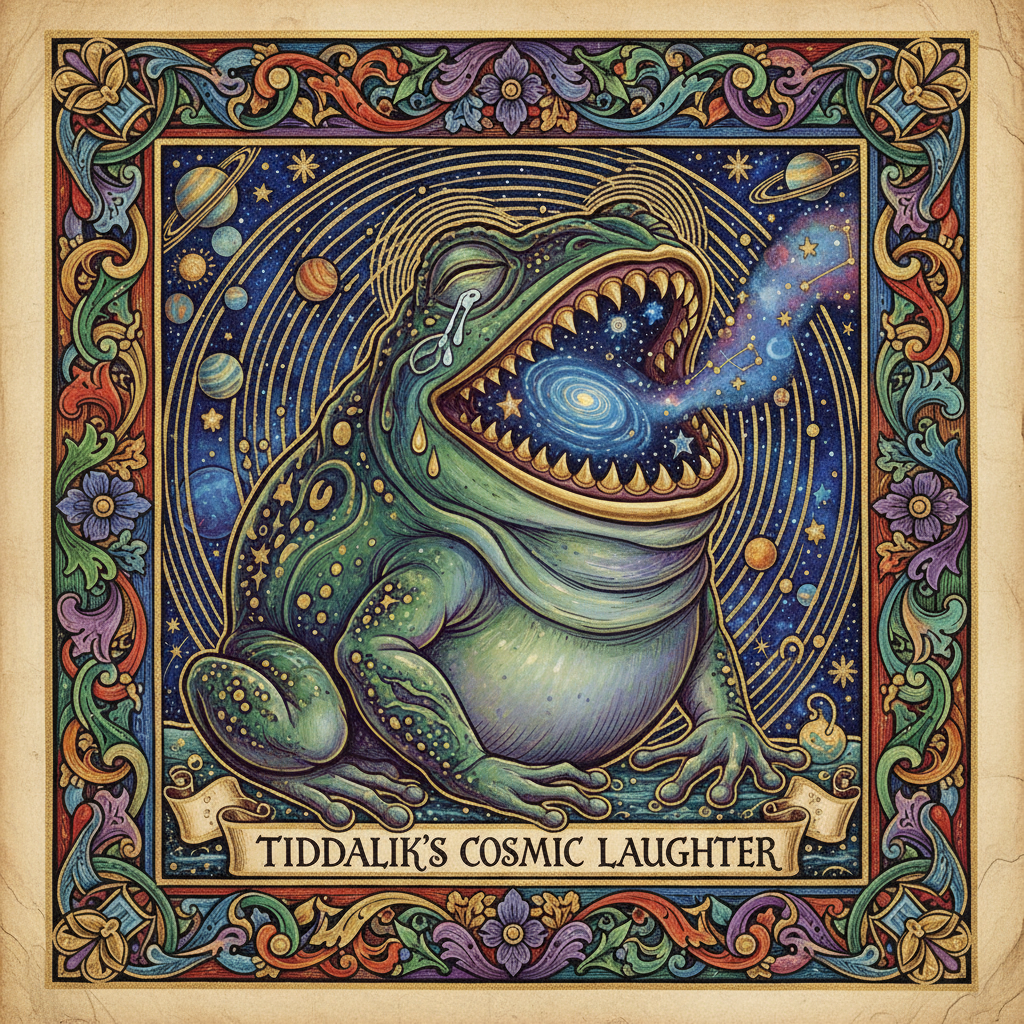
Tiddalik was a giant frog who, in the Dreamtime, drank all the water in the world. Every river, every lake, every waterhole — gone. Tiddalik bloated to enormous size and sat, unmoving, while the world dried around him.
The animals gathered. They tried everything: poking him, pleading with him, making loud noises. Nothing worked. Finally, wise Nabunum the eel had an idea: make Tiddalik laugh.
The animals took turns. They tried. Most failed. Then the eel twisted himself into ridiculous shapes and began to writhe and contort. Tiddalik’s face cracked. A smile. A chuckle. A laugh.
Water exploded in every direction. The flood was enormous. Rivers and waterholes were created by where the water landed.
The Australian landscape was shaped by a frog’s laughter. This is a creation story. The eel who made Tiddalik laugh is one of the continent’s first comedians, and his act — a silly dance for a difficult audience — created the waterways that made life possible.
The Punchline: The Aboriginal flood was solved by standup comedy. Nabunum’s audience was the hardest possible crowd and he killed.
St. Lawrence, Patron of Comedians
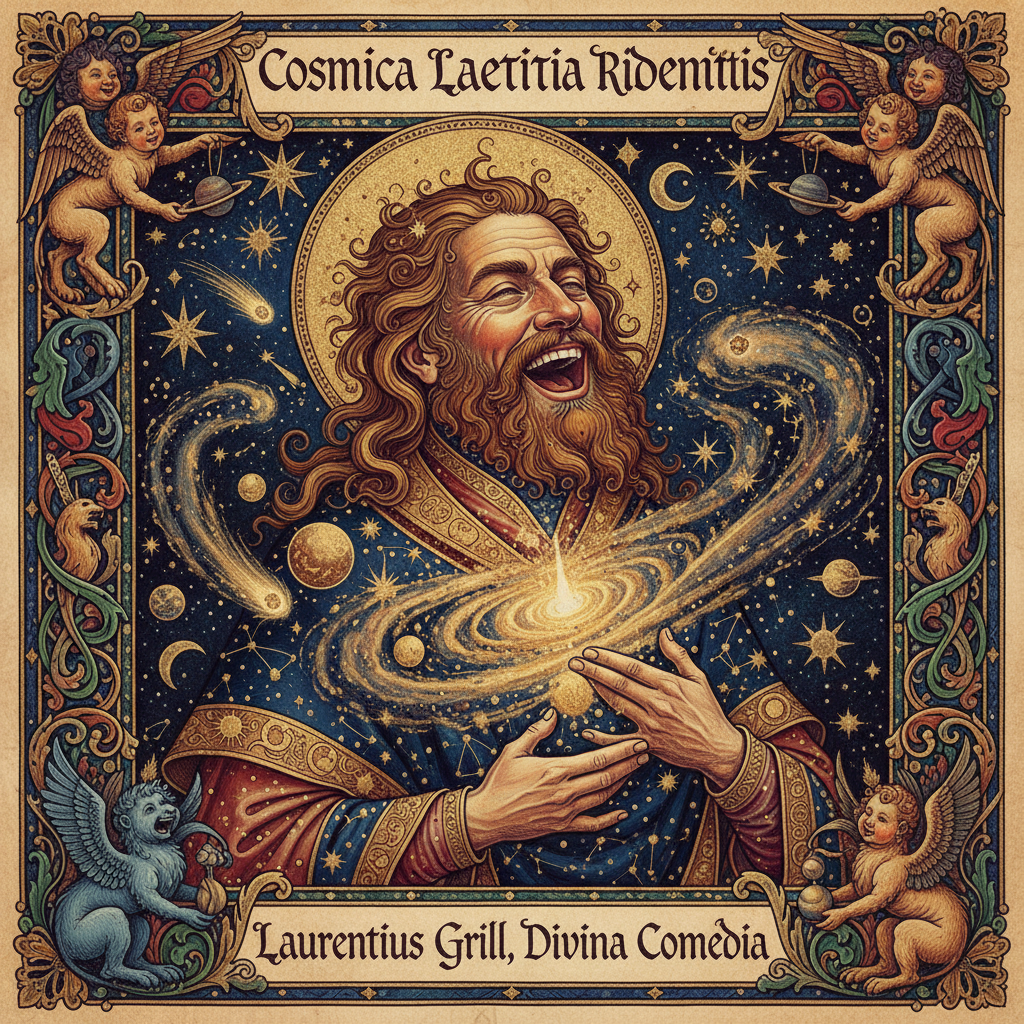
Lawrence was a deacon of the early church, executed in 258 CE under the Emperor Valerian. The method was roasting alive on a gridiron.
According to tradition, after some time had passed, Lawrence turned to his executioners and said:
“Turn me over. I’m done on this side.”
He was made patron saint of cooks and comedians. The Church, apparently, agreed that a man who made a grill joke while being grilled had achieved something worth commemorating.
The joke is a theological statement. Lawrence’s equanimity at the moment of death — the absolute refusal to give his killers the suffering they wanted — is the argument. The laugh deflates the executioner. He wanted a scene of agony. He got a cooking tip.
This is the same impulse as Baron Samedi’s top hat, as Tiddalik’s laugh releasing the flood, as Sarah’s denied giggle becoming her son’s eternal name. The joke refuses to let the worst moment win. Comedy, at the limit, is an act of defiance.
The Punchline: The patron saint of comedians earned the title by doing crowd work at his own execution.
The Universal Pattern
graph TD
    subgraph "Sacred Humor Taxonomy"
        A[Sacred Laughter] --> B[Laughter That Creates]
        A --> C[Laughter That Saves]
        A --> D[Laughter That Defeats]
        A --> E[Laughter at the Divine]
        A --> F[Laughter at Death]

        B --> B1[Loki's children born from chaos]
        B --> B2[Anansi wins the stories of the world]
        B --> B3[Tiddalik's laugh shapes the landscape]

        C --> C1[Ame-no-Uzume lures back the sun]
        C --> C2[Sekhmet stopped by beer]
        C --> C3[Tiddalik releases the water]

        D --> D1[Elijah mocks Baal's prophets]
        D --> D2[Anansi outmaneuvers Nyame]
        D --> D3[St. Lawrence defeats the executioner]

        E --> E1[Sarah laughs at the promise]
        E --> E2[Ganesh's elephant head]
        E --> E3[Krishna stealing butter]
        E --> E4[Coyote's magnificent failures]

        F --> F1[Baron Samedi's dirty jokes]
        F --> F2[St. Lawrence's grill punchline]
        F --> F3[The Irish Wake tradition]
    end
The Deeper Theology
Every tradition on this list figured out the same thing independently: gravity is not the same thing as sanctity.
A god who cannot absorb a joke is a god on thin ice. If the divine requires your performance of solemn awe at all times, it’s protecting something fragile. The laughing gods — the ones who let Sarah deny her giggle while naming her son after it, the ones who got drunk and had to be carried out of the festival, the ones who dressed death up in a top hat and rum — these gods are confident enough to be ridiculous.
The trickster’s comedy is specifically redemptive. Coyote fails so you can see what failure looks like without being destroyed by it. Loki’s pranks produce real things — a horse, a hammer, golden hair — even when they start as problems. Anansi tricks God so that small, vulnerable people have the stories they need to survive.
And then the jokes at the worst moments: Lawrence on the grill, Samedi at the deathbed, the Irish Wake turning grief into a party. These are not denials of suffering. They are the claim that suffering does not get the last word. The punchline after the worst thing is the assertion that you are still here, still speaking, still capable of surprising the executioner.
The laugh that saves the world comes from a place the darkness cannot reach.
Cross-References
- Loki — full entry in Norse Mythology
- Sun Wukong — full entry in Chinese Mythology
- Ganesh and Krishna — full entries in Hindu & Vedic Sacred Figures
- Amaterasu and Ame-no-Uzume — full entries in Shinto & Japanese Mythology
- Sekhmet and Ra — full entries in Egyptian Mythology
- Baron Samedi — full entry in Yoruba & Diaspora Traditions
- Anansi — full entry in West African Traditions
- Coyote — full entry in Native American Traditions
- Trickster Gods (episode overview) — Podcast Episode 3