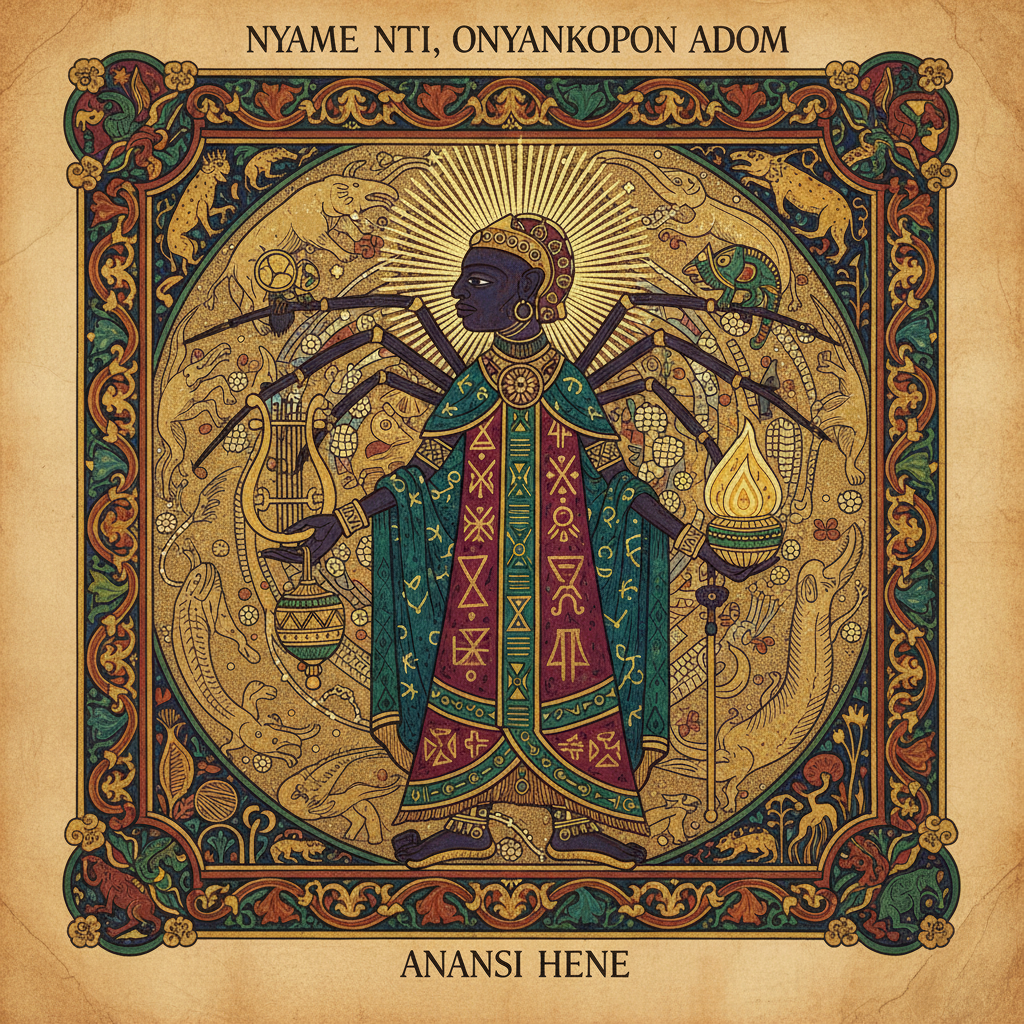
Rank Philosophical Teaching System; Sacred Symbols
Domain Wisdom, philosophy, moral instruction, cosmic principles
Period Pre-colonial Akan civilization; the word "Adinkra" itself is attributed to Gyaman King Adinkra c. 1818; the symbols are older than the name
Alignment Akan Sacred
Power MYTHIC 95
Combat Profile
Cosmic Codex
Reveals hidden moral truths and universal principles encoded within reality itself, guiding seekers toward wisdom.
Sacred Geometry
All allies gain insight and clarity; wisdom flows naturally from their presence, illuminating the path of righteousness.
None. Symbols endure; they cannot be destroyed
“Each symbol is a story. Each symbol is a prayer. Each symbol is a teacher.” — Akan saying
1 min read
Forgetting; misinterpretation. The symbols are vulnerable only to being lost in memory
Kwame Asante, *Afrologia: An Introduction to African Epistemology* (2002); traditional Akan cloth-making and carving documentation