Combat Profile
Sunset Procession
The Cihuateteo carry the sun westward each afternoon; on their feast-days they descend from the sky to the world's crossroads and exact tribute from the living.
Warrior-Mothers
Women who died in childbirth are equal to warriors who fell in battle; the Cihuateteo retain their honor and their menace, and their hands can heal or wither at the same touch.
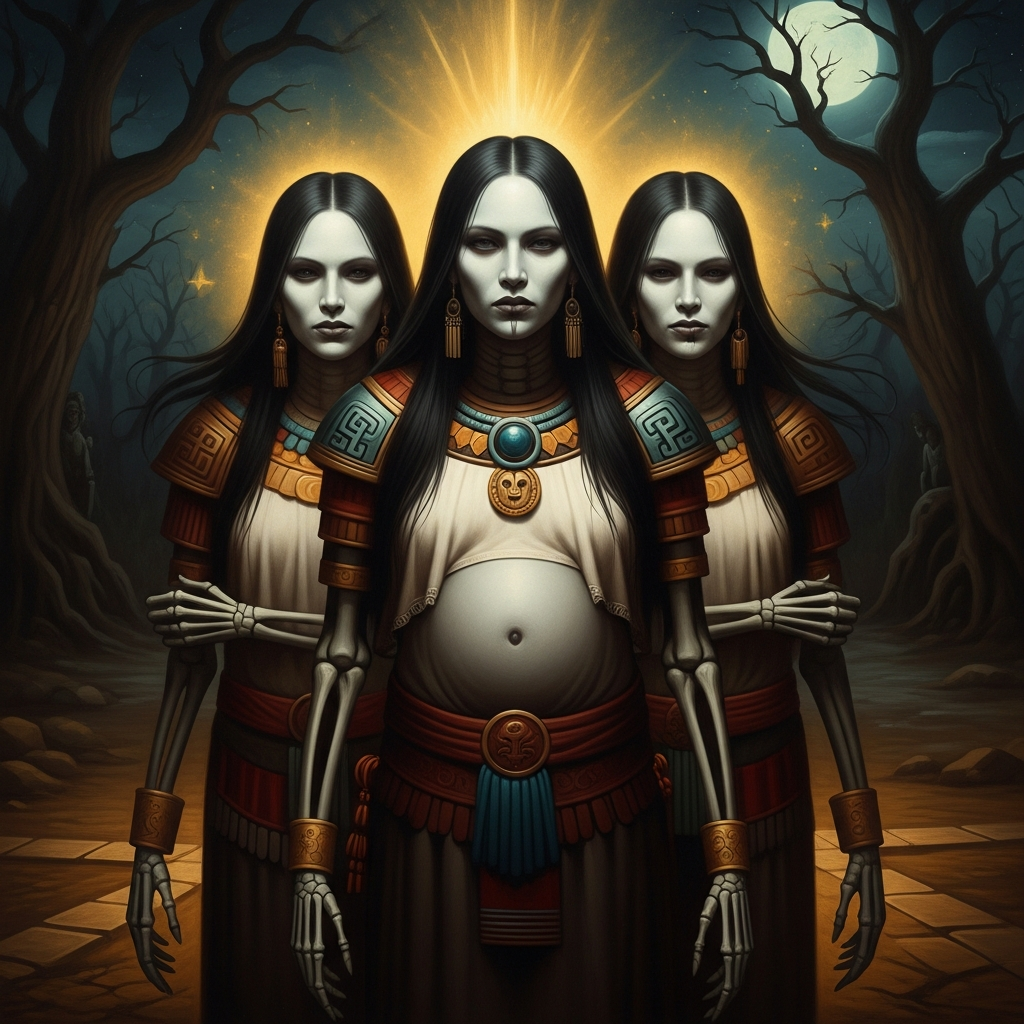
The Cihuateteo (“Divine Women”) are the spirits of women who died in childbirth — and in Mexica thought, this death was the equal of the warrior’s death in battle. To die bringing a new soul into the world was to die in cosmic combat, and the woman who fell was honored as a warrior fallen. She did not go to Mictlan. She went to the western sky, the realm of Cihuatlampa, where the Cihuateteo gathered each afternoon to escort the sun on its westward journey toward the underworld. Warriors took the sun from dawn to noon; the Cihuateteo carried him from noon to sunset.
But they were also dangerous. The Cihuateteo descended to earth at certain dates of the calendar — particularly the Five Days of the West, periods sacred to them — and during these descents they could afflict children with disease, paralyze passersby, cause stillbirths, and lure men to madness or suicide. Their faces were skull-like, their hair wild, their hands clawed. Crossroads at sunset belonged to them. To meet a Cihuateotl on a deserted road was to die or be unmade. The cult that honored them was both reverent and protective: offerings of bread and feathers were left at crossroads to placate them; pregnant women were watched through the dangerous days. They were the ambivalent dead — hallowed warriors, restless ghosts, in one body.
Biblical Parallels: The Cihuateteo have no exact biblical parallel — Christianity does not have ambivalent female dead, and the Hebrew Bible regards the dead as undifferentiated shades in Sheol. The biblical figure of Lilith — the night-demon who threatens children — is structurally the closest, and like the Cihuateteo, she is a female figure whose victims are mothers and infants. The Catholic veneration of mothers who died in childbirth (the partera tradition in Mexico) and the folk figure of La Llorona — the weeping woman who drowned her children and now haunts riversides searching for them — preserves much of the Cihuateteo’s role in Mexican popular religion.
Cross-Tradition: The Cihuateteo parallel the Greek Erinyes (Furies) — female spirits who avenge wrongs and haunt crossroads. They parallel the Slavic Rusalki — drowned women whose ghosts beckon and harm. They parallel the Celtic Banshee — the wailing woman whose appearance signals death. The Hindu Churel — the ghost of a woman who died in childbirth — is the most exact Asian parallel.
2 min read