Combat Profile
Breath of the Cosmos
Ehecatl exhales and the rain clouds gather; he inhales and the tributary winds reverse; his breath is the membrane between divine intention and physical weather.
The Round Temple
Ehecatl cannot be cornered; his shrines have no edges, his presence cannot be locked into ritual, and his blessing flows wherever air can reach.
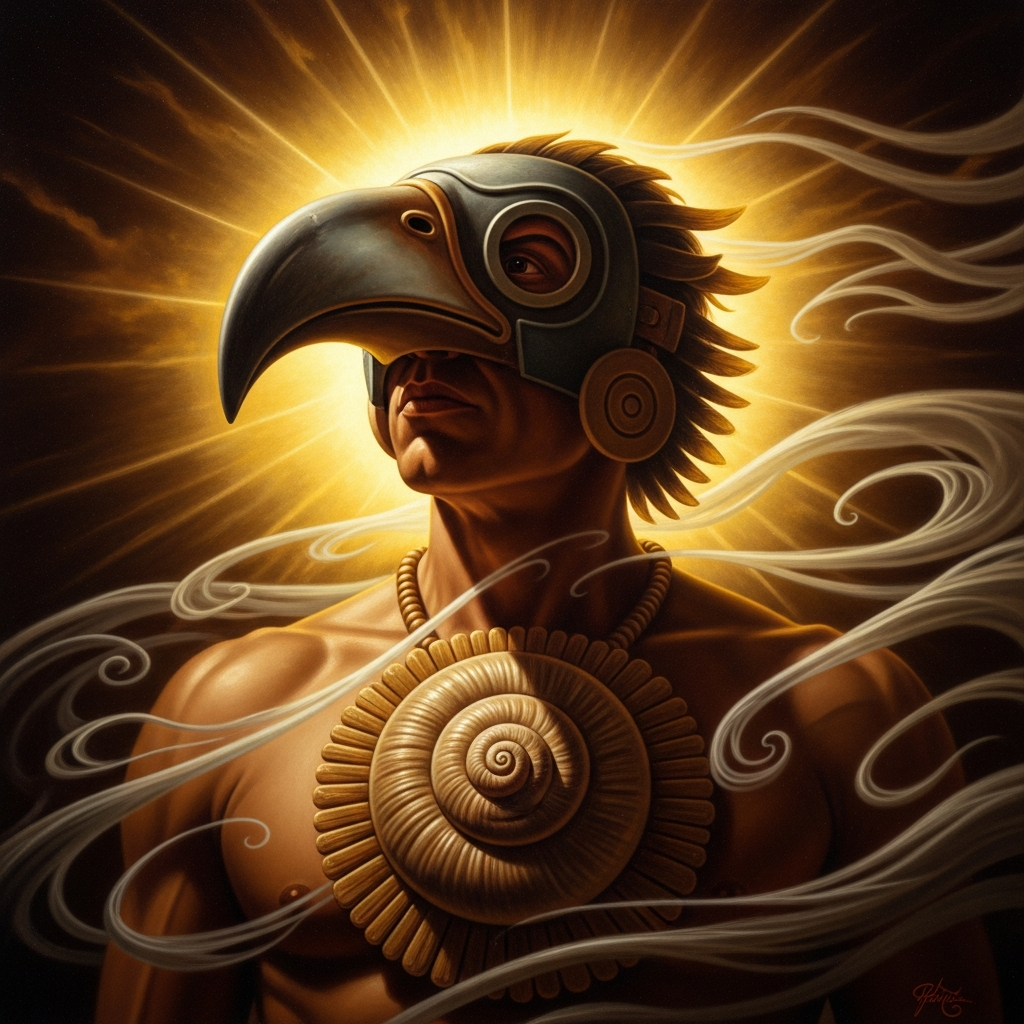
Ehecatl (“Wind”) is an aspect of Quetzalcoatl — sometimes treated as Quetzalcoatl’s wind-form, sometimes as a distinct deity, Ehecatl-Quetzalcoatl. He is the wind that sweeps the road for the rains, the breath that animates the world, the divine respiration. Wherever the air moves, Ehecatl moves. His temples were always round — alone among Mexica architecture — because the wind cannot be cornered. The round temple of Ehecatl on the Templo Mayor’s western edge has been excavated in modern Mexico City; another stands at El Tajín in Veracruz. To worship a wind-god in a square temple, the Mexica reasoned, was to insult him.
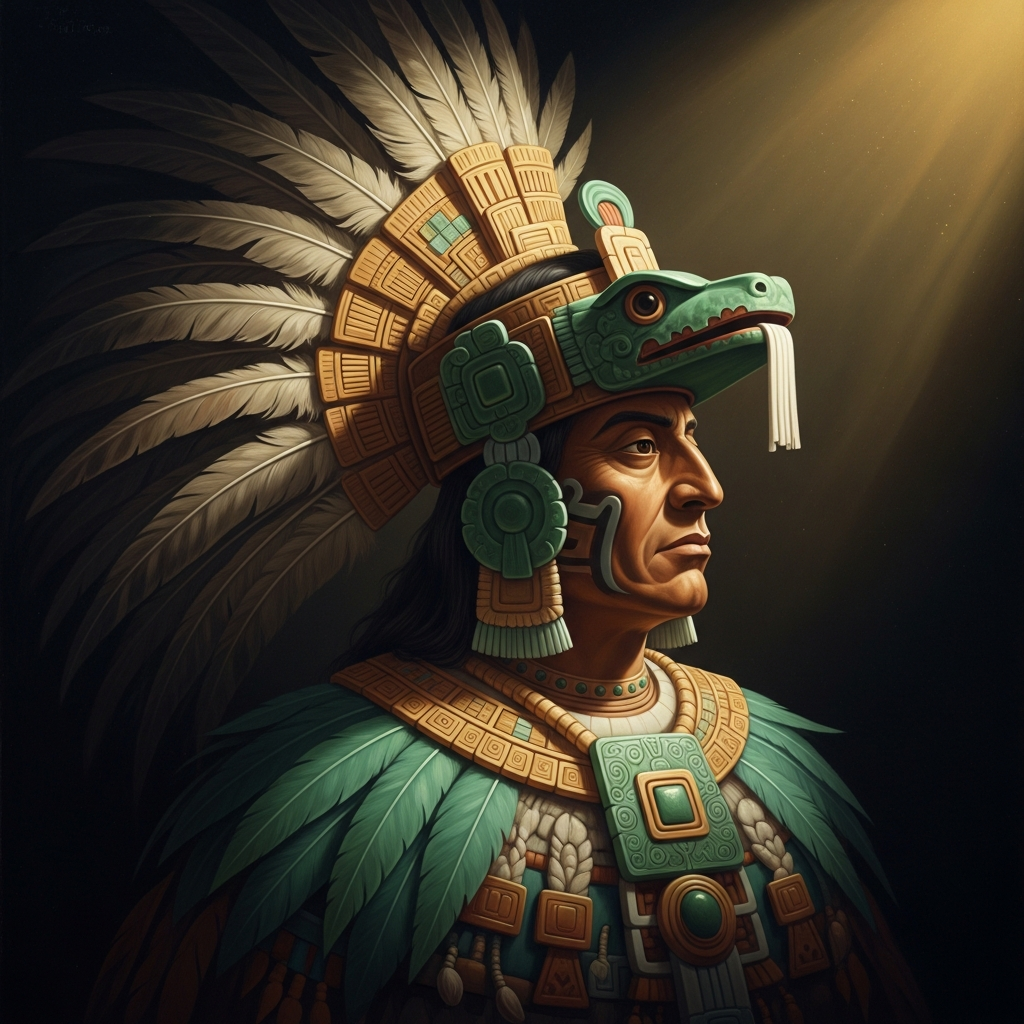
Ehecatl wears a buccal mask — a duck-billed beak — through which he blows. He is the wind that announces Tlaloc’s rains; he is the wind that fills the macaws’ wings; he is the wind in the priest’s lungs as he chants. In the Quetzalcoatl mythology, Ehecatl plays the cosmic role of animator: the breath that turns inert matter into living being. He is also identified with Venus rising before dawn — a planet whose appearance, like the wind, is felt before it is seen. To the Mexica, every breath of air was Ehecatl’s gift, withdrawn at his pleasure.
Biblical Parallels: Ehecatl parallels the ruach of Genesis 1:2 — the breath/spirit of God hovering over the waters. He parallels the pneuma of John 3:8 — “the wind blows where it wills, and you hear the sound of it, but you do not know where it comes from or where it goes; so it is with everyone who is born of the Spirit.” The Pentecost wind of Acts 2 (“a sound came from heaven like the rush of a mighty wind”) is structurally parallel to Ehecatl’s empowering presence. The breath of life into Adam’s nostrils (Genesis 2:7) parallels Ehecatl’s role in animating the cosmos.
Cross-Tradition: Ehecatl parallels Vedic Vayu (wind), Greek Aeolus (keeper of the winds), Egyptian Shu (god of air, who separates earth from sky), Yoruba Oya (goddess of winds and storms), and the Polynesian Tāwhirimātea (storm-wind god). The wind-god as cosmic breath — and as identified with the breath of the worshipper — is one of the most universal of religious archetypes.
2 min read