Combat Profile
Abdicatio
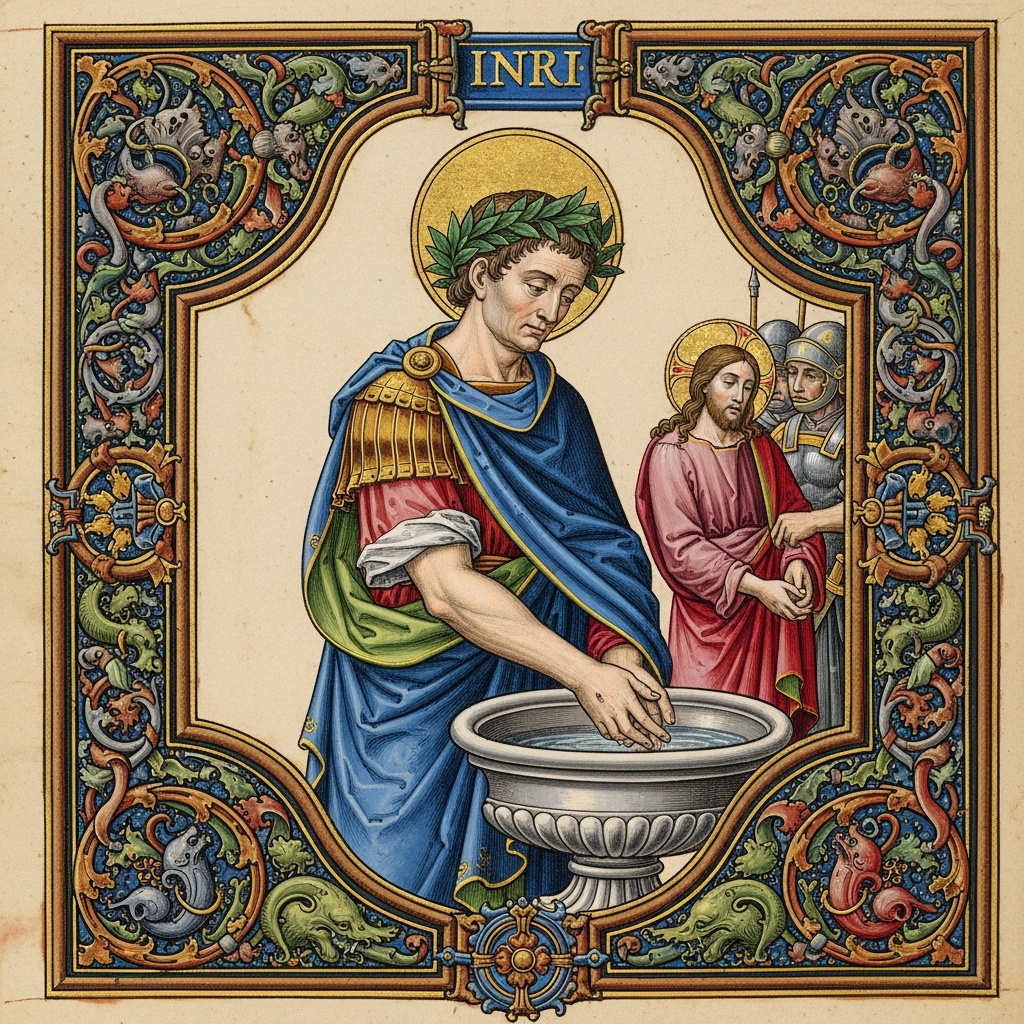
Pilate transfers responsibility for a critical decision to another entity, forcing them to bear the consequences while he remains unharmed.
Manus Lavacrum
Pilate's political authority grants him immunity from direct moral judgment; actions taken by others under his command cannot be attributed to him.
Political fear; couldn't withstand the crowd
Pilate asked Jesus three questions that echo through history: “Are you the king of the Jews?” (political), “What is truth?” (philosophical), and implicitly, “What should I do with this man?” (moral). He found Jesus innocent, tried to release him, offered the crowd a choice (Barabbas), sent him to Herod, and had him scourged — all delay tactics to avoid making a decision. When the crowd threatened to report him to Caesar, he caved. His hand-washing is the defining image of moral cowardice: taking responsibility for nothing while authorizing everything. Historical sources (Josephus, Philo) describe him as brutal and stubborn — his weakness with Jesus was exceptional, suggesting he was genuinely unsettled. He appears in the Apostles’ Creed (“suffered under Pontius Pilate”) — the only non-divine, non-biblical figure named in any Christian creed. Ethiopian tradition venerates him as a saint who later converted.
1 min read
Matthew 27; Mark 15; Luke 23; John 18-19