Combat Profile
Plague Arrow
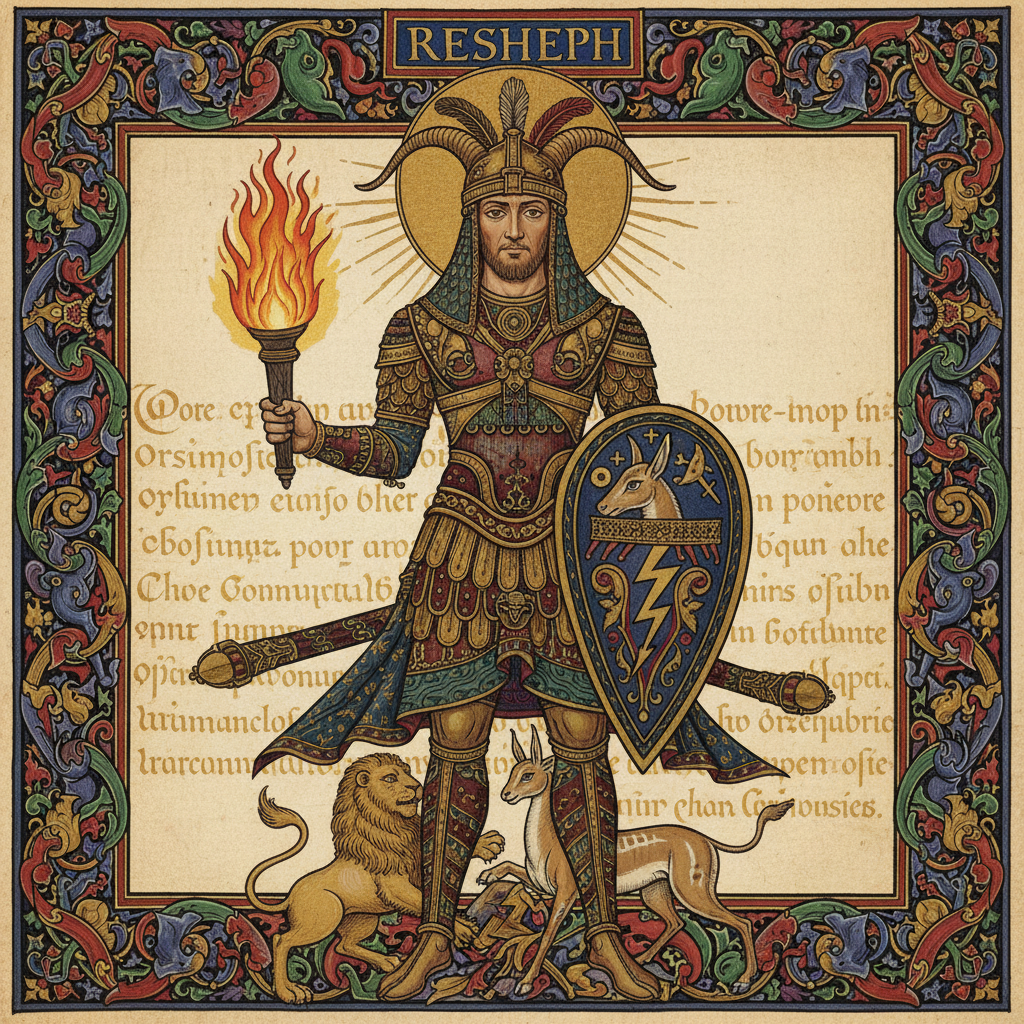
Resheph fires a divine bolt that spreads pestilence in a sweeping arc, damaging all enemies and applying a lingering disease that weakens their defenses.
Liminal Passage
Resheph exists between life and death, granting him immunity to crowd control and allowing him to freely pass between the mortal realm and the underworld's threshold.
A mid-tier god with no major cycle of his own; overshadowed by Baal and Mot
“Before him went pestilence [deber], and plague [resheph] followed at his heels.” — Habakkuk 3:5
Lore: Resheph is the god of plague, and his name is one of the most remarkable survivals of Canaanite theology inside the biblical text. Habakkuk 3:5 places resheph in a passage describing YHWH’s theophany: “Before him went pestilence, and resheph followed at his heels.” (Habakkuk 3:5) Most English translations render resheph as “plague” or “burning fever” — not wrong, because by the time of the biblical authors resheph had become a common Hebrew noun for “pestilence” or “flame.” But it was originally a god’s name. Deuteronomy 32:24 uses the plural reshaphim (“burning fevers/plagues”); Psalm 78:48 has God sending reshaphim against Egypt. The divine name was demoted to a common noun. The god was absorbed into the vocabulary.
In his original Canaanite context, Resheph was a warrior-plague deity carrying shield and weapon, often with a gazelle horn on his helmet. He was widely worshipped across the Levant and into Egypt, syncretized with local war gods. He guards the boundary between life and death — a liminal figure who sends disease from the underworld into the land of the living (KTU 1.14, 1.82).
Parallel: Resheph maps onto the “plague-archer” archetype: Apollo (Greek — who sends plague with his arrows in the Iliad, Book 1), Nergal (Mesopotamian plague and war god), Rudra (Vedic — the howler who sends disease). The connection to Apollo is particularly strong: both are plague gods who also have solar/flame associations, both send pestilence as divine punishment, and both are depicted as archers.
1 min read
El's authority; healing deities
KTU 1.14, 1.82; Habakkuk 3:5; Deuteronomy 32:24; Psalm 78:48; Maciej Münnich, *The God Resheph in the Ancient Near East*