Combat Profile
Devouring Maw
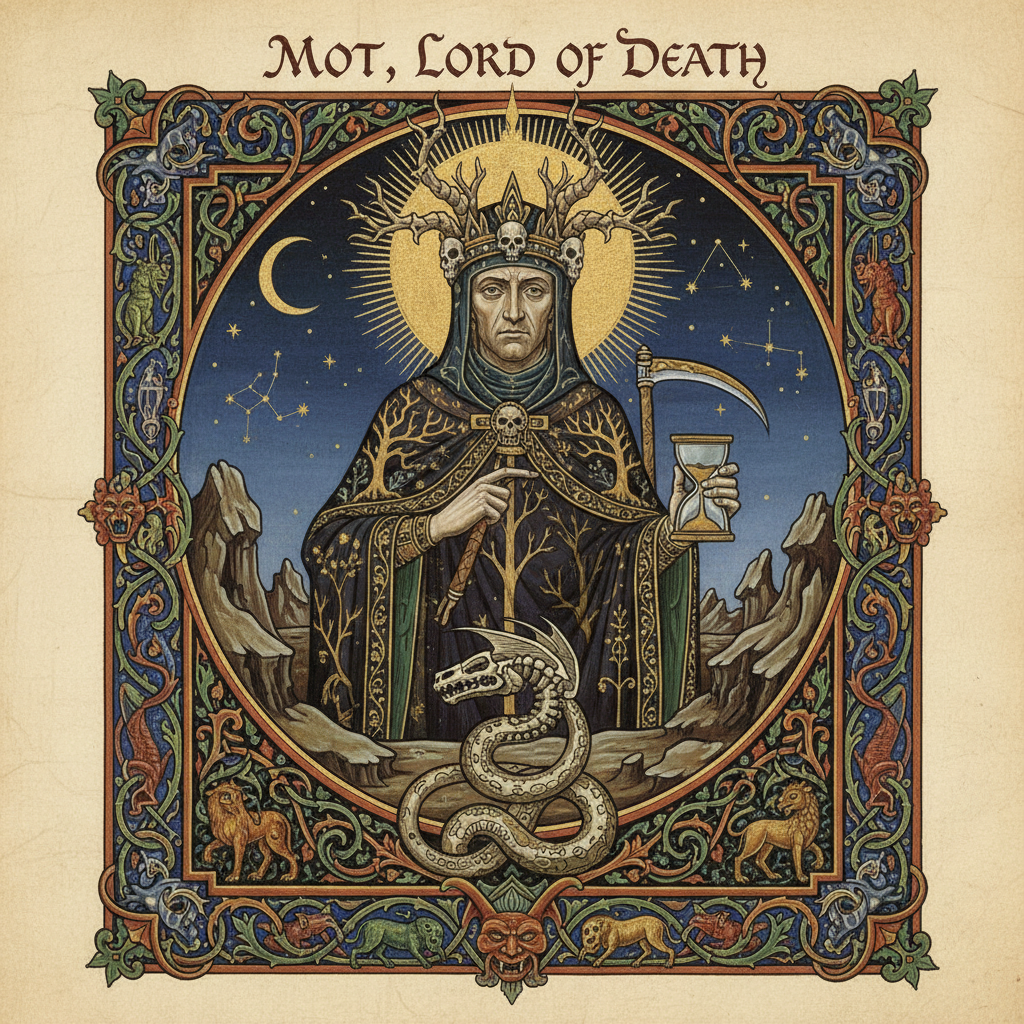
Mot consumes all vitality in a region, rendering it barren and lifeless until the cycle of seasons is restored by divine intervention.
Lord of the Arid Realm
All moisture withers in Mot's presence; living things weaken and fertility fails in lands under his dominion.
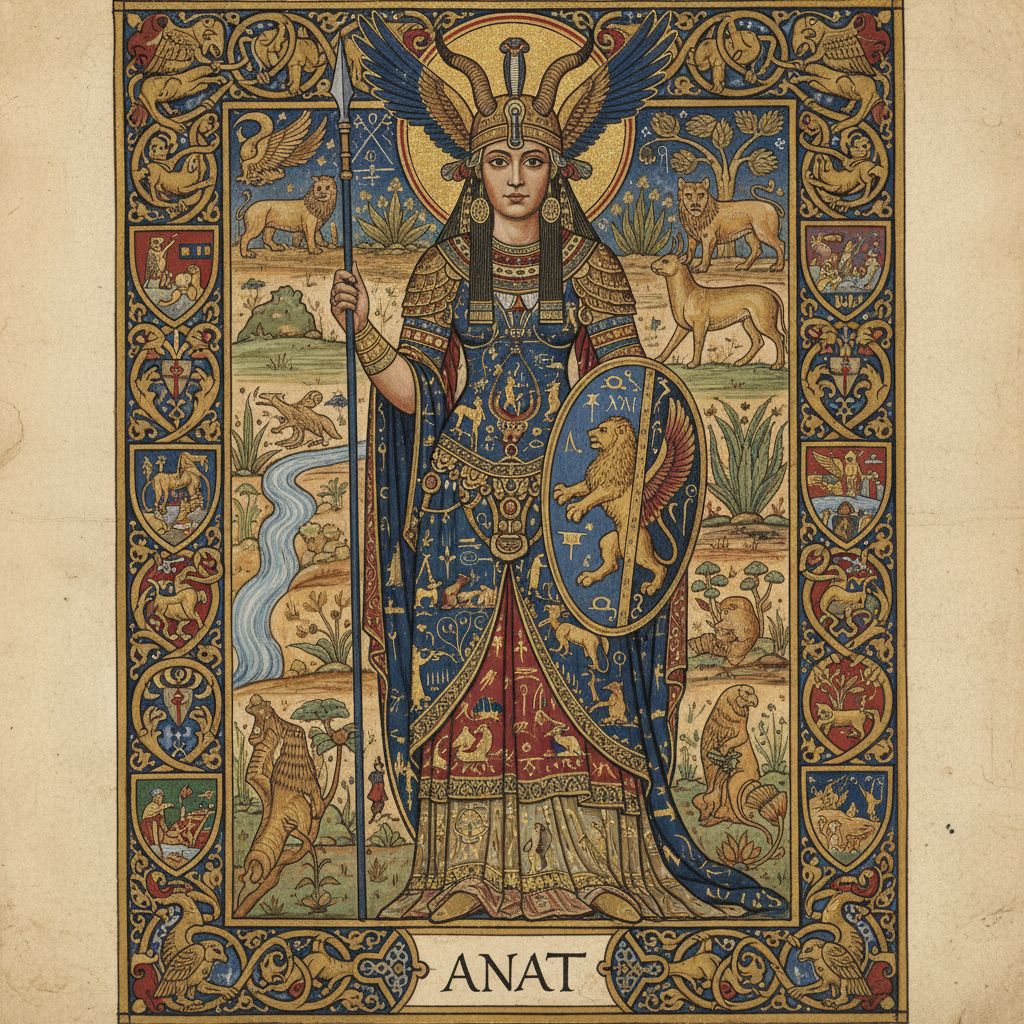
Can be temporarily defeated by Anat; bound to the seasonal cycle
“Mot’s appetite is the appetite of lions in the waste, or the longing of the dolphin in the sea. One lip to earth, one lip to heaven — he will stretch his tongue to the stars.”
Lore: Mot is Death itself, given a name and a gaping mouth. His jaws stretch from earth to heaven. He swallows everything. When Baal descends, Mot consumes him — and the world dies. The rains stop. The crops wither. All fertility ceases. Not metaphor: Mot IS the dry season, the famine, the grave. He is the Canaanite answer to the question every agricultural society asks: “Why does the world die every year?” (Mark S. Smith, The Early History of God)
The Hebrew word for death — mot (maveth) — is this god’s name. When Isaiah 25:8 says “He will swallow up death forever,” the Hebrew reads “He will swallow up ha-mavet forever.” (Isaiah 25:8) The irony is precise: Death, who swallowed Baal, will himself be swallowed. Paul quotes this passage in 1 Corinthians 15:54 — “Death is swallowed up in victory” (1 Corinthians 15:54) — perhaps without realizing he is citing a text that echoes Anat’s defeat of Mot in the Baal Cycle (KTU 1.5-1.6). The dying-and-rising god pattern (Baal dies, Mot swallows him, Anat defeats Mot, Baal rises) is the Canaanite original that predates and arguably informs the Christian resurrection narrative.
Parallel: Mot maps onto the “Death personified” archetype across traditions: Hades (Greek), Hel (Norse), Yama (Hindu/Buddhist), Anubis/Osiris (Egyptian underworld complex), Ereshkigal (Mesopotamian). But Mot is more purely consumptive than most — he is not a judge of the dead or a ruler of a kingdom. He is simply the Mouth That Eats.
1 min read
Anat (grinds him like grain); Baal (wrestles him to a draw)
KTU 1.5-1.6; Theodore Lewis, *Cults of the Dead in Ancient Israel and Ugarit*