Combat Profile
Bloodlust Ascendant
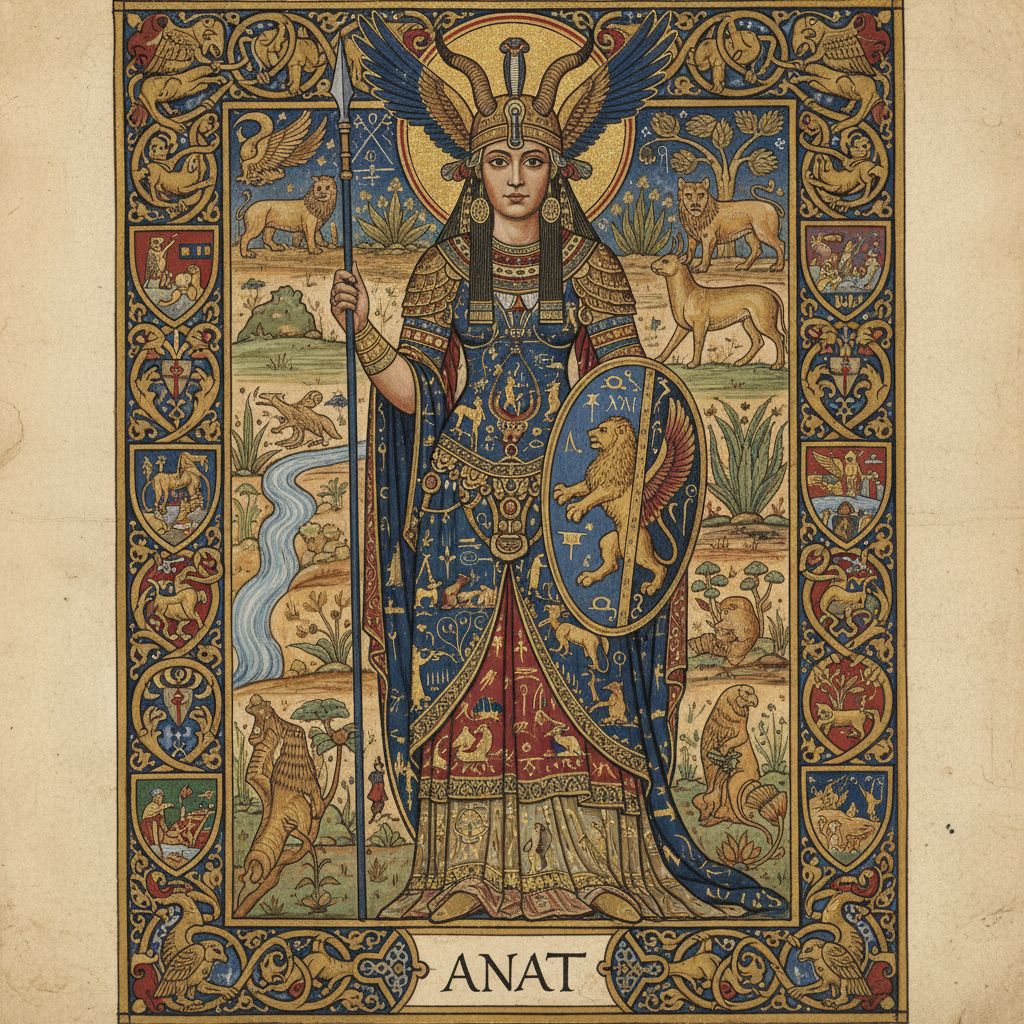
Anat enters a frenzy, doubling her attack power and gaining lifesteal on all strikes until the battle ends or she is defeated.
Warrior's Vindication
Anat gains increased damage for each enemy that has wounded her allies, stacking indefinitely throughout combat.
Uncontrollable bloodlust; threatens even El to get what she wants
“Heads rolled beneath her like balls; hands flew over her like locusts. She waded knee-deep in the blood of soldiers, up to her thighs in their gore.”
Lore: Anat is the most terrifyingly violent deity in the Canaanite pantheon — and that is not hyperbole. In the Baal Cycle (KTU 1.3) she holds a feast and massacres every guest. The text describes her wading knee-deep in blood, heads rolling beneath her like balls, hands flying like locusts. She ties the severed heads to her belt, the hands to her waist. Then she washes off the blood, applies makeup, and cheerfully visits her brother Baal. Even El, the supreme god, fears her. When she comes to petition him, he says: “I know you, daughter, that you are like a man; among the goddesses there is none who resists you.”
Her most important act is saving Baal from death. When Mot swallows Baal, Anat hunts him down (KTU 1.6): “She seized Mot, son of El. With a blade she split him, with a sieve she winnowed him, with fire she burned him, with millstones she ground him, in a field she sowed him.” Agricultural processing described as divine violence — threshing, winnowing, grinding, sowing. The death of Death is the harvest. The resurrection of the grain god is literal.
Parallel: Anat maps onto the “war goddess” archetype with extreme intensity: Kali (Hindu — the blood-drenched destroyer), Morrigan (Celtic — the battle fury), Durga (Hindu — the slayer of the buffalo demon), Sekhmet (Egyptian — the lioness who nearly destroyed humanity). But Anat is rawer than most — no redemptive framework softens her violence. She kills because she can and because she wants to.
1 min read
None in the texts -- she is essentially unopposable in combat
KTU 1.3, 1.6; Neal Walls, *The Goddess Anat in Ugaritic Myth*