Contents
Baal Hadad, storm king of the Canaanite gods, builds his palace on the mountain and defeats Yam, the sea. Then Mot, god of death, summons him. You cannot refuse Death's invitation. Baal descends. The rains stop. The world withers. And Anat, his sister, goes looking for the god who was supposed to be in charge of the harvest.
- When
- Mythic time · Ugaritic tablets composed c. 1400-1200 BCE
- Where
- Mount Zaphon (Baal's palace) · Sheol (Mot's realm beneath the earth) · Ugarit, coastal Syria
The invitation arrived from below.
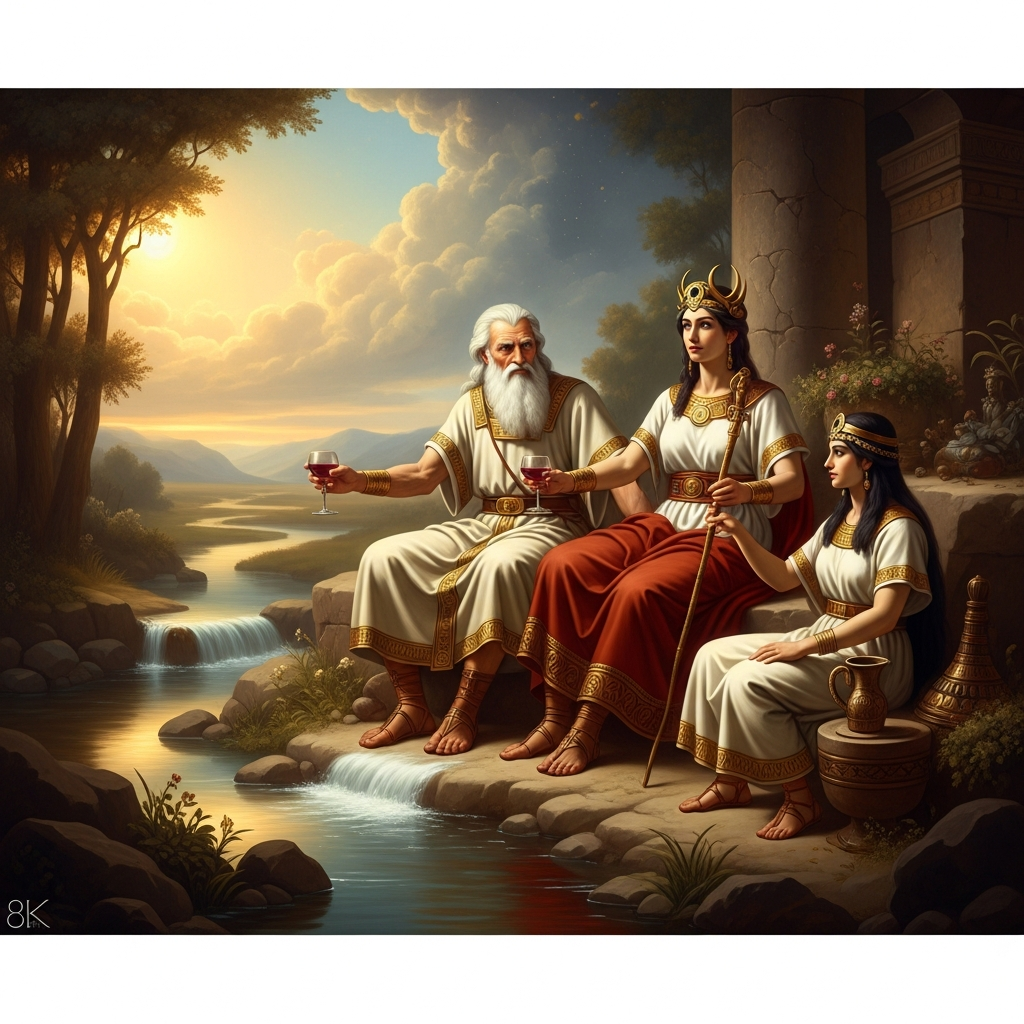
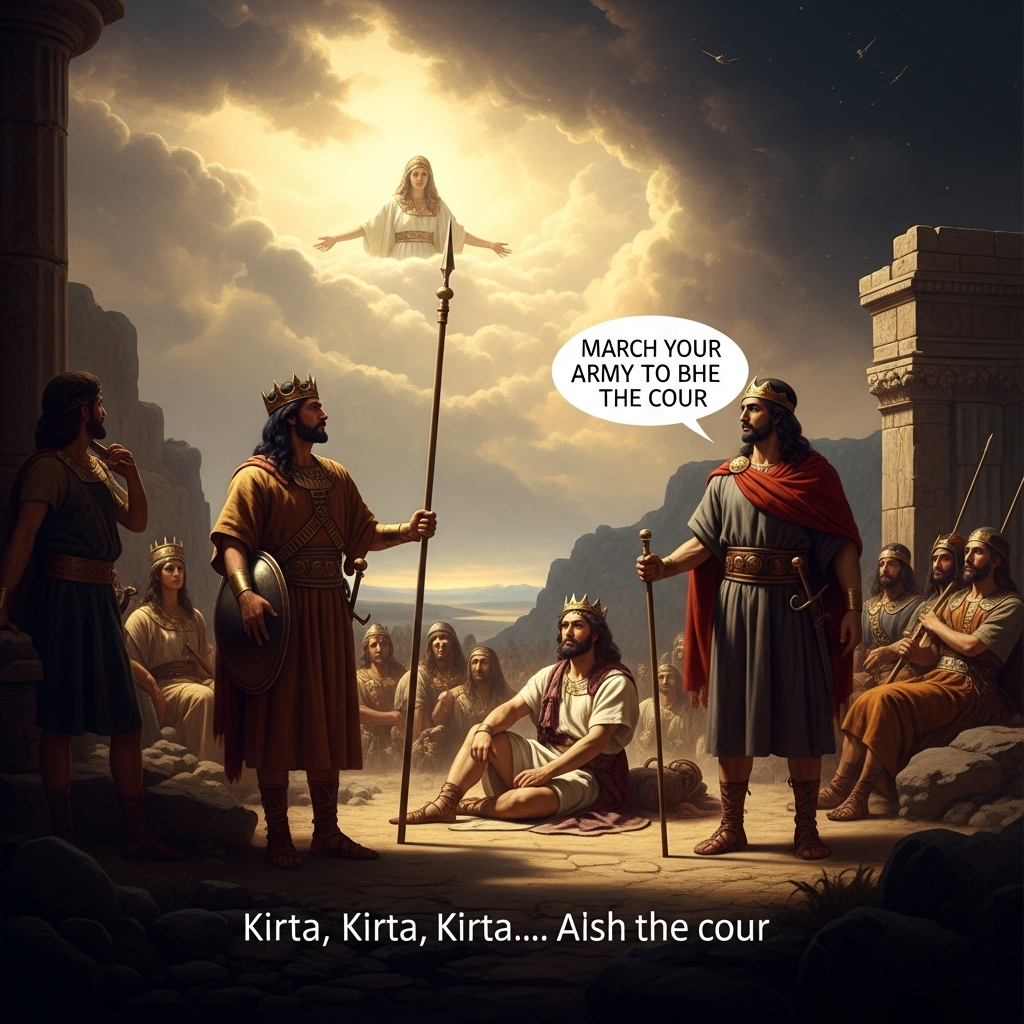
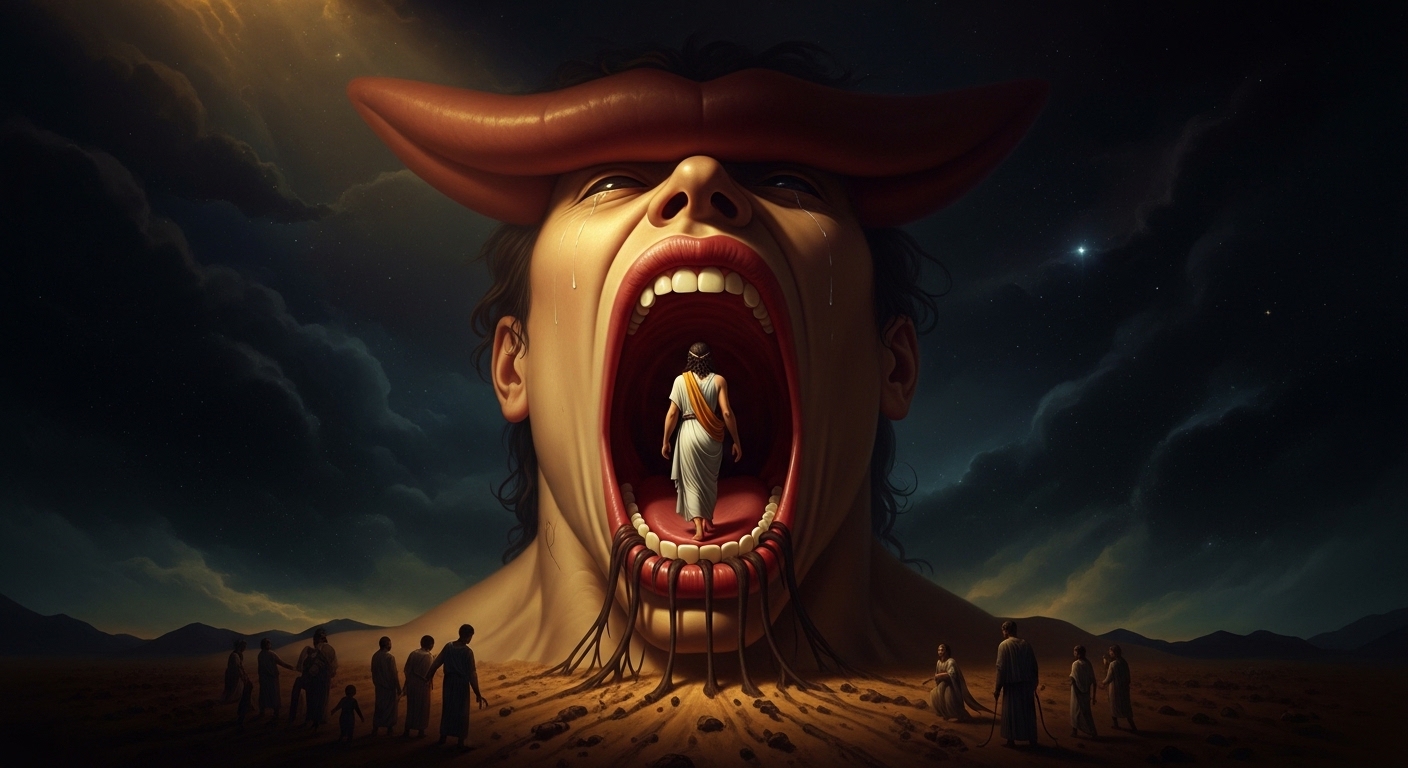
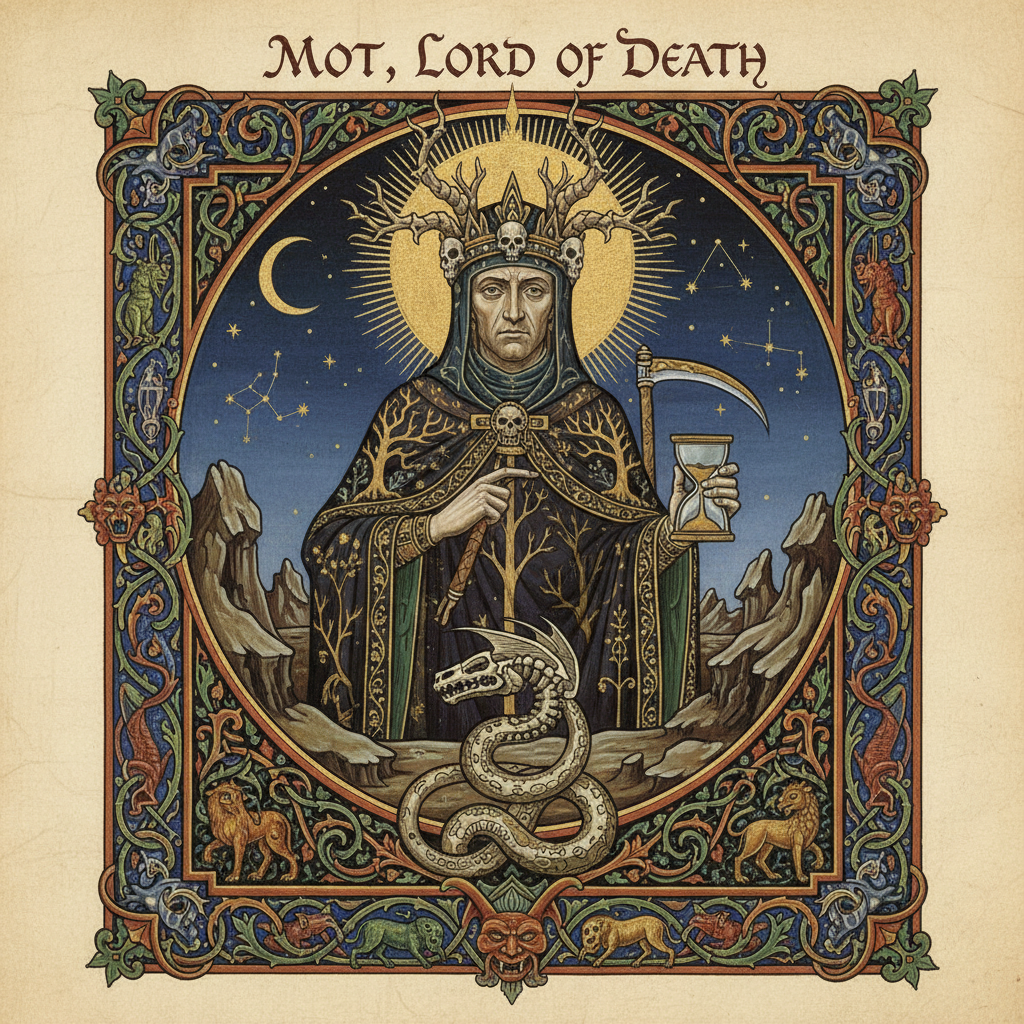
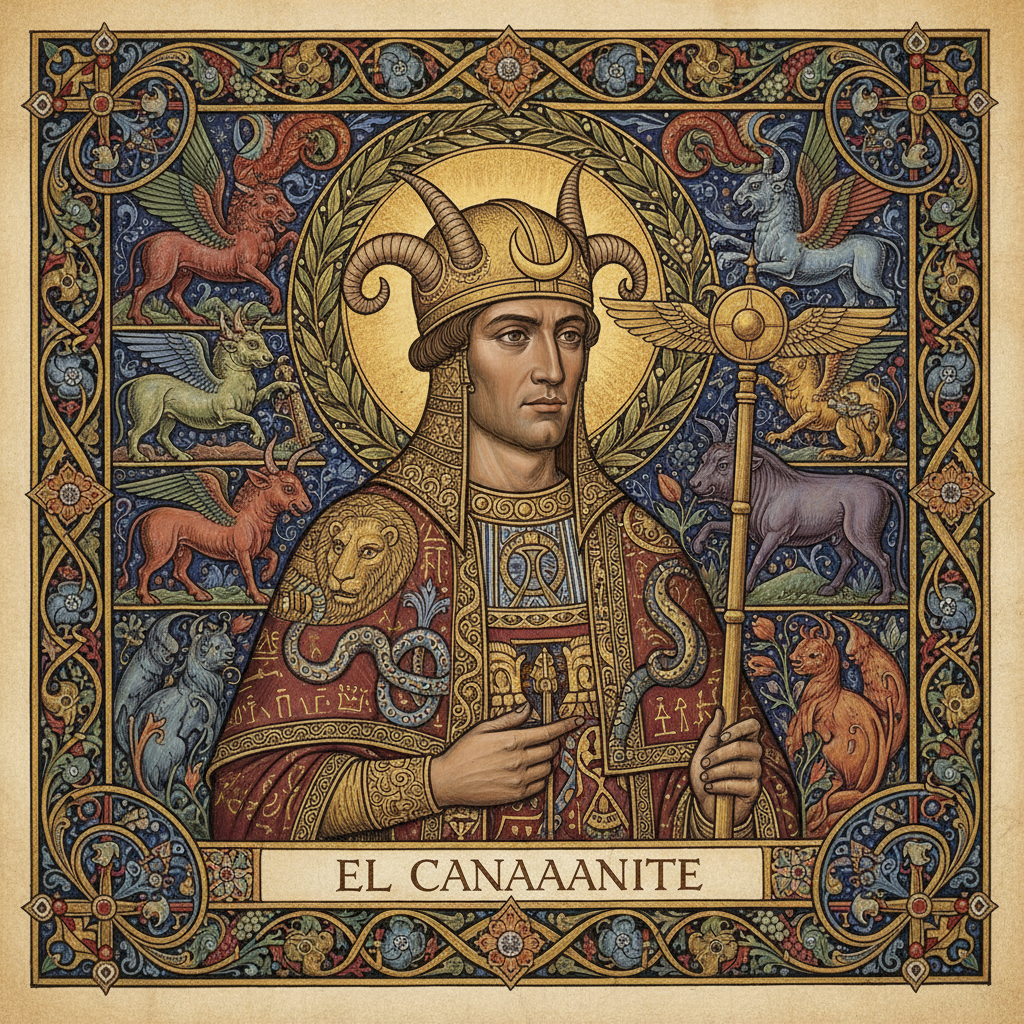
Mot’s messengers are described in the tablets as two figures who move through the mountains — Gapn and Ugar, “Vine” and “Field” — and their arrival at Baal’s palace on Mount Zaphon was the kind of visit you cannot refuse. Mot is Death. He is El’s son, appointed lord of the underworld, the one who swallows all who die with his two-lipped mouth whose upper lip scrapes the sky and lower lip drags along the earth. He had invited Baal to a feast in his realm below the ground.
The invitation was not a request.
Baal was at the height of his power when the invitation came.
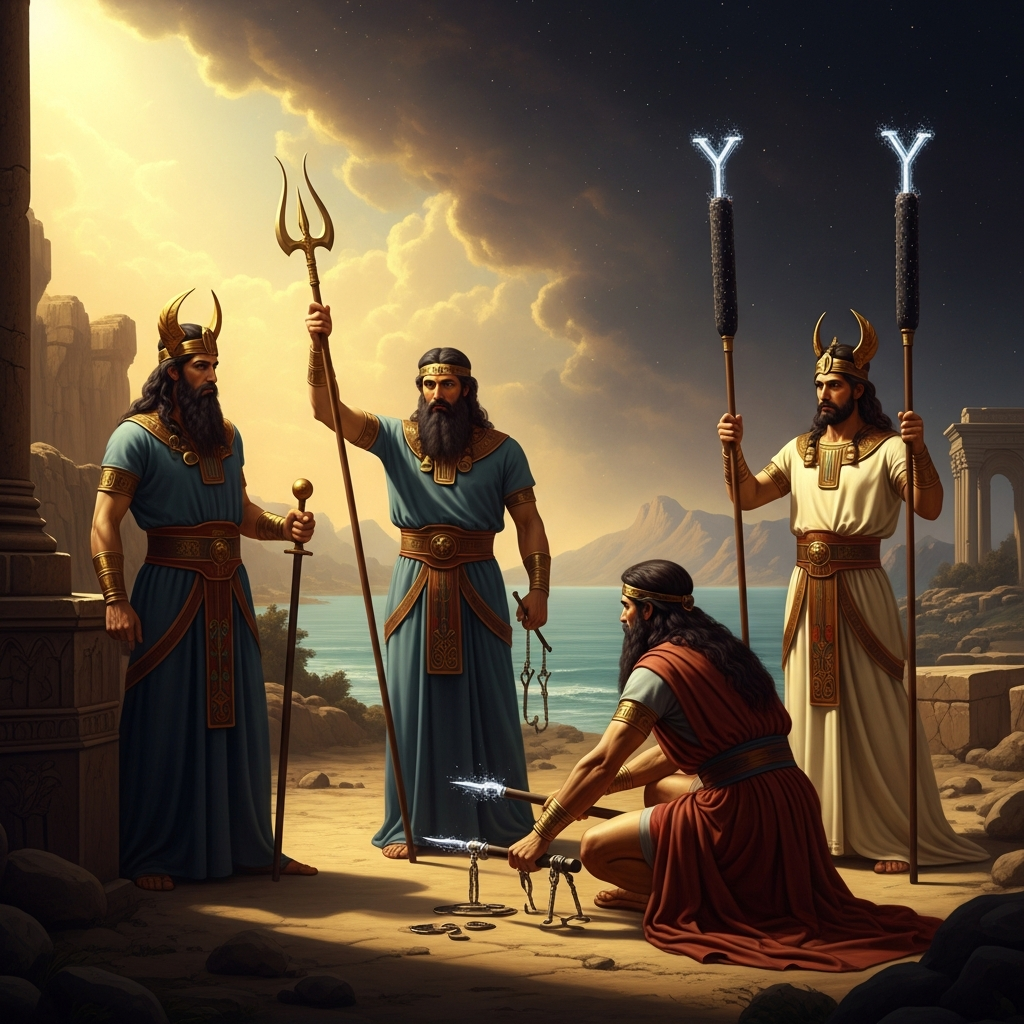
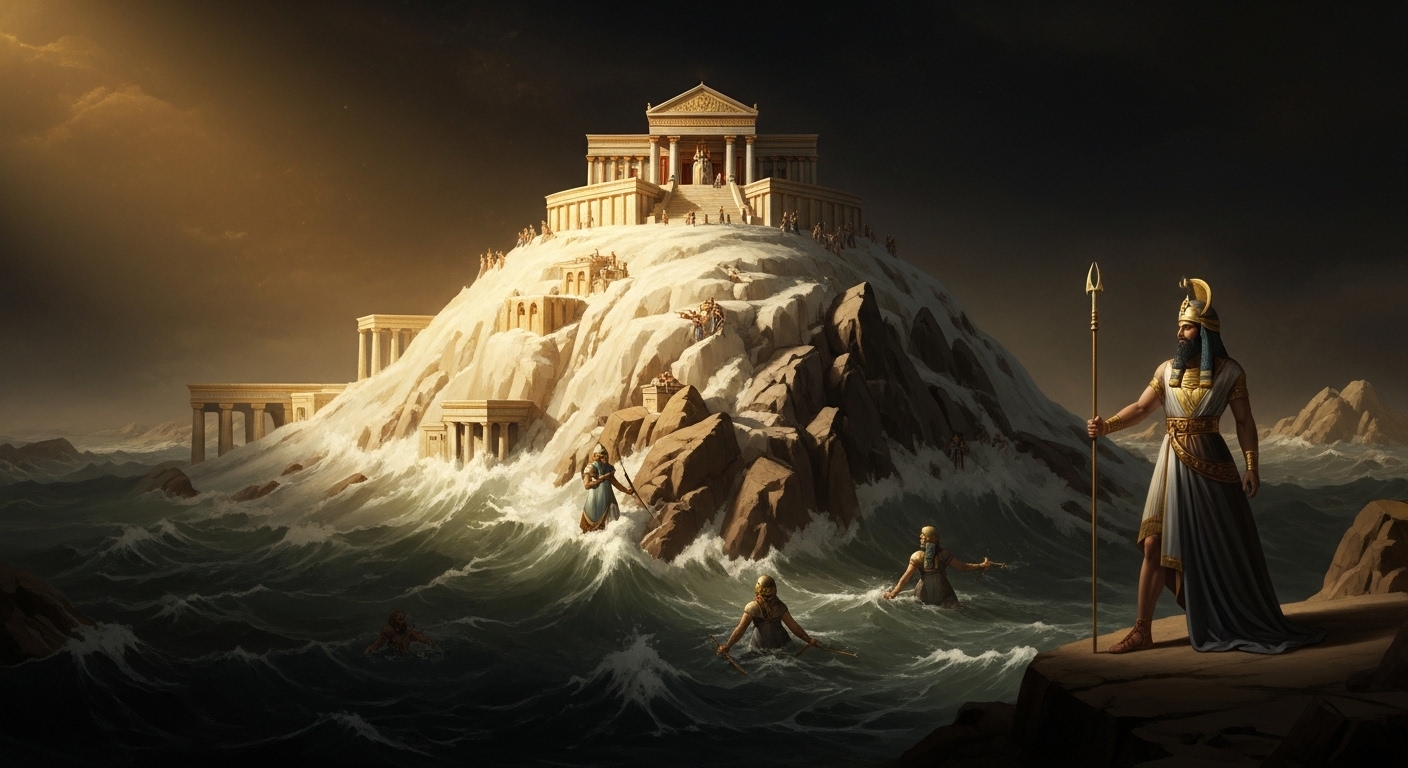
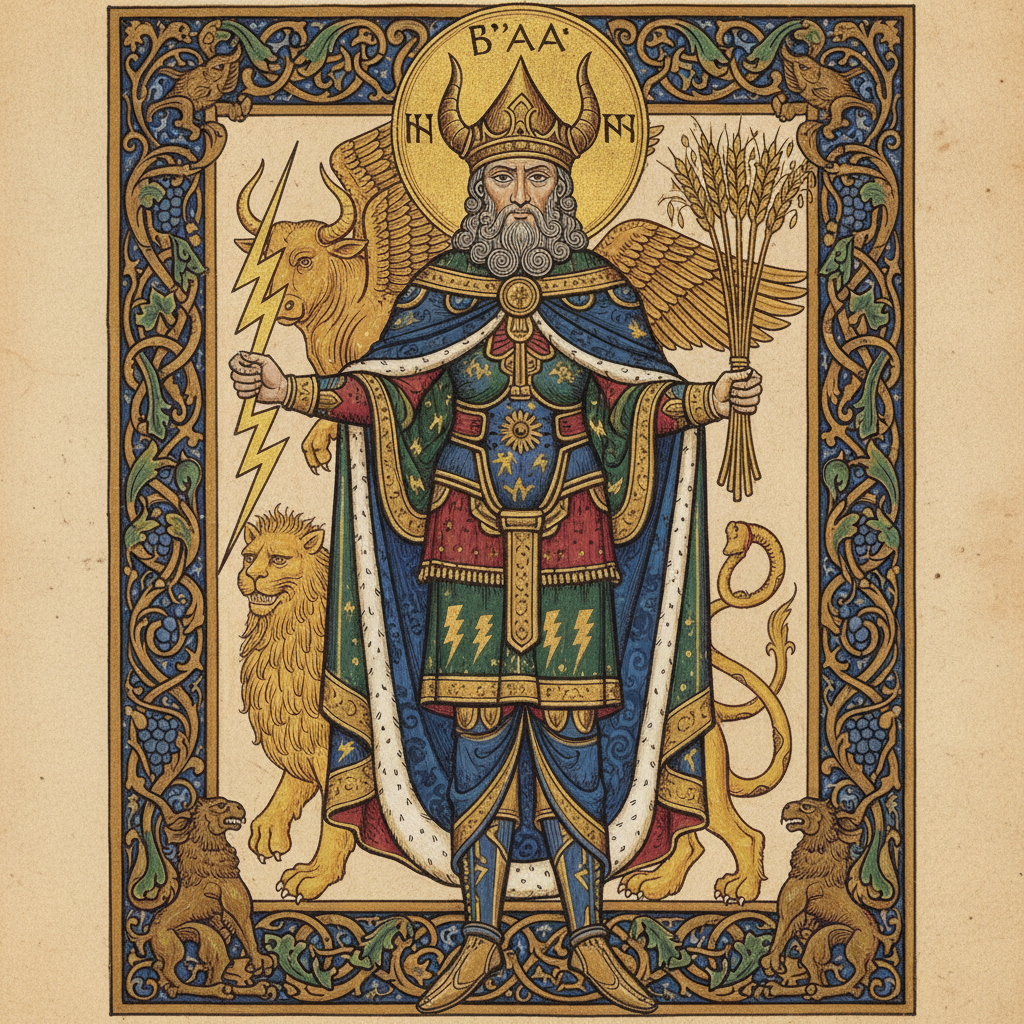
He had defeated Yam — Yam the sea, Yam the river-judge, the primordial chaotic waters that threatened to overwhelm the dry land El had assigned to the ordered cosmos. The craftsman god Kothar-wa-Khasis had made Baal two clubs — named “Driver” and “Chaser” — and with them Baal had beaten Yam into submission and claimed the kingship of the divine assembly. He had built his palace on Zaphon with cedar logs and bricks of silver and gold, with windows that he had at first refused and then accepted, so that the voice of thunder could pour out of them.
He had everything. He was rain. He was the storm that broke the drought. He was the thunder announcing the harvest and the lightning that split the sky above the harvest fields. The peoples of coastal Syria worshipped him because without him, nothing grew.
And then Mot wrote.
Come down, the message said, in effect. You have insulted me by excluding me from your palace feast. Come down and taste what I have served you.
In the theological world of the Baal Cycle, you cannot exclude death from the feast of life. Baal had hosted everyone — had invited even El’s oldest son, the ancient sea-monster Lotan, to his victory celebration — but he had not invited Mot, because you do not invite Death to your celebration if you can avoid it. You cannot avoid it.
Baal prepared.
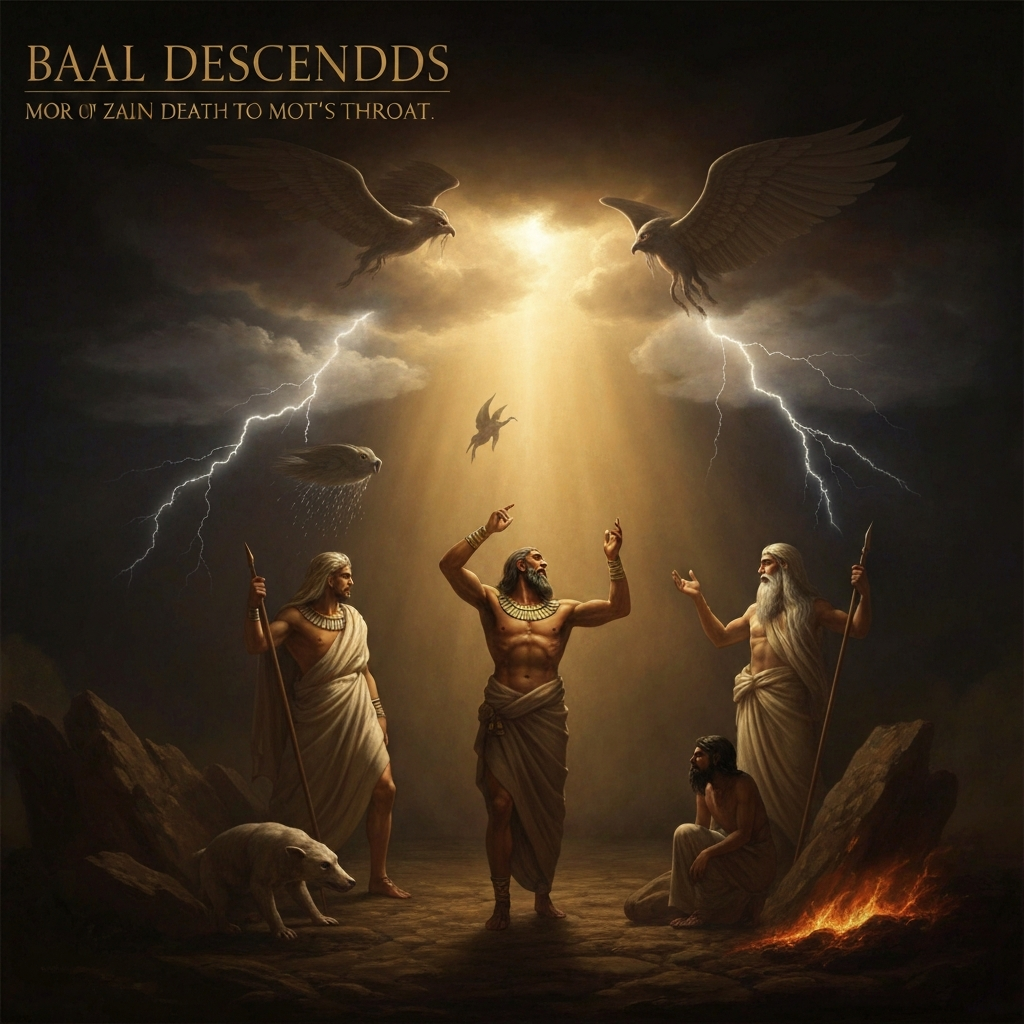
The tablets describe his preparation for the descent with the precision of someone aware of what they are walking into. He mated with a heifer, producing a child who would wear his garments into death in his place — a substitute, a decoy, a way to send something of himself below while keeping something of himself above. Then he descended.
The world changed immediately.
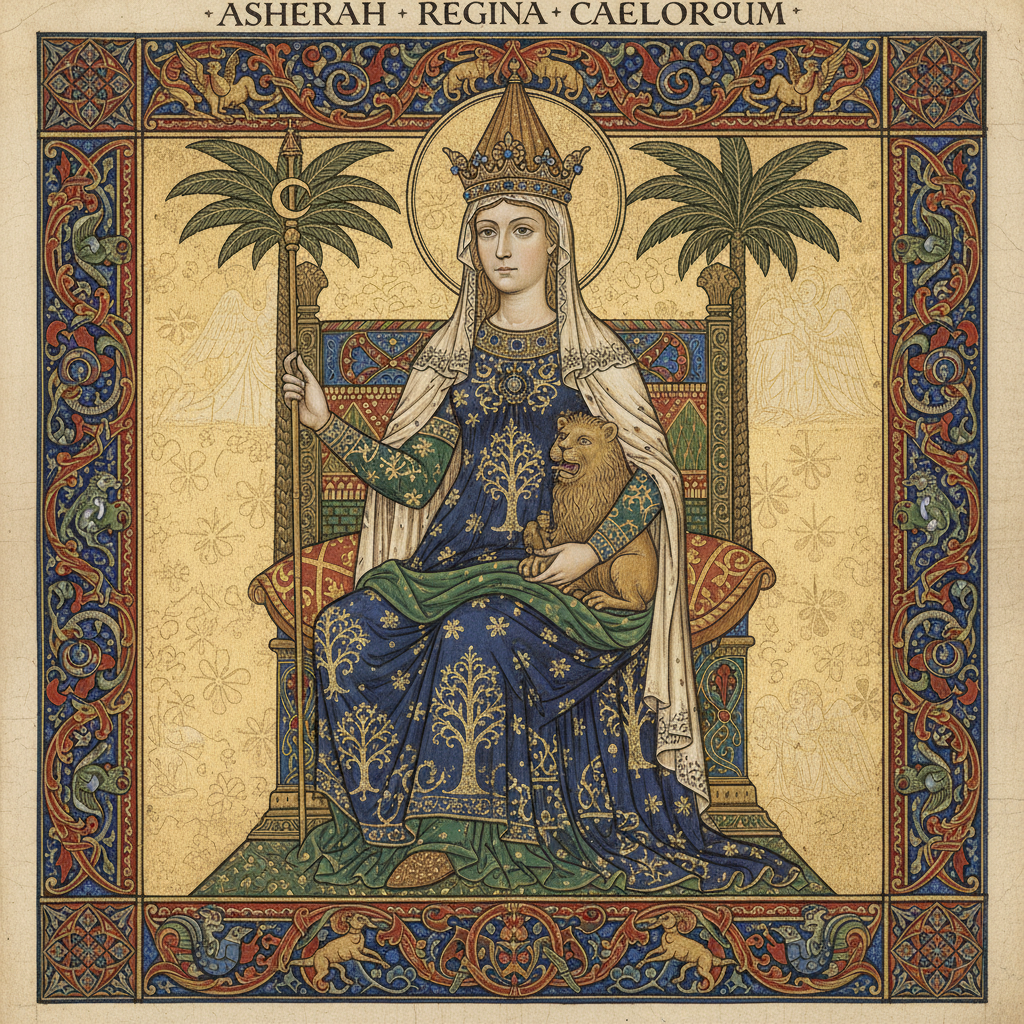
The great god Baal — whose functions were rain and storm and the fertility they brought — was in the land of the dead. The rains stopped. The crops failed. The cycle of seasons that depended on his cycle broke. El, the father of the gods, performed the mourning rites: he descended from his throne, sat on the ground, covered himself with dust and sackcloth, and wept. The divine assembly wept. Even Asherah, who had opposed Baal’s palace-building, went into mourning.
The tablets record the silence of the rains for seven years.
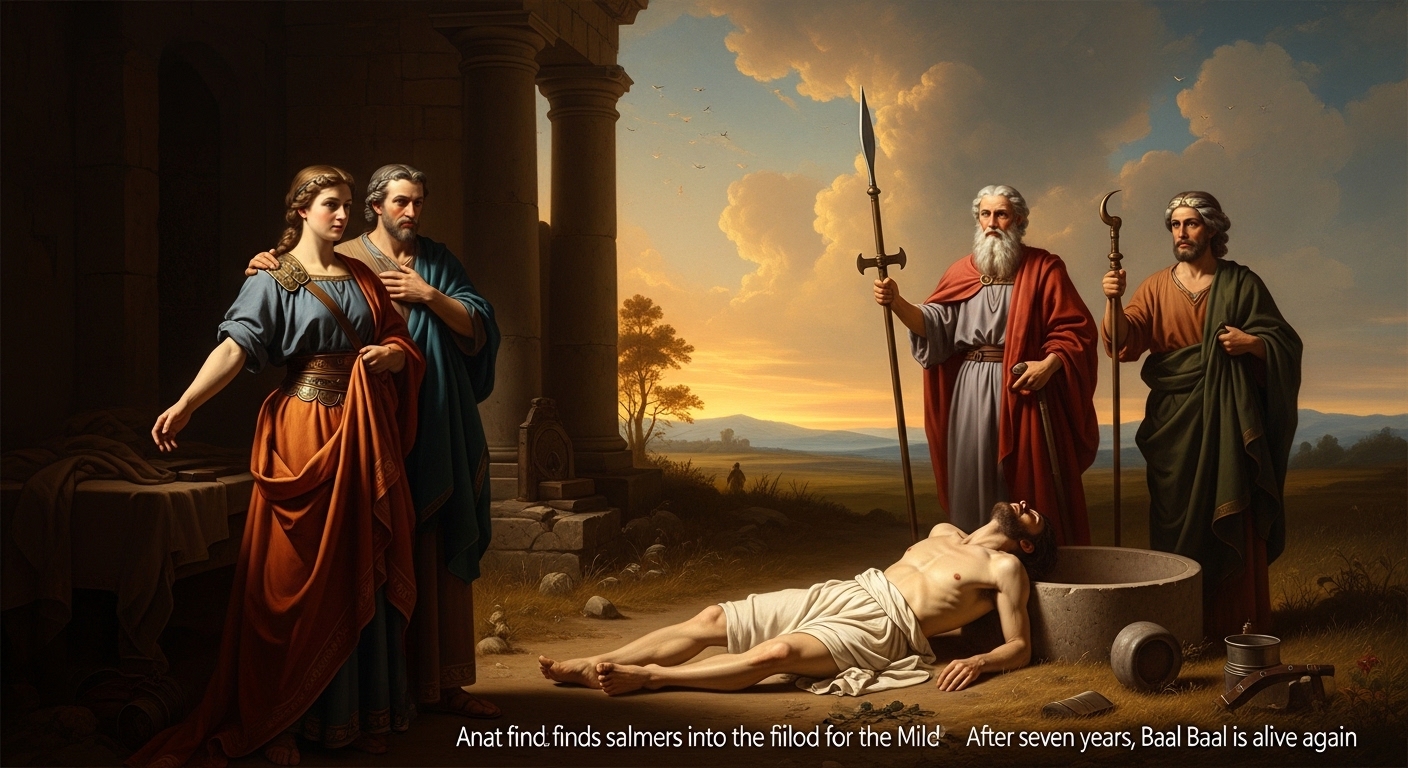
Anat went looking for her brother.
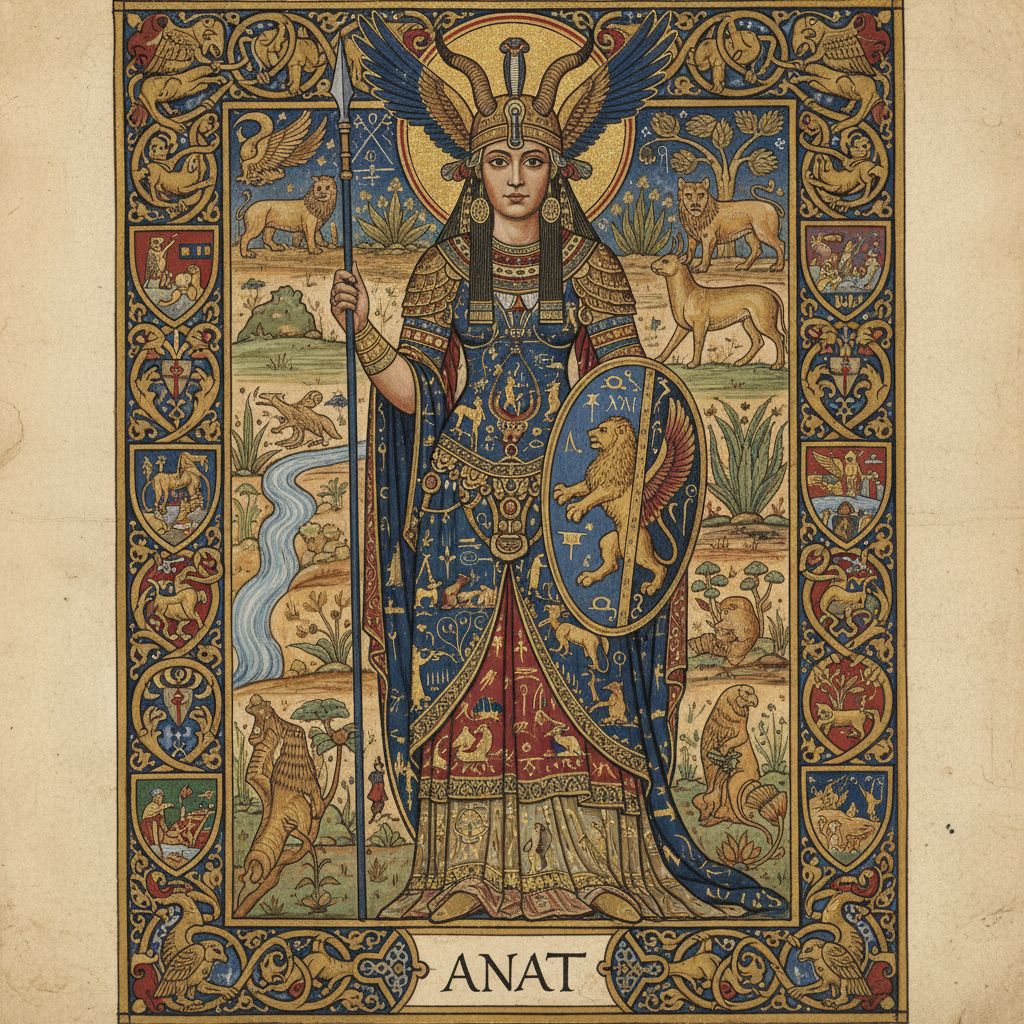
She is one of the most vivid figures in the Baal Cycle — the warrior goddess, Baal’s sister and closest ally, who is described elsewhere in the tablets wading through a battlefield thigh-deep in blood and laughing. When she received the news of Baal’s death, she did what warrior goddesses do: she went to find the body.
She found Mot.
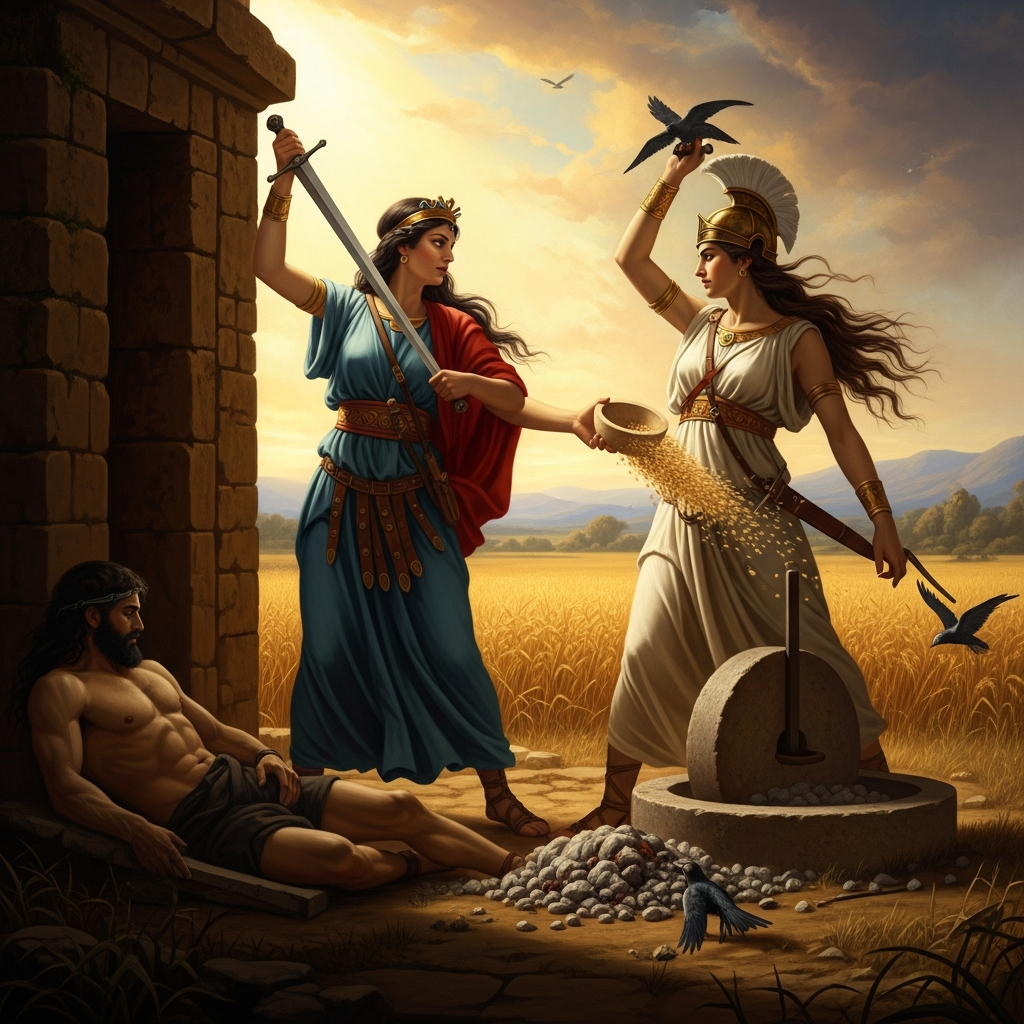
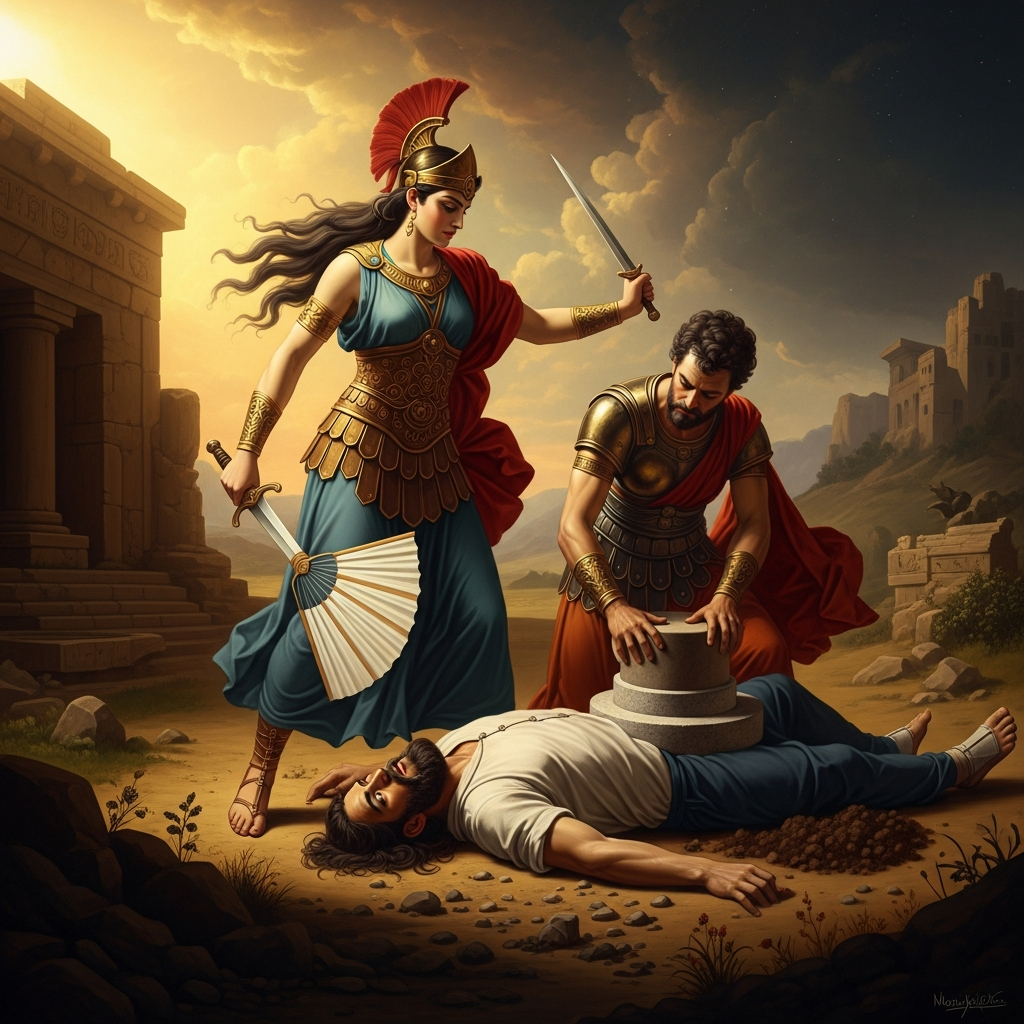
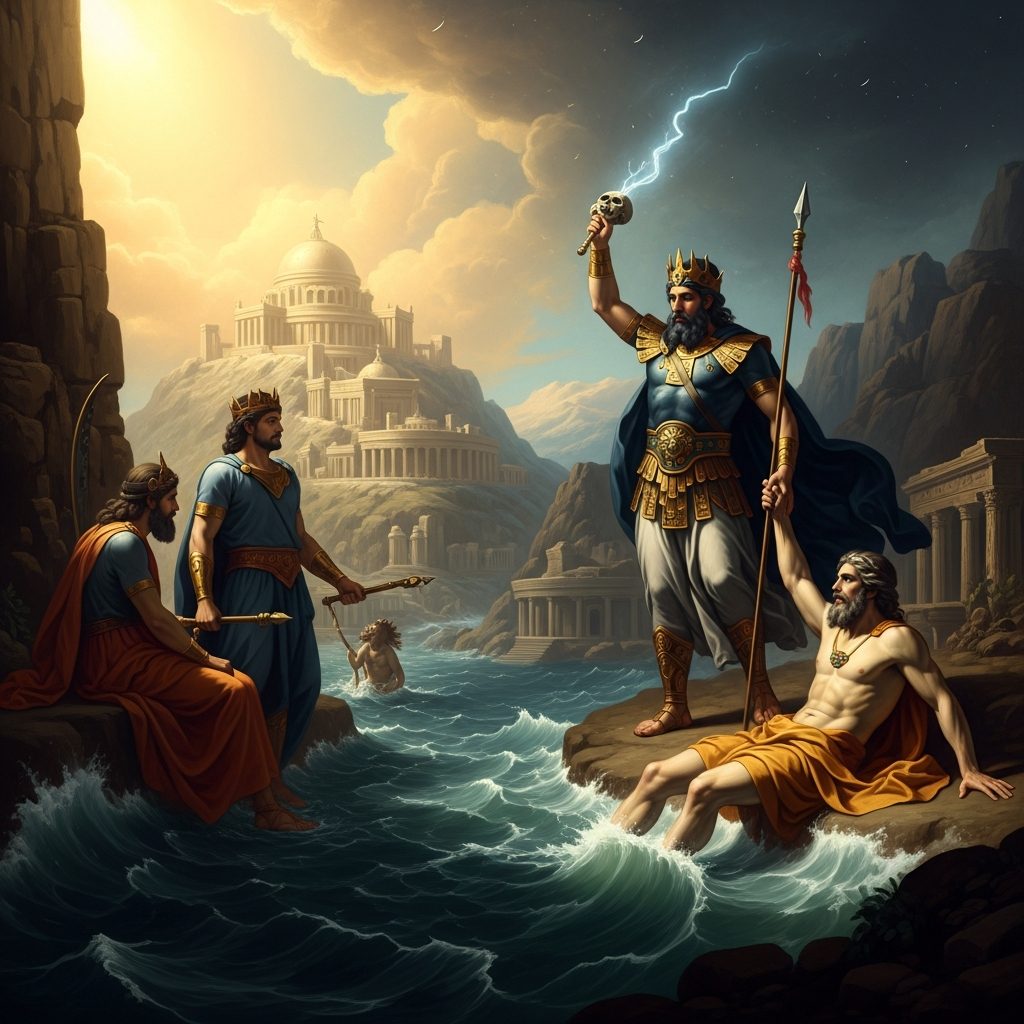
The confrontation between Anat and Mot is one of the most striking scenes in ancient Near Eastern literature. She does not argue. She does not negotiate. She seizes Mot and does to him what you do to grain: she slaughters him, winnows him, grinds him in a mill, scatters the pieces in the field, burns what remains. The god of death, treated as grain.
This is not merely violence. It is a theological statement: death is subject to the same agricultural cycle as life. What kills the harvest can itself be harvested. Mot will return — the tablets are clear that he and Baal will fight again in the seventh year, and neither will definitively win, and this is the structure of the seasons forever — but for now, Mot is scattered, and Baal is alive.
The Baal Cycle survives because Ugarit was destroyed.
In approximately 1185 BCE, the city of Ugarit on the Syrian coast was sacked by the Sea Peoples — the same mysterious wave of population movement that ended the Bronze Age across the eastern Mediterranean. The city was burned. No one came back to retrieve the cuneiform tablets in the house of the high priest, stored in jars, preserved in the destruction rubble that covered them for three thousand years.
Excavated in 1929, the tablets gave scholars for the first time a direct window into the world the Hebrew Bible was written against. El is there — the same name, the same epithet (“Father of Years,” “Creator of Creatures”) that appears in Genesis. Asherah is there — the consort of El, whose name appears scattered across the Hebrew text, whose cult poles the reforming kings of Judah repeatedly destroyed. Yam is there — the sea that Genesis 1 subdues into “the deep” (tehom) over which God’s spirit hovers.
And Baal is there, storm king, dying and rising, defeated by death and returned from it, whose name the prophets Elijah and Hosea use as the paradigmatic false god that Israel keeps running after.
The reason Israel kept running after Baal is not that they were stupid or faithless. It is that Baal controlled the rain. On a subsistence agriculture in the Levant, the storm that broke the drought was a religious experience. Yahweh eventually absorbed the storm theology — the thunder on Sinai, the pillar of cloud, the voice that answers Job from the whirlwind — but the earlier competition between the two storm-gods of the ancient Levant is preserved in the texts, if you know what you are reading.
Baal descends into Mot. The rains stop. Anat grinds Death in a mill. The rains return.
The year turns.
It turns again.
Scenes
Echoes Across Traditions
Entities
Sources
- Baal Cycle, Ugaritic tablets, c. 1400-1200 BCE (KTU 1.1-1.6)
- Frank Moore Cross, Canaanite Myth and Hebrew Epic (1973)
- Mark S. Smith, The Origins of Biblical Monotheism (2001)