Combat Profile
Thunderstorm Deluge
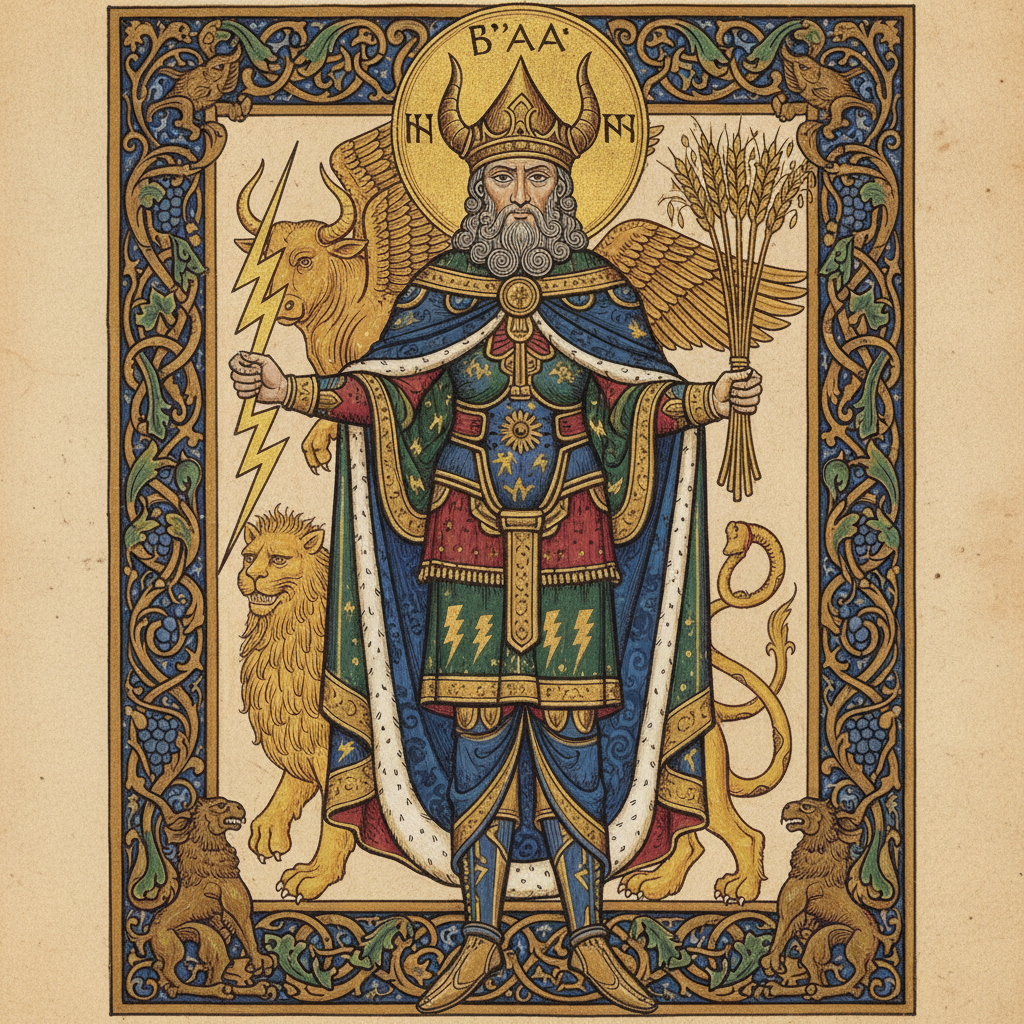
Baal summons catastrophic lightning and torrential rain, devastating enemies while fertilizing the land and restoring allies
Divine Kingship
Baal's presence strengthens allies and grants dominion over weather; his power fluctuates with seasonal cycles and ritual devotion
Cannot defeat Death (Mot) permanently; dies and must be resurrected
“Baal will send abundance of rain, abundance of moisture with snow. He will utter his voice from the clouds, flash his lightning to the earth.”
Lore: Baal Hadad (“Lord of Thunder”) is THE rival to YHWH in the Old Testament — the god Elijah confronted on Mount Carmel (1 Kings 18), the god the prophets spent centuries trying to eradicate, the god who would not go away. In the Ugaritic Baal Cycle (KTU 1.1-1.6), he is the heroic champion: he defeats Yam (the sea-god of chaos) using two divine maces forged by Kothar-wa-Khasis, earns the right to build his palace on Mount Zaphon (the Canaanite Olympus), then faces his greatest enemy — Mot (Death) — who swallows him whole. Baal dies. The earth withers. His sister Anat searches for him, destroys Mot, and Baal returns to life. The rains return. The cycle of death and resurrection mirrors the agricultural seasons: Baal dies in the dry summer and rises with the autumn rains.
The overlap with YHWH is not incidental. It is structural. YHWH rides the clouds (Psalm 68:4). YHWH sends the rain. YHWH defeats the sea (Psalm 74:13-14). YHWH’s holy mountain is Zaphon (Psalm 48:2 — “Mount Zion, in the far north [tsaphon]”). The biblical writers did not merely reject Baal. They absorbed his attributes into YHWH (John Day, Yahweh and the Gods and Goddesses of Canaan). The contest on Mount Carmel is not between two different gods. It is between two storm gods claiming the same portfolio.
Parallel: Baal belongs to the universal storm god archetype: Zeus (Greek), Thor (Norse), Indra (Vedic), Marduk (Babylonian), Perun (Slavic). All are thunder-wielding warriors who defeat a chaos serpent/sea monster and claim kingship. The dying-and-rising pattern connects him to Osiris (Egyptian), Tammuz (Mesopotamian), and Dionysus (Greek). Whether these parallels extend to Christ’s death and resurrection remains one of the most contested questions in comparative religion.
1 min read
Mot (Death) swallows him; YHWH supplants him as the storm god of Israel
KTU 1.1-1.6 (The Baal Cycle); 1 Kings 18 (Elijah on Carmel); John Day, *Yahweh and the Gods and Goddesses of Canaan*