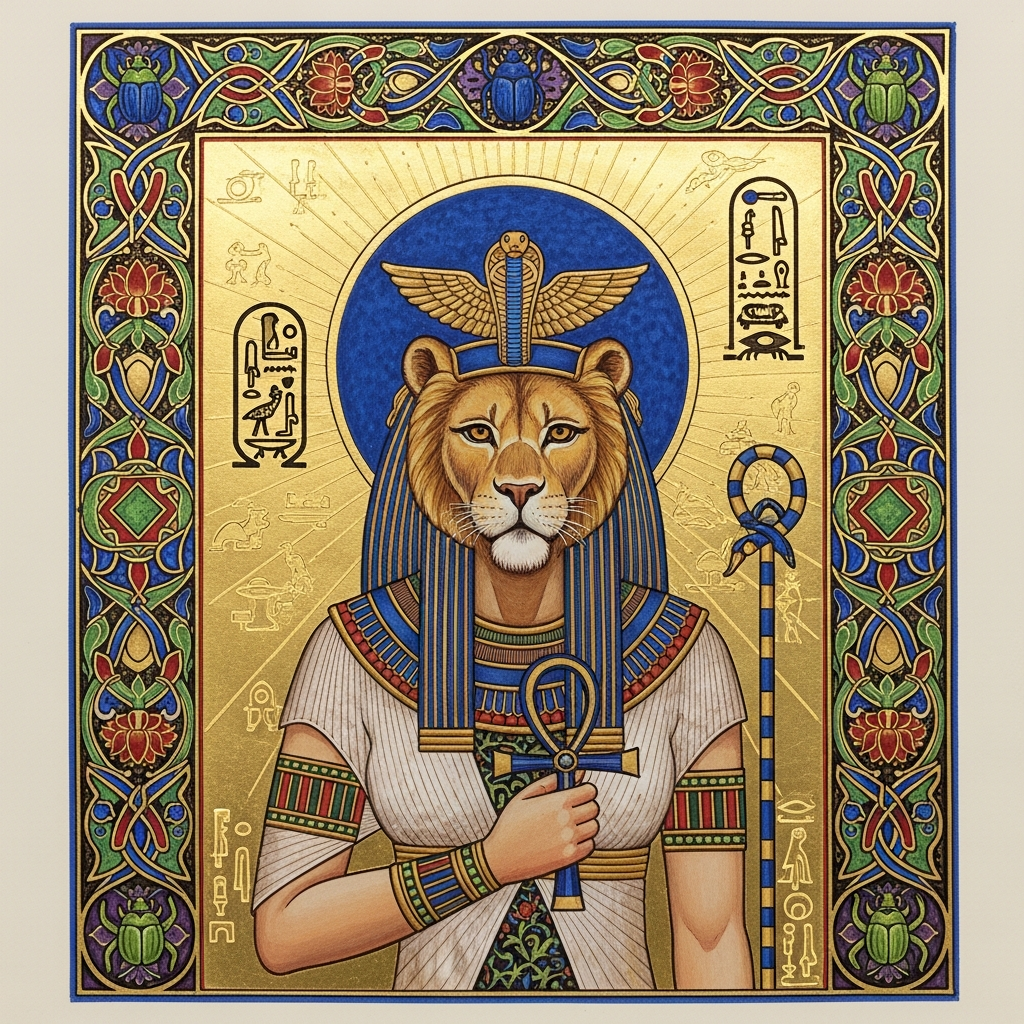
Combat Profile
Eye of Ra's Wrath
unleashes a devastating plague of fire and disease that decimates enemies while paradoxically granting the wielder immunity to all afflictions
Desert Fury
attacks gain increased power under sunlight and cannot be healed by conventional means; Sekhmet's wounds inflict supernatural decay
“Mighty One, before whom evil trembles. The flame of her breath is the heat of the desert noon.”
Sekhmet’s name means “the powerful one.” She is the killing aspect of the sun — the desert heat that burns crops, the plague that empties villages, the warrior-rage that razes cities. The Book of the Heavenly Cow recounts the most terrible myth in the Egyptian corpus: Ra, angered by human rebellion, sent Sekhmet to destroy humankind. She did so with such enthusiasm that even Ra recoiled. He flooded a field with beer dyed red with ochre. Sekhmet, drunk on what she thought was human blood, fell into a stupor; she awoke as Hathor, the gentle cow-goddess of love. The myth contains both: Sekhmet IS Hathor’s wrath, Hathor IS Sekhmet’s mercy. Egyptian temple priests performed daily rituals to “appease Sekhmet” — a literal liturgy of pacification, because an unappeased Sekhmet brought epidemics.
Cross-tradition parallels: Kali (Hindu warrior-goddess who similarly cannot be stopped once unleashed and is similarly pacified by trickery); the Angel of Death of Exodus 12 (sent by YHWH to slaughter the firstborn — a parallel often noted in comparative scholarship); Ishtar/Inanna in her warrior aspect.
1 min read
The Book of the Heavenly Cow (Coffin Texts); the Litany of Ra; Edfu temple texts