Combat Profile
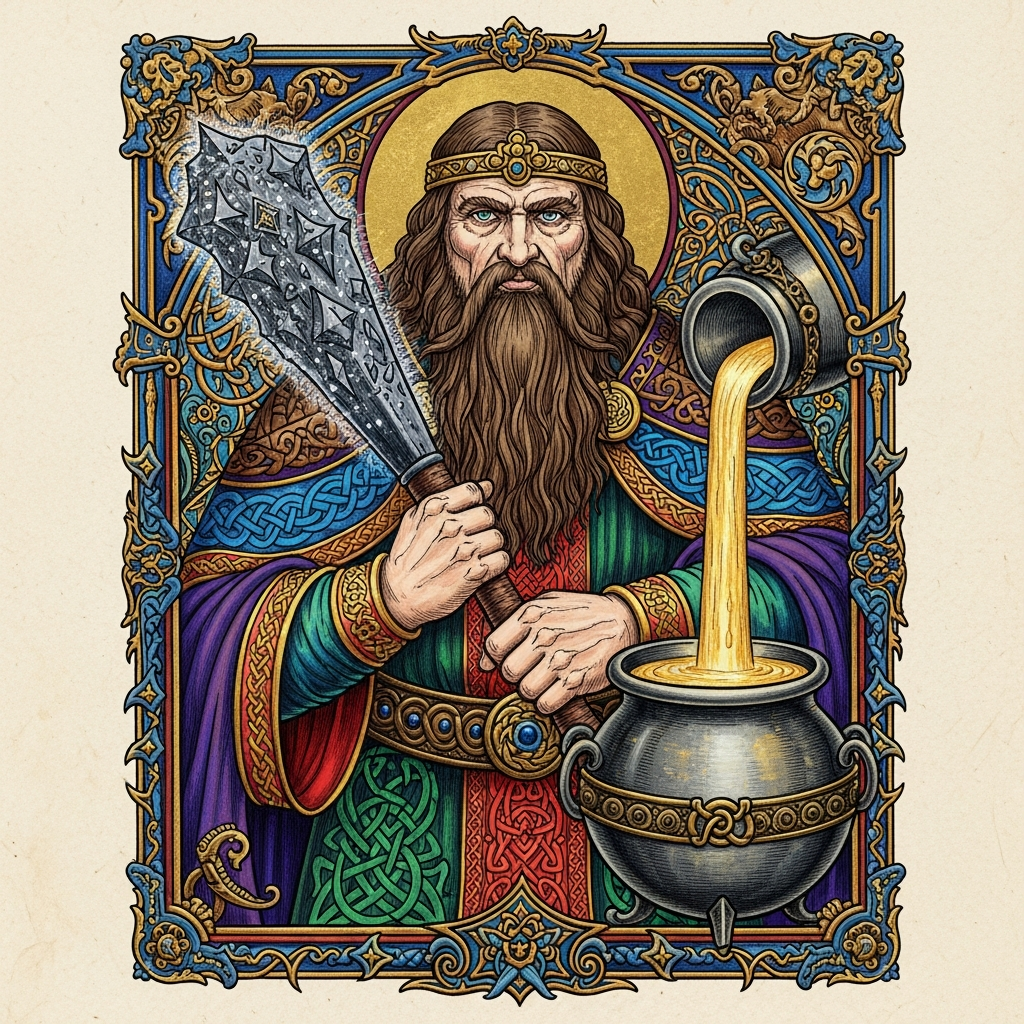
Cauldron of Abundance
restores vitality to allies and drains life from enemies, reversing the very cycles of existence itself
Seasons' Dominion
the Dagda's presence shifts weather and fertility, granting blessings to his followers while withering those who oppose him
Comically earthy -- his appetites (for food, drink, and sex) are legendary and sometimes make him a figure of humor rather than awe
“He was a true father to the people. No company ever left his cauldron hungry.” — Cath Maige Tuired
Lore: The Dagda (“The Good God” — not morally good, but good at everything) is the chief of the Tuatha De Danann (Cath Maige Tuired), the divine race that ruled Ireland before retreating into the Otherworld. He is an enormous, rough figure — sometimes described with a belly so large his tunic barely covers it, dragging his club on a cart behind him (Cath Maige Tuired). But this earthy appearance belies cosmic power. His club has dominion over life and death itself: one end kills, the other resurrects (Cath Maige Tuired). His cauldron, Undry, is one of the Four Treasures of the Tuatha De Danann and is an endless source of nourishment — the original horn of plenty (Lebor Gabála Érenn). His harp, Uaithne, controls the turning of the seasons and the emotions of all who hear it. Before the Second Battle of Mag Tuired, the Fomorians stole his harp; the Dagda walked into their camp and called it by its secret names, and it flew across the room to him, killing nine Fomorians as it passed (Cath Maige Tuired).
Parallel: The Dagda’s club parallels God’s power over life and death (Deuteronomy 32:39: “I kill and I make alive”). His inexhaustible cauldron parallels both the manna in the wilderness (Exodus 16) and Christ’s feeding of the five thousand. His harp parallels David’s harp, which soothed Saul’s troubled spirit (1 Samuel 16:23) and which tradition associates with the Psalms — songs that, like the Dagda’s music, can evoke every human emotion. The Dagda is, in many ways, the most “Old Testament” of Celtic gods: powerful, earthy, larger than life, concerned with abundance and justice.
1 min read
None who prevailed. His power over life and death makes him nearly unopposable
*Cath Maige Tuired* (The Second Battle of Mag Tuired); *Lebor Gabala Erenn*