Combat Profile
Túatha Ascendance
grants divine lineage and supernatural gifts to her chosen bloodline, empowering all descendants in perpetuity
Primordial Womb
all life and magic emanates from her eternal presence, regenerating the land and blessing fertility across all realms
Almost entirely absent from the narratives -- more archetype than character. She is the name, not the story
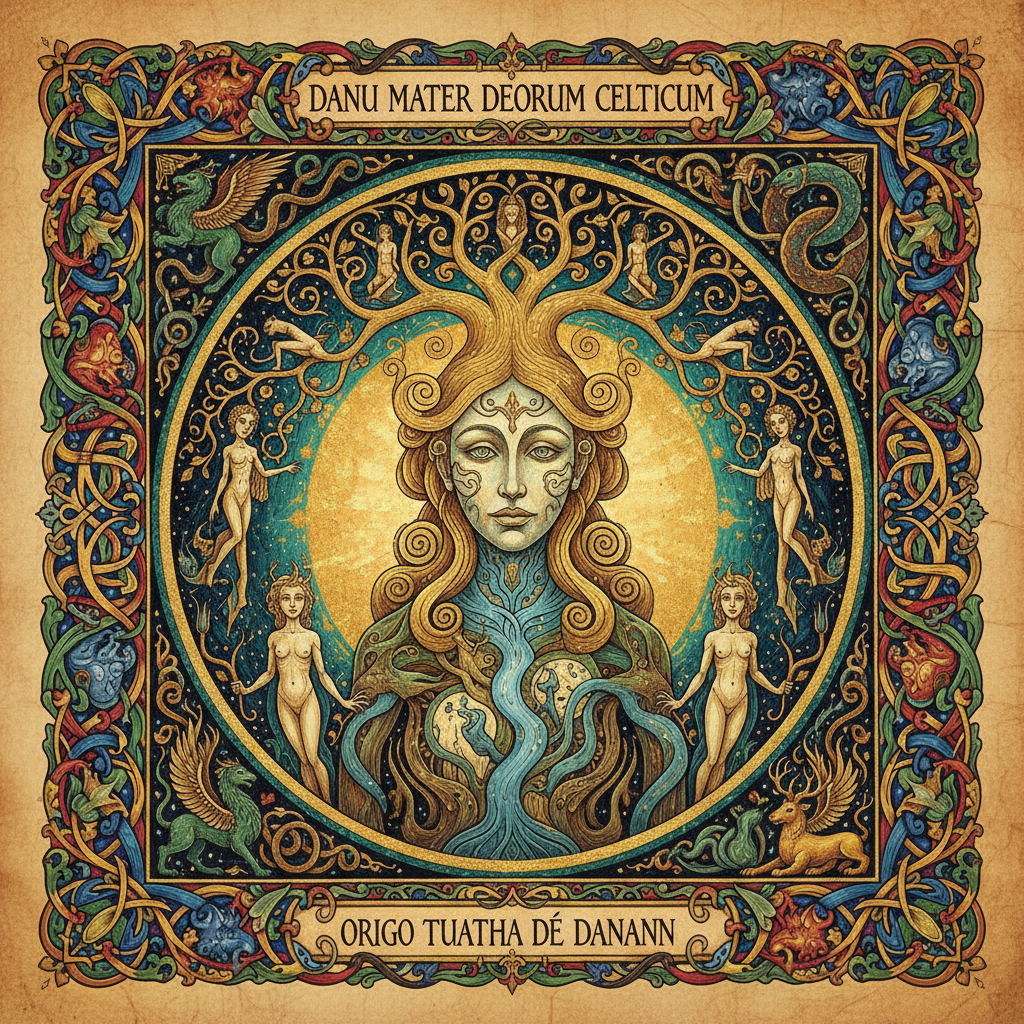
Lore: Danu (also called Anu or Ana) is the most mysterious figure in Celtic mythology — and perhaps the most important. She is the mother goddess after whom the entire Tuatha De Danann are named, yet she has almost no surviving mythology. No stories. No dialogue. No adventures. She is simply there, at the beginning, the source from which the gods spring. The Paps of Anu in County Kerry — two breast-shaped hills with cairns for nipples — are the most tangible evidence of her cult. Some scholars identify her with the river-goddess Danann or connect her to the pan-Celtic and Indo-European concept of the divine mother (cf. the Danube, possibly named from the same root). She is the Celtic equivalent of what the Gnostics called Barbelo or what Hinduism calls Shakti: the feminine principle underlying all divine manifestation.
Parallel: Danu parallels the divine feminine across traditions — Sophia (Wisdom) in Proverbs 8, who was present at creation; Barbelo in Gnostic texts (the first emanation, the mother of the divine realm); Shakti in Hinduism (the creative power of the divine). She also parallels the unnamed “woman clothed with the sun” in Revelation 12 — the cosmic mother figure who gives birth to the divine child. The Celtic insistence on a maternal source for the gods is a theological statement: divinity comes from a mother.
1 min read
None. You do not counter the ground you stand on
*Lebor Gabala Erenn*; *Sanas Cormaic*; the landscape itself