Combat Profile
Ríastrad
Cu Chulainn enters a state of supernatural battle-frenzy, transforming his body into a twisted weapon that strikes all enemies with overwhelming force and regenerates wounds mid-combat.
Champion's Burden
Cu Chulainn's honor-bound nature grants him increased damage when defending allies or upholding vows, but he cannot flee from combat or refuse a challenge without suffering weakness.
Bound by geas (sacred taboos) whose contradictions destroy him. His battle frenzy (riastrad) makes him indiscriminate -- he cannot distinguish friend from foe
“His body made a fearful twist inside his skin. His feet and his knees came to the back, and his heels and his calves came to the front… The moon of his madness rose from the crown of his head.” — Tain Bo Cuailnge (description of the riastrad)
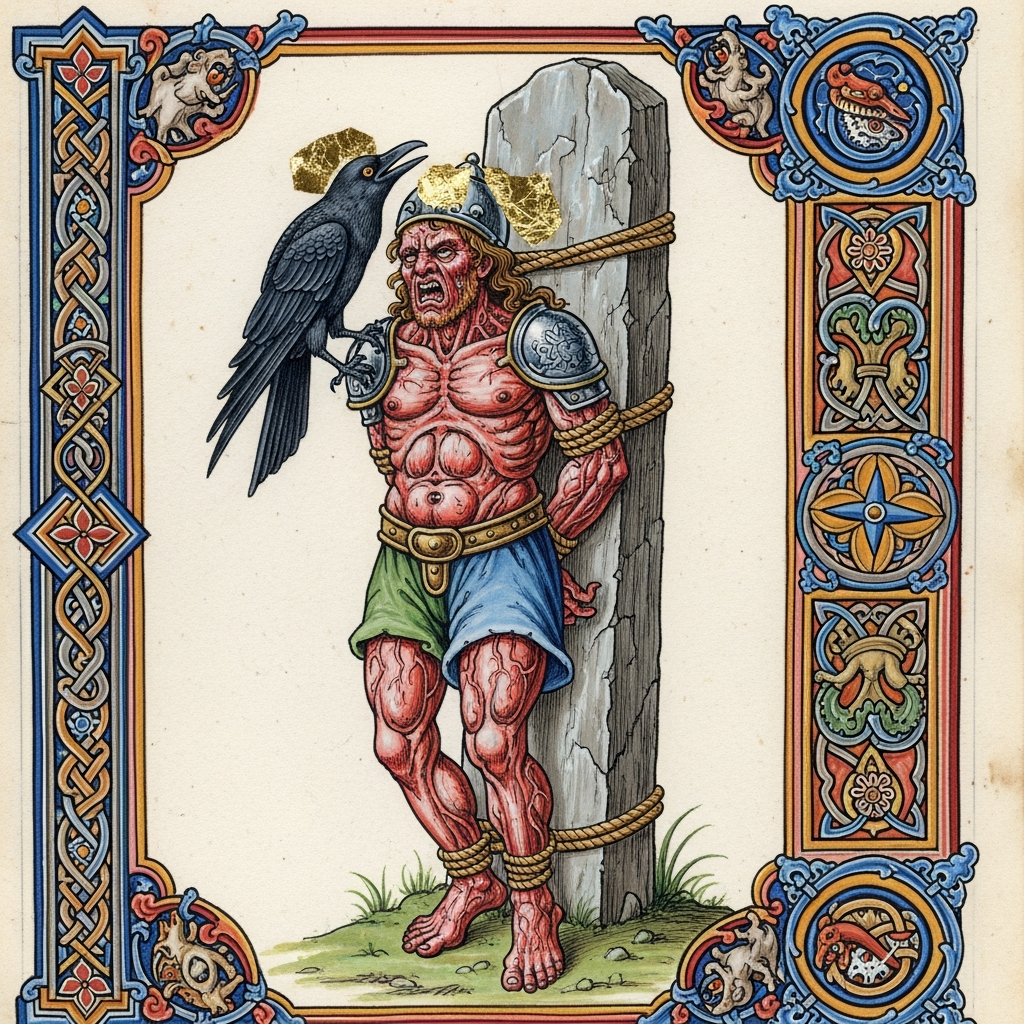
Lore: Cu Chulainn (born Setanta) is Ireland’s Achilles — the greatest warrior in Celtic mythology, beautiful, doomed, and ferocious beyond human comprehension. As a boy, he killed the guard-dog of Culann the smith and offered to take its place until a replacement was trained, earning the name Cu Chulainn (“Hound of Culann”). He is the son of Lugh (or of the mortal Sualtam — the texts vary). His defining feature is the riastrad — the warp-spasm or battle frenzy — in which his body twists inside its own skin, one eye sinks into his skull while the other bulges outward, his hair stands on end with a drop of blood on each tip, and a column of dark blood erupts from his head like a mast. In this state, he is unstoppable and uncontrollable. During the Cattle Raid of Cooley, when the men of Ulster were incapacitated by Macha’s curse (labor pains), Cu Chulainn alone held the ford against Queen Medb’s entire army, fighting each champion in single combat. He killed his foster-brother Ferdiad in one of the most grief-stricken scenes in all mythology. He died young, as he chose — selecting a short glorious life over a long obscure one. Mortally wounded by sorcery and treachery, he tied himself to a standing stone so he would die on his feet. His enemies waited until a crow landed on his shoulder before they dared approach.
Parallel: Cu Chulainn parallels Achilles (the short, glorious life chosen over a long, obscure one), Samson (superhuman strength, fatal vulnerability to geas/vows, a final stand), and the berserker warriors of Norse tradition. His death tied to a stone, refusing to fall, parallels Christ refusing to come down from the cross — both choose to endure rather than escape. The crow on his shoulder (the Morrigan confirming death) parallels the Roman soldier’s spear confirming Christ’s death (John 19:34).
2 min read
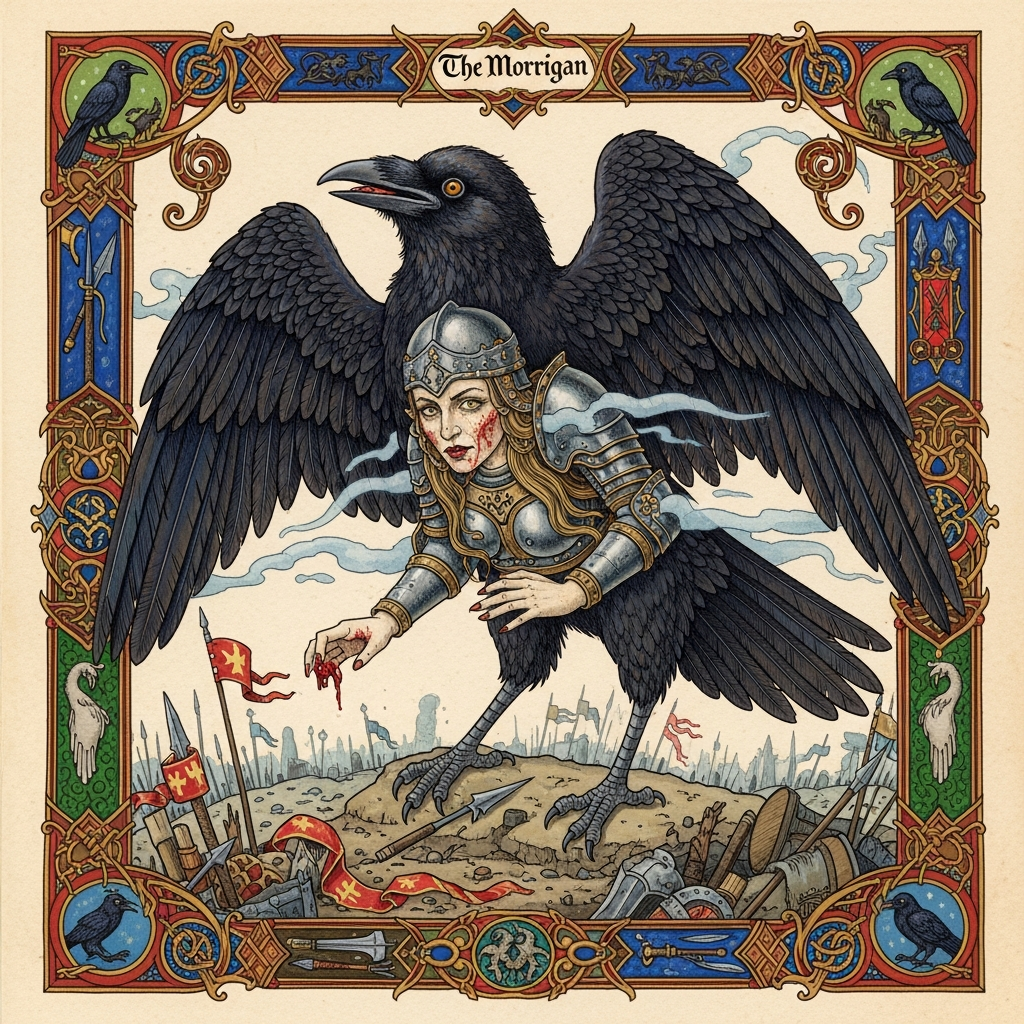
The Morrigan (who haunts him); his own geas (conflicting taboos that force impossible choices); Queen Medb's conspiracies
*Tain Bo Cuailnge*; *Aided Con Culainn* (Death of Cu Chulainn); Ulster Cycle