Combat Profile
Crimson Tithe
demands a blood sacrifice to unleash devastating power that increases in strength with each offering made
Hunger of the Worm
nearby mortals experience dread and compulsion toward violent acts of devotion
A static idol -- powerful only through the fear and worship of followers. When Patrick confronted him, the idol fell
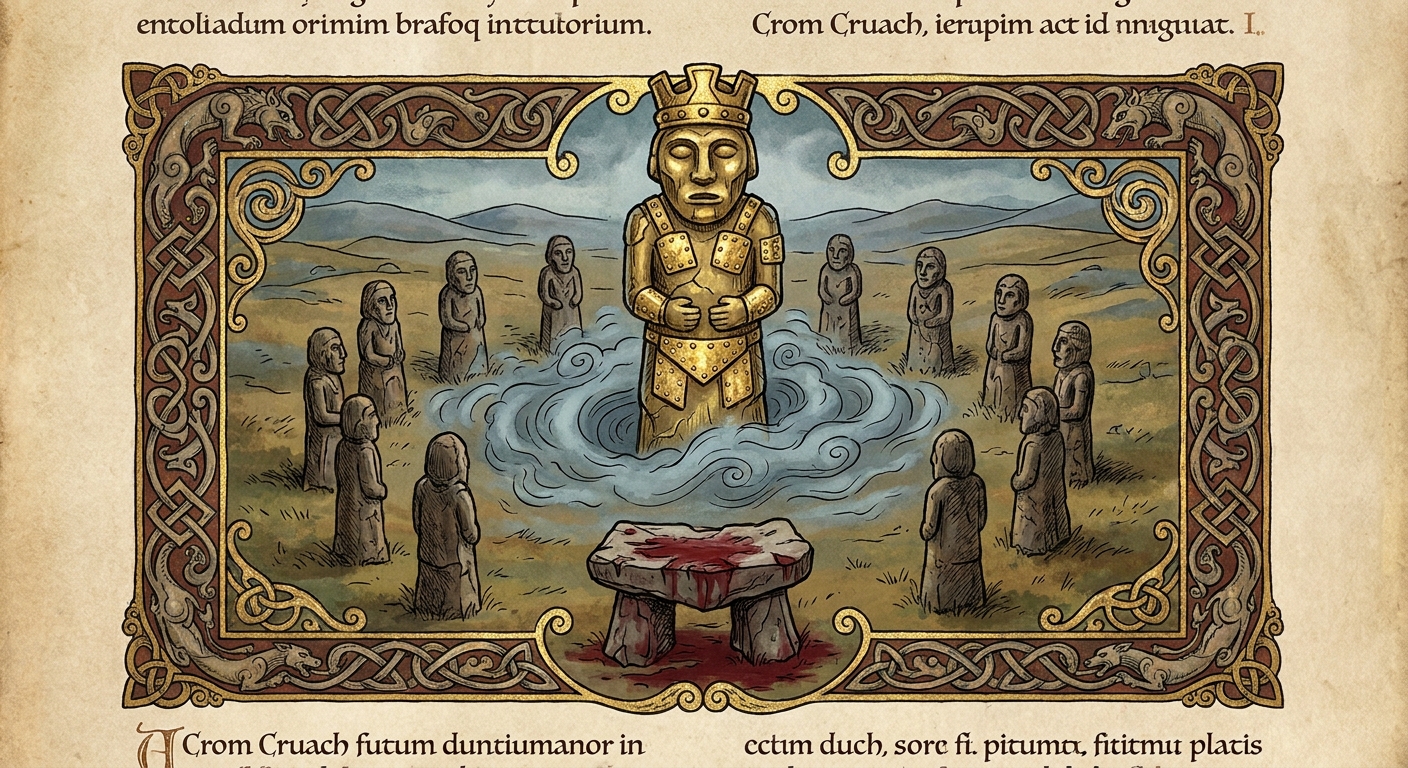
“To him without glory / they would kill their piteous, wretched offspring / with much wailing and peril, / to pour their blood around Crom Cruach.” — Metrical Dinnshenchas
Lore: Crom Cruach (“Bloody Crescent” or “Bent One of the Mound”) is the darkest figure in Celtic religion — an idol that demanded human sacrifice. According to the texts, Crom Cruach stood at Mag Slecht in what is now County Cavan, surrounded by twelve lesser stone idols (a detail that eerily inverts Christ and the twelve apostles). Worshippers prostrated themselves before him and sacrificed their firstborn children to ensure good harvests. This practice was said to have been established by Tigernmas, a legendary High King. Patrick’s destruction of the cult is one of the foundational legends of Irish Christianity: the saint confronted the idol, struck it with his crozier (or the earth swallowed it), and the stone bent into the ground. The twelve lesser idols sank into the earth up to their heads.
Parallel: Crom Cruach directly parallels Moloch (Leviticus 18:21, 2 Kings 23:10) — a deity demanding child sacrifice — and the Baal worship that the Hebrew prophets denounced. The destruction of Crom Cruach by Patrick parallels Josiah’s destruction of the Tophet (the place of child sacrifice to Moloch) in 2 Kings 23. The twelve subsidiary idols surrounding one central figure is an inversion of Christ and the twelve apostles, or the high priest and the twelve tribes. Patrick’s confrontation with Crom Cruach is the Celtic equivalent of Elijah’s confrontation with the prophets of Baal on Mount Carmel (1 Kings 18).
1 min read
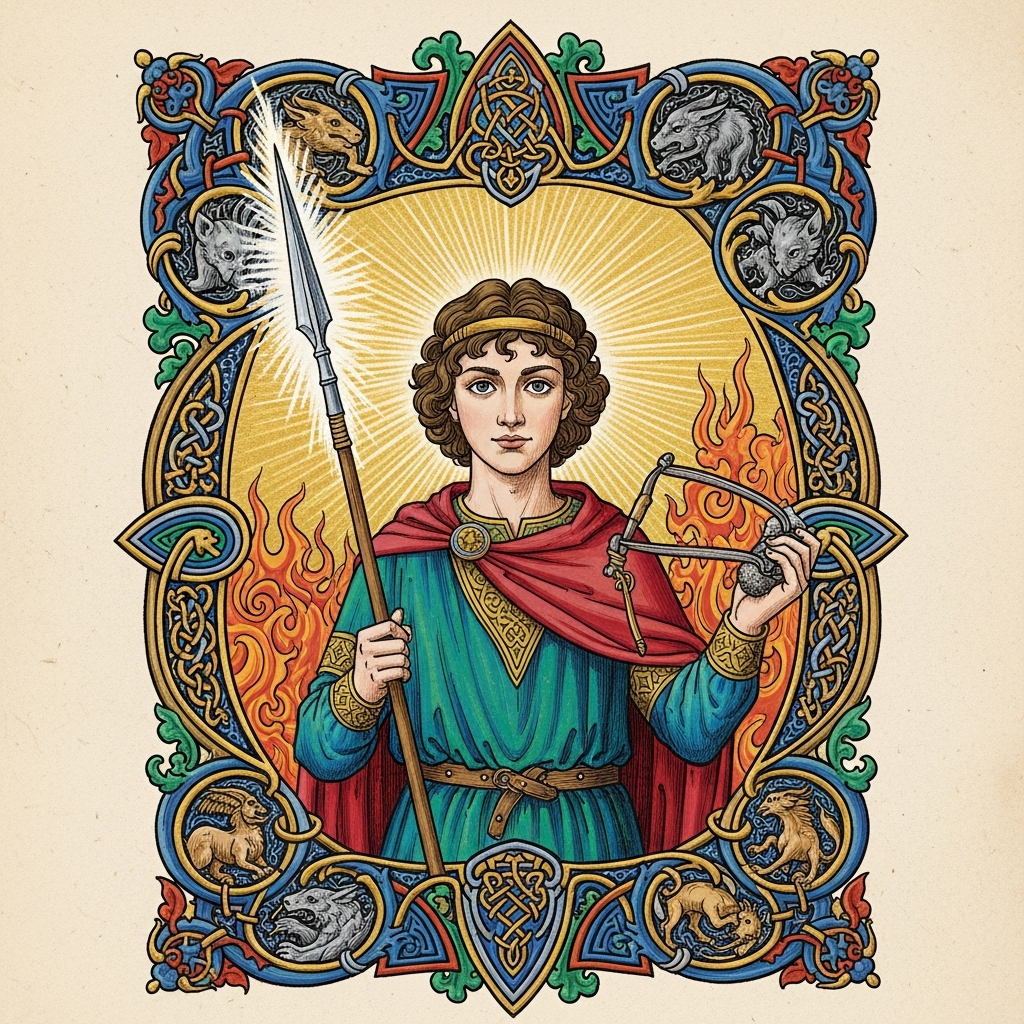
St. Patrick, who allegedly destroyed his cult
*Lebor Gabala Erenn*; Tripartite Life of St. Patrick (9th century); *Dinnshenchas*