The Story
“Celtic religion” is a phrase that hides a problem. There is no single Celtic faith and never was. What we call Celtic is a sprawling Iron Age cultural sphere — the Hallstatt and La Tene archaeological horizons from the 8th century BCE through the Roman conquests — stretching from the British Isles through Gaul, Iberia, the Alps, and as far east as Galatia. These peoples shared a language family, a visual aesthetic (spiral, knotwork, triskele), and a priestly class the Romans called the Druids. They did not share a unified pantheon, a sacred text, or a single ritual calendar. Caesar’s Gallic Wars names a handful of Gaulish gods by Roman analogy (Mercury, Mars, Jupiter); Irish myth names dozens with entirely different names. Both are Celtic. Neither is complete.
Druidic religion (~600 BCE - 1st century CE): The Druids were a hereditary intellectual caste — judges, poets, calendrical specialists, ritual officiants (Caesar, Gallic War 6.13-14). Training took twenty years, all of it oral. They left no scripture. Everything we “know” comes from hostile Greek and Roman ethnographers (Caesar, Strabo, Pliny) happy to describe human sacrifice in lurid detail to justify conquest. The actual religious practice — oak groves, mistletoe ritual, the cult of the head, the wickerman, triple-goddess patterns — must be reconstructed from foreign accounts and archaeology (votive deposits in lakes and bogs, severed heads at sites like Roquepertuse, the Coligny calendar) (Caesar, Gallic War 6.16). This is hedge number one: most claims about Druidic belief are educated guesses.
Roman conquest (1st century BCE - 1st century CE): Caesar finishes Gaul by 51 BCE (Caesar, Gallic War 8). Claudius takes Britain in 43 CE (Cassius Dio, Roman History 60.21). Druidism is suppressed — not for being pagan (Rome tolerated paganism) but for organizing resistance. By 60 CE Suetonius Paulinus is massacring Druids on Anglesey (Tacitus, Annals 14.29-30). Continental Celtic religion gets absorbed into a syncretic Gallo-Roman pantheon (Lugus becomes Mercury, Belenos becomes Apollo) and gradually dissolves.
Insular survival (~400-1200 CE): Ireland was never conquered by Rome. When Patrick arrives in the 5th century (Confessio c. 432-461), the existing Irish religious-poetic-legal class — the filid and brehons — mostly converts rather than dies. They become Christian monks, but keep telling the old stories. Here is the paradox: nearly everything we have was written down by Christian monks between roughly 700 and 1300 CE, in manuscripts like the Lebor Gabála Érenn (Book of Invasions), the Táin Bó Cúailnge (Cattle Raid of Cooley), and the Welsh Mabinogion (White Book of Rhydderch, ~1350; Red Book of Hergest, ~1400). The monks are euhemerizing the old gods (turning Lugh and the Dagda into ancestral kings), but preserving them. Without these manuscripts, Celtic mythology would be as lost as Gaulish.
Welsh, Irish, Scottish branches: The insular tradition splits by language. Irish and Scottish Gaelic share the Tuatha De Danann and Cu Chulainn cycles (Book of Leinster; Book of the Dun Cow). Welsh preserves a separate corpus — the four branches of the Mabinogion (White Book of Rhydderch; Pwyll, Branwen, Manawydan, Math), plus Arthurian roots that later get absorbed into European literature. Cornish and Breton survive in folklore.
Folkloric continuation (1200-1900): Medieval manuscripts give way to oral folk tradition — fairy belief, the sidhe, holy wells, Samhain, May Day, second sight. Through the Famine, the Highland clearances, and the Irish/Scottish/Welsh diasporas, this material travels to America, Australia, elsewhere, often thriving better in diaspora than at home.
The Druid Revival (1717+): John Toland founds the first modern Druid order in London in 1717 (Toland, History of the Druids). By the 1790s, Iolo Morganwg (Edward Williams) openly forges “ancient” Welsh manuscripts and invents the Gorsedd of Bards from scratch (Iolo Morganwg, Barddas, 1800s publication). This is hedge number two: nearly everything you see at Stonehenge on the solstice — the white robes, the oaths, the cosmology — is 18th and 19th century romantic invention. The actual ancient Druids would not recognize any of it.
Celtic Revival + neo-paganism (1893+): W.B. Yeats, Lady Gregory, and the Irish Literary Revival rediscover the medieval cycles. Robert Graves’s The White Goddess (1948) systematizes a triple-goddess theology that is as much Graves as ancient. The 1960s neo-pagan revival (Ross Nichols, the Order of Bards Ovates and Druids; Isaac Bonewits’s ADF) builds modern reconstructionist Druidry. Today roughly 80,000 self-identified Druids exist worldwide, with seasonal festivals, ordained clergy, and tax-exempt status in several countries.
Contemporary Celtic Christianity: A separate revival thread — the Iona Community (1938), bestselling spirituality books, rediscovered figures like Brigid, Columba, Aidan, Patrick. This blends authentic insular Christian sources with modernized, ecological spirituality. The line between recovery and projection remains blurry.
What survives is layered: an Iron Age substrate visible only through hostile sources and archaeology; medieval Christian-monastic preservation; folk-religious continuity; 18th-19th century romantic reconstruction; and 20th-21st century neo-pagan and Christian revival. All claim the word “Celtic.” None means quite the same thing.
Pivotal Events
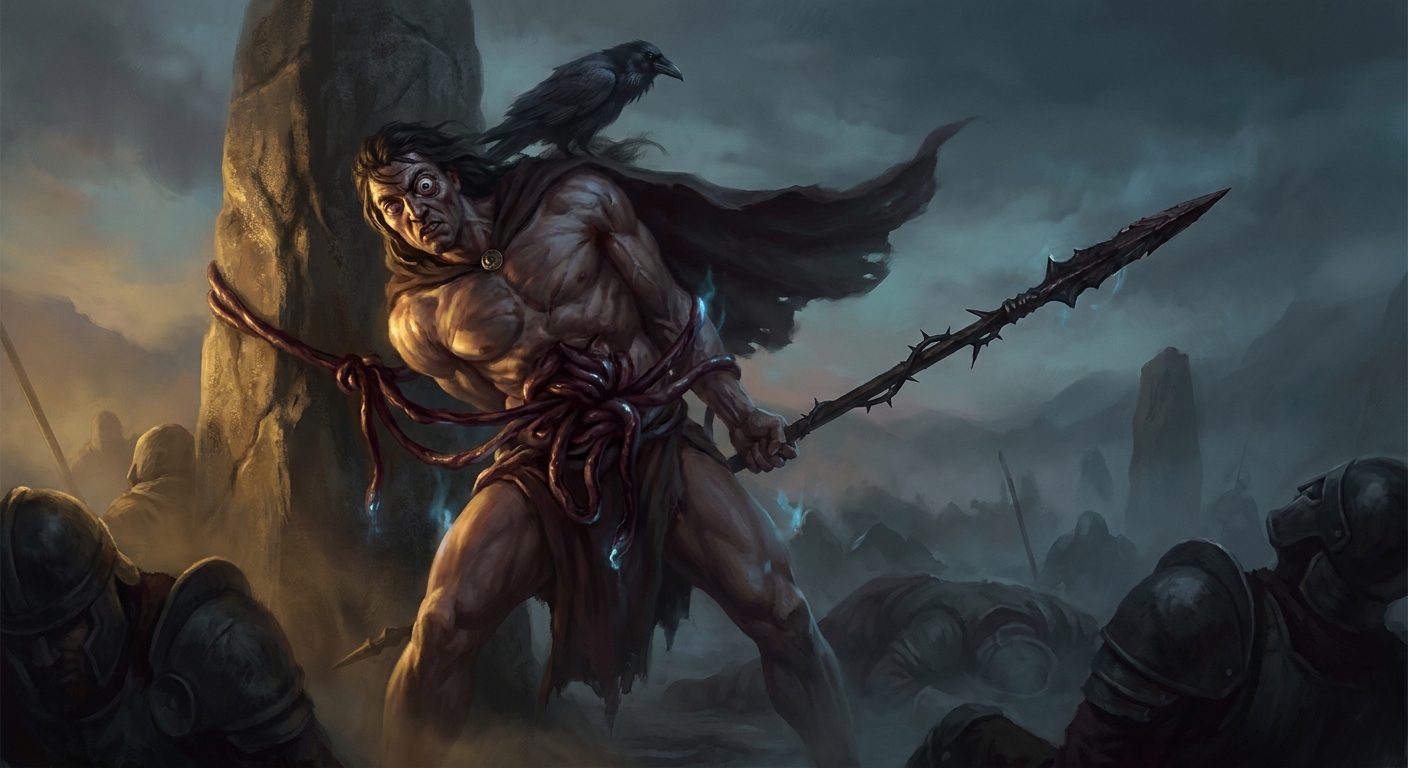
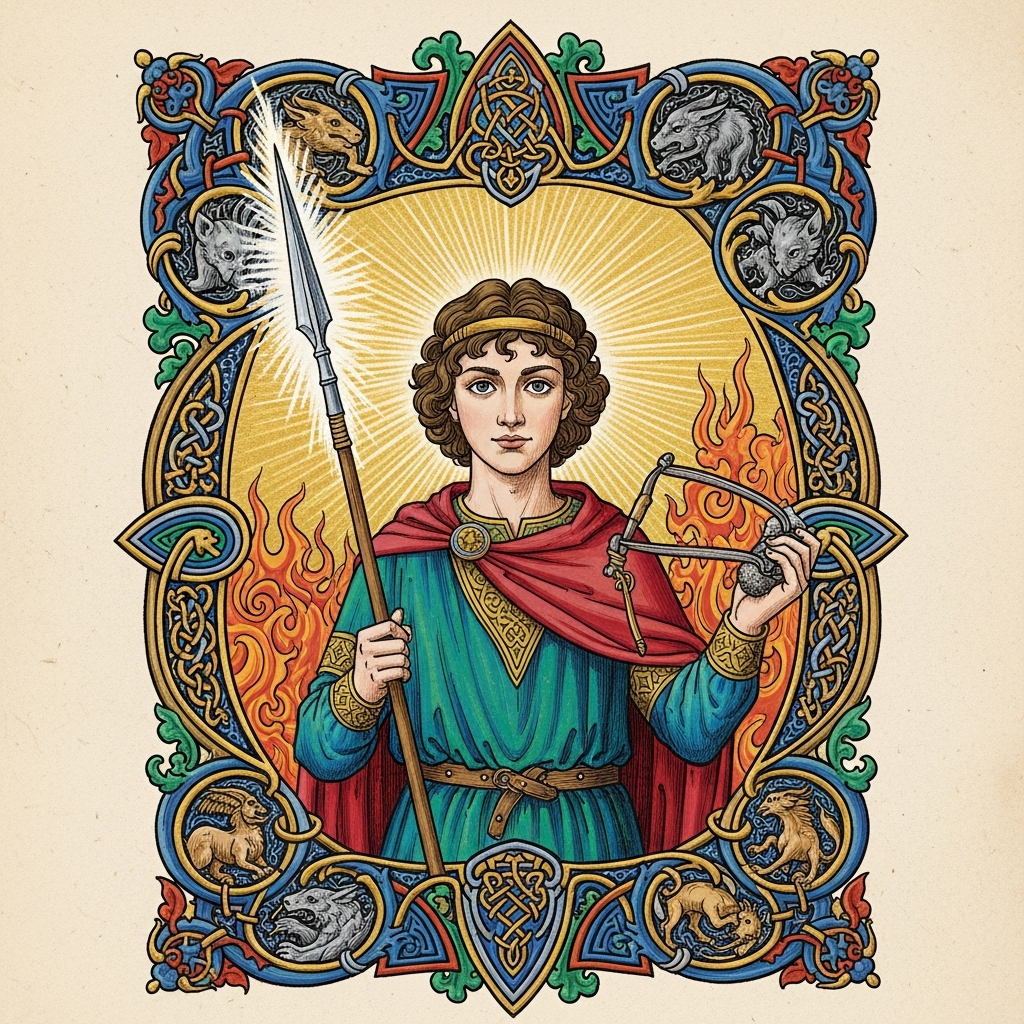
At seven years old, Ireland’s defining hero killed the hound of Culann the smith with his bare hands and earned his adult name: Cu Chulainn, “Hound of Culann” (Táin Bó Cúailnge). By seventeen, he single-handedly defended Ulster against Connacht’s entire army while his own men lay paralyzed by Macha’s curse (Táin Bó Cúailnge). His signature transformation — the riastrad or warp-spasm — twists his body inside out: one eye sucked into his skull, the other bulging on his cheek, hair bristling like blackthorn with a drop of blood at each tip, the hero-light blazing from his head (Táin Bó Cúailnge). The Táin Bó Cúailnge was written down around 1100 CE (from Book of the Dun Cow sources, ~12th century) by Christian monks who understood they were preserving something pre-Christian and refused to lose it. Cu Chulainn becomes Ireland’s Achilles — young, doomed, semi-divine, perpetually retold.
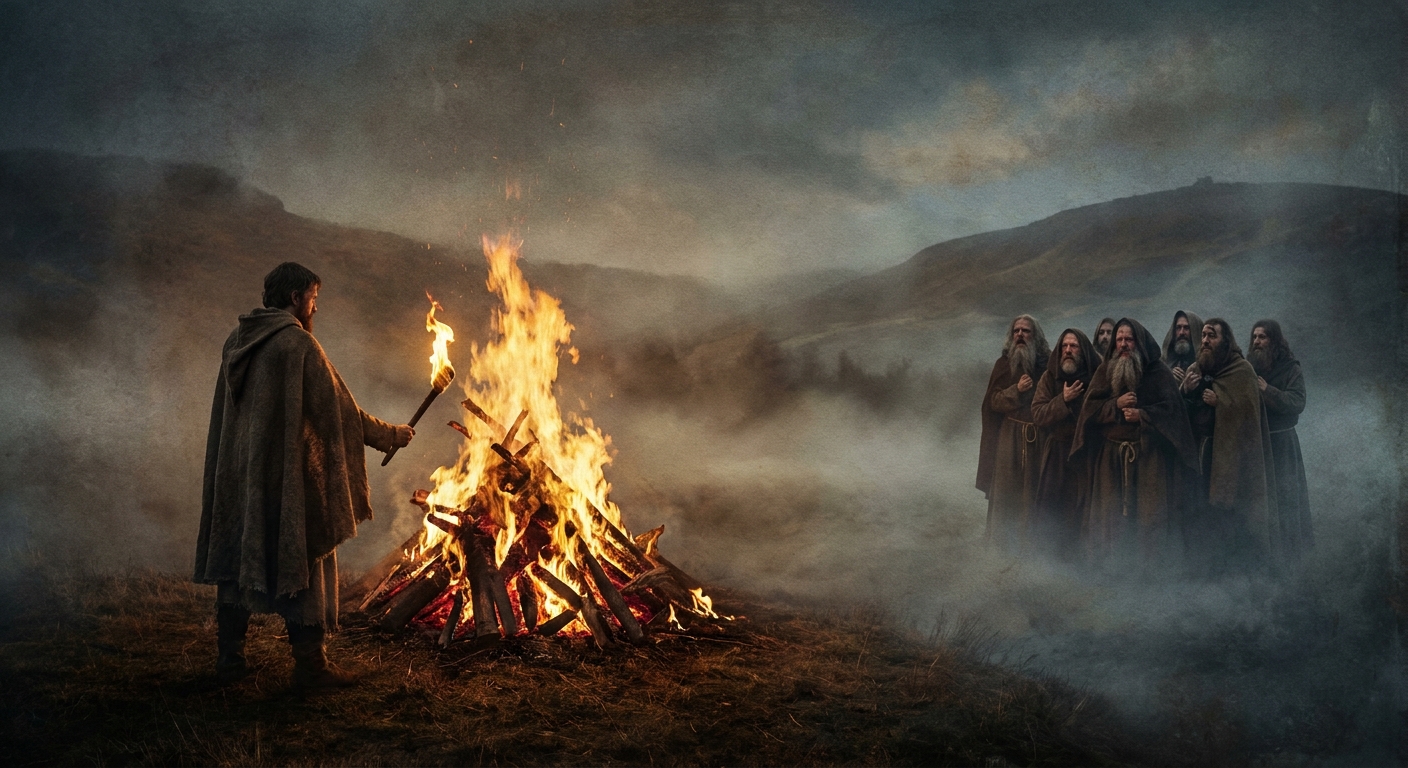
High King Laeghaire had decreed: no fire on the hills surrounding Tara on Beltane, before his own fire was kindled. Patrick lit a Paschal fire (Easter Vigil fire) on the Hill of Slane in direct defiance (Muirchú, Vita Sancti Patricii, 7th century). The Druids warned Laeghaire: “If that fire is not extinguished tonight, it will never be extinguished in Ireland.” It was not. The symbolic victory is real: within two centuries, Ireland was Christianized with comparatively little bloodshed, and the old religious class crossed into the monastery rather than being put to the sword. (Patrick’s own Confessio doesn’t mention the event, so the historical detail remains uncertain — but the pattern holds.)
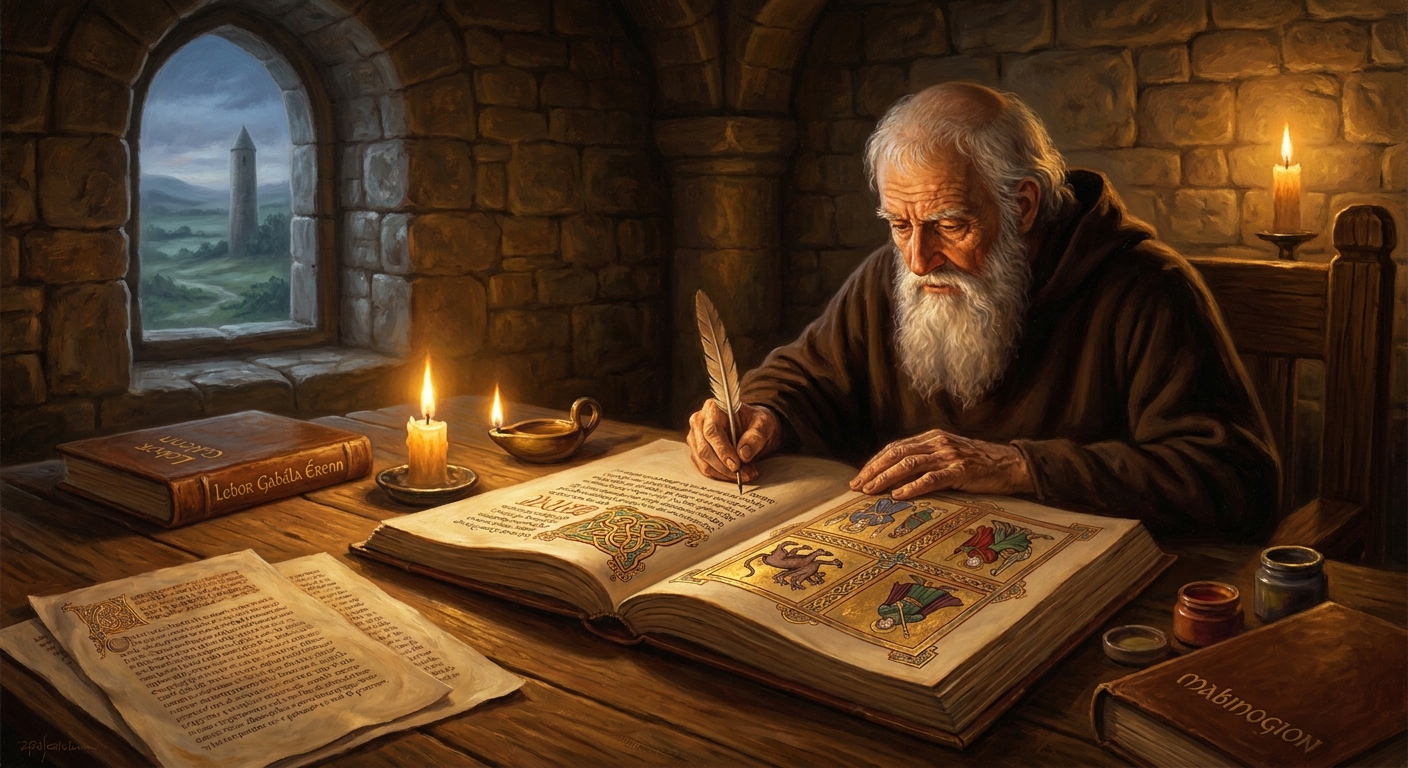
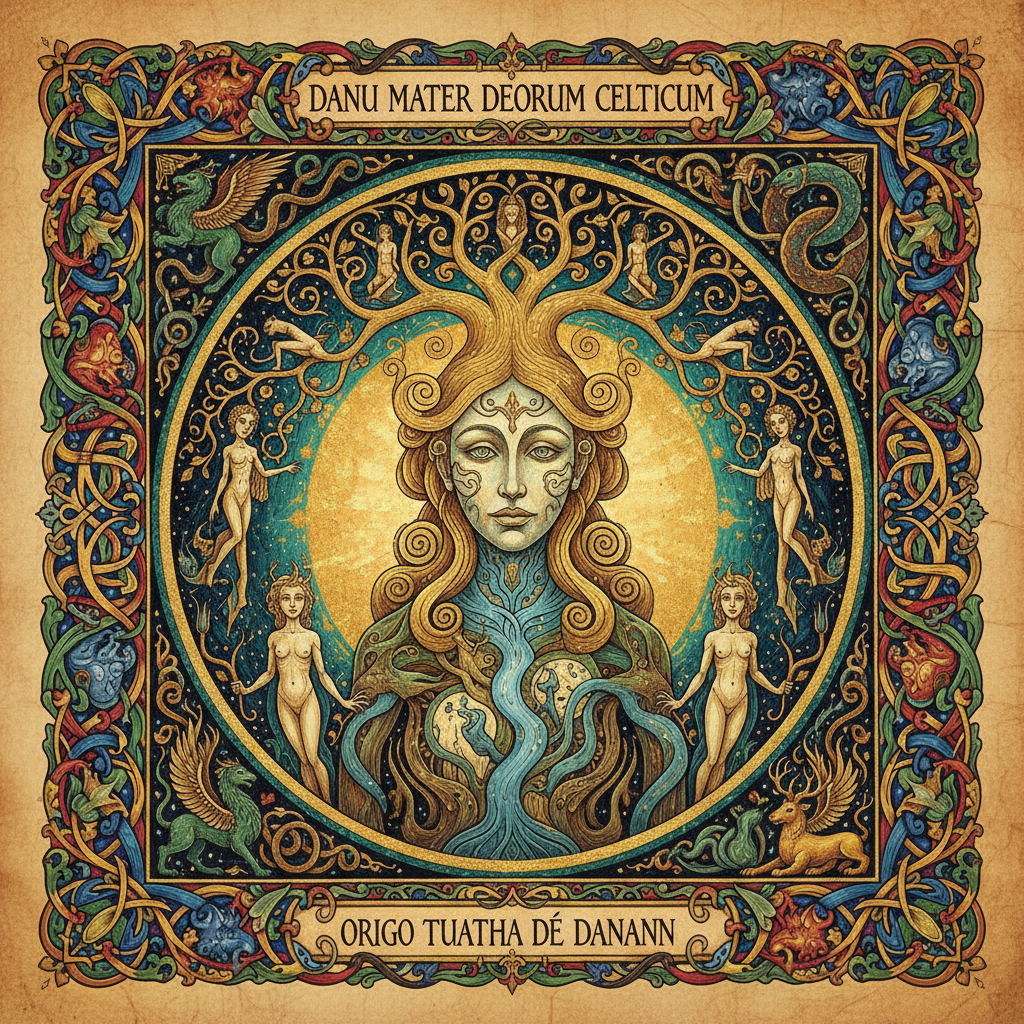
Celtic mythology survives because Christians wrote it down. Between roughly 1100 and 1300 CE, monastic scribes committed the entire mythological inheritance to vellum. The Lebor Gabála Érenn (“Book of Invasions,” ~1100s) reconstructs Ireland’s pseudo-history through six invasions (Lebor Gabála Érenn), ending with the Tuatha De Danann driven underground into sidhe mounds when the Milesians arrived. The Mabinogion (from the White Book of Rhydderch ~1350 and Red Book of Hergest ~1400) preserves the Welsh four branches plus native Arthurian tales (White Book of Rhydderch; Red Book of Hergest). The monks euhemerize the gods into ancient kings, but preserve the names, stories, attributes, relationships. Modern Celtic religion, neo-Druidism, even Tolkien — all descend from medieval monks choosing to copy pagan stories rather than burn them.
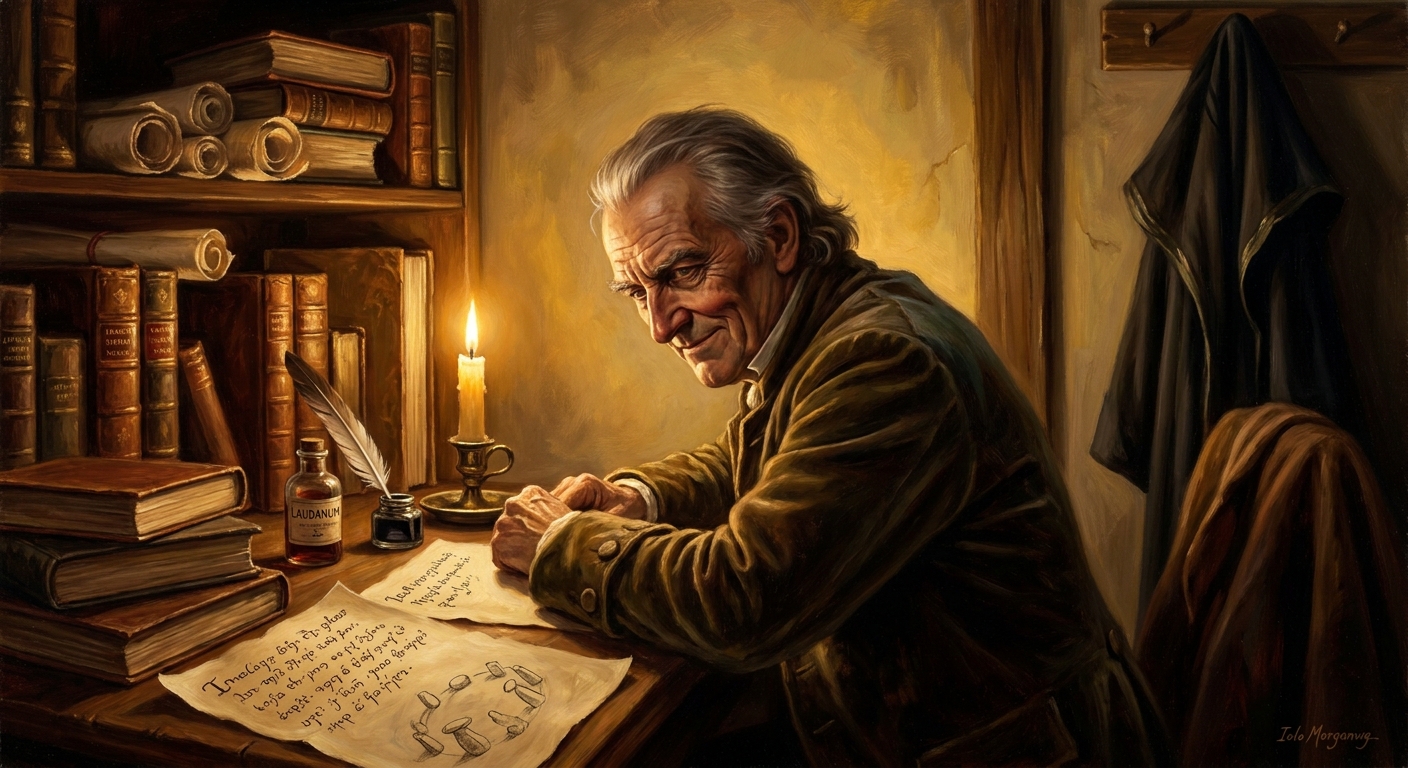
Edward Williams (1747-1826), bardic name Iolo Morganwg, was a Welsh stonemason, scholar, laudanum addict, and one of history’s most successful literary forgers (Iolo Morganwg, Barddas). In the 1790s he produced what he claimed were ancient Welsh Druidic manuscripts — including the Barddas, a complete Druidic theology and ritual system (Iolo Morganwg, Barddas). He invented the Gorsedd Beirdd Ynys Prydain (Throne of the Bards), held its first ceremony on Primrose Hill, London, in 1792 (Iolo Morganwg records), and fabricated an entire Welsh Druidic tradition from scratch, sprinkled with genuine medieval fragments. By the time scholars detected the forgeries in the late 19th century, his inventions had been absorbed into the National Eisteddfod of Wales and every modern Druidic order. The 18th-19th century “ancient Druidic” revival is, to a startling degree, Iolo’s invention. This is not hostile critique; it is genealogical fact.
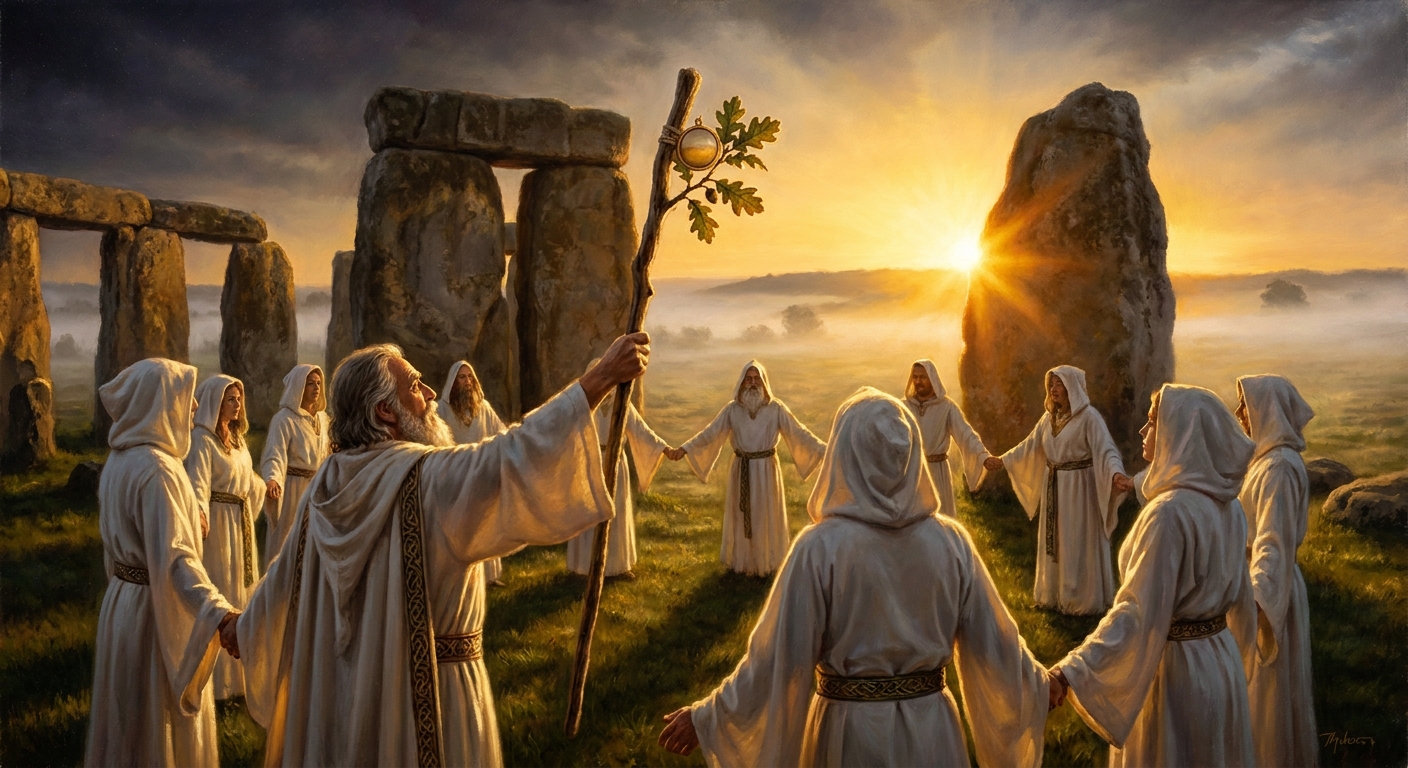
Yeats publishes The Celtic Twilight (1893) (Yeats, Celtic Twilight). Lady Gregory translates the Cu Chulainn cycle into English (1902) (Lady Gregory, Cuchulain of Muirthemne). Douglas Hyde founds the Gaelic League (1893) to restore Irish (Hyde, Convent of the Sacred Heart). The Irish Literary Revival merges with the political revival that produces the 1916 Rising and independence. Meanwhile, modern Druidic orders multiply: the Ancient Druid Order, the Order of Bards Ovates and Druids (Ross Nichols, 1964), Isaac Bonewits’s Ar nDraiocht Féin (1983). The last is explicitly reconstructionist, modeled on actual Iron Age and medieval scholarship, not Iolo’s romantic fabrications. Today three streams coexist: romantic neo-Druidism (white robes, Stonehenge solstice, mostly British); reconstructionist Celtic polytheism (mostly American); and folk Celtic Christianity (Iona, Glenstal, global spirituality publishing). All claim the inheritance. None resembles what existed in 500 BCE.
Timeline
| Era | Date | Event | Source |
|---|
| Hallstatt Culture | ~1200-500 BCE | Early Iron Age proto-Celtic culture | archaeology |
| La Tene Culture | ~500 BCE - 1st c. BCE | Mature Celtic art and expansion | archaeology |
| Druids Recorded | 1st c. BCE | Caesar describes the Druidic priesthood | Caesar, De Bello Gallico VI |
| Coligny Calendar | ~2nd c. CE | Bronze Gaulish lunisolar calendar | Coligny, France |
| Roman Conquest of Gaul | 58-51 BCE | Caesar conquers Gaul; Druidism suppressed | Caesar |
| Roman Britain | 43 CE | Claudius invades; Druids massacred on Anglesey (60 CE) | Tacitus, Annals |
| Patrick in Ireland | ~432-461 CE | Christianization begins; Paschal Fire at Slane (433 CE) | Confessio; Muirchu |
| Columba Founds Iona | 563 CE | Insular Christian monasticism flowers | Adamnan, Vita Columbae |
| Book of Kells | ~800 CE | Illuminated Gospel manuscript — Celtic Christian peak | Trinity College Dublin |
| Tain Bo Cuailnge Recorded | ~1100 CE | Cu Chulainn cycle written down | Book of the Dun Cow |
| Lebor Gabala Erenn | ~1100s CE | ”Book of Invasions” compiled | medieval mss |
| Mabinogion Compiled | ~1350-1400 CE | Welsh four branches written down | White/Red Books |
| Statutes of Kilkenny | 1366 CE | English ban Gaelic language and customs | English law |
| Highland Clearances | 1750-1860 | Scottish Gaelic culture devastated | historical record |
| Toland’s Druid Order | 1717 CE | First modern Druidic order founded in London | his writings |
| Iolo Morganwg Forgeries | 1790s | Welsh “Druidic” tradition fabricated | Barddas etc. |
| Irish Famine | 1845-1852 | One million dead; diaspora spreads folk tradition | historical record |
| Celtic Revival Begins | 1893 CE | Yeats’s Celtic Twilight; Gaelic League | literary record |
| Irish Independence | 1922 CE | Anglo-Irish Treaty; Irish Free State established | political record |
| Iona Community Founded | 1938 CE | Celtic Christian renewal community | Iona records |
| Graves’s White Goddess | 1948 CE | Triple-goddess theology systematized | Robert Graves |
| OBOD Founded | 1964 CE | Order of Bards, Ovates and Druids | OBOD records |
| ADF Founded | 1983 CE | Ar nDraiocht Fein — reconstructionist Druidry | ADF records |
| Druidry Recognized | 2010 CE | The Druid Network granted UK charity status | Charity Commission |
| Present | 2026 CE | ~80,000 Druids; vibrant Celtic Christian/neo-pagan revival | demographic studies |
 LEGENDARY
  RARE
RARE  LEGENDARY
  LEGENDARY
  MYTHIC
  RARE
RARE 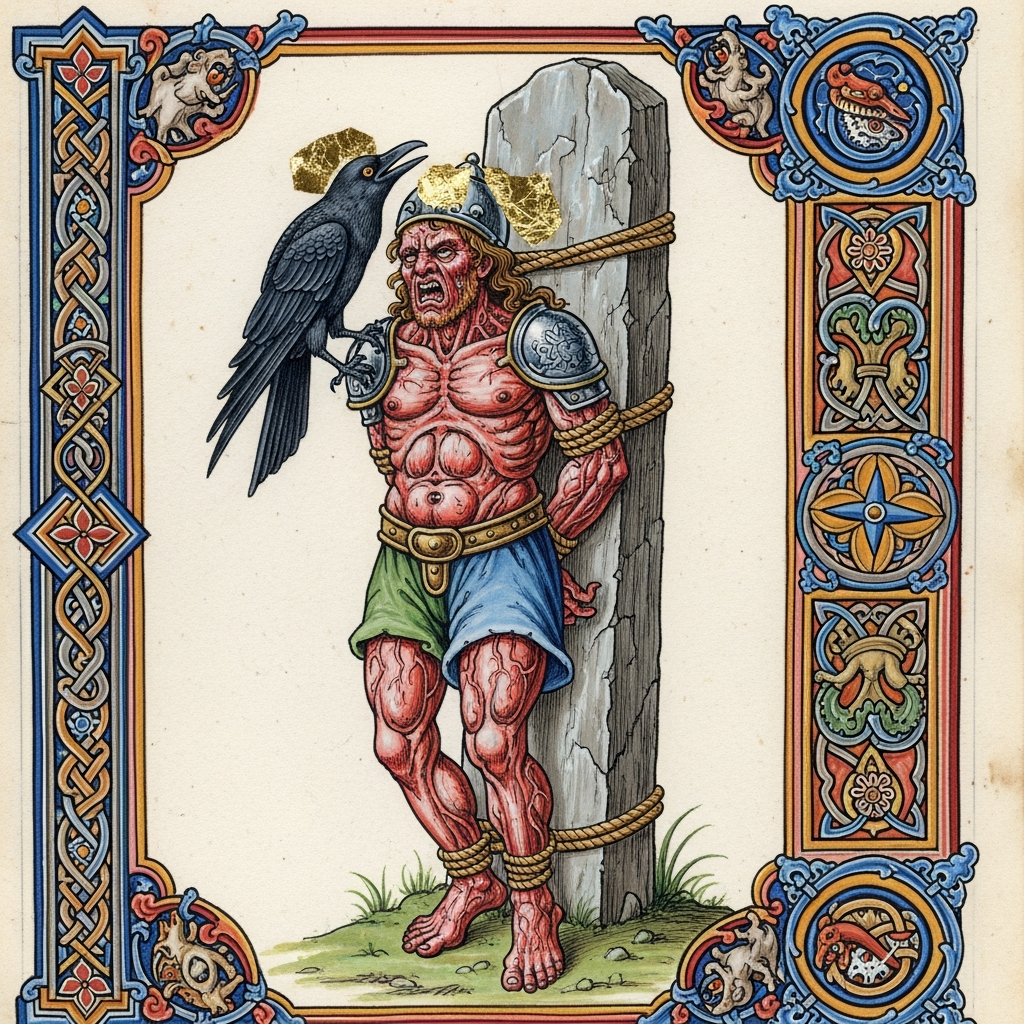 LEGENDARY
  LEGENDARY
  MYTHIC
  MYTHIC
 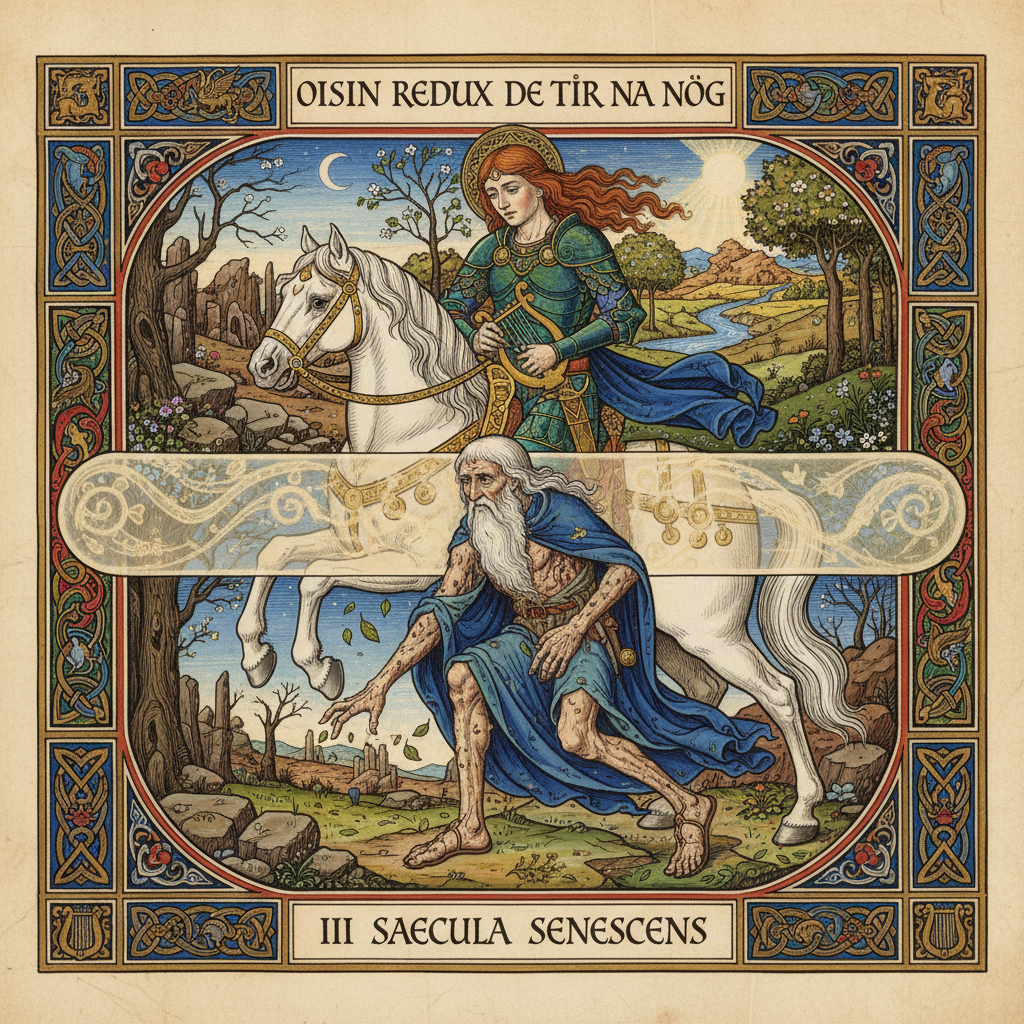 LEGENDARY
 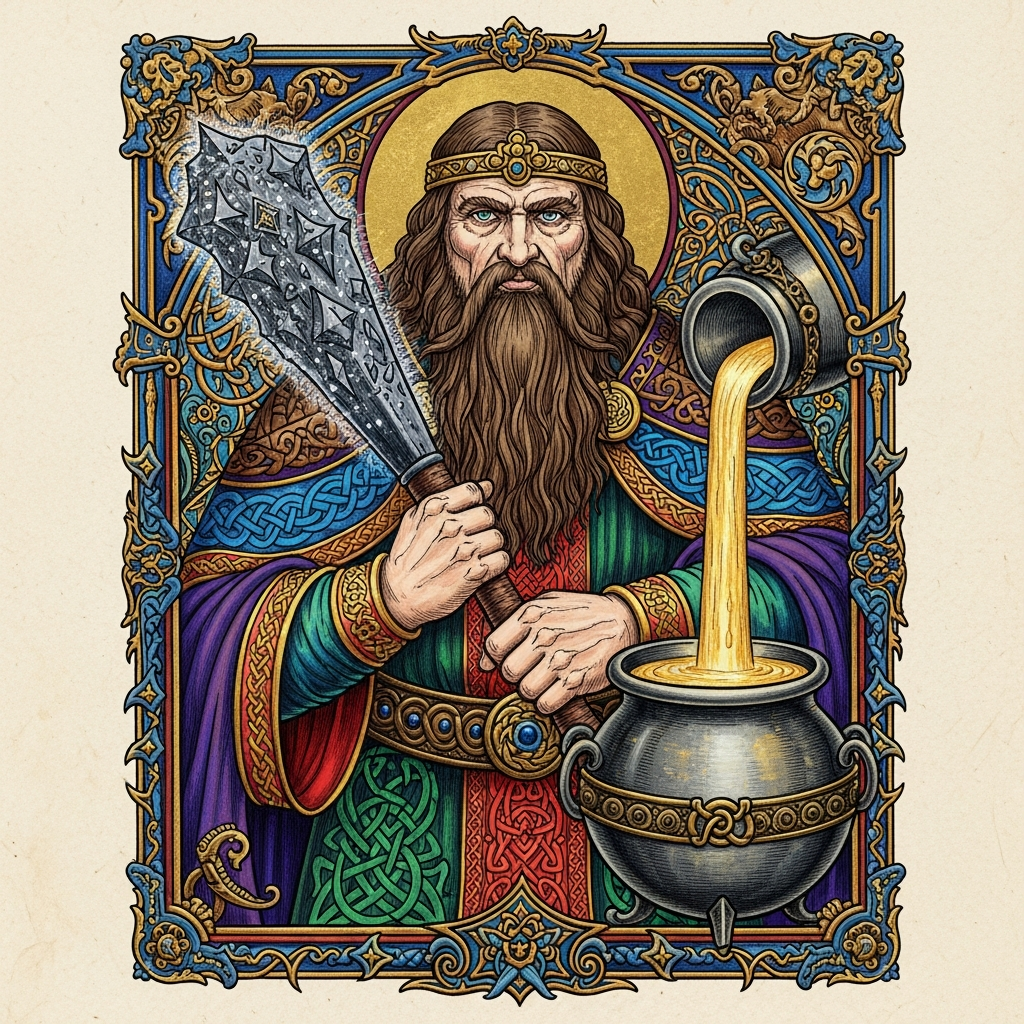 MYTHIC