The Story
In the beginning there was no beginning. Ginnungagap — the yawning void between worlds — flanked Niflheim (ice and mist) to the north and Muspelheim (fire and embers) to the south. Where heat met cold, the ice melted. From dripping rime came Ymir, a frost giant, hermaphroditic and monstrous, who sweated other giants from his armpits (Voluspa 1-4). Beside him: Audhumla, the primordial cow, licking salty rime stones, slowly uncovering Buri, the first god, frozen in ice.
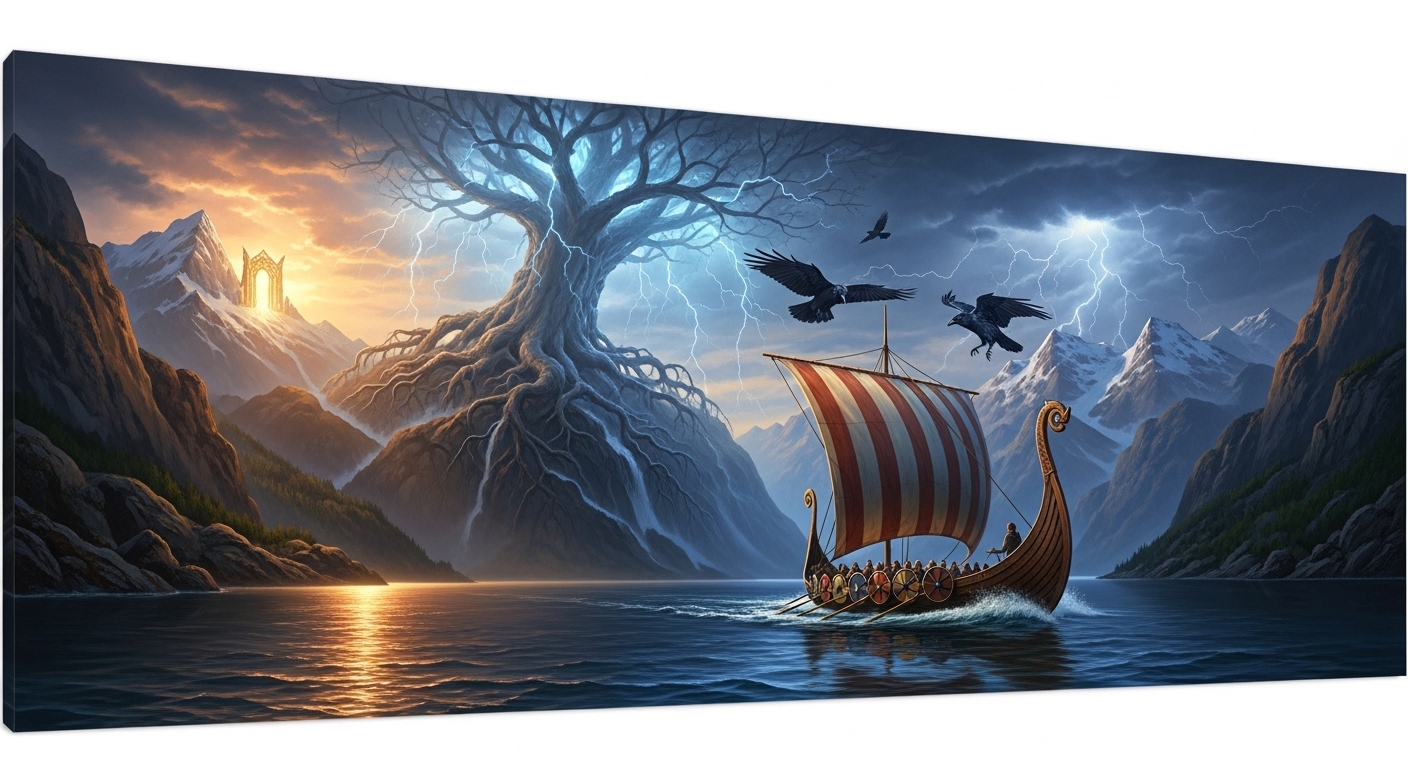
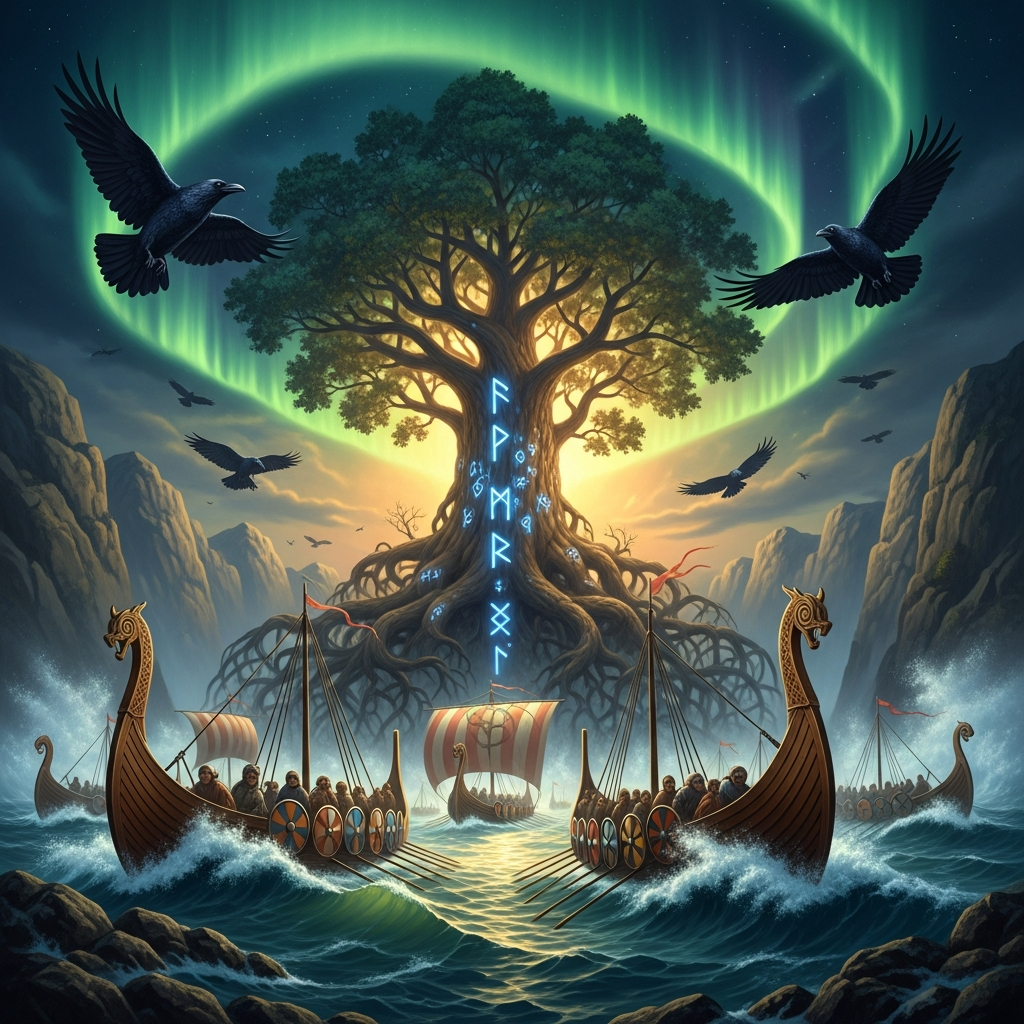
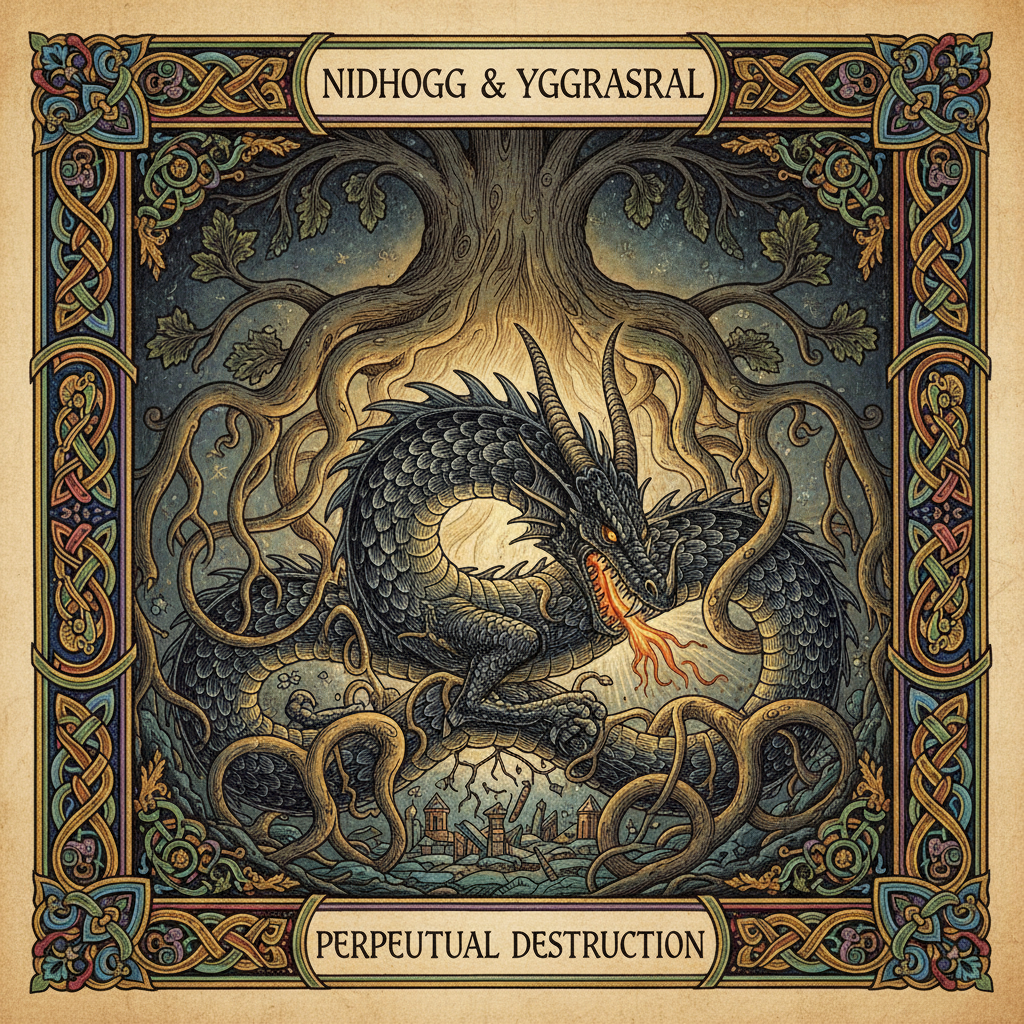
Buri begat Bor, who begat three sons: Odin, Vili, Ve. The brothers killed Ymir. From corpse they built the world — flesh into earth, blood into sea, skull into sky-dome, brains into clouds, bones into mountains (Voluspa 4-5). Two driftwood logs became Ask and Embla, the first humans (Voluspa 17-18). The cosmos: Yggdrasil, the World Tree, whose roots and branches linked the Nine Realms — Asgard (Aesir gods), Vanaheim (Vanir), Midgard (humans), Jotunheim (giants), Alfheim (light elves), Svartalfheim (dwarves), Niflheim, Muspelheim, and Hel (Grímnismál 2-9).
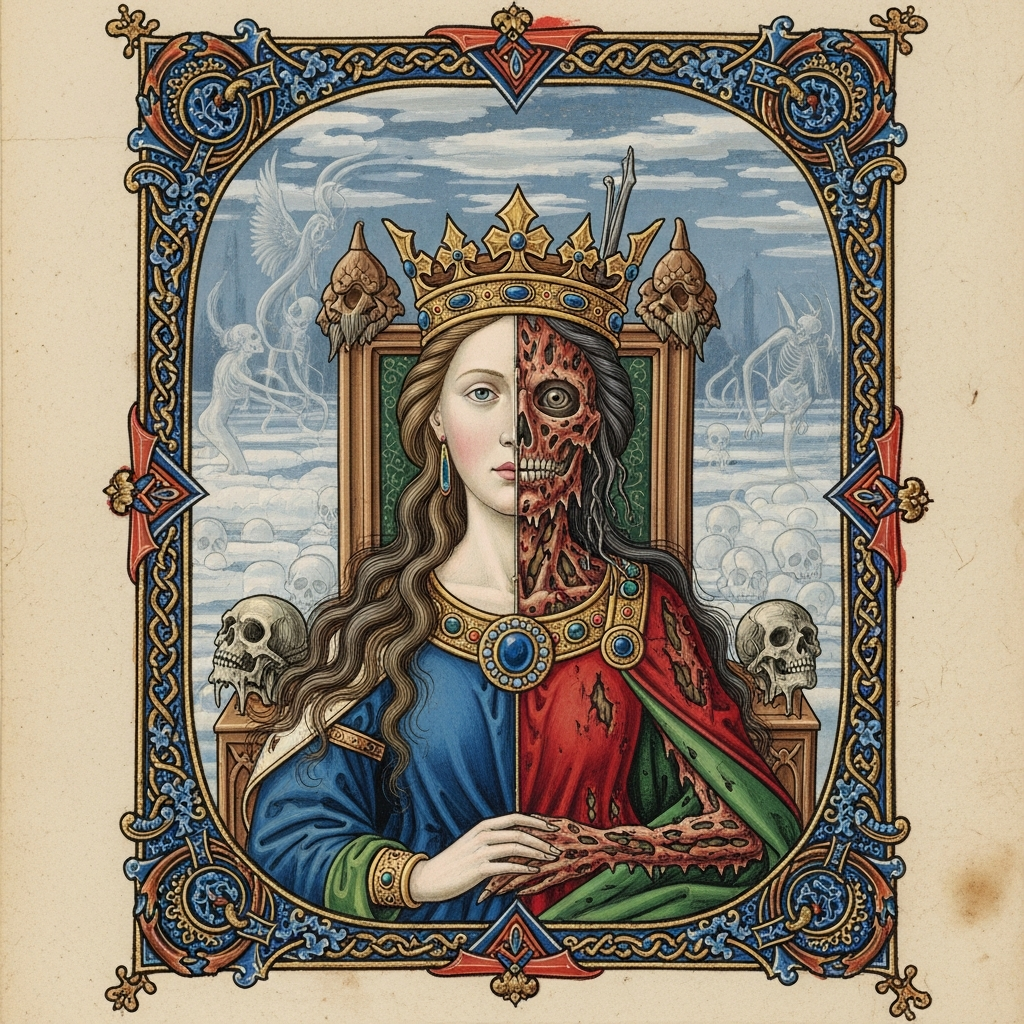
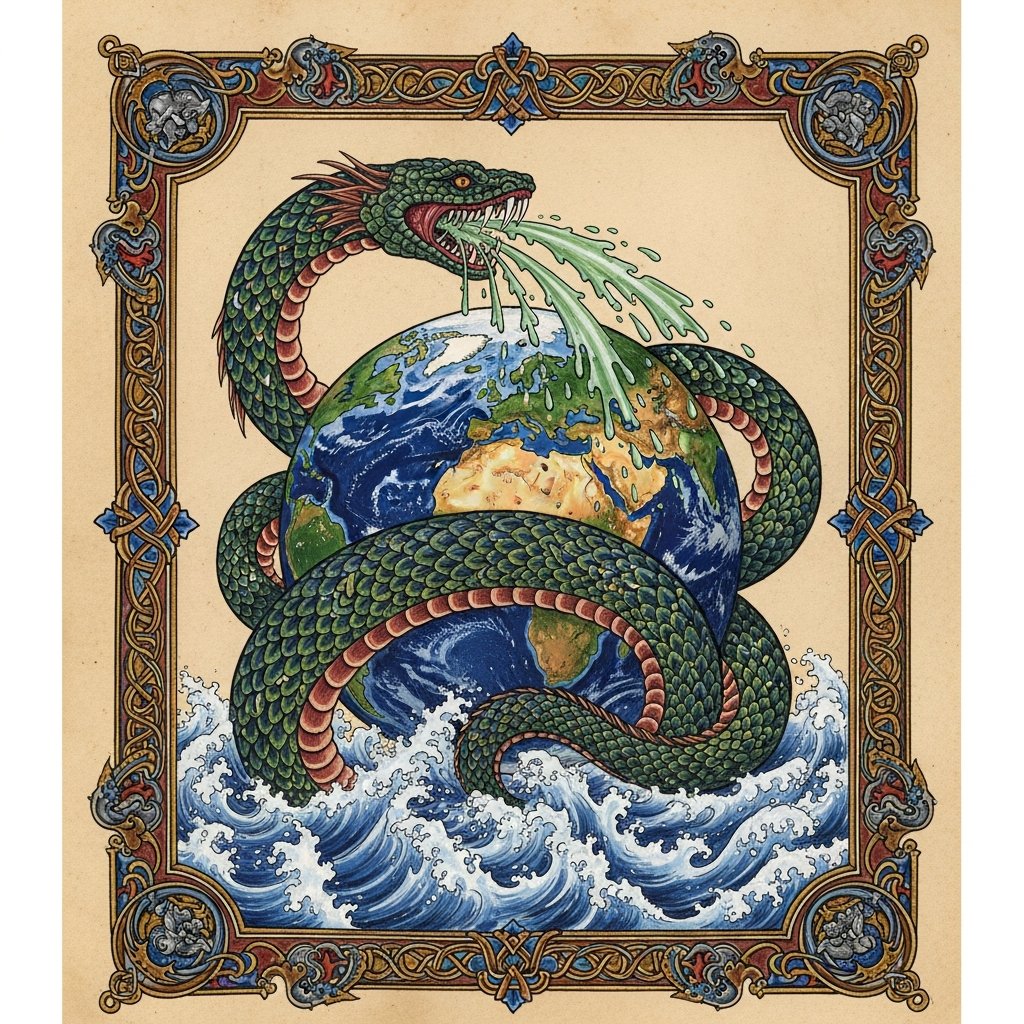
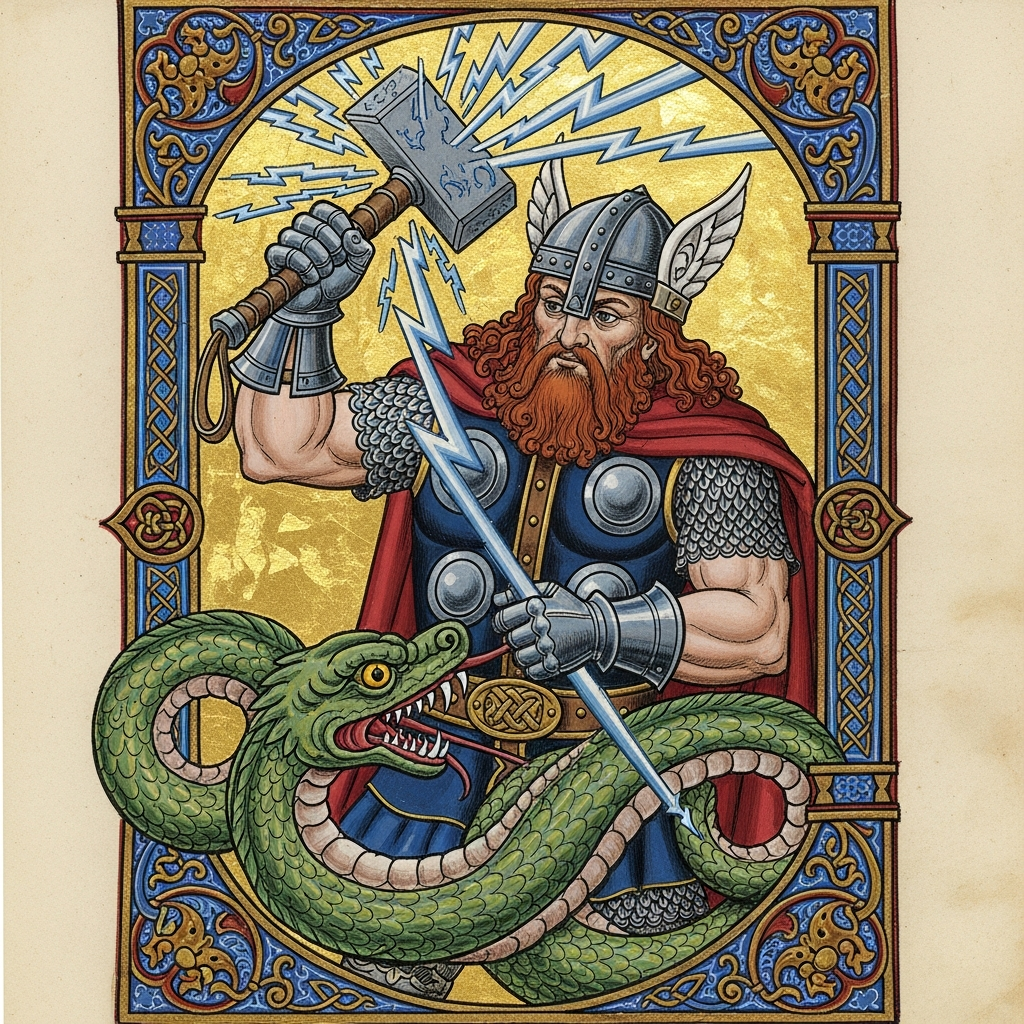
Then the Aesir-Vanir war. The warrior gods clashed the fertility gods, ended it by hostage exchange: Freya, Freyr, Njord to Asgard; Mimir and Hoenir to Vanaheim (Voluspa 21-24). Then came Loki, trickster and blood-brother to Odin, a half-giant who fathered three horrors: Fenrir the wolf, Jormungandr the world-serpent, and Hel, ruler of the dead (Gylfaginning 34). Loki killed Odin’s son Baldur. The gods bound him beneath a serpent whose venom drips eternal. He writhes still. The Voluspa prophesies the end: Ragnarok (Voluspa 44-66). Loki breaks free. Fenrir devours Odin. Thor kills the serpent, walks nine steps, dies of venom. Surtr’s fire burns the world. A new earth rises from the sea. Baldur returns. Two humans emerge from a hollow tree. The wheel turns.
That is myth. History is stranger. Norse paganism saturated Scandinavia for centuries. Then Christianization hit fast: Denmark ~960 CE under Harald Bluetooth (Jelling stones), Norway under Olaf Tryggvason and St. Olaf (Heimskringla), and Iceland in the year 1000, when the Althing — history’s oldest parliament — voted to convert (Islendingabok). The lawspeaker Thorgeir Ljosvetningagodi (himself pagan) lay under his cloak in silence for a day and a night, then declared: all Icelanders shall be Christian, baptized; private pagan worship tolerated (Islendingabok). A democratic conversion — nearly unique in medieval Europe. By 1100 the old gods were dead in public.
Everything we know about Norse mythology passes through Christian hands. Around 1220 CE, Snorri Sturluson — Icelandic chieftain, lawyer, twice lawspeaker of the Althing, ruthless political operator — wrote the Prose Edda (Snorri, Prose Edda c. 1220), a poet’s handbook framed as dialogue between a legendary king and three disguised gods. Snorri was Christian. He was also a meticulous preserver of ancestral heritage who saved the mythology from oblivion. Whether his Ragnarok-as-apocalypse parallels reflect pre-Christian sources or Snorri’s own framing remains the central debate in Norse studies. The Poetic Edda (older, anonymous, Codex Regius c. 1270) is the check.
The story doesn’t end in 1220. The 1970s brought Asatru revival. Sveinbjorn Beinteinsson founded Asatruarfelagid in Iceland (1972); it won official recognition (1973, Icelandic government). Tens of thousands of practitioners worldwide now honor the Aesir and Vanir, with active organizations across Iceland, the Nordic countries, the UK, and North America. But the revival also attracted predators. White supremacist movements looted Norse symbolism — runes, Thor’s hammer, the Othala rune, the Sonnenrad — as identity markers, a theft that mainstream Asatru organizations have condemned repeatedly and explicitly. Declaration 127 (2016, signed by dozens of heathen groups) repudiates the Asatru Folk Assembly’s racialist theology. The symbols remain contested. Most contemporary Norse pagans treat racism as heresy against a tradition that genuinely included diversity — the Vanir-Aesir merger is itself a story of integration.
A living tradition, then: pagan, Christianized, preserved by the very Christians who replaced it, revived in the modern era, now contested between honest practitioners and bad-faith appropriators.
Pivotal Events
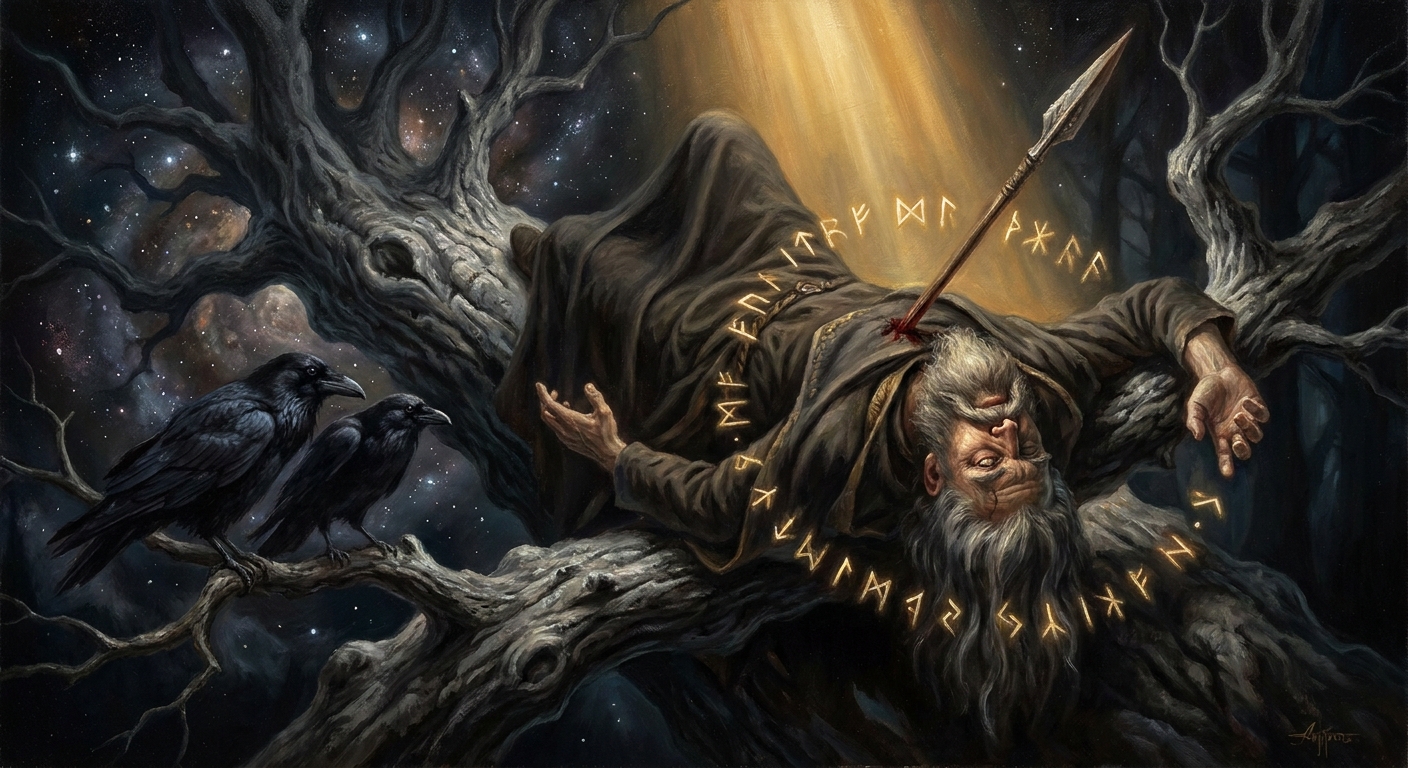
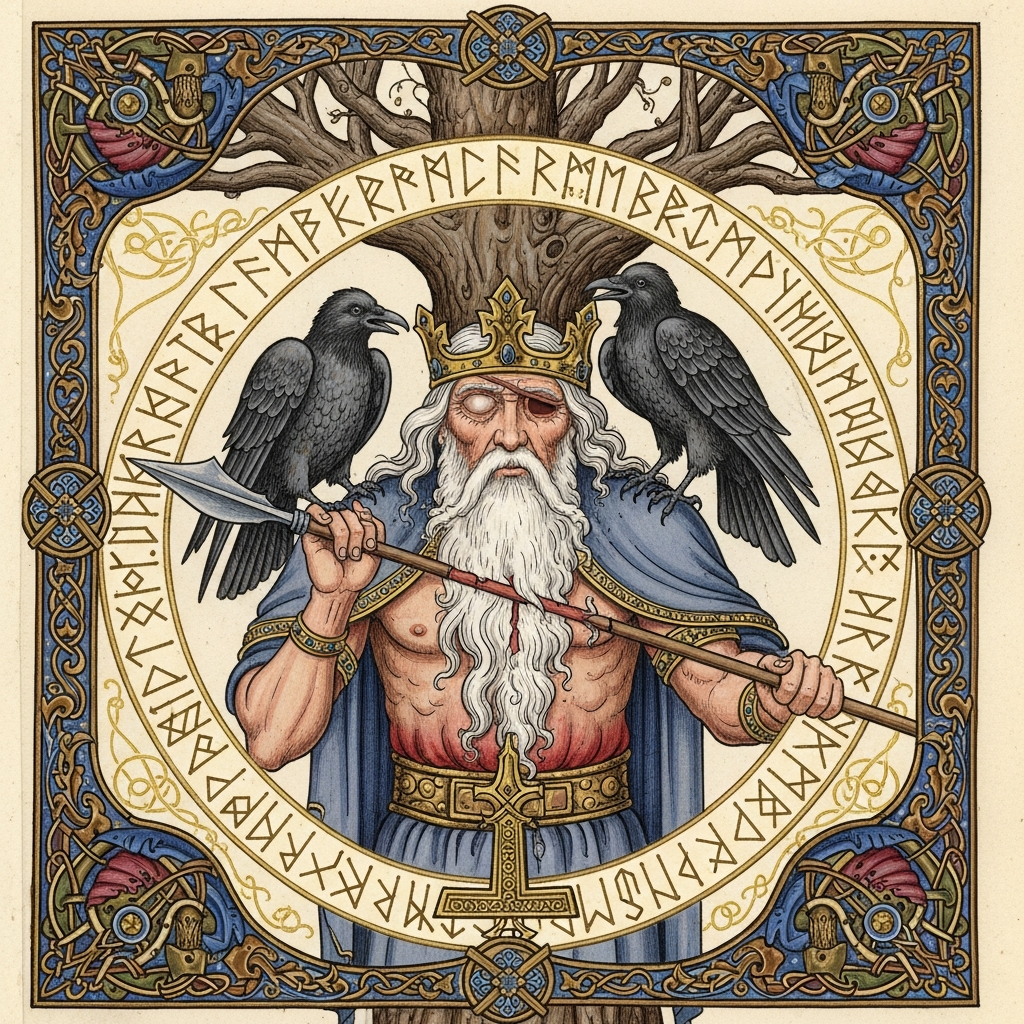
Of all the strange episodes in Norse mythology, this may be the strangest. Odin — All-Father, chief of the Aesir, god of war and wisdom — hangs himself from Yggdrasil, the World Tree, pierced by his own spear Gungnir (Havamal 138-141). Nine days and nine nights, “given to Odin, myself to myself,” refusing food and drink (Havamal 138). At the height of agony he screams and seizes the runes — the secret alphabet that encodes fate itself (Havamal 139-141). The Havamal records Odin’s own voice. The parallels to Christ’s crucifixion (god self-sacrificed on a tree, pierced by spear, suffering for knowledge) are striking. Whether this is pre-Christian or shaped by Iceland’s conversion remains debated. Either way, the message holds: knowledge exacts a price. The highest god pays it.
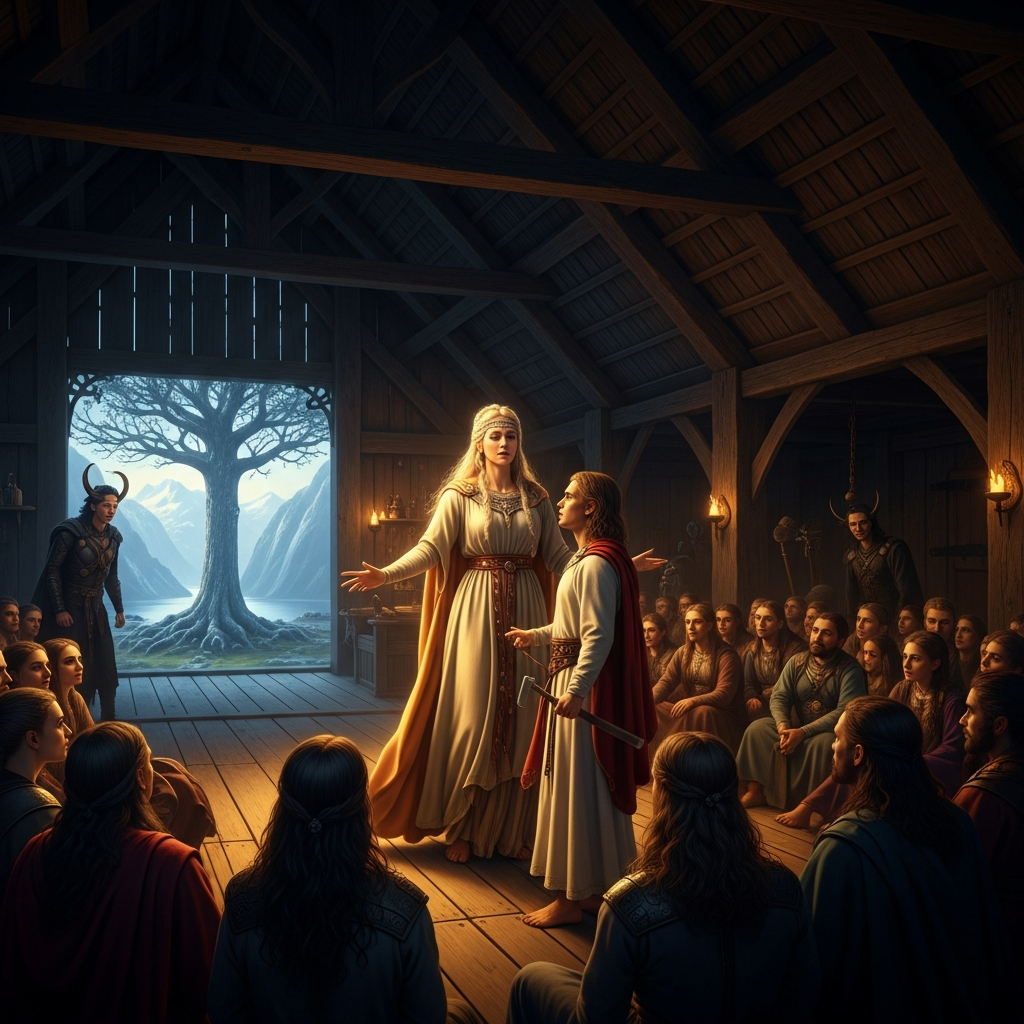
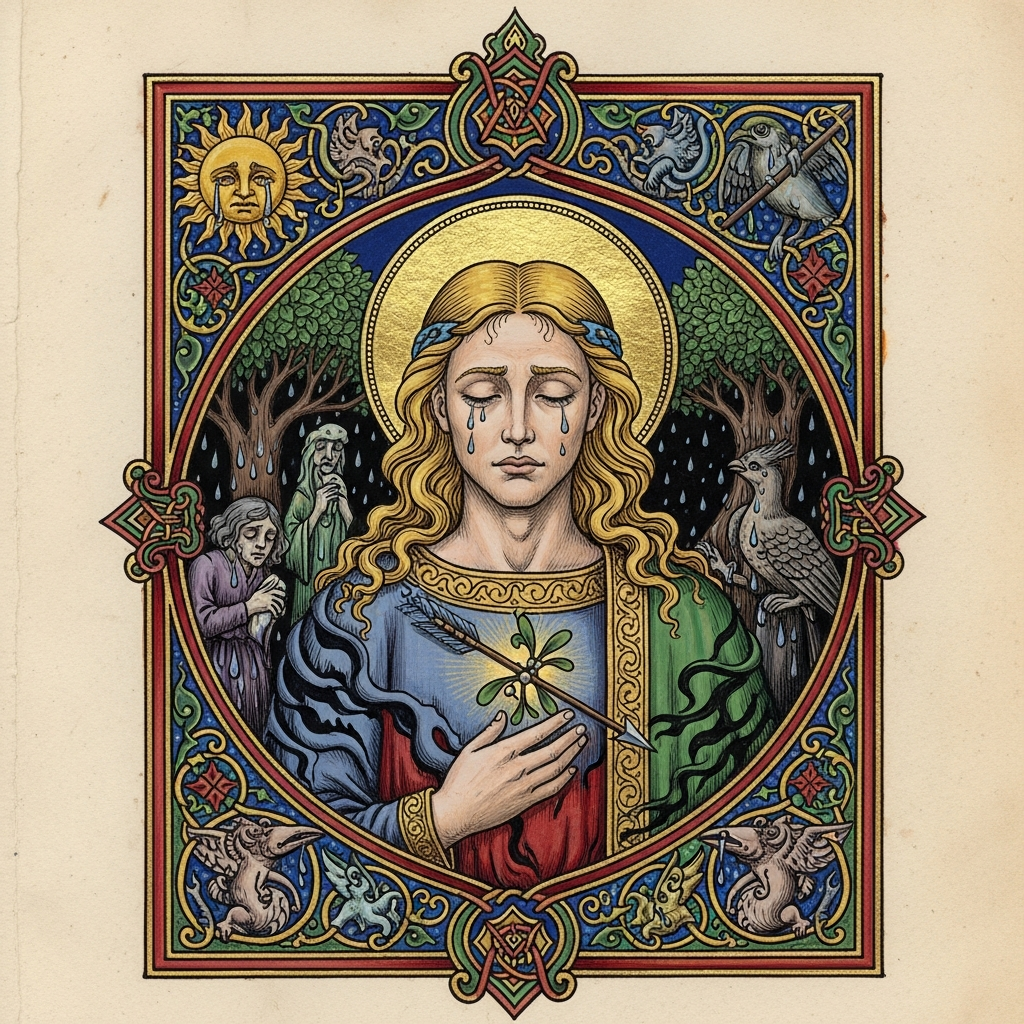
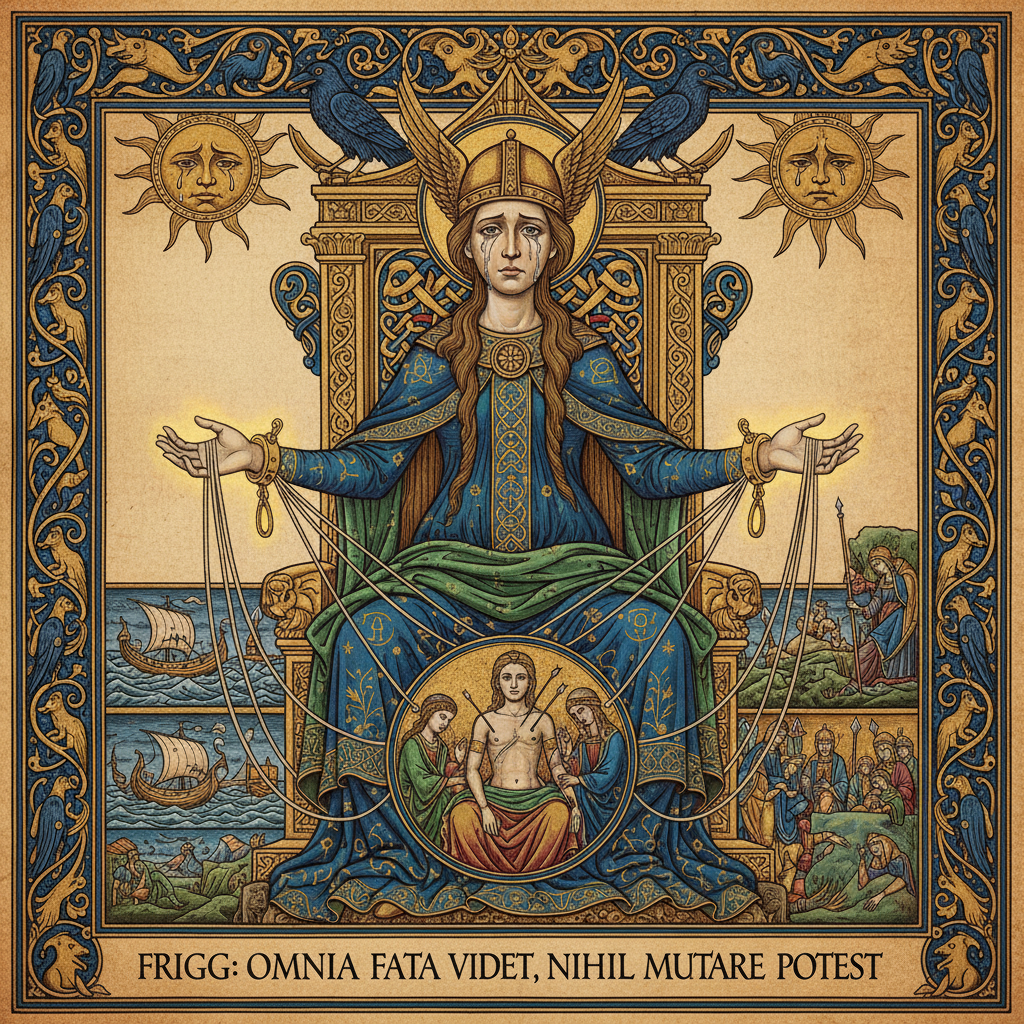
Baldur the Bright — son of Odin and Frigg, most beloved of gods, invulnerable to all weapons — dies from mistletoe (Snorri, Gylfaginning 49). Frigg extracted oaths from every plant, animal, stone, and metal not to harm him. She overlooked mistletoe: too young, too slight to swear. Loki fashioned a dart from it, placed it in the blind Hodr’s hands, guided the throw (Gylfaginning 49). Baldur fell. The gods’ grief consumed them. Hel agreed to release him only if every being in the cosmos wept. Everything did — except one giantess (Loki in disguise) who refused (Gylfaginning 49). Baldur remained dead. The Voluspa marks this as the first crack in creation: the moment fate tilted toward Ragnarok (Voluspa 32-33). Innocence dies. The end begins.
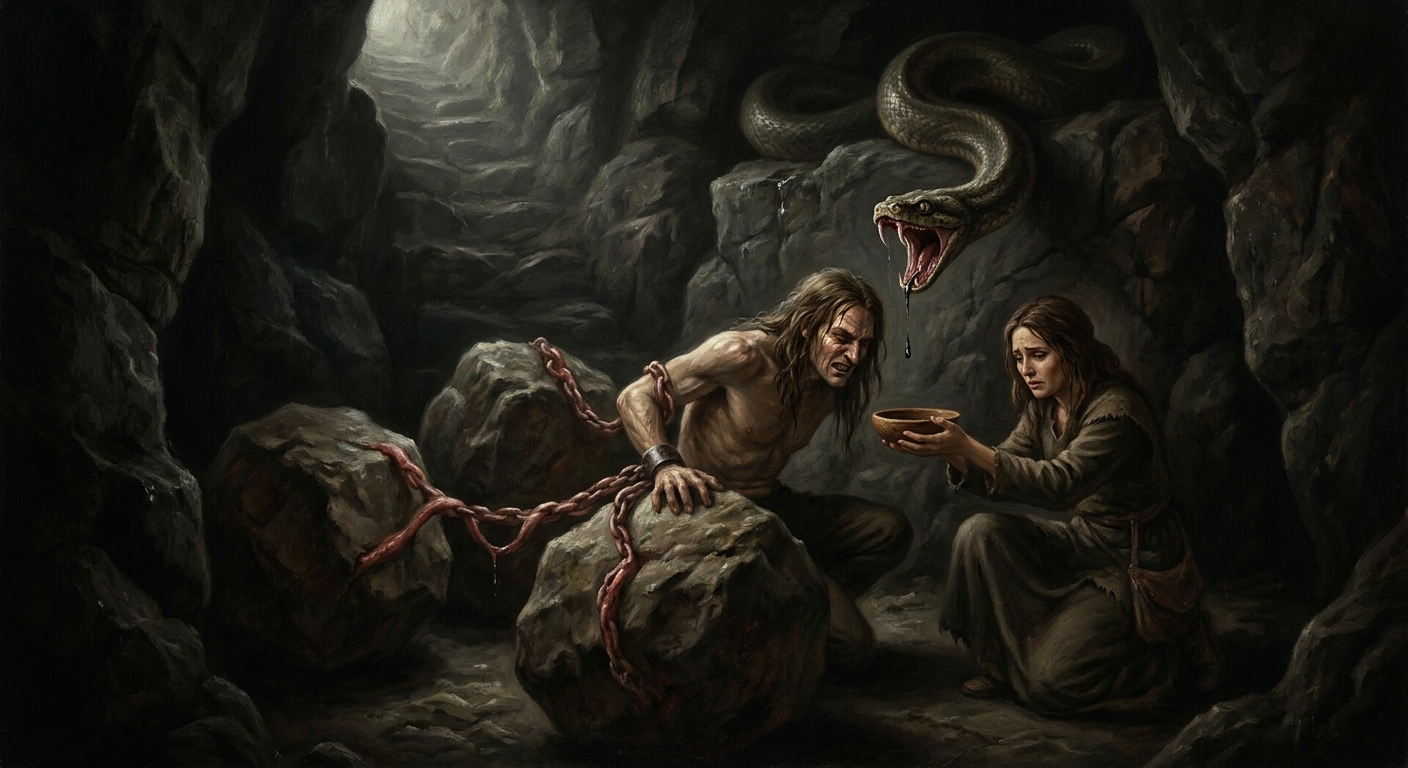
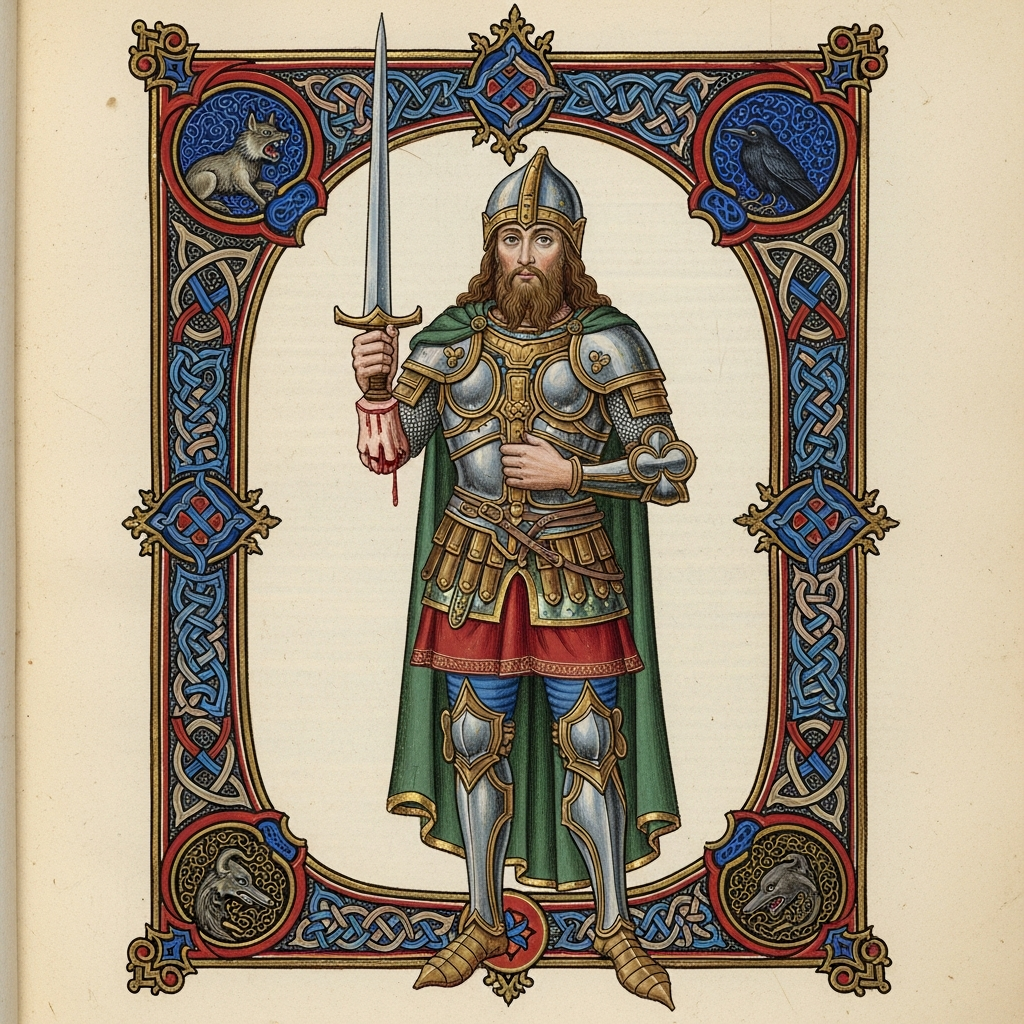
After Baldur’s death, pretense ended. Loki was caught — transformed into a salmon, netted by Thor — and dragged to a cave (Snorri, Gylfaginning 50). The gods killed his son Vali (or transformed him into a wolf to kill Narfi), then used Narfi’s entrails to bind Loki to three stones (Gylfaginning 50). Skadi, giantess-goddess, fastened a venomous serpent above his face to drip poison forever (Gylfaginning 50). Loki’s wife Sigyn catches the venom in a bowl, but when she empties it, drops fall on his face, and his writhing causes earthquakes (Gylfaginning 50). He stays bound until Ragnarok, when his chains break (Voluspa 51). The pattern mirrors 1 Enoch’s Watchers and Revelation 20’s bound dragon: evil intelligence chained beneath the earth, biding time, destined to break free.
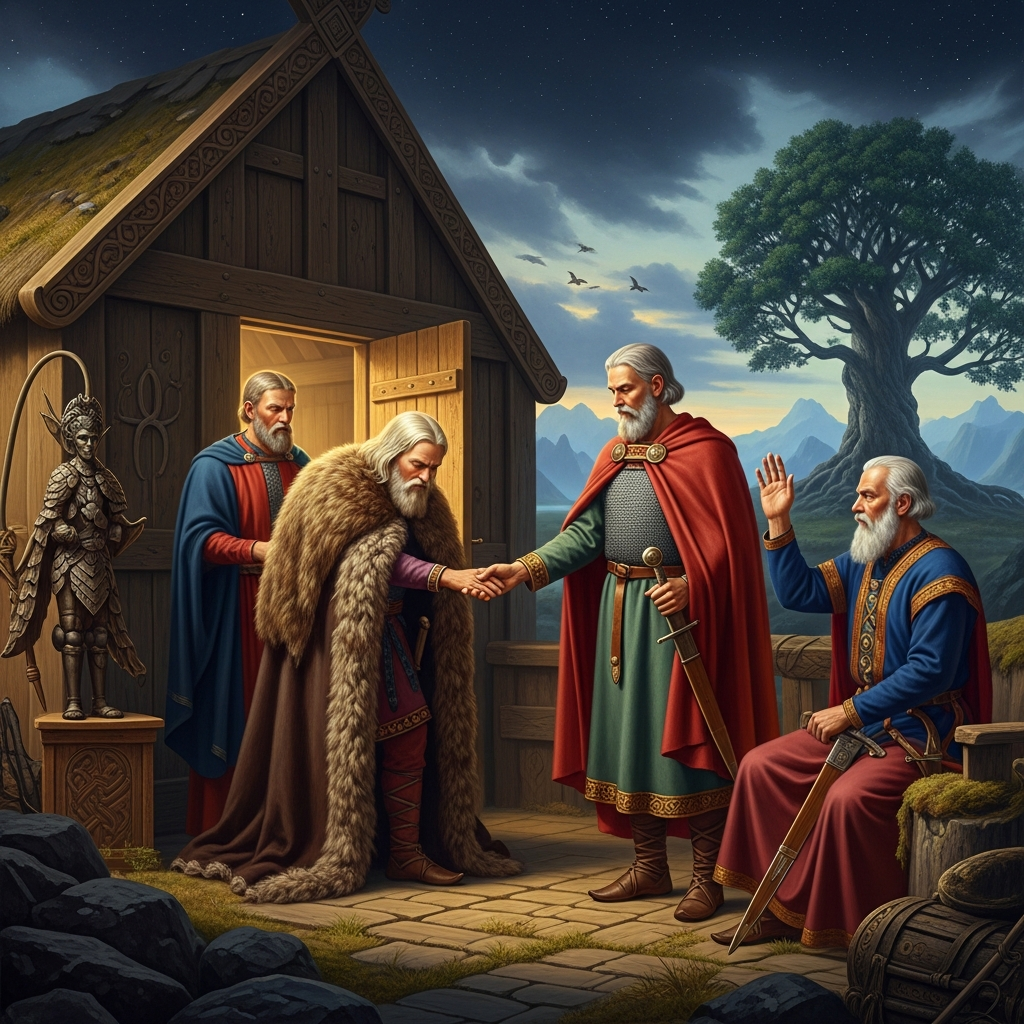
Summer, 1000 CE. The Althing — Iceland’s parliament, founded 930 CE, history’s oldest continuous legislature — met at Thingvellir (Islendingabok). The question tearing the nation: Christian or pagan? Norway’s King Olaf Tryggvason pressured conversion, holding Icelandic hostages (Heimskringla). Civil war threatened. The lawspeaker Thorgeir Ljosvetningagodi — himself a pagan priest — was given sole authority to decide for all Iceland (Islendingabok). He lay under his cloak for a day and night in silence, deliberating (Islendingabok). He emerged and declared: all Icelanders shall be Christian and baptized; private pagan worship, eating horseflesh, and infant exposure would be tolerated (Islendingabok). Both sides accepted it. A democratic conversion — almost unique in medieval Europe — and the moment Norse paganism began its 200-year slide from public life.
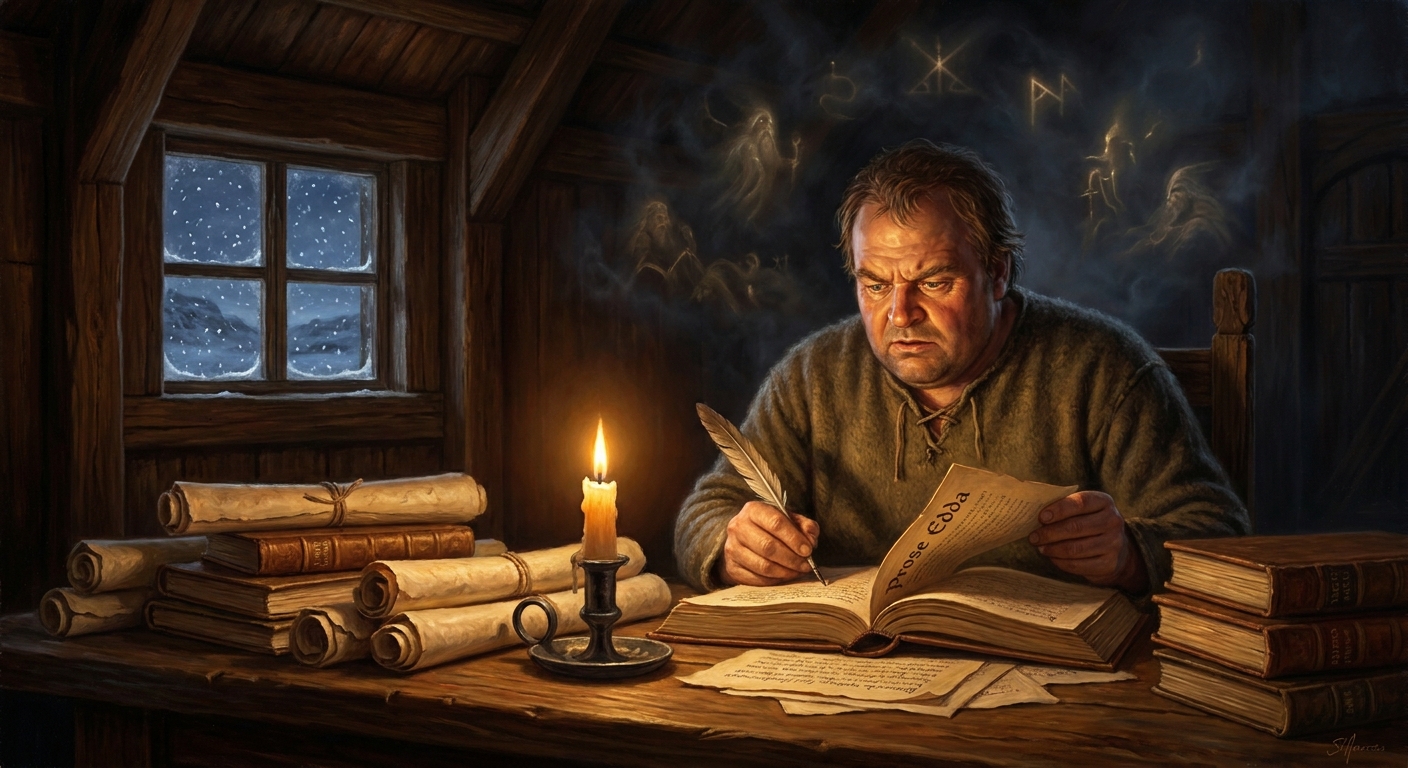
By 1220, the old gods had vanished from Iceland’s churches for two centuries. They lived on in poetry. Skaldic verse, the metrical court-poetry of the Norse, relied on kennings (“Odin’s drink” = poetry, “Freyja’s tears” = gold) that younger poets, never hearing the myths, no longer understood (Snorri, Skaldskaparmal). Snorri Sturluson — chieftain, lawyer, twice lawspeaker of the Althing, ruthless operator, murdered in his cellar in 1241 (Sturlunga saga) — wrote the Prose Edda as a poet’s handbook, framing the myths as dialogue between a legendary king and three disguised gods (Snorri, c. 1220). He was Christian preserving heritage: he frames the Aesir as deified humans (the medieval “Euhemerist” reading) to make it theologically safe. Without Snorri, we would have scattered fragments and almost nothing of the systematic cosmology. He preserved it. That we know Yggdrasil, the Nine Realms, Ragnarok, and the genealogies of the Aesir is because one Christian Icelander in the 13th century deemed his ancestors’ stories worth saving.
Timeline
| Era | Date | Event | Source |
|---|
| Mythic Creation | Before time | Ginnungagap; Ymir and Audhumla emerge from ice | Voluspa; Gylfaginning |
| Mythic Creation | Before time | Odin, Vili, Ve slay Ymir; build the cosmos from his body | Gylfaginning |
| Mythic Creation | Before time | First humans Ask and Embla shaped from driftwood | Voluspa 17-18 |
| Mythic Cosmology | Before time | Yggdrasil and the Nine Realms established | Grimnismal |
| Mythic War | Mythic past | Aesir-Vanir war ends in hostage exchange | Voluspa 21-24; Ynglinga saga |
| Mythic | Mythic past | Odin hangs nine nights on Yggdrasil; seizes the runes | Havamal 138-141 |
| Mythic | Mythic past | Death of Baldur; Loki’s role uncovered | Gylfaginning 49 |
| Mythic | Mythic past | Loki bound beneath the serpent until Ragnarok | Gylfaginning 50; Lokasenna |
| Mythic Future | End of the world | Ragnarok prophesied: Fenrir, Surtr, world reborn | Voluspa 44-66 |
| Bronze/Iron Age | ~1500 BCE - 500 CE | Proto-Norse religion in Scandinavia; rock art, bog deposits | archaeology |
| Migration Period | 400-800 CE | Germanic religion crystallizes; runic alphabet (Elder Futhark) | runic inscriptions |
| Viking Age | 793 CE | Lindisfarne raid — the Viking Age begins | Anglo-Saxon Chronicle |
| Viking Age | 793-1066 CE | Viking raids, settlements, trade across Europe and beyond | sagas; chronicles |
| Christianization | ~960 CE | Harald Bluetooth converts Denmark | Jelling stones |
| Christianization | 995-1030 CE | Norway Christianized under Olaf Tryggvason and St. Olaf | Heimskringla |
| Christianization | 1000 CE | Iceland’s Althing votes for Christianity | Islendingabok |
| Late Norse | 1100 CE | Public Norse paganism essentially extinct in Scandinavia | historical record |
| Saga Age | 1200-1300 CE | Icelandic saga writing flourishes | Family Sagas |
| Preservation | ~1220 CE | Snorri Sturluson writes the Prose Edda | Prose Edda |
| Preservation | ~1270 CE | Codex Regius compiled (preserves the Poetic Edda) | Codex Regius |
| Preservation | 1241 CE | Snorri murdered in his cellar at Reykholt | Sturlunga saga |
| Romantic Revival | 19th century | Wagner, Tegner, scholarly reinvestment in Norse myth | Ring cycle |
| Asatru Revival | 1972 CE | Sveinbjorn Beinteinsson founds Asatruarfelagid in Iceland | Asatruarfelagid records |
| Recognition | 1973 CE | Asatru officially recognized as religion in Iceland | Icelandic government |
| Modern | 2016 CE | Declaration 127 — mainstream heathenry repudiates white supremacist appropriation | public statement |
| Modern | 2026 CE | Tens of thousands of Asatru practitioners worldwide; Reykjavik temple under construction | community records |
 LEGENDARY
  LEGENDARY
  LEGENDARY
  LEGENDARY
  LEGENDARY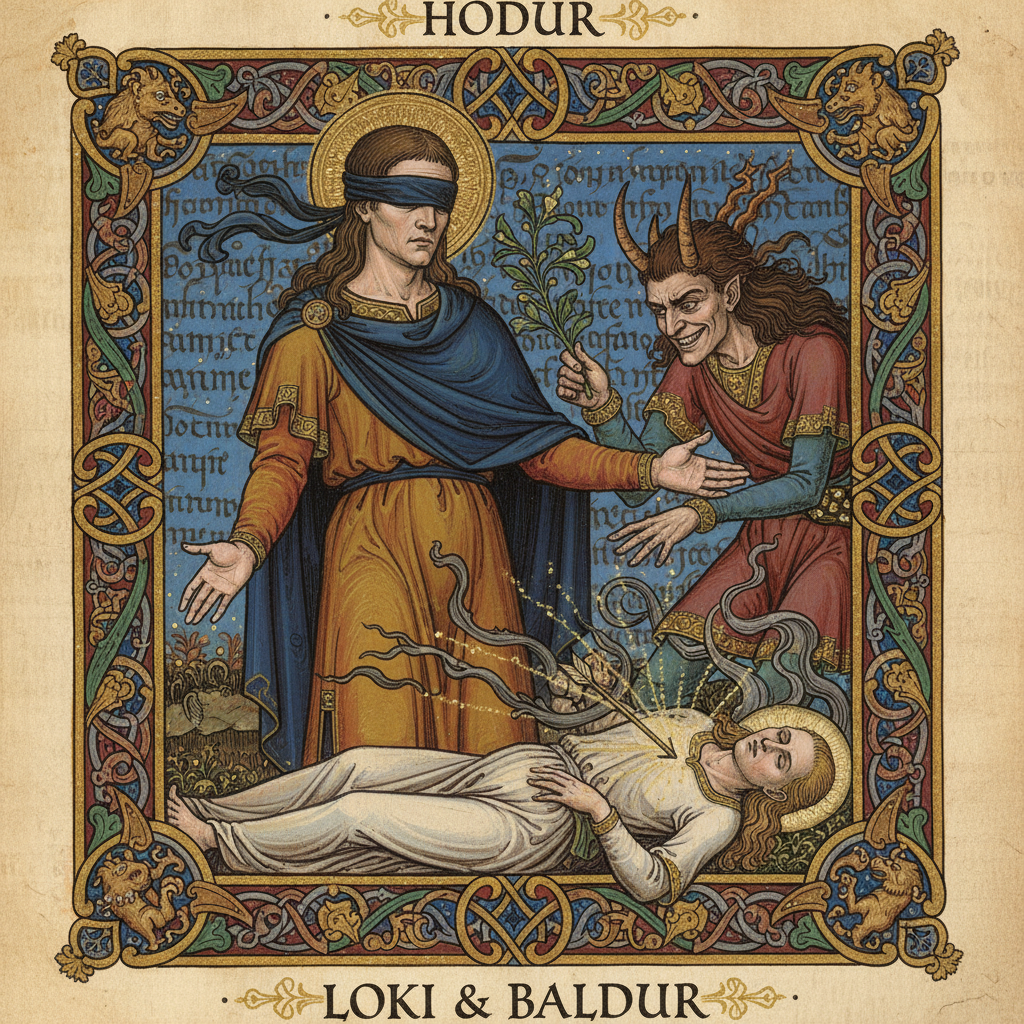
 RARE
RARE 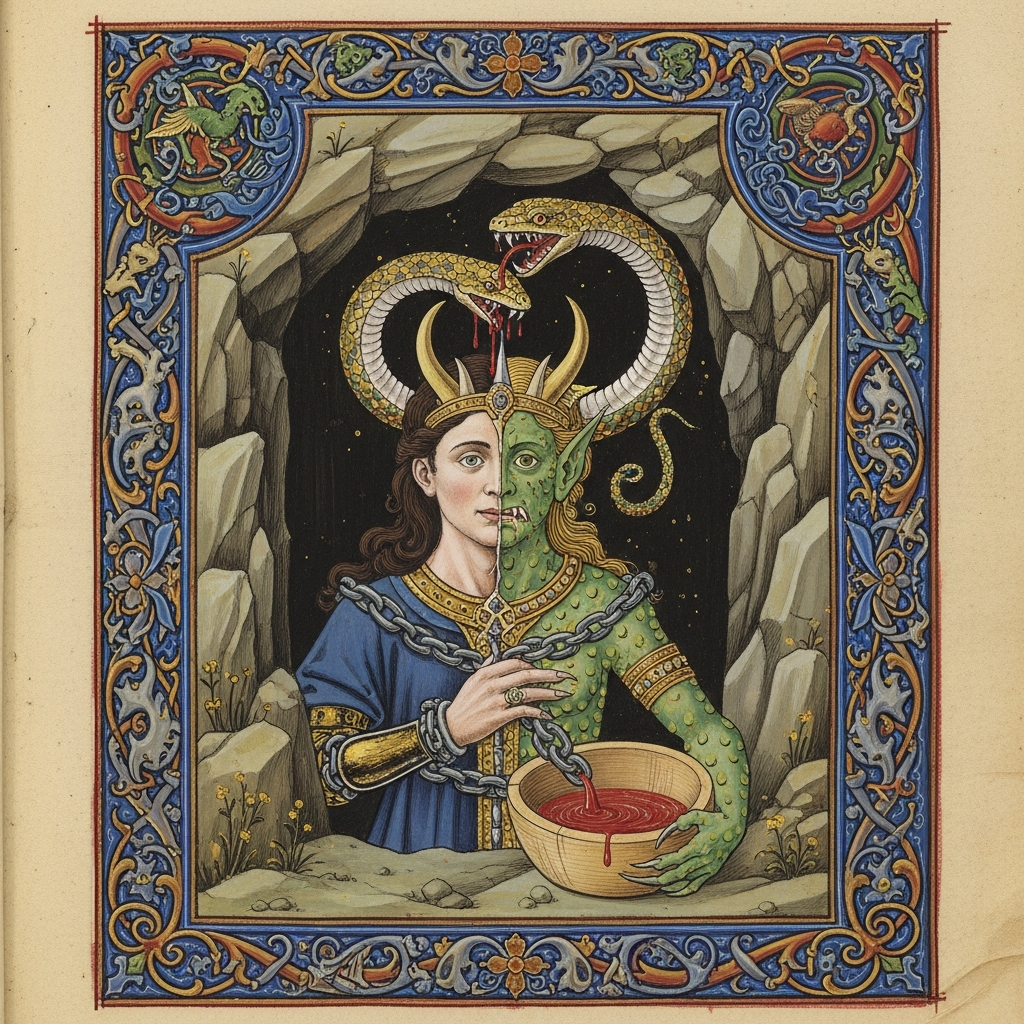 MYTHIC
  RARE
RARE 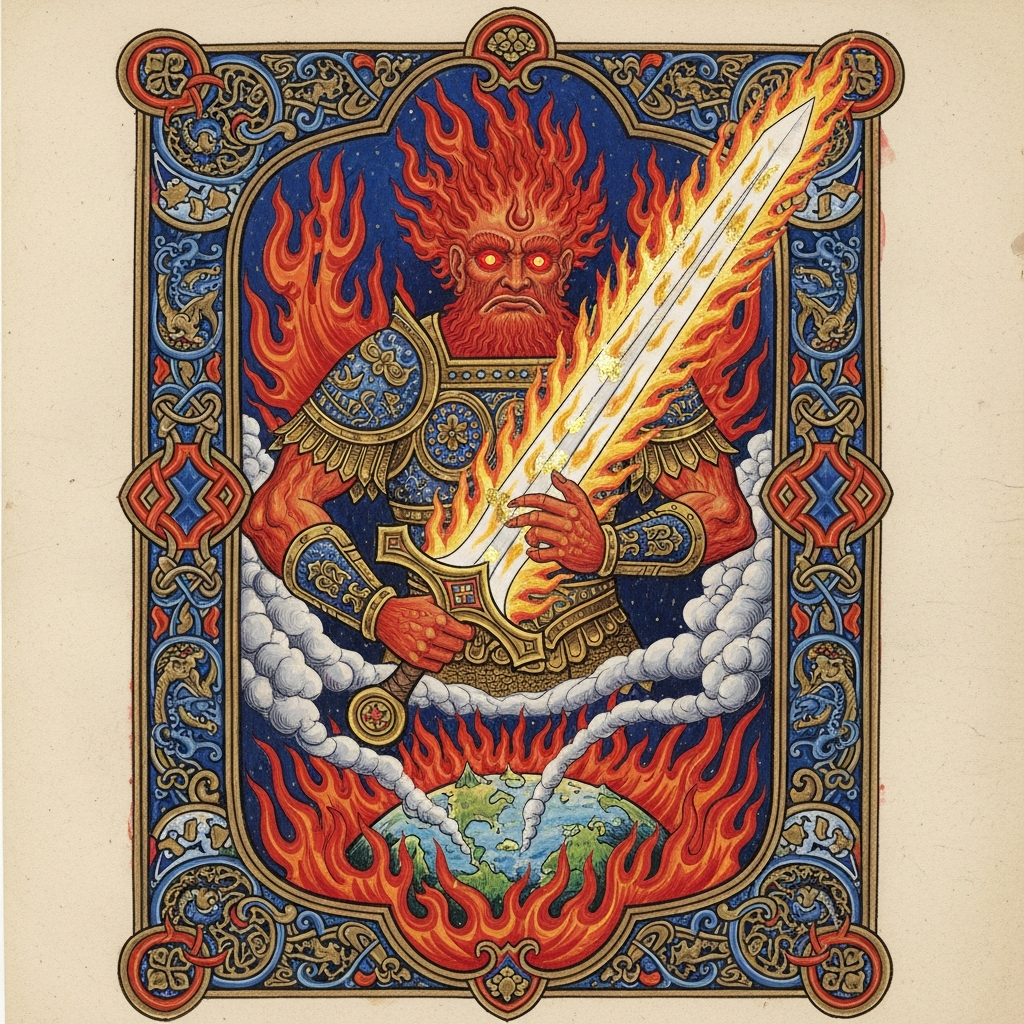 LEGENDARY
  LEGENDARY