Combat Profile
Völva's Sight
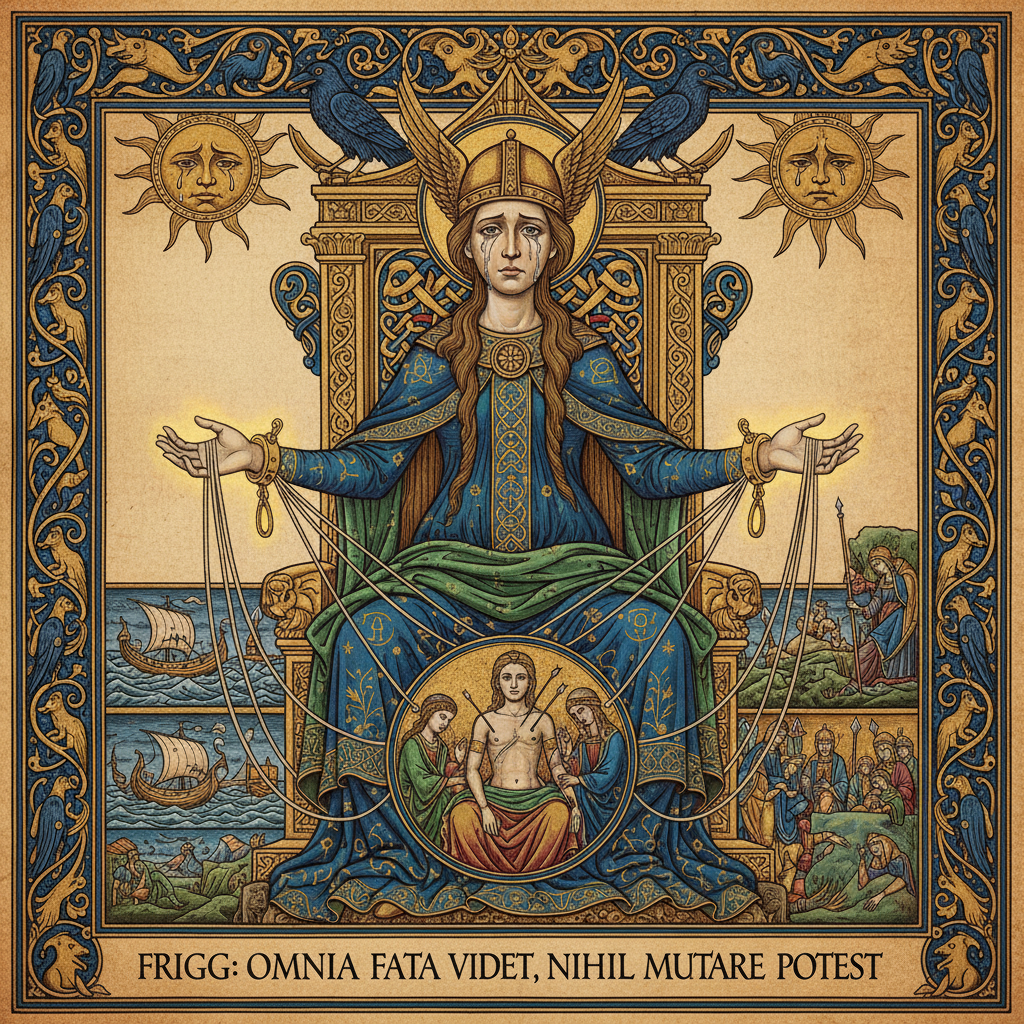
Frigg perceives all threads of fate across the Nine Realms, revealing hidden destinies and allowing her to alter the course of predetermined events once per conflict.
Queen's Benediction
All allies under Frigg's blessing gain protection from harm and increased fortune; she cannot be deceived or manipulated through illusion or falsehood.
Her foreknowledge cannot alter fate -- she knew Baldur would die and could not prevent it despite extracting oaths from all things
“Frigg knows all fates, though she does not speak of them.” — Prose Edda
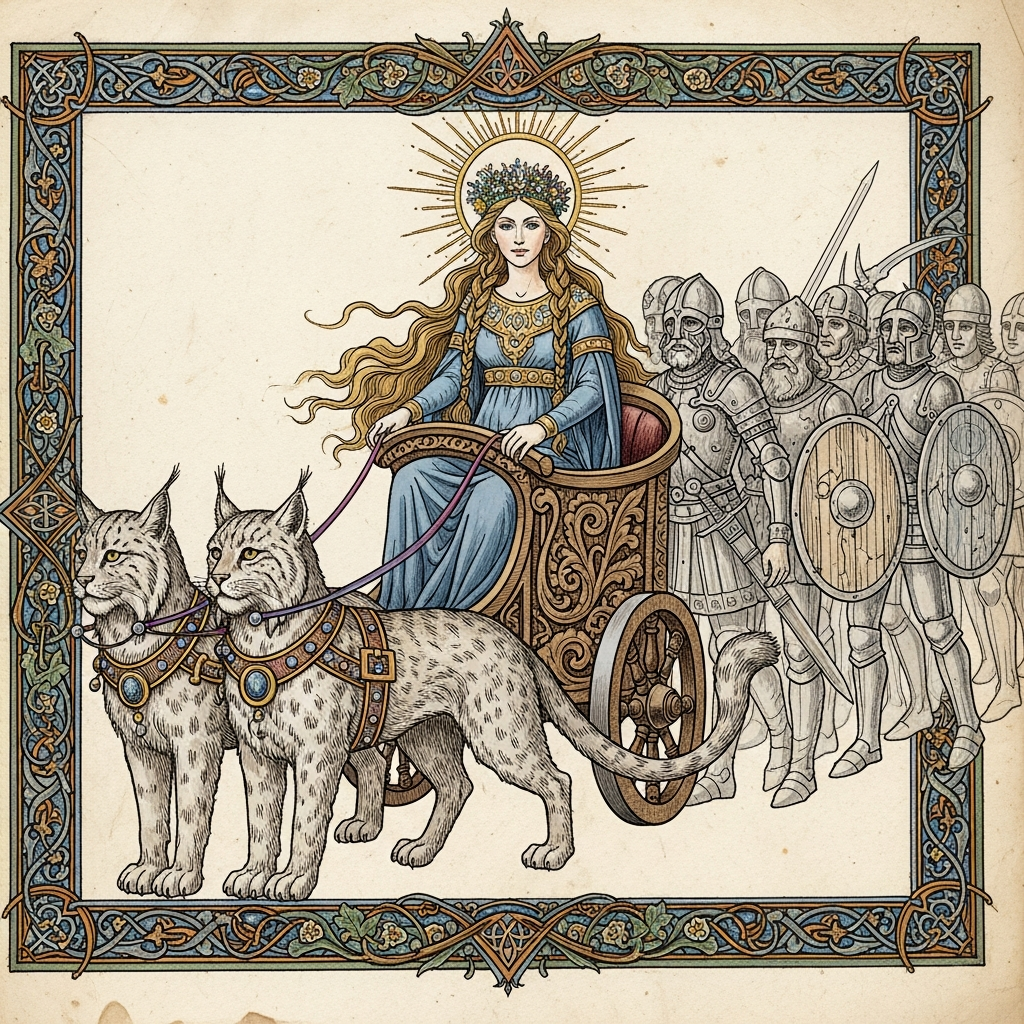
Lore: Frigg is the wife of Odin, queen of Asgard, and the greatest of the goddesses. She sits in the high seat Hlidskjalf (which she shares with Odin) and from it can see all that happens in the Nine Realms. She possesses the gift of foreknowledge — she sees the fates of all beings — but she never speaks of what she knows. When she learned through her gift that her son Baldur would die, she traveled to every corner of creation and extracted sworn oaths from fire, water, iron, every metal, every stone, every disease, every beast, every bird, every serpent, and every tree that they would not harm Baldur. She missed only the mistletoe, judging it too small and young to be a threat. That single oversight — or that single decree of fate that not even a goddess’s love could overrule — cost her son’s life.
Parallel: The parallel with Mary, mother of Jesus, is both obvious and heartbreaking. Both are the mothers of the “most beloved” figure in their tradition. Both possess foreknowledge (Mary through the angel Gabriel and Simeon’s prophecy — “a sword will pierce your own soul also,” Luke 2:35). Both know their son will die and cannot prevent it. Both represent the theme of a mother’s love colliding with cosmic fate. The Greek parallel is Thetis, who tried to make Achilles immortal but missed one point of vulnerability (the heel). The pattern is ancient: the mother who almost saves her son.
1 min read
Fate itself (she sees what is coming but cannot change it)
Prose Edda (Gylfaginning 49); *Voluspa*; *Lokasenna*