Combat Profile
Náströnd Judgment
Hel condemns a foe to her freezing realm, inflicting curse and slow that worsen each turn until death or cleansing
Half-Living
Hel exists between life and death; she takes reduced damage from healing magic and gains power whenever a creature perishes nearby
She cannot claim the heroic dead (they go to Valhalla or Folkvangr). Her power is limited to her realm
“Hel he cast into Niflheim and gave her authority over nine worlds, that she should have the governance of all those who are sent to her — those who die of sickness or old age.” — Prose Edda, Gylfaginning 34
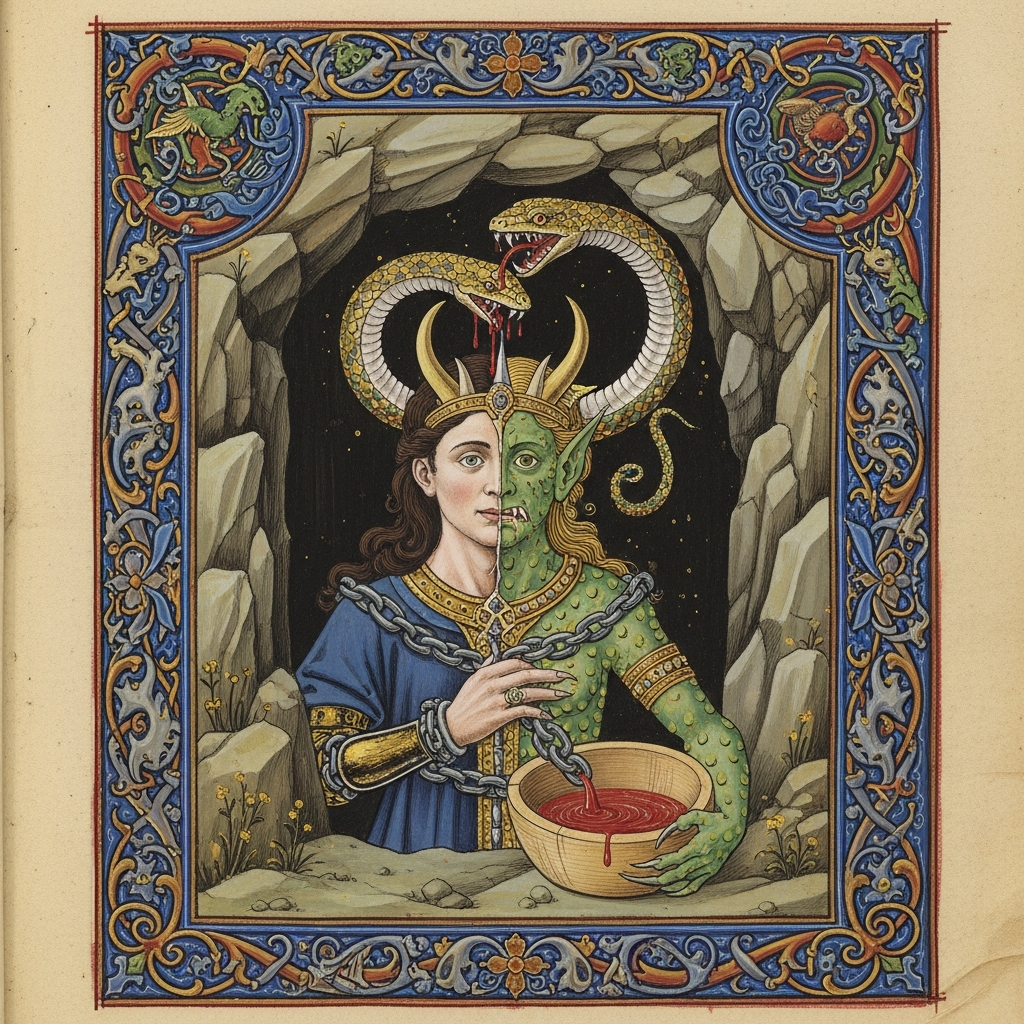
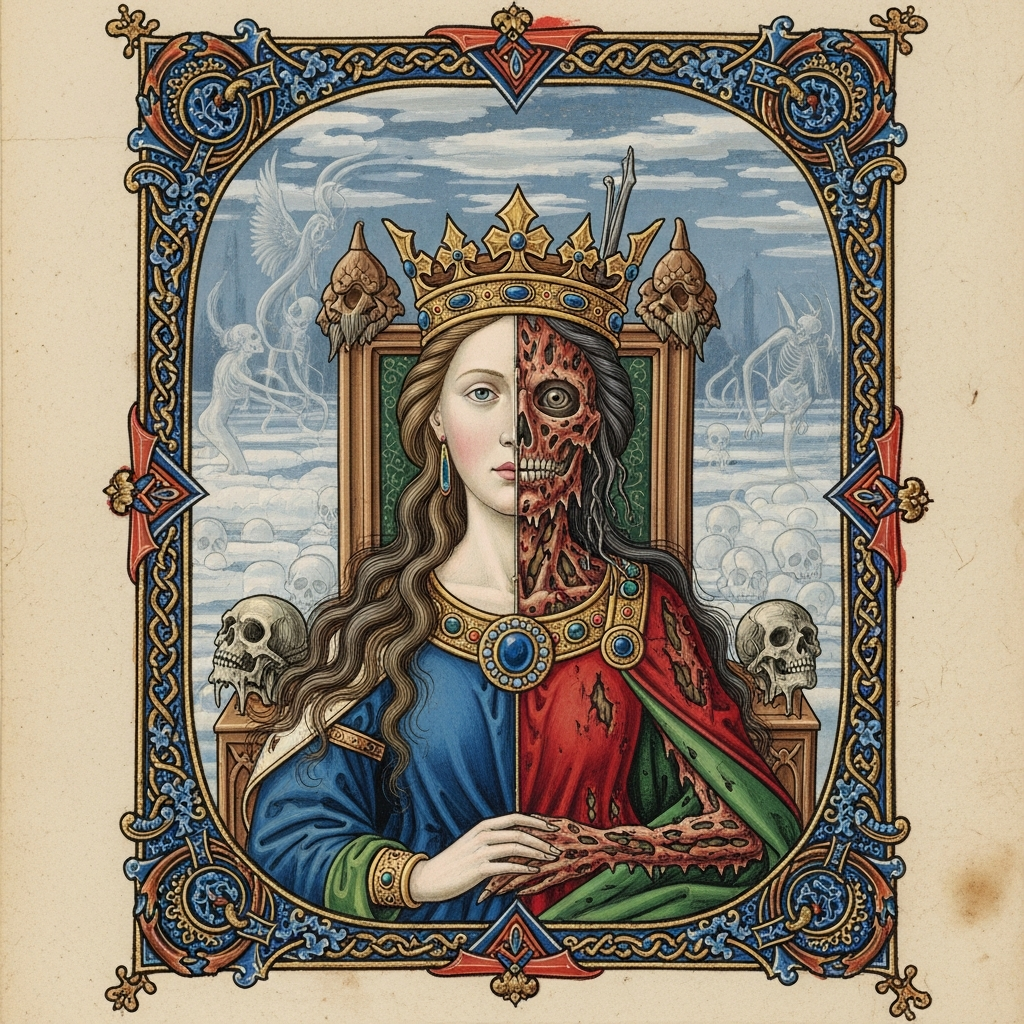
Lore: Hel is the youngest of Loki’s three monstrous children, and the only one who rules rather than destroys. She was cast into the lowest realm by Odin and given dominion over all who die of sickness, old age, or any cause other than battle. She is described as half-living and half-dead — one side of her body is that of a beautiful woman, the other side a decaying corpse. Her hall is called Eljudnir (“sprayed with snowstorms”), her dish is Hunger, her knife is Famine, her servant is Ganglati (“lazy-walker”), and her threshold is called Stumbling-Block. When Hermod rides to Hel to beg for Baldur’s release, she sets a condition of perfect grief: if every being in creation weeps for Baldur, she will release him. Everything weeps — except Thokk (Loki). And Hel keeps what is hers.
Parallel: Hel parallels the Mesopotamian Ereshkigal, queen of the underworld in the Descent of Inanna, who similarly holds the dead and negotiates for their release. The English word “hell” derives directly from her name, though the Norse Hel is not a place of punishment — it is simply where the dead go, similar to the Hebrew Sheol (a grey, neutral afterlife, not the fire-and-brimstone of later Christian theology). The transformation of Hel from a neutral afterlife realm into the Christian Hell (a place of torment) is one of the most significant theological shifts in the Christianization of Northern Europe.
1 min read
No one defeats her -- death is permanent in her domain (except for Baldur's prophesied return)
Prose Edda (Gylfaginning 34, 49); *Voluspa*