Combat Profile
Unbreakable Oath
Tyr binds an enemy with a magical contract that prevents them from breaking their word, severely weakening those who rely on deception or betrayal.
Sacrifice for Order
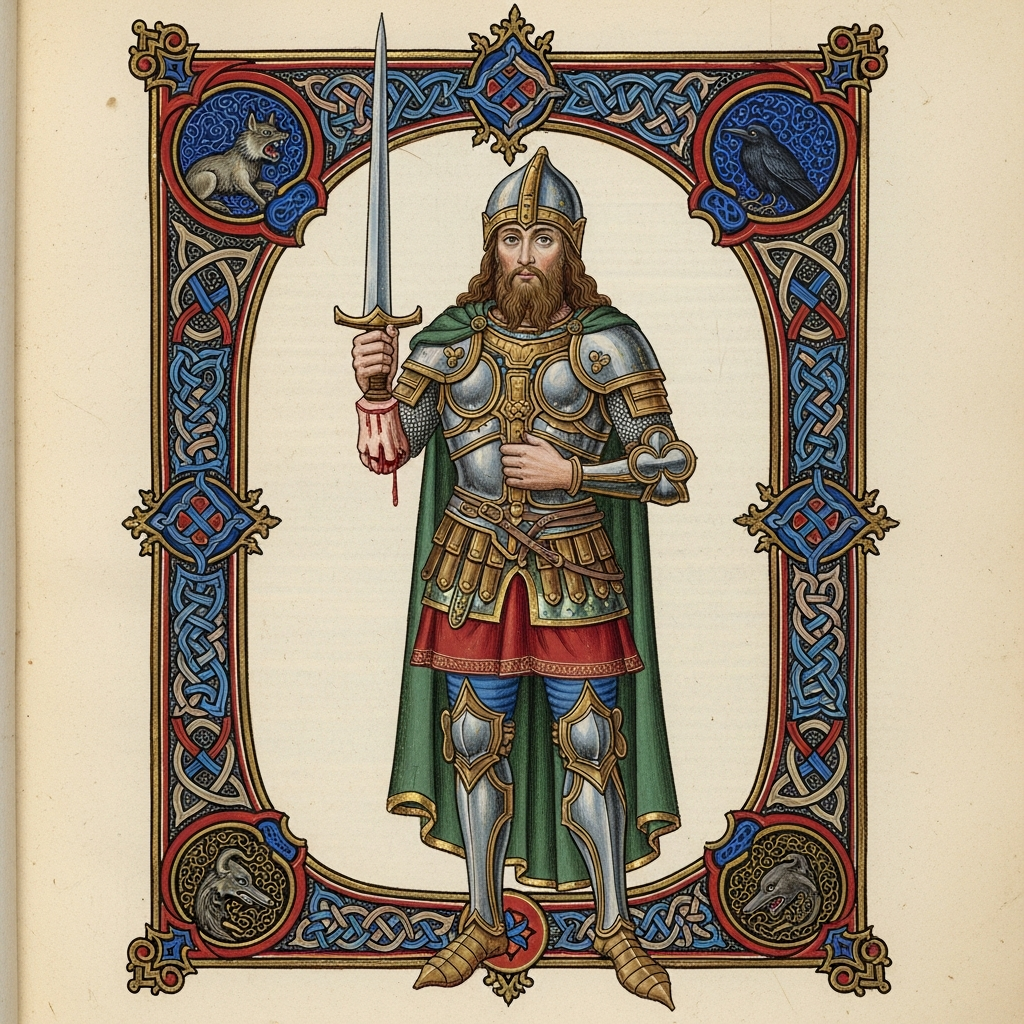
Tyr's missing hand grants him immunity to binding effects and increases his resolve by 15% when facing overwhelming odds, embodying his eternal commitment to justice over self.
One-handed -- sacrificed his right hand to bind Fenrir
“Then when the Aesir were unwilling to set the wolf free, he bit off the hand of Tyr at the place now called the wolf-joint.” — Prose Edda, Gylfaginning 34
Lore: Tyr is the god of war and justice — a combination that modern minds find contradictory but that the Norse understood as inseparable. War without law is chaos; law without the courage to enforce it is meaningless. Tyr is the bravest of all the gods, proved by the only test that matters: he volunteered to put his right hand in the mouth of Fenrir (the great wolf, son of Loki, Gylfaginning 34) as a guarantee of good faith while the gods attempted to bind the beast with the unbreakable fetter Gleipnir (Gylfaginning 34). When Fenrir realized he had been tricked and the fetter would hold, he bit off Tyr’s hand (Gylfaginning 34). Tyr did not cry out. He knew the cost before he offered it. In older Germanic tradition (as Tiwaz), Tyr may have been the chief god of the pantheon before Odin displaced him — the god of the daytime sky, cognate with Greek Zeus and Sanskrit Dyaus Pita.
Parallel: Tyr’s sacrifice echoes the biblical theme of sacrificing part of oneself for the greater good. Jesus says, “If your right hand causes you to stumble, cut it off” (Matthew 5:30). The binding of Fenrir parallels the binding of Satan (Revelation 20:1-2) — a monstrous evil force that must be restrained until the appointed time. Both Fenrir and Satan are bound, both break free for the final battle, and both are ultimately destroyed.
1 min read
Garm (the hellhound) -- they kill each other at Ragnarok
Prose Edda (Gylfaginning 34); *Hymiskvida*; runic inscriptions (Tiwaz rune)