The Radiation of Siberian Shamanism: How One Tradition Became Global
graph TB
    SIB["Siberian Shamanism<br/>3000+ BC<br/>Evenki, Yakut, Mongol origins"]

    SIB -->|Via land bridge & coastal routes| NAM["Native American Shamanism<br/>Bering Strait crossing<br/>Inuit, Tlingit, Navajo, Pueblo"]

    SIB -->|Westward through steppes| FIN["Finnish-Saami Shamanism<br/>Sámi noaidi tradition<br/>Lapland practices"]

    SIB -->|Norse traders & raiders| NORSE["[Norse](Norse.md) Seidr & Volva<br/>Freyja's priestesses<br/>Seidr circles"]

    SIB -->|Eastward along coast| KOR["[Korean](Korean.md) Shamanism<br/>Mudang tradition<br/>Kut rituals"]

    SIB -->|Further east| JPN["Japanese Shamanism<br/>Miko tradition<br/>[Shinto](Shinto.md) spirit mediums"]

    SIB -->|Southeast Asian routes| SEA["Southeast Asian Shamanism<br/>Hmong, Karen, Lao traditions<br/>Rice ritual specialists"]

    SIB -->|Steppes to Mongolia| TENT["Tengrism Revival<br/>Pan-Turkic identity<br/>Modern Mongolia, Kazakhstan"]

    style SIB fill:#4a90e2,stroke:#000,color:#fff
    style NAM fill:#7cb342,stroke:#000,color:#fff
    style FIN fill:#9575cd,stroke:#000,color:#fff
    style NORSE fill:#8d6e63,stroke:#000,color:#fff
    style KOR fill:#ff8a65,stroke:#000,color:#fff
    style JPN fill:#f06292,stroke:#000,color:#fff
    style SEA fill:#29b6f6,stroke:#000,color:#fff
    style TENT fill:#26a69a,stroke:#000,color:#fff
Key Argument:
The shamanic technology is fundamentally technological—it can be learned and transmitted. A Siberian shaman’s initiation ritual shows structural similarities to:
- A Korean mudang’s calling and training
- A Native American vision quest
- A Nordic volva’s apprenticeship
- A Japanese miko’s service initiation
- A Sámi noaidi’s spiritual education
The core components appear across all:
- A calling (often involuntary—seizure, illness, vision)
- A training period (3-7 years typically)
- Mastery of an ecstatic technique (drumming, dancing, plant medicine, rhythmic singing)
- Negotiation with spirits (not command—negotiation)
- Healing as primary practice
- Shamans as go-betweens for living and dead
This suggests cultural transmission through migration and contact, with Siberia as the root system.
Primary Sources & Further Study
Foundational Texts:
-
Mircea Eliade, Shamanism: Archaic Techniques of Ecstasy (Princeton, 1964) — The definitive comparative study. Eliade’s framework of “axis mundi,” “shamanic flight,” and “cosmological levels” remains standard.
-
Uno Holmberg, The Mythology of all Races, Vol. IV: Finno-Ugric, Siberian (Archaeological Institute of America, 1927) — Pre-suppression documentation of actual practices. Holmberg interviewed shamans directly. His descriptions of the World Tree predate broader academic attention to the concept by decades.
-
Vilmos Diósegi, Trancing and Shamanism in Siberia (Akadémiai Kiadó, 1968) — Focused ethnographic study of Mongol, Buryat, and Tungusic shamanism, with transcribed interviews and ritual documentation.
-
Marjorie Mandelstam Balzer, Shamanism: An Expanded View of the Phenomenon (2012) — Modern synthesis incorporating post-Soviet research and indigenous perspectives. Balzer documents the Tengrism revival specifically.
On Tengrism Revival:
-
Bayarsaikhan Dashdondog, The Mongols and the Islamic World (Oxford, 2011) — Political and religious context for modern Tengrism among Mongol peoples.
-
Poul Erik Andersen, Shamanic Healing Within a Sámi Context — Comparative study showing how Siberian techniques survived in Sámi tradition through suppression periods.
Ethnographic Field Studies:
-
Caroline Humphrey & Urgunge Onon, Shamans and Elders: Experience, Knowledge, and Power among the Daur Mongols (Oxford, 1996) — Living tradition documented in 1990s Mongolia.
-
Åke Hultkrantz, Shamanic Healing and Ritual Drama (Crossroad, 1992) — Comparative analysis of shamanic healing across Siberian and Native American traditions.
Cross-Tradition Resonances
| Siberian Entity | Norse Parallel | Japanese Parallel | Hindu Parallel | Native American Parallel |
|---|
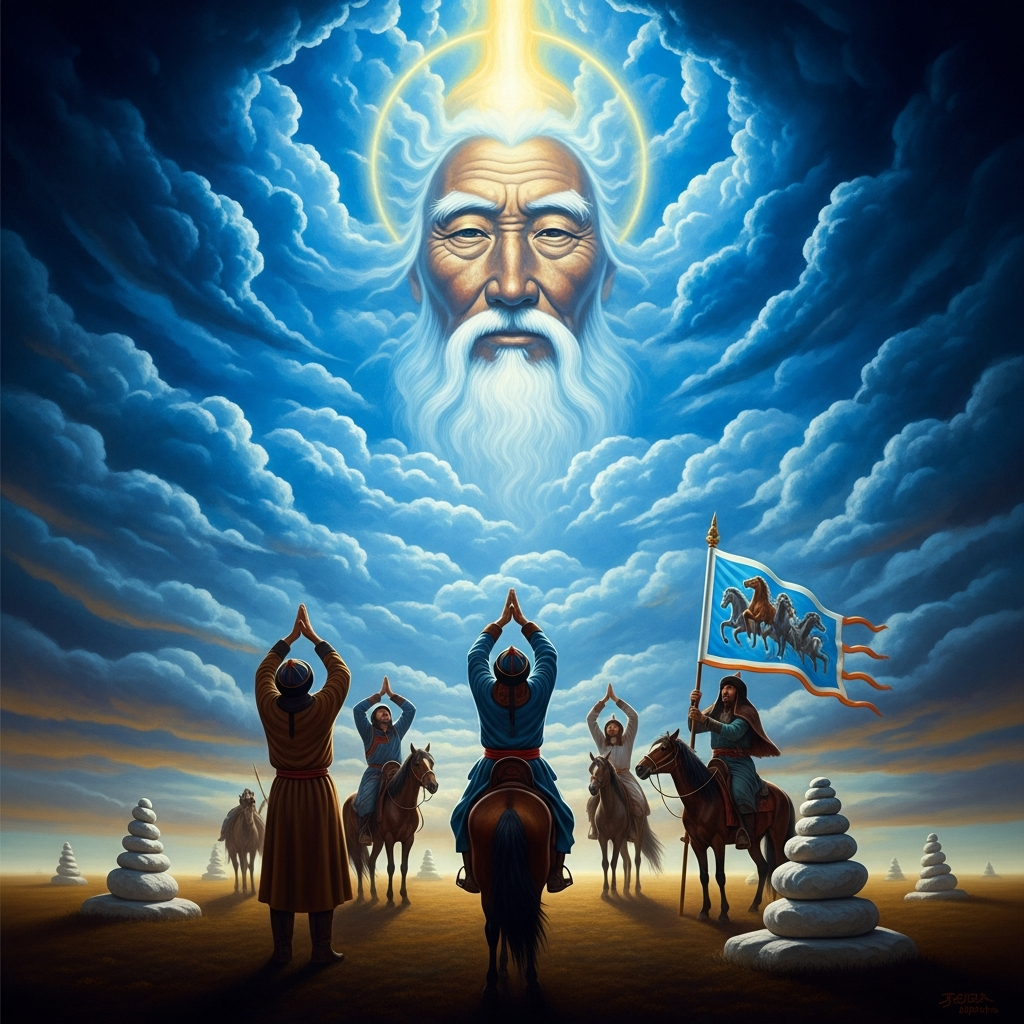
| Tengri | Ymir (cosmic principle) | Amaterasu realm (heaven) | Brahman (universal consciousness) | Great Spirit / Wakan Tanka |
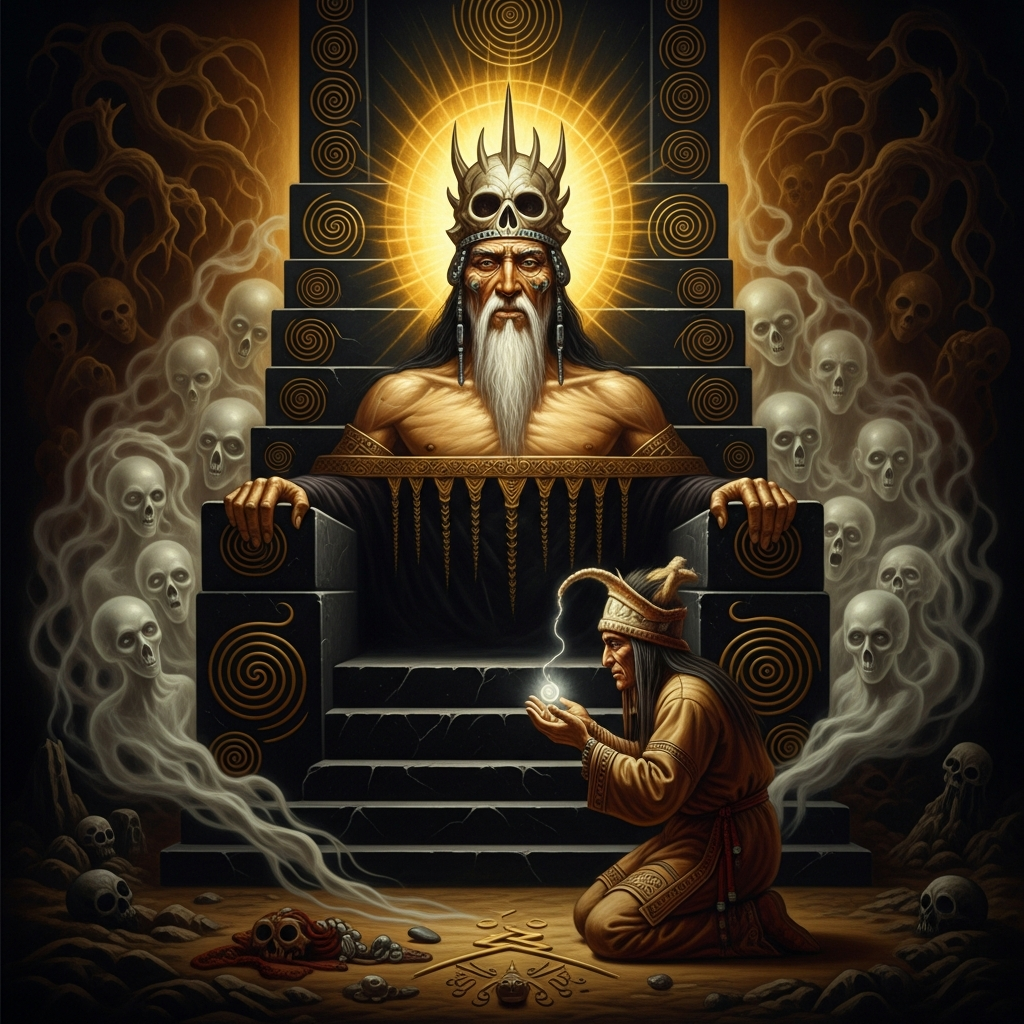
| Erlik | Hel (underworld keeper) | Yama (lord of the dead) | Yama (god of death) | Underworld keeper spirits |
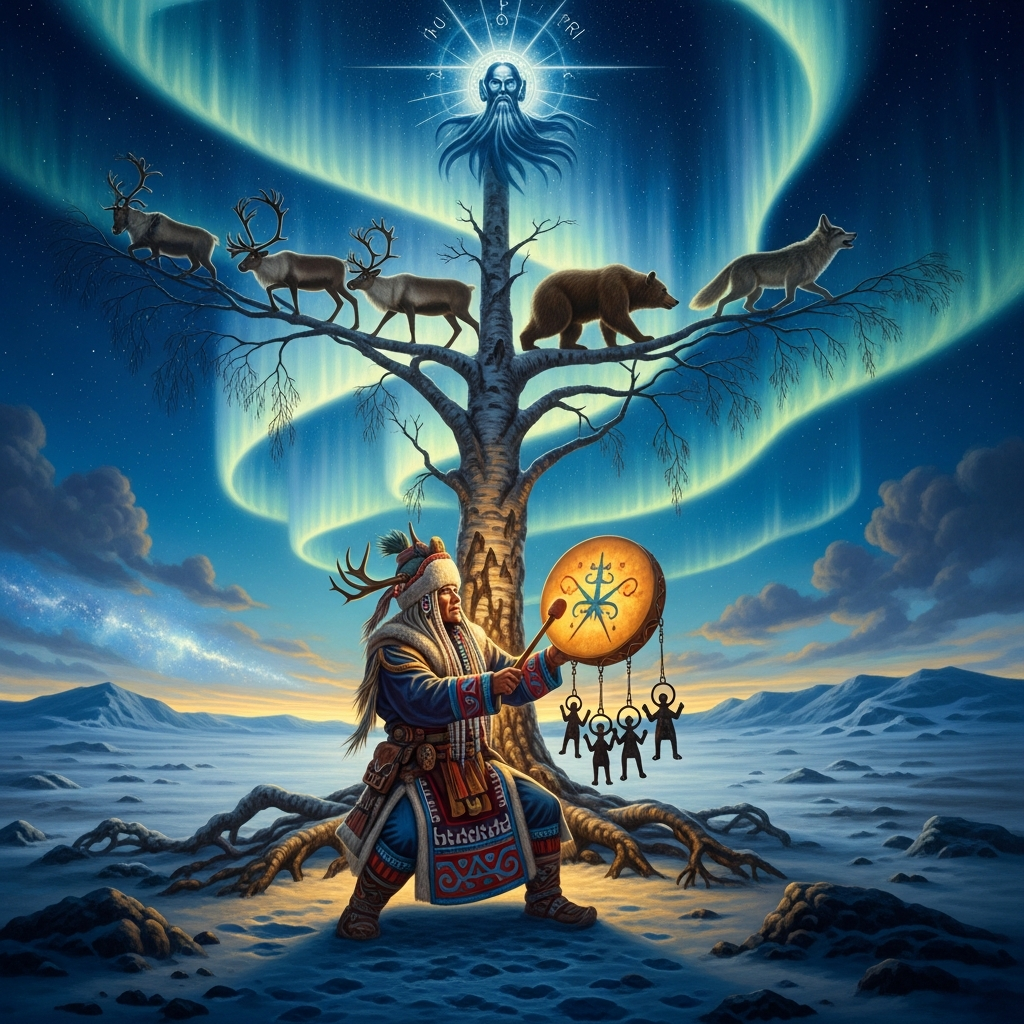
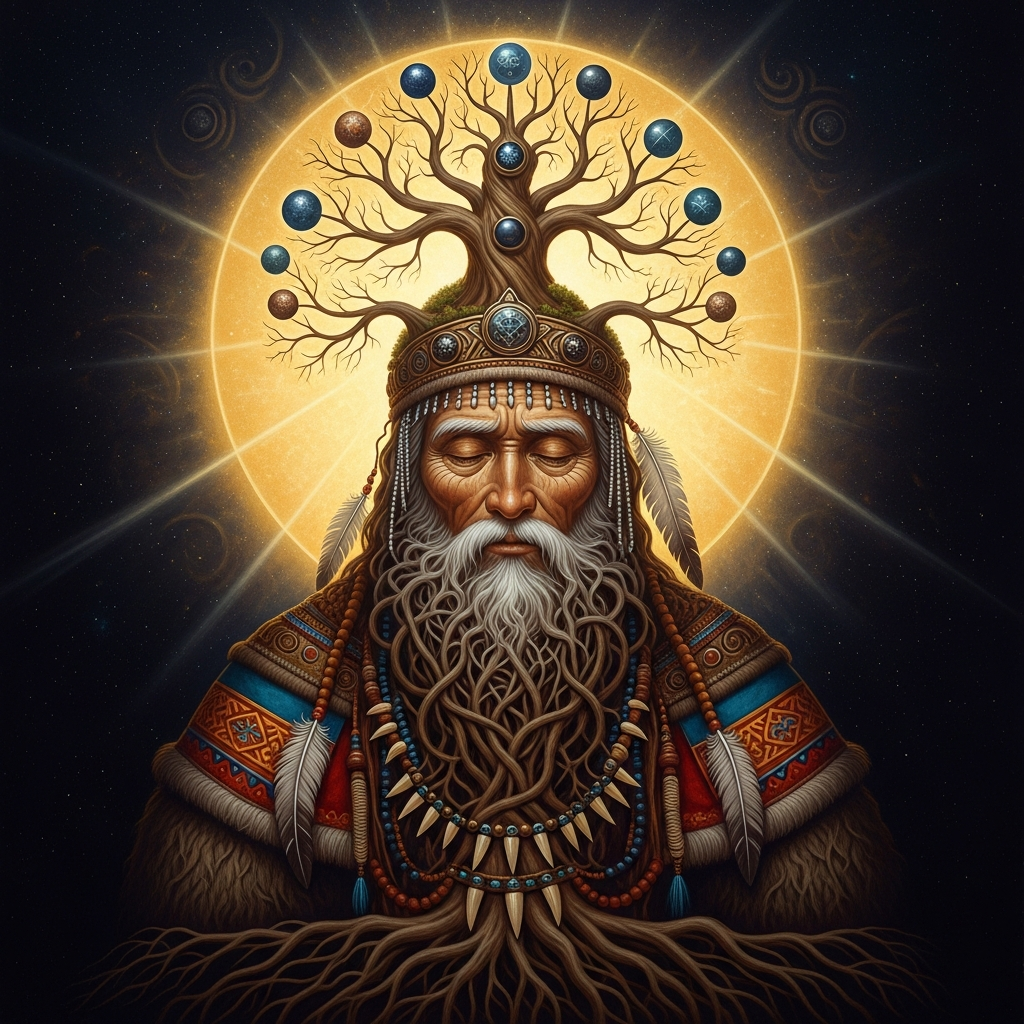
| World Tree | Yggdrasil (axis mundi) | Cosmic pillar | Brahma’s tree / Mount Meru | The central pole / lodge pole |
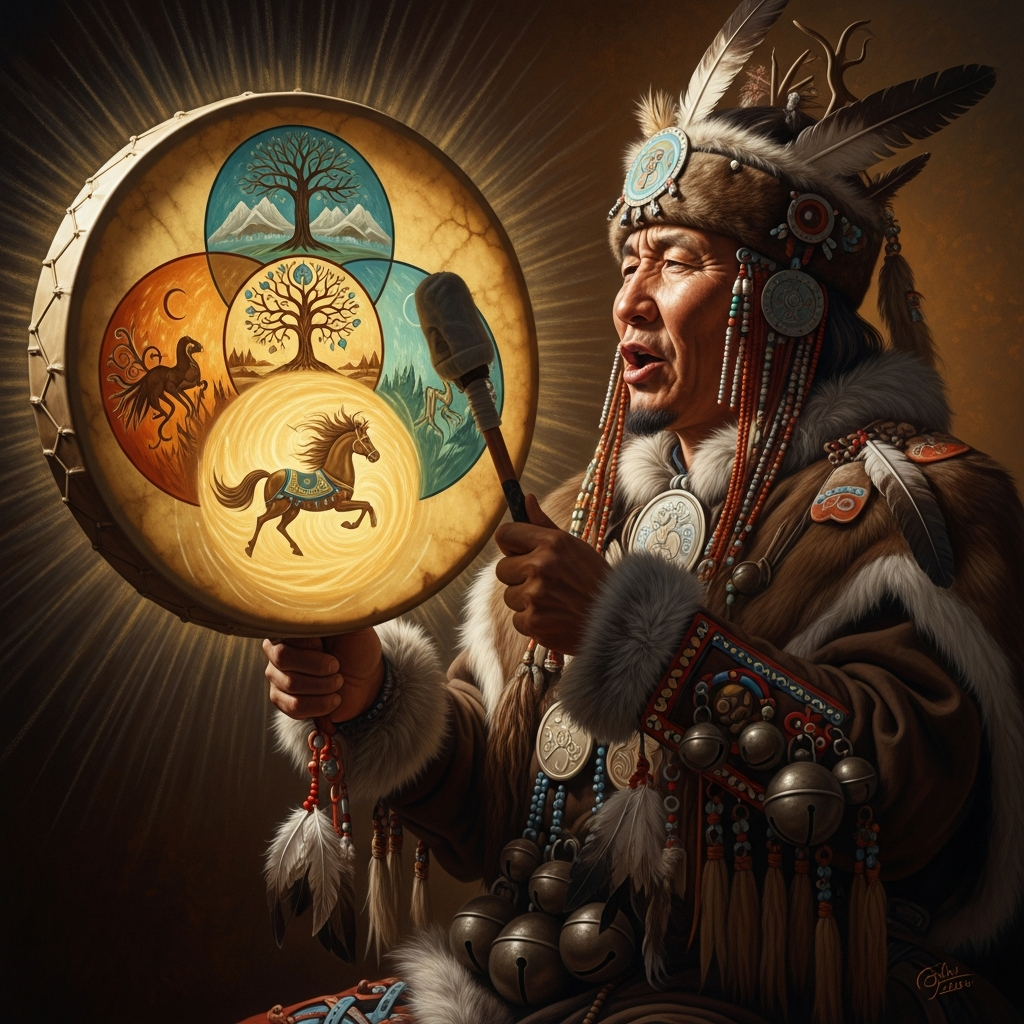
| Shaman’s Drum | Odin’s spear Gungnir (journey tool) | Shaman’s bell/staff | Rishi’s meditation object | Sacred rattle / pipe |
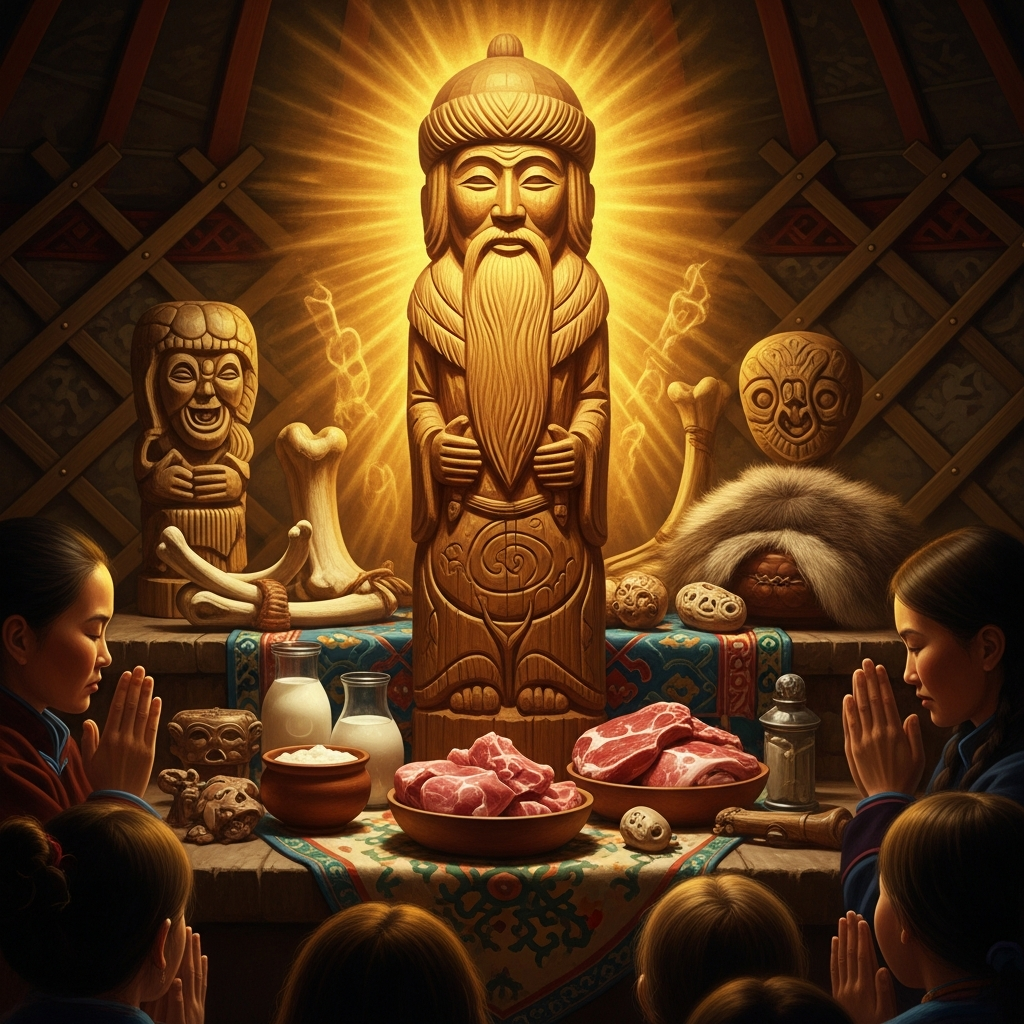
| Ongon | Household spirits (vaettir) | Kami in objects | Household devas | Spirit fetishes |
| Albys | Naiads / river spirits | River kami | Apsaras (water nymphs) | Water spirits / sirens |
| The Three Worlds | Niflheim / Midgard / Muspelheim | Three realms (takamagahara, nakatsukuni, yomitsu-kuni) | Brahma-Vishnu-Shiva realms | Lower/Middle/Upper worlds |
Quest Hooks & Narrative Scenarios
For Game Masters:
-
“The Shaman’s Initiation” — A player character has been called to shamanism (via illness, vision, or possession). They must find a teacher, craft their first drum, and complete the three-realm trial.
-
“Negotiation with Erlik” — A plague of deaths or soul-stealing requires the party to descend into the Lower Realm and bargain with Erlik’s servants for the souls’ return.
-
“The Burning of the Drums” — Colonial/missionary forces are suppressing shamanism. The party must preserve, hide, or restore sacred drums while protecting the shamanic tradition.
-
“The Alby’s Captive” — A party member or NPC has been seduced into the Alby’s underwater realm. Rescue requires social negotiation, shamanic magic, or a willing sacrifice.
-
“The World Tree at War” — The three realms are in conflict. The party must climb the Tree to negotiate peace between Upper and Lower realms, preventing cosmic rupture.
-
“The Tengrism Revival” — A modern-day quest to restore Tengrism as a pan-Turkic spiritual force, uniting fractured peoples through shamanic cosmology.
Siberian shamanism represents not a dead tradition but a living technology—one that has survived suppression, dispersed across continents, and persists in the 21st century as both spiritual practice and cultural identity. The shaman’s core claim is simple and radical: the invisible worlds are real, accessible, and negotiable. All it requires is the drum, the courage to die symbolically, and the discipline to return.
 MYTHIC
  LEGENDARY
  RARE
RARE  RARE
RARE  MYTHIC