Combat Profile
Cosmic Genesis
Bai Ulgan reshapes reality itself, capable of creating or unmade entire worlds and celestial orders through divine will.
Creator's Omniscience
Bai Ulgan perceives all events across creation simultaneously and exists beyond mortal comprehension or direct challenge.
Title: Sky Father, Shaper of Humanity, The Merciful One
Tradition: Siberian Sacred | Altai shamanism specifically
Description:
While Tengri is cosmic principle, Bai Ulgan is creative will. The Altai peoples recognize Bai Ulgan as the specific creator of humans—he molded the first humans from clay, breathed life into them, and watches over their development. He is less distant than Tengri, more accessible, a god of mercy and craft.
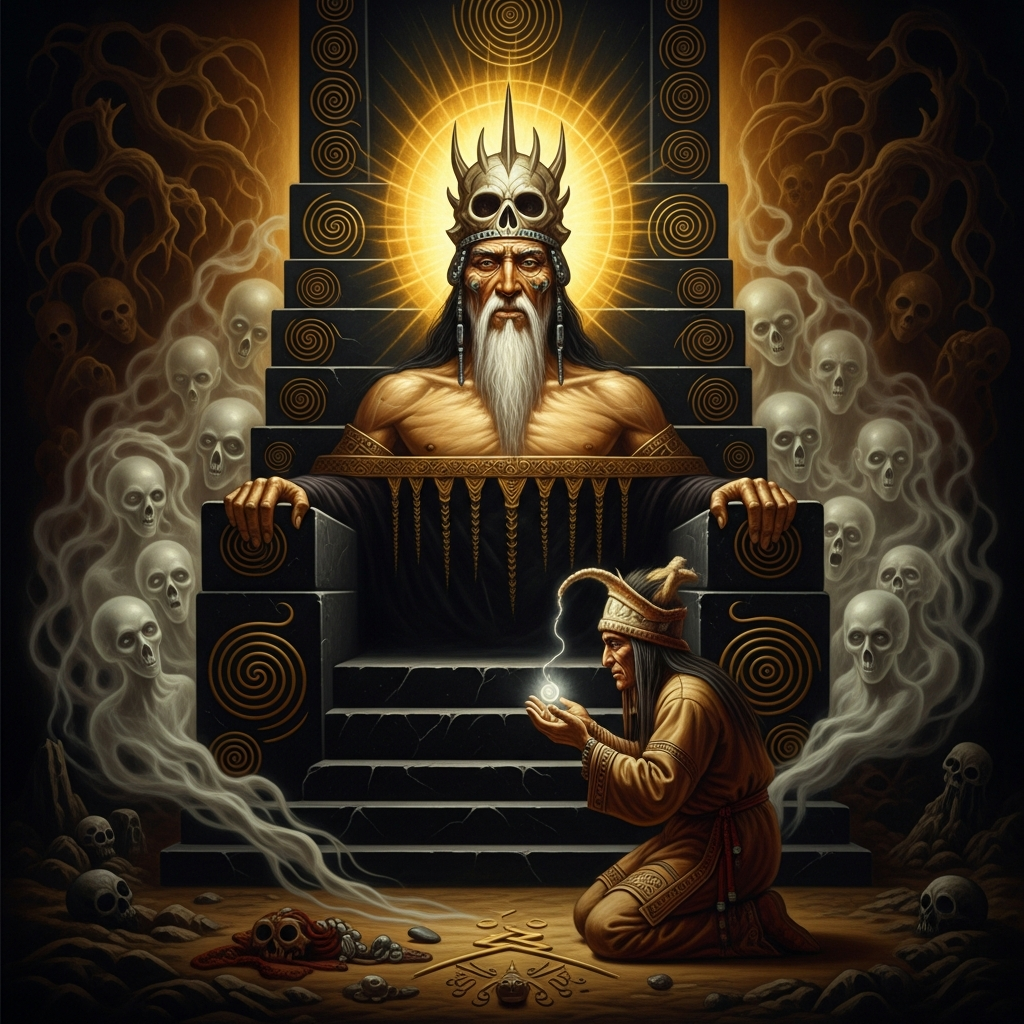
Bai Ulgan dwells on the highest mountain (Mount Belukha or Mount Altai itself in different tellings). He has a cosmic smithy where he forges not weapons but healing, justice, and the bonds between families. His opposition to Erlik is not combat but compassion—he saves souls that Erlik claims; he grants second chances; he teaches shamans to heal.
In Altai mythology, Bai Ulgan once took human form to teach the first shamans their craft. His instructions were encoded in cosmological knowledge—how to read the sky, how to interpret animal signs, how to speak to spirits with respect.
Bai Ulgan is revered in restored Altai practices and in Tengrism, where he represents the merciful aspect of divinity.
In RPG Context: Bai Ulgan is the god of apprenticeship, teaching, and redemption. Quests in his name involve healing, rescuing lost souls from Erlik’s claim, and passing on knowledge.
STAT BLOCK:
| Stat | Score |
|---|---|
| ATK | 62 |
| DEF | 85 |
| SPR | 92 |
| SPD | 71 |
| INT | 88 |
| CHA | 82 |
| WIS | 99 |
| END | 99 |
| Element | Cosmic |
| Role | Sovereign |
| Rarity | Mythic |
| Threat | Apocalyptic |
| LCK | 95 |
| ARC | 98 |
| Special | Cosmic Genesis — Bai Ulgan reshapes reality itself, capable of creating or unmade entire worlds and celestial orders through divine will. |
| Passive | Creator’s Omniscience — Bai Ulgan perceives all events across creation simultaneously and exists beyond mortal comprehension or direct challenge. |
| Epithets | ”Bai Ulgan” (Altai: Great/Rich One Above), “Ülgen” (simplified form), “Kök Tengri” in some Altai contexts, “The Merciful Creator,” “He on the Golden Mountain” |
| Sacred Animals | White horse (the sacrificial animal in his honor — the yadagan ceremony), eagle (his sky messenger), swan (purity and creative power) |
| Sacred Objects | Clay vessel (he shaped humans from clay), the shaman’s hammer or axe (his cosmic smithy tools), golden mountain imagery, healing herbs |
| Sacred Colors | White (purity, Upper World), gold (divine light and creativity), blue (sky, Tengri’s principle that he embodies as creator) |
| Sacred Number | 7 (seven heavens in some Altai accounts; Bai Ulgan dwells in the seventh and highest); 9 in other traditions |
| Consort(s) | In some Altai traditions, a celestial consort in the Upper World; specifics vary by local tradition |
| Sacred Sites | Mount Belukha (the highest peak of the Altai Mountains, Russia/Kazakhstan border) — his mythic dwelling place; mountain summits generally as Upper World access points |
| Festivals | The tavun ceremony — a major shamanic sacrifice ceremony involving a white horse, dedicated to Bai Ulgan; spring and summer Upper World ceremonies |
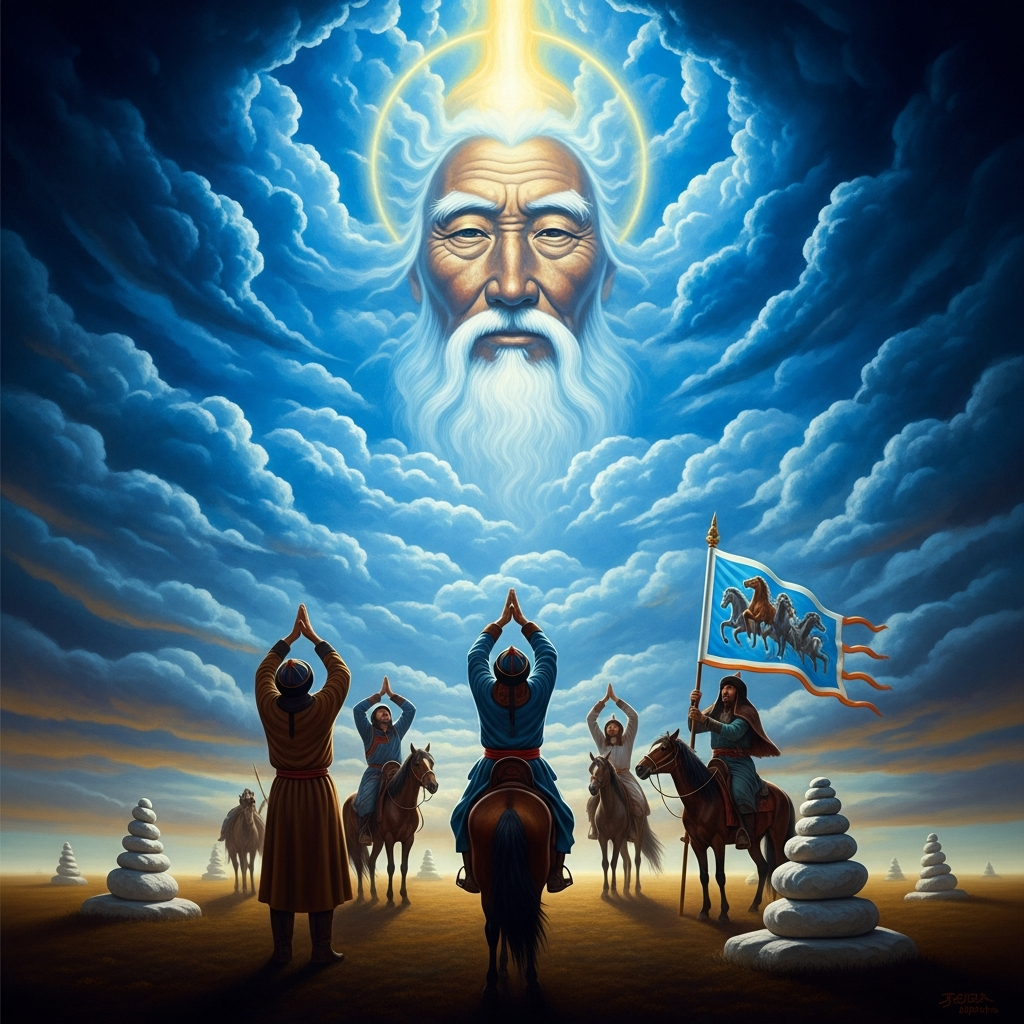
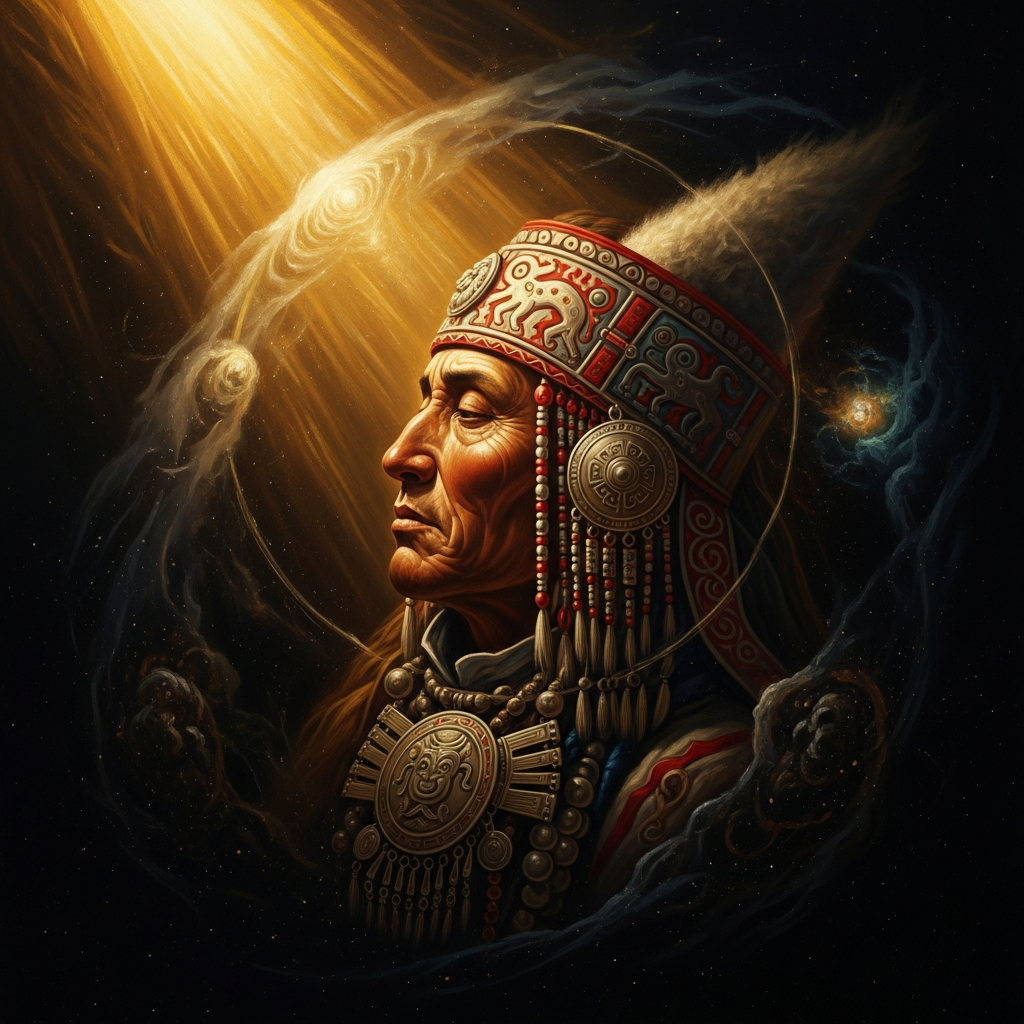
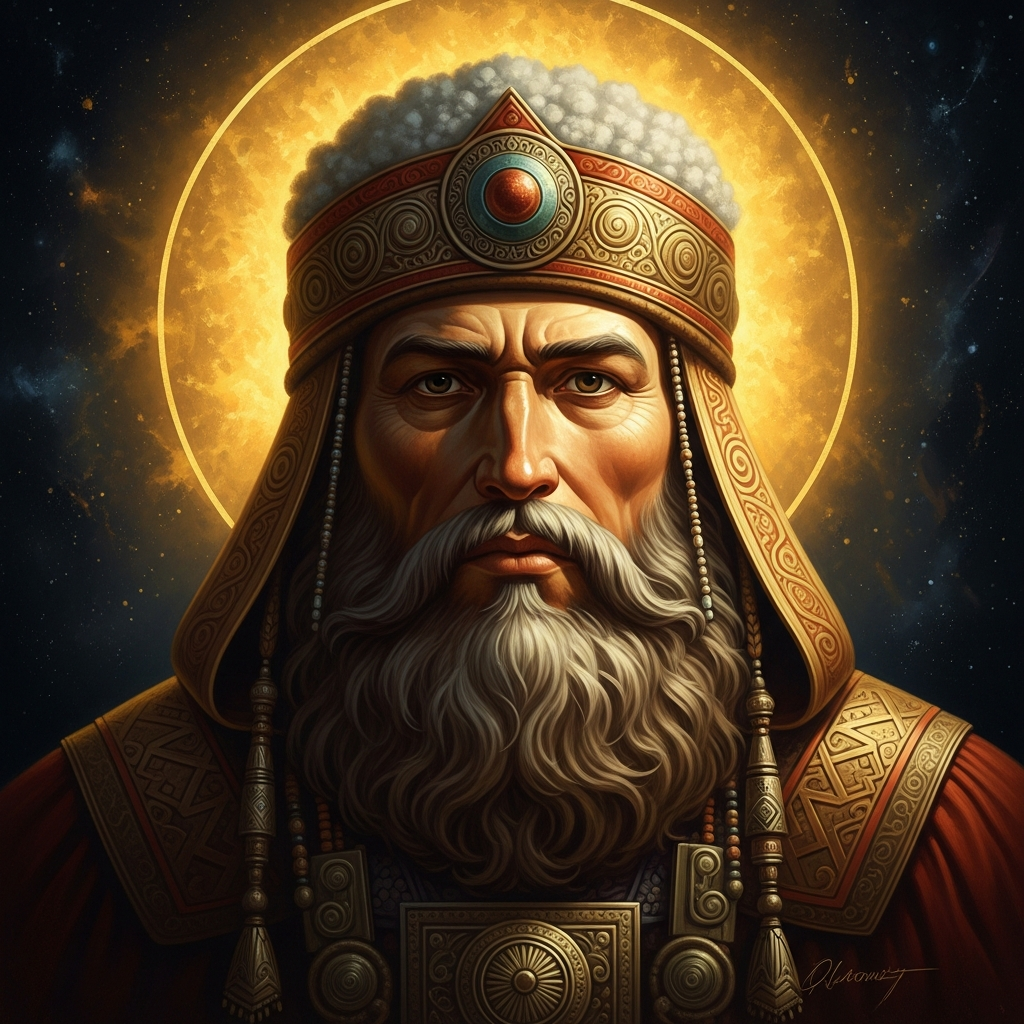
| Iconography | Aged, wise figure seated on a golden mountain or throne in the highest heaven; often depicted with light radiating from his form; the shaman’s trance-ascent often culminates in reaching Bai Ulgan’s court |
| Period | Attested in Altai shamanic traditions from at least the 17th century CE in Russian ethnographic records; oral tradition origins far older; Altai shamanic revival active since the 1990s |
| Region | Altai Republic (Russia) — specifically the Altai peoples (Telengits, Teleuts, Kumandins); also influences on neighboring Khakass and Tuvan traditions |
Power Tier: A — Archangelic
Alignment: Lawful Good (Creation through craft and mercy)
Domain: Creation, humanity, healing, smithcraft, mountains, mercy
Sacred Symbols: Clay vessel, master’s hammer, mountain peak, healing light
Cross-Tradition Parallels: Brahma (Hindu creator), Khnum (Egyptian potter god), Hephaestus (Greek smithcraft), YHWH as potter (Hebrew), Ptah (Egyptian creator via speech)
Vulnerability: Cannot directly intervene in human affairs; must work through shamans and avatars.
3 min read