Combat Profile
Potter's Divine Hand
Khnum reshapes a target's form or fate, permanently altering their physical nature or spiritual essence
Source of the Nile
Khnum's presence brings fertility and abundance to all waters and living things within his domain, granting life-force to the surrounding world
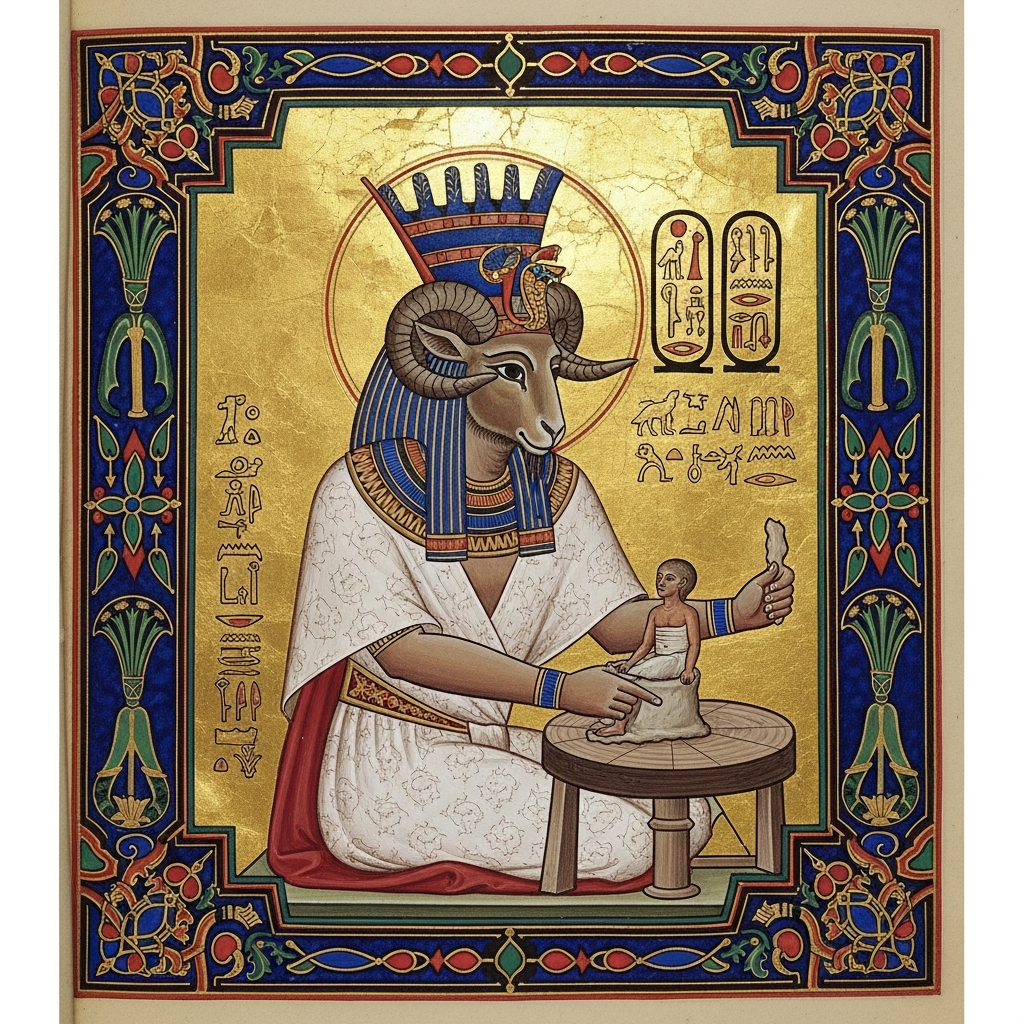
“Khnum, who fashioned mankind upon his wheel, who pinches the clay into living shape.”
Khnum is the divine potter. Egyptian theology held that he sat at his wheel and crafted each human body — and each ka (the vital double) — from Nile mud before the soul incarnated. This is the most directly anthropic creation myth in Egyptian religion: god as craftsman, humanity as pottery. He was venerated especially at Elephantine, the southern frontier city beside the First Cataract, because the Egyptians believed he controlled the Nile’s source from caverns beneath the island. The Famine Stela records that during a seven-year drought, pharaoh Djoser (or his Ptolemaic backdater) restored Khnum’s neglected temple, and the floods returned the next year.
Cross-tradition parallels: YHWH forming Adam from the dust of the ground (Genesis 2:7) — the parallel is so close that biblical scholars frequently cite Khnum as a likely Egyptian background to the J-source creation; Prometheus (Greek titan who forms humanity from clay); Tane Mahuta (Maori god who shapes the first woman from earth).
1 min read
Pyramid Texts; the Famine Stela of Sehel; Elephantine temple inscriptions; Coffin Texts