Combat Profile
Primordial Rampage
unleashes devastating attacks that ignore defensive barriers, embodying the uncontrolled fury of pre-creation chaos
Untamed Nature
resists all attempts at binding or control magic, growing stronger when opposed by order-based forces
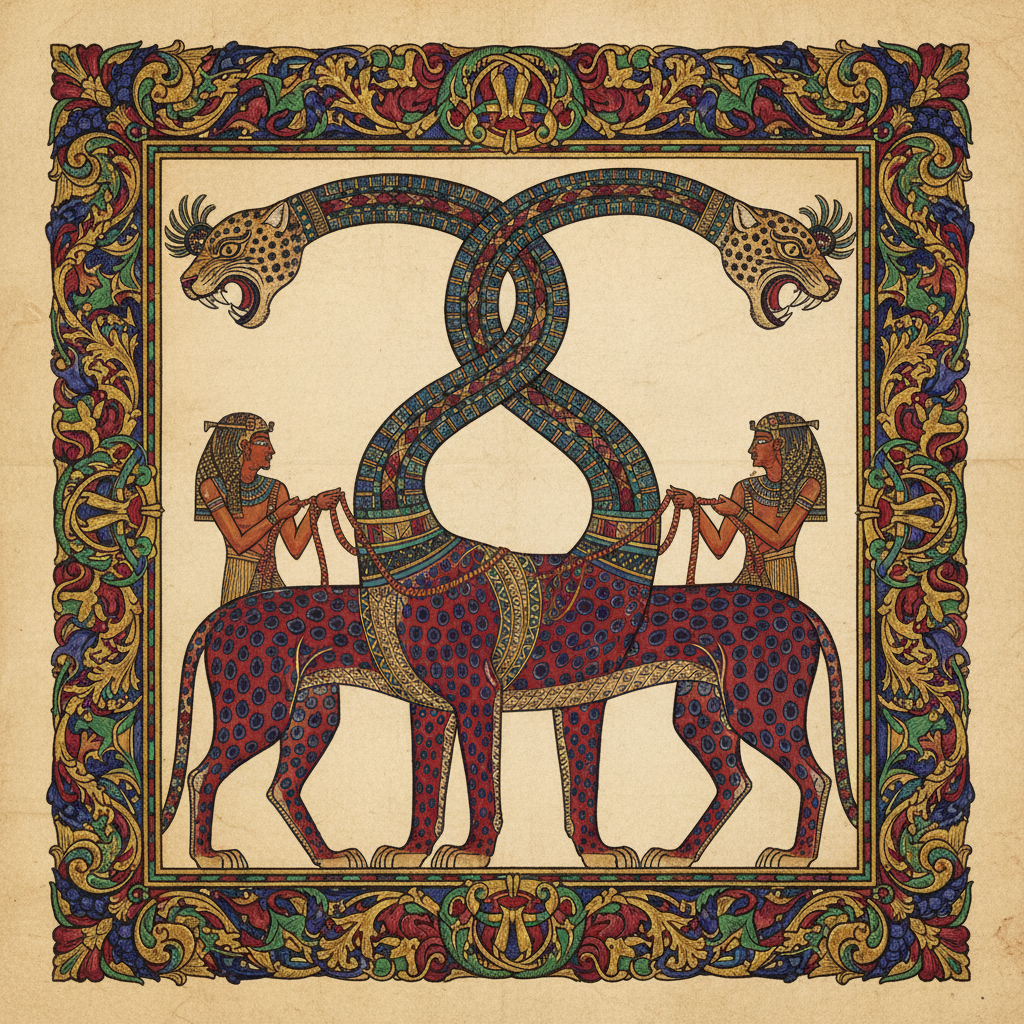
Subdued by the first Pharaohs as a symbol of imposing order on chaos
“A leopard with a neck like a serpent — from an age before the gods had names.”
The serpopard is one of the oldest mythological creatures in Egyptian art: a leopard or lioness with an impossibly long, sinuous, serpentine neck. It appears on the Narmer Palette (c. 3100 BCE), one of the earliest artifacts of unified Egypt, where two serpopards intertwine their necks in a scene scholars interpret as chaos being brought under control by the first Pharaoh. The creature has Mesopotamian parallels, suggesting a shared Near Eastern tradition of serpent-feline hybrid chaos beasts. It represents the raw, untamed world before divine kingship imposed order — a visual theology that predates the written myths by centuries.
1 min read
Pharaonic authority / divine kingship
Narmer Palette; pre-dynastic cylinder seals; Mesopotamian parallels