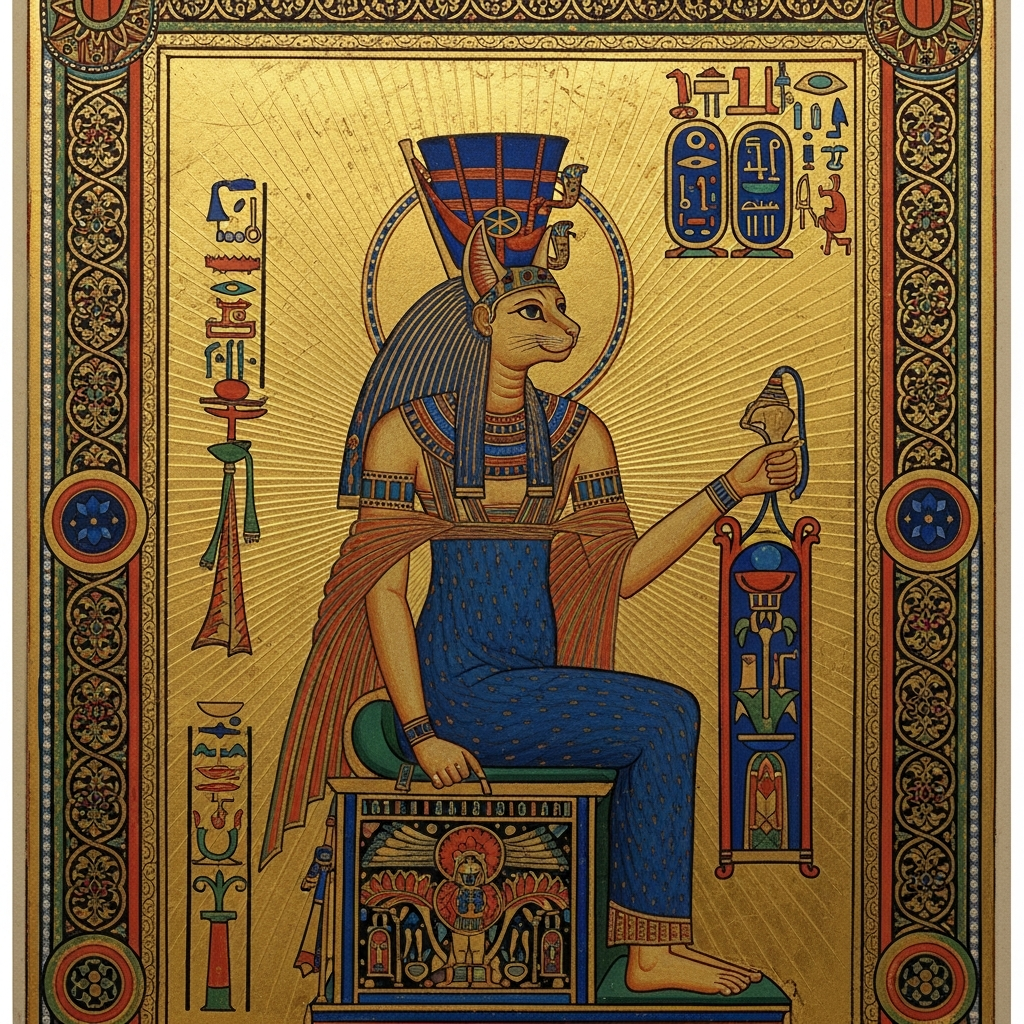
Combat Profile
Feline Wrath
Bastet channels the ferocity of the sacred cat to unleash a devastating strike that multiplies in power for each ally protected in her presence.
Hearth's Blessing
Bastet radiates protective warmth over her domain, gradually restoring vitality to all companions and shielding the household from malevolent forces.
“When a cat dies in a private house by a natural death, all those who dwell in the house shave their eyebrows.” — Herodotus, Histories 2.66
Originally depicted as a fierce lioness (and partly conflated with Sekhmet in early dynasties), Bastet softened over time into the domestic cat — the goddess Egyptians invited into their houses rather than feared. Her cult center at Bubastis hosted what Herodotus called the most joyous festival in Egypt: hundreds of thousands of pilgrims drinking wine on barges, women lifting their skirts and singing obscenities to the goddess (Histories 2.59-60). Mummified cats by the millions have been excavated near her temples. She protected the home from snakes, plague, and evil spirits, and was the patroness of mothers and children.
Cross-tradition parallels: Hestia (Greek goddess of the hearth and household); Sekhmet (her own ferocious sister-aspect); the Hindu cat-vehicle of Shashthi (goddess of children and childbirth); the Norse Freyja, whose chariot is drawn by cats.
1 min read
Pyramid Texts; Coffin Texts; Herodotus, *Histories* 2.59-60; Bubastis temple inscriptions