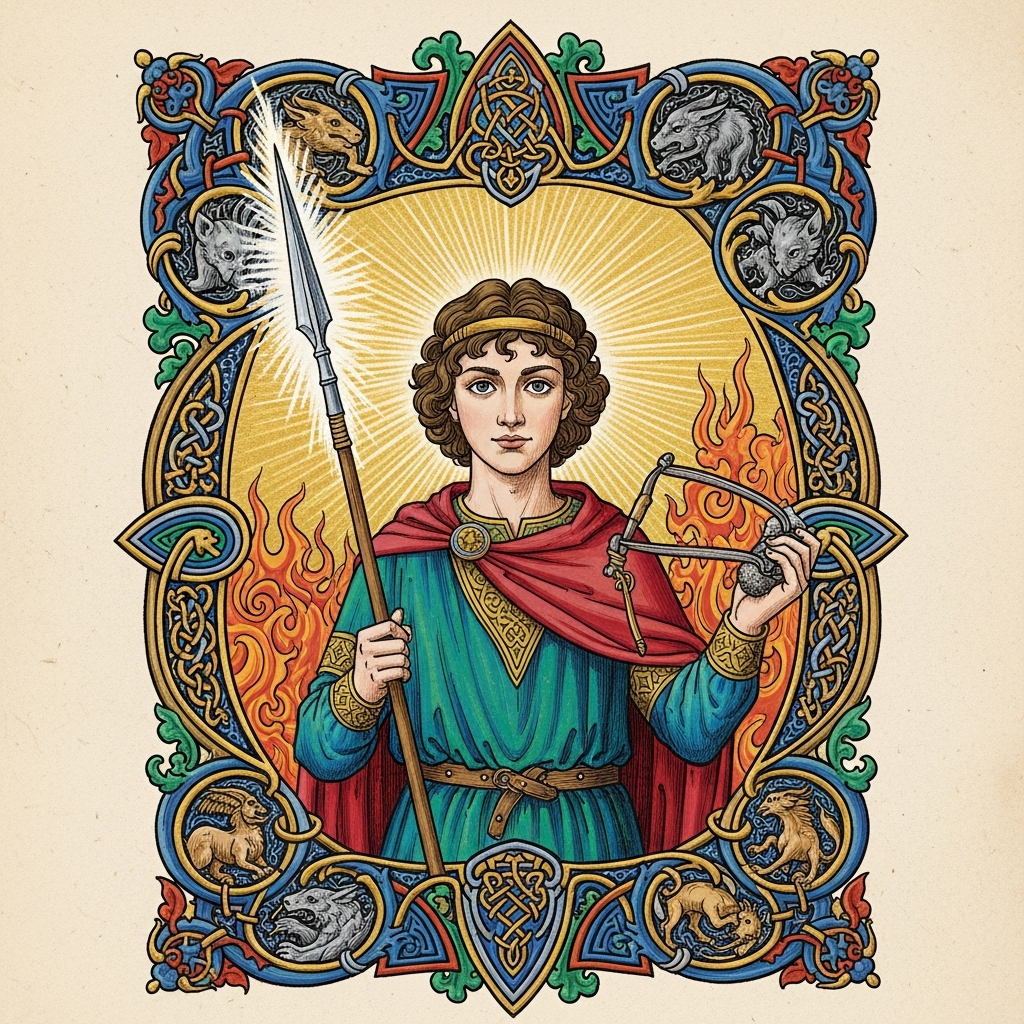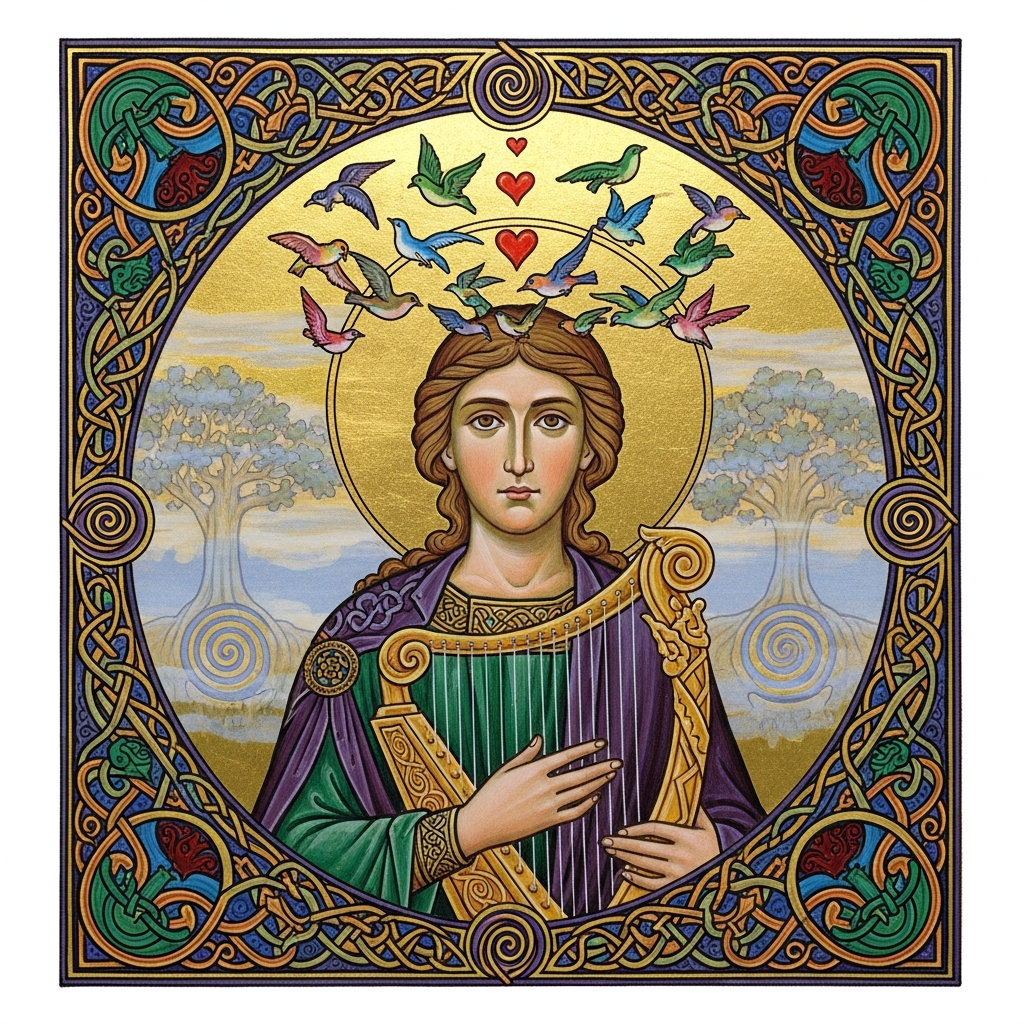
Combat Profile
Aisling's Rapture
Enchants all beings in range with irresistible love and poetic inspiration, compelling them to cease hostilities and create beauty instead of war
Eternal Youth
Aengus Og radiates perpetual beauty and vitality, granting all allies in his presence enhanced charm and immunity to aging or decay
Lovesick to the point of physical illness; vulnerable to dream-magic
Lore: Aengus is the Irish god of romantic love — conceived in scandal (his father the Dagda slept with Boann, wife of the river-god Elcmar, and stopped the sun for nine months so Boann could give birth in a single day, hiding the affair). Aengus’s defining myth is Aislinge Oenguso: he dreams nightly of a beautiful woman, falls so ill from love he can barely move, and finally his mother and father search Ireland for her. They find her at Loch Bel Dracon — Caer Ibormeith, who lives one year as a woman and one year as a swan. Aengus chooses to become a swan beside her, and they fly together circling the lake three times, their song lulling Ireland into three days of magical sleep. He keeps four birds that fly around his head representing kisses. He stole Newgrange (the great megalithic tomb at Bru na Boinne) from his father by linguistic trickery — a comic moment in a tradition usually grimmer than this.
Parallel: Eros/Cupid (Greco-Roman god of love whose arrows induce lovesickness); Krishna in his role as divine lover playing the flute for the gopis; the Song of Songs’s lovers searching for one another (Song 3:1-4); the swan-maiden motif which appears across Indo-European mythology (Norse Valkyries, Slavic Vila, Hindu Apsaras).
1 min read
The same dream-magic he uses against others
*Aislinge Oenguso* (The Dream of Aengus); *Tochmarc Etaine* (The Wooing of Etain); *Dindshenchas* of Newgrange