Combat Profile
Corruption Compact
grants mortals mastery over political intrigue and forbidden knowledge in exchange for binding their souls to infernal servitude
Hierarchical Dominion
commands absolute obedience from lesser spirits and corrupts institutions of power through whispered counsel to their agents
Requires offerings and sacrifices or he will lie; specific conjuration in the Ars Goetia is mandatory
The Kings hold the highest authority among the 72. They are invoked with the most elaborate protections and command the largest legions.
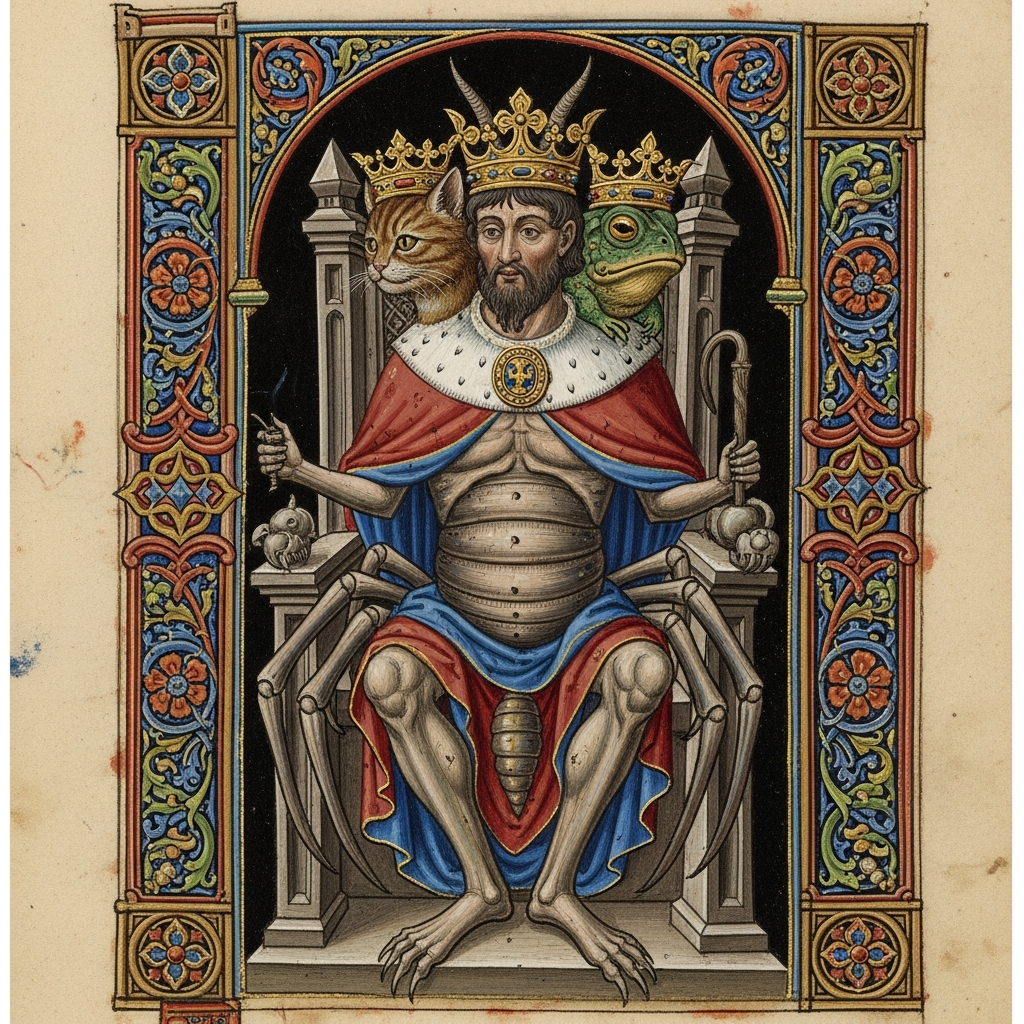
The first and foremost of the Goetia. Bael grants the power of invisibility — not physical vanishing, but the ability to pass unnoticed, to be overlooked, to operate without detection. His three heads represent dominion over the animal kingdom (cat), humanity (man), and the amphibious boundary between worlds (toad). A debased form of the Canaanite storm-god Baal. See also: Qliphoth section (ruler of A’arab Zaraq).
The most loyal of the Kings to Lucifer. Paimon commands the largest army (200 legions — roughly 1.2 million spirits). He teaches every art, science, and secret, and can bind others to the summoner’s will. His voice is so loud the summoner must compel him to speak clearly. In the Liber Officium Spirituum, Paimon is said to have been an angelic power of the Order of Dominions before the Fall. He is the demon most commonly depicted in modern horror media.
Beleth arrives with such fury that the summoner must draw a triangle outside the circle and command him into it, or be destroyed. The summoner must hold a hazel wand toward the South and East, making a triangle outside the circle, and command Beleth to enter it. Only then can he be safely addressed. Once controlled, Beleth causes love “between a man and a woman” — though the nature of Goetia love spells is compulsion, not genuine affection.
One of the more information-focused Kings. Purson reveals all hidden and secret things, discovers treasure, and answers truly about past, present, and future events. He can also provide good familiars. His relatively small army (22 legions) suggests his power lies in knowledge rather than force — the spy-master of Hell rather than a general.
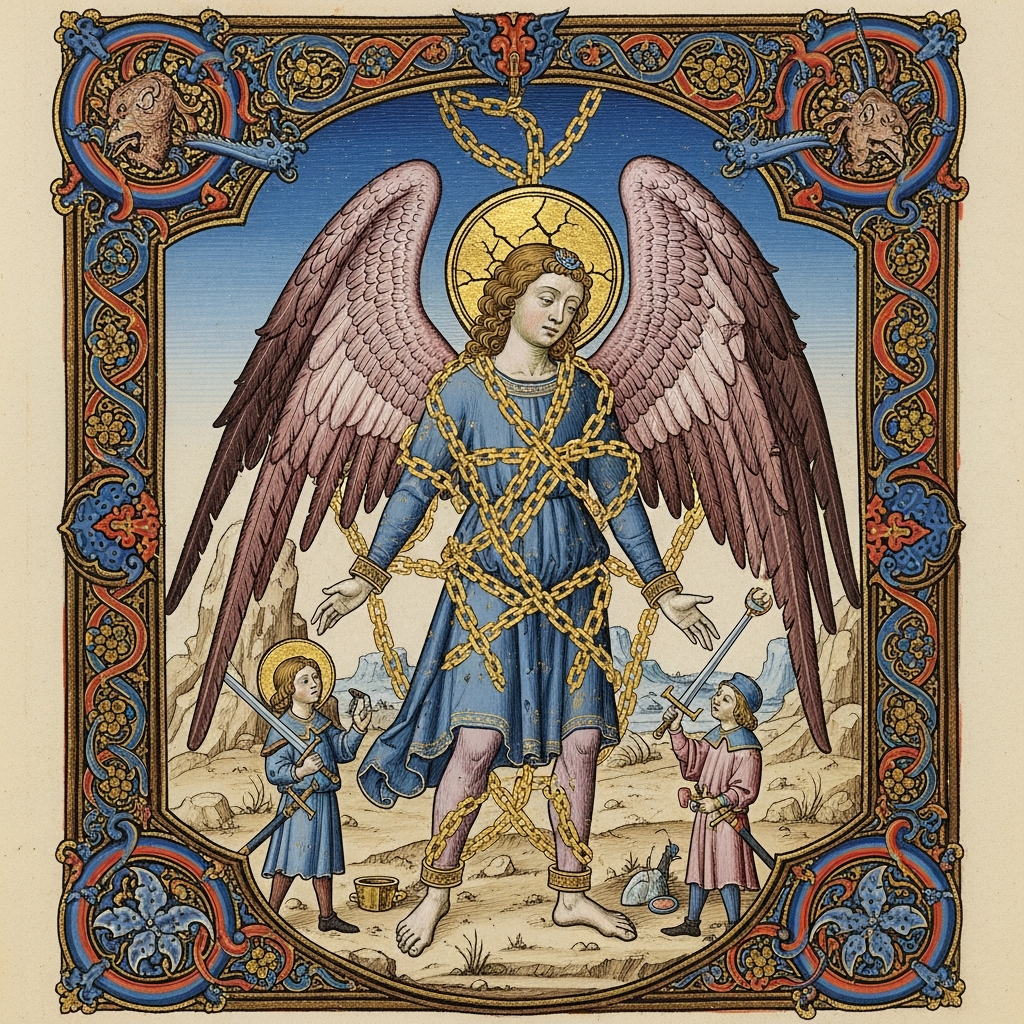
The Goetia manifestation of Asmodeus. Here he teaches the mathematical sciences and gives truthful answers about the future. He commands exactly 72 legions — matching the total number of Goetia demons, as if each legion mirrors one of his peers. He can make the summoner invisible and reveals the location of hidden treasure. His counter-angel is Raphael, who bound him in the Book of Tobit. See the full Asmodeus profile in the Fallen Angels section.
One of two dual-rank spirits (King AND Count). Vine discovers hidden things, identifies witches and sorcerers, and reveals past, present, and future. His unique power is over physical structures — he can demolish walls and create storms at sea. He builds as well as destroys. A practical, military-minded demon for siege warfare and counter-sorcery.
His name derives from Balaam — the biblical prophet-for-hire who was summoned by King Balak to curse Israel but ended up blessing them instead (Numbers 22-24). The demon Balam retains the prophetic function: he tells of things past and to come, grants invisibility, and imparts wit and finesse. The transformation from biblical prophet to Goetia King illustrates how ambiguous or foreign spiritual figures were demonized across traditions.
The supreme alchemist of Hell. Zagan can turn wine to water, water to wine, blood to wine, blood to oil, and any metal to coin. He makes fools wise and the witless sharp. His transformation powers are the most extensive of any Goetia spirit — where others grant knowledge, Zagan physically transmutes matter. His dual rank (King and President) combines sovereign authority with scientific expertise.
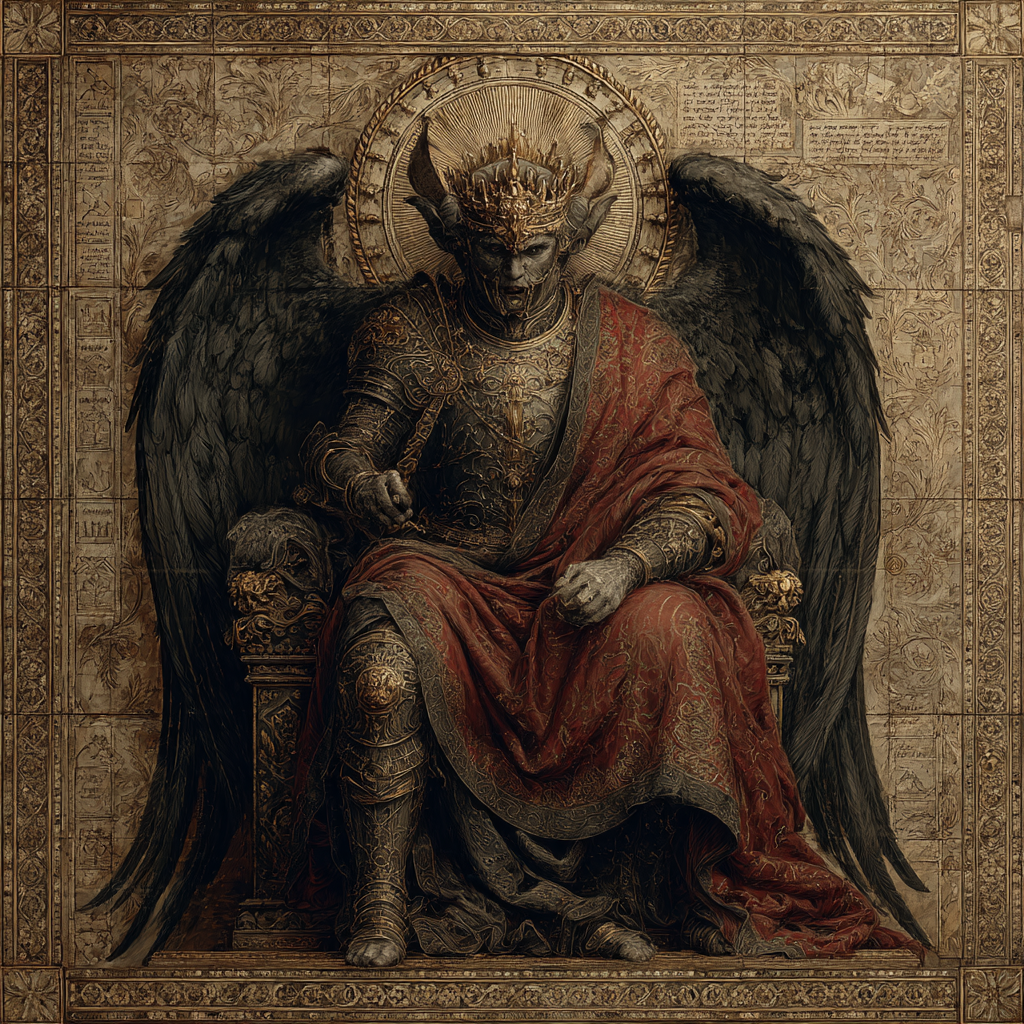
The name Belial (Hebrew: בליעל) literally means “worthless” or “without a yoke.” In the Hebrew Bible, “sons of Belial” is a phrase for wicked, lawless men (Deut 13:13; Judges 19:22). By the Dead Sea Scrolls era, Belial had become a proper noun — the chief of darkness opposing the “Prince of Light” in the War Scroll. Paul uses the name as Satan’s equivalent: “What harmony is there between Christ and Belial?” (2 Cor 6:15). In the Goetia, Belial is the most politically-minded King — he distributes senatorships and provides favor with friends and foes. His requirement for offerings distinguishes him from other spirits: withhold payment, and he lies. His appearance as beautiful angels in a fire-chariot is the most deceptive form in the entire Goetia.
3 min read
Raphael
Ars Goetia #68; 2 Corinthians 6:15; Dead Sea Scrolls (War Scroll); Deuteronomy 13:13