Combat Profile
Heart Devourer
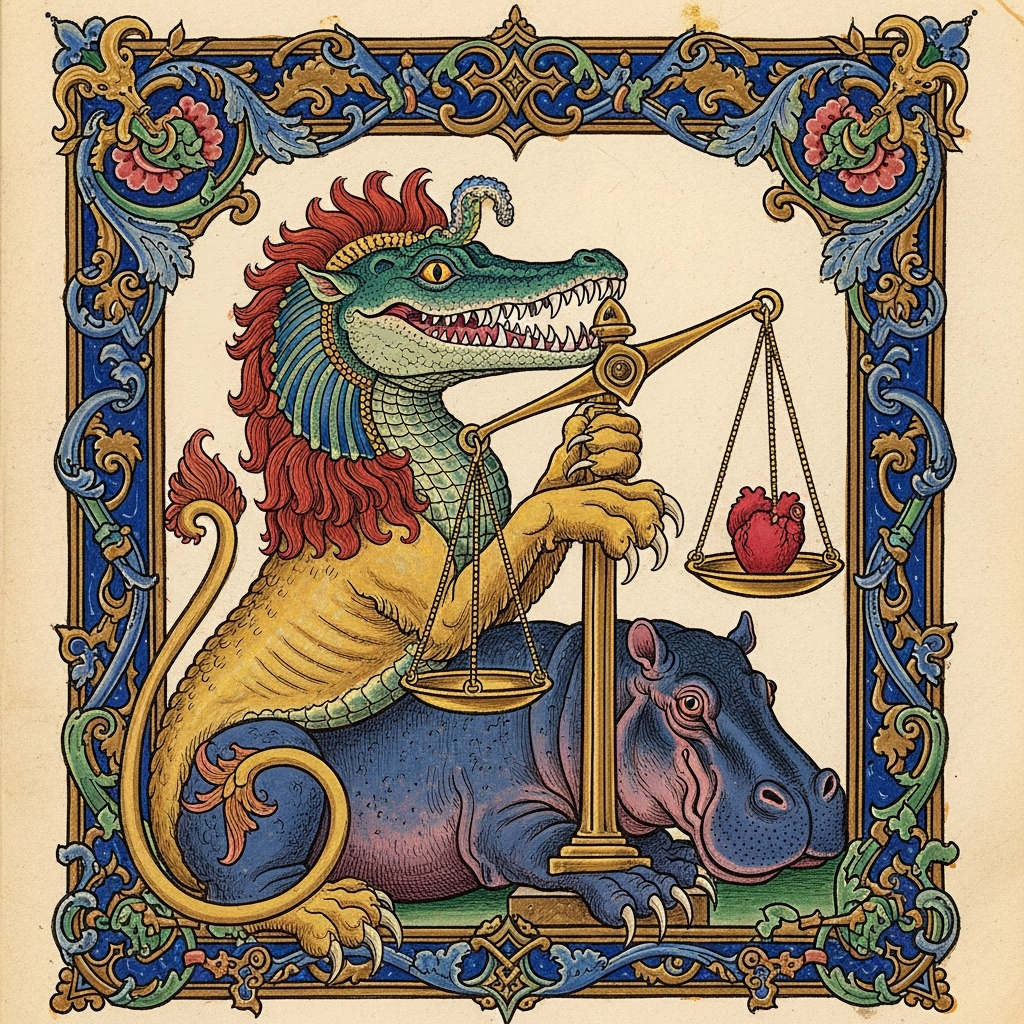
Ammit consumes the heart of a condemned soul, utterly annihilating their chance at the afterlife and erasing them from existence forever.
Scales of Ma'at
Ammit judges all who stand before her; those deemed unworthy cannot lie or hide their sins, and their power diminishes in her presence.
Only acts at the Weighing of the Heart; cannot pursue the living
“She has the head of a crocodile, the body of a lion, and the hindquarters of a hippopotamus — the three largest man-eating animals the Egyptians knew.”
Ammit is a composite nightmare: crocodile jaws, lion’s mane and forelegs, hippopotamus hindquarters. She crouches beside the scales in the Hall of Ma’at, waiting. If a soul’s heart is heavy with sin — heavier than the feather of truth — Ammit devours it. The soul is not sent to a hell; it simply ceases to exist. This is annihilation, not eternal torment, which makes Ammit the Egyptian parallel to both the Lake of Fire (Rev 20:14-15) and the annihilationist reading of final judgment. The three animals composing her body were the three most dangerous creatures in the Egyptian world, combining every mortal terror into a single form. Notably, Ammit is not evil — she is a function of cosmic justice. She only eats what the scales declare unworthy.
1 min read
A pure heart (lighter than Ma'at's feather)
Book of the Dead (Chapter 125); Papyrus of Ani