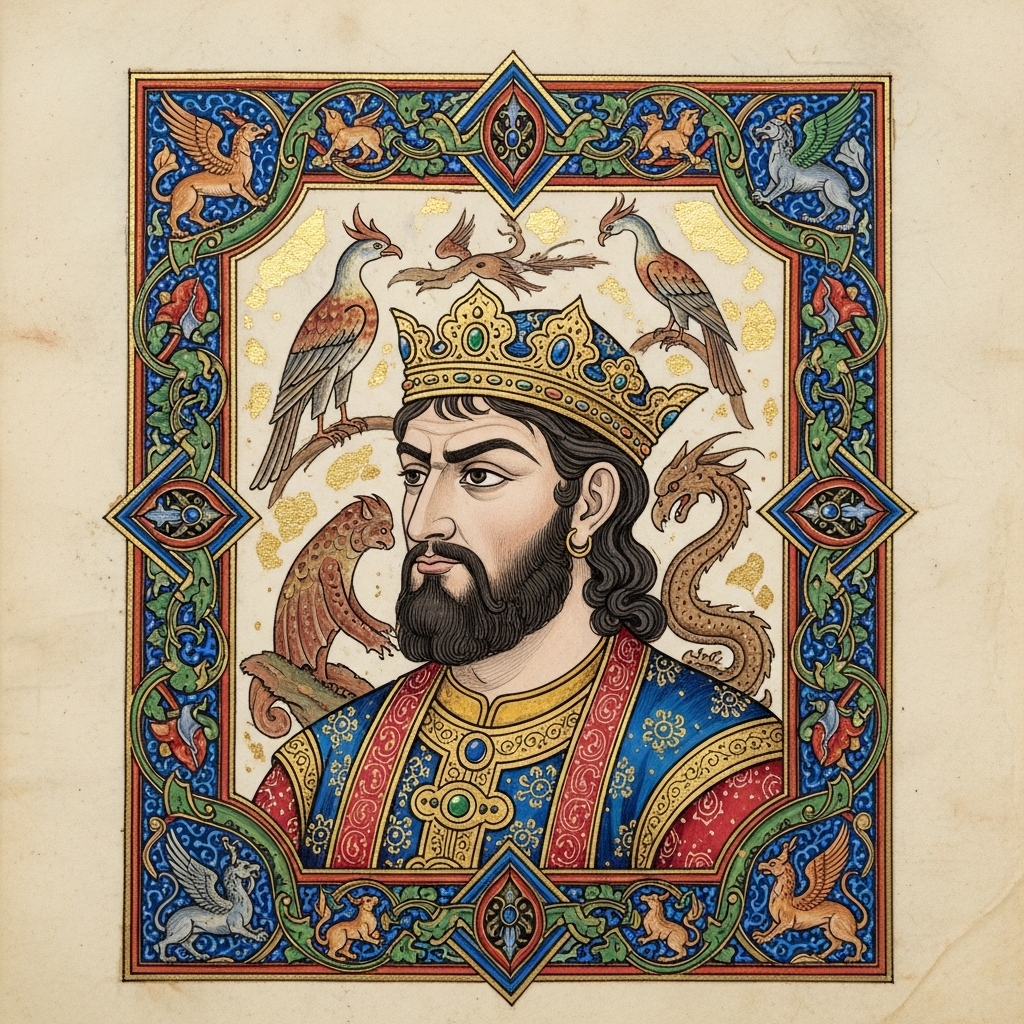
Combat Profile
Khavarenah's Blade
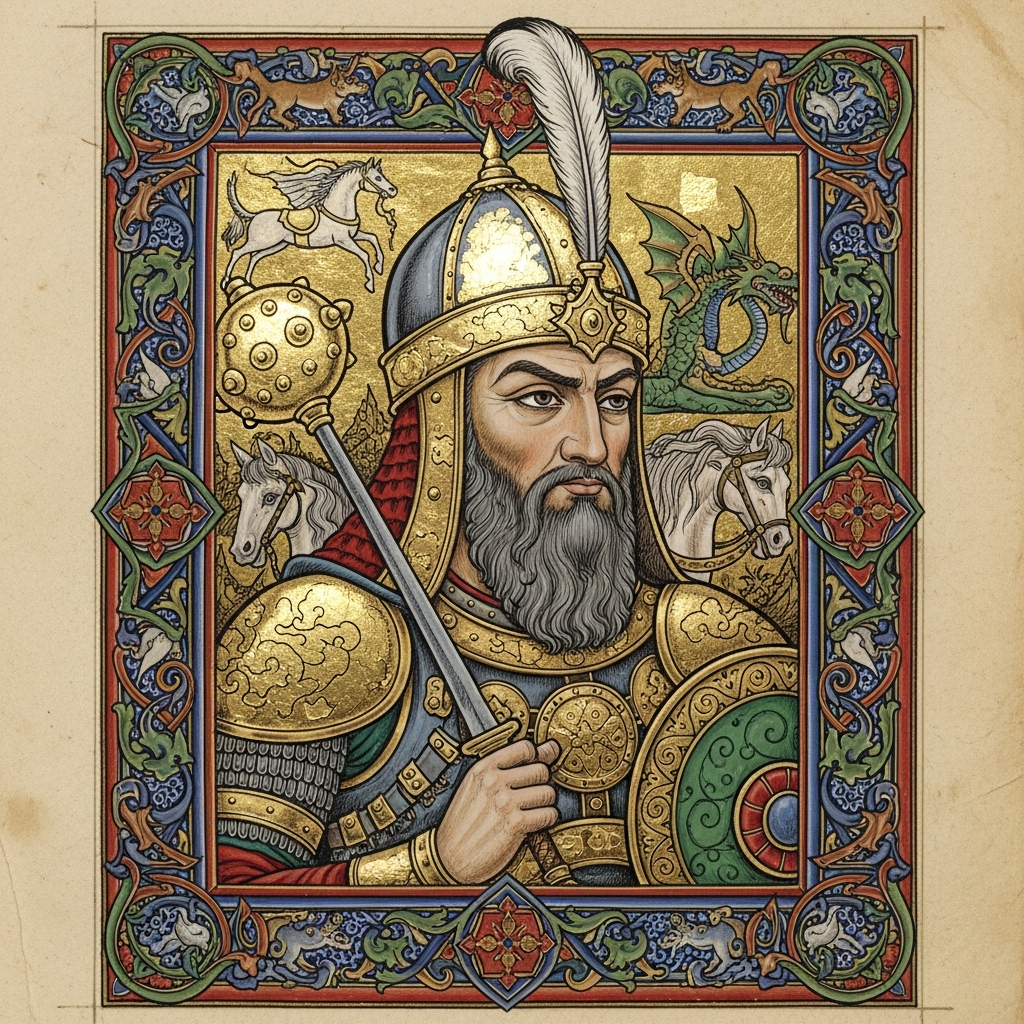
Sohrab strikes with divine radiance inherited from his lineage, dealing massive damage that increases when facing a worthy opponent of greater power.
Tragic Fate
Sohrab's every victory is shadowed by destiny; he gains strength from his struggle against inevitability but cannot escape his doom.
Inexperience; desire to meet his father; Rostam's superior skill
“I have come seeking my father, Rostam. Tell me where he is, for I wish to challenge him to single combat, to prove myself his equal, and then to claim my rightful place among the great warriors of Persia.” — Sohrab, before the final battle
Sohrab is Rostam’s son by a foreign princess (some versions say the daughter of the King of Semengan) (Shahnameh), a child raised without knowing his father’s identity. He grows to be a magnificent warrior in his own right, renowned across the land, yet consumed by a single quest: to find his father and either join him or surpass him in combat (Shahnameh). This desire — to be recognized by his father, to stand as his equal or superior — drives Sohrab toward the battlefield where Rostam awaits, unknowing.
The tragedy of Sohrab is the tragedy of the son: his ATK (82) is formidable, but not quite equal to Rostam’s (95). His speed is superior (85 vs. 80), but Rostam’s experience and cunning overcome it. When Sohrab finally faces his father in single combat, neither knows who the other is. They fight with fury and skill, and Rostam, through a trick, gains the upper hand. He drives his spear through Sohrab’s body and only then learns — through Sohrab’s dying words, which call out for his father — that he has killed his own son.
Sohrab represents the yearning for paternal recognition that defines human vulnerability. Unlike Rostam, whose strength isolates him, Sohrab’s tragedy is that his strength cannot buy him what he most desires: his father’s acknowledgment and love.
Biblical Parallel: Isaac (the son about to be sacrificed, though Sohrab’s sacrifice is actual, not prevented); Absalom (David’s son who dies in battle, causing David immense grief); the prodigal son (seeking reunion with his father).
Cross-Tradition Connections: Telemachus (Odysseus’s son in Greek epic); Karna (in the Mahabharata, the warrior born of hidden lineage, killed by his brother unknowingly); Hamlet (seeking validation from the father, ultimately destroyed by that quest).
2 min read
Rostam (his own father)
*Shahnameh*; Davis, *Shahnameh: The Persian Book of Kings*