The Story
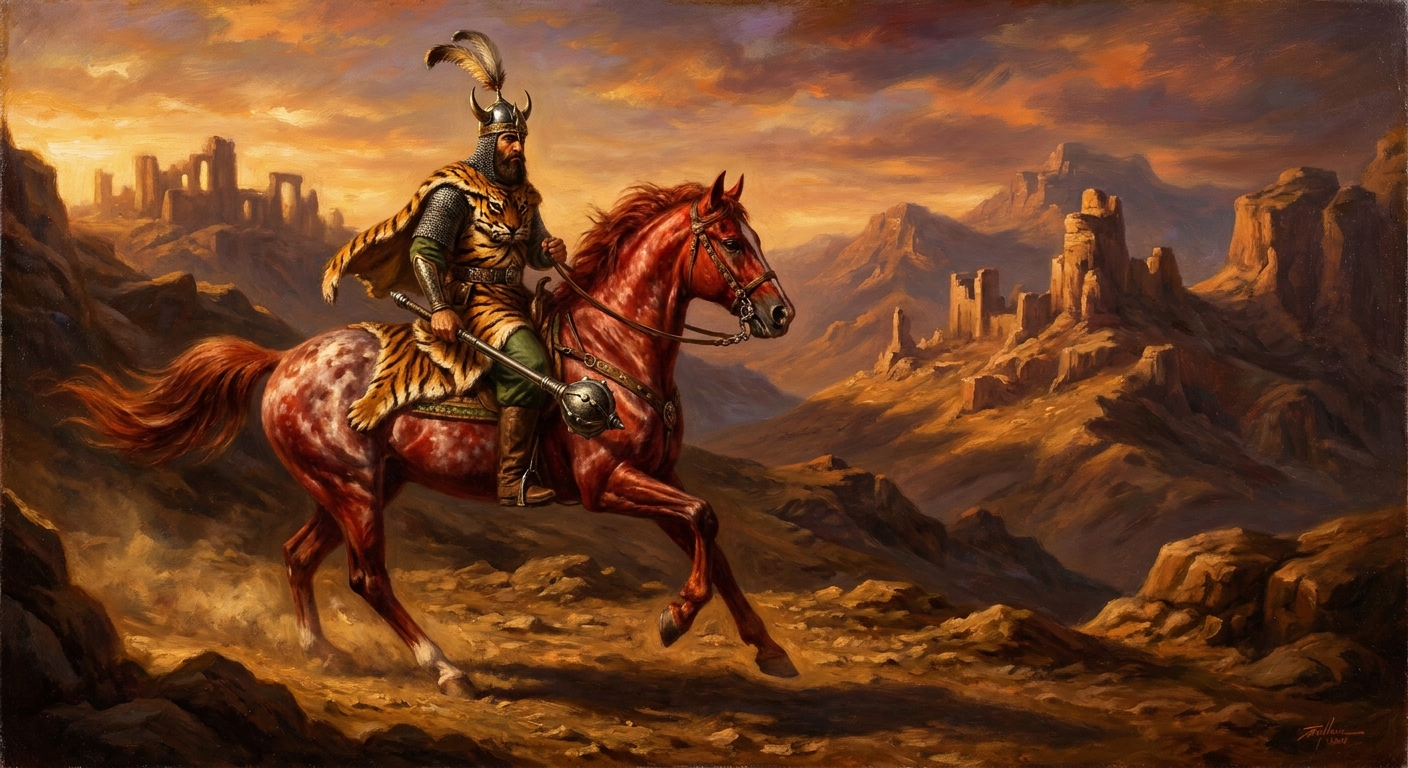
Persian mythology preserves the heroic memory of pre-Islamic Iran — kings, warriors, impossible deeds. It runs parallel to Zoroastrianism but is not theological; it is epic. The Shahnameh (Book of Kings) is its center, though the roots run much deeper.
The Mythic Dynasties (legendary): Iranian oral tradition holds two pre-historical royal lines: the Pishdadian dynasty (Keyumars, Hushang, Tahmuras, Jamshid, Fereydun) and the Kayanian (Kay Kavus, Kay Khosrow) (Shahnameh). These are archetypal, not historical — the king as civilizer, tyrant, pride-broken mortal. Rostam of Sistan orbits them, serving seven kings, performing the Seven Labors.
The Achaemenids and Sasanians (550-651 CE): Cyrus, Darius, Xerxes build the largest empire yet (Herodotus, Histories; Behistun Inscription). After Alexander (330 BCE), the Sasanian dynasty (224-651 CE) restores Persian rule and Zoroastrian faith. The Sasanian court codifies the old legends in the Khwaday-Namag (Book of Lords) — seed of the Shahnameh (Bundahishn; Sasanian inscriptions).
The Arab Conquest (651 CE): Yazdegerd III flees eastward and is killed (Tabari, History of the Prophets and Kings). Persia falls to the Caliphate. Arabic ascends; Pahlavi recedes. For three centuries, heroic memory survives underground — oral, rural, fragmented.
The Persian Renaissance (~977-1010 CE): Under the Samanids and Ghaznavis, New Persian becomes an act of cultural defiance. Ferdowsi, a landed-gentry poet in Tus, composes 60,000 rhyming couplets in pure Persian over thirty-three years (Shahnameh colophon). He recreates the longest epic by a single author, foundational to modern Persian identity. His boast endures: “Much have I suffered in these thirty years / I have brought Iran back to life with this Persian.” (Shahnameh, preface).
Mongols, Timurids, Safavids (1220-1722): Successive invasions sack, rebuild, reshape. The Safavids (1501-1722) make Twelver Shia Islam the state faith. Persian remains the prestige language from Anatolia to Bengal. The Shahnameh stays canonical; illuminated copies become some of Islamic art’s greatest treasures.
Qajar, Pahlavi, Revolution (1796-1979): The Pahlavis (1925-1979) revive pre-Islamic Persian symbols — lion-and-sun, Shahanshah (King of Kings), Cyrus as national shrine. The Islamic Revolution (1979) overthrows them. The new Islamic Republic eyes the pre-Islamic epic with ambivalence: officially Islamic, yet the Shahnameh runs too deep to erase.
Today: Iranians memorize the tragic combat of Rostam and Sohrab — father killing son unrecognized — the most quoted passage in Persian, rival to Hamlet or the binding of Isaac (Shahnameh). UNESCO listed Naqqali (epic storytelling) as Intangible Cultural Heritage in 2011 (UNESCO ICH List).
Pivotal Events
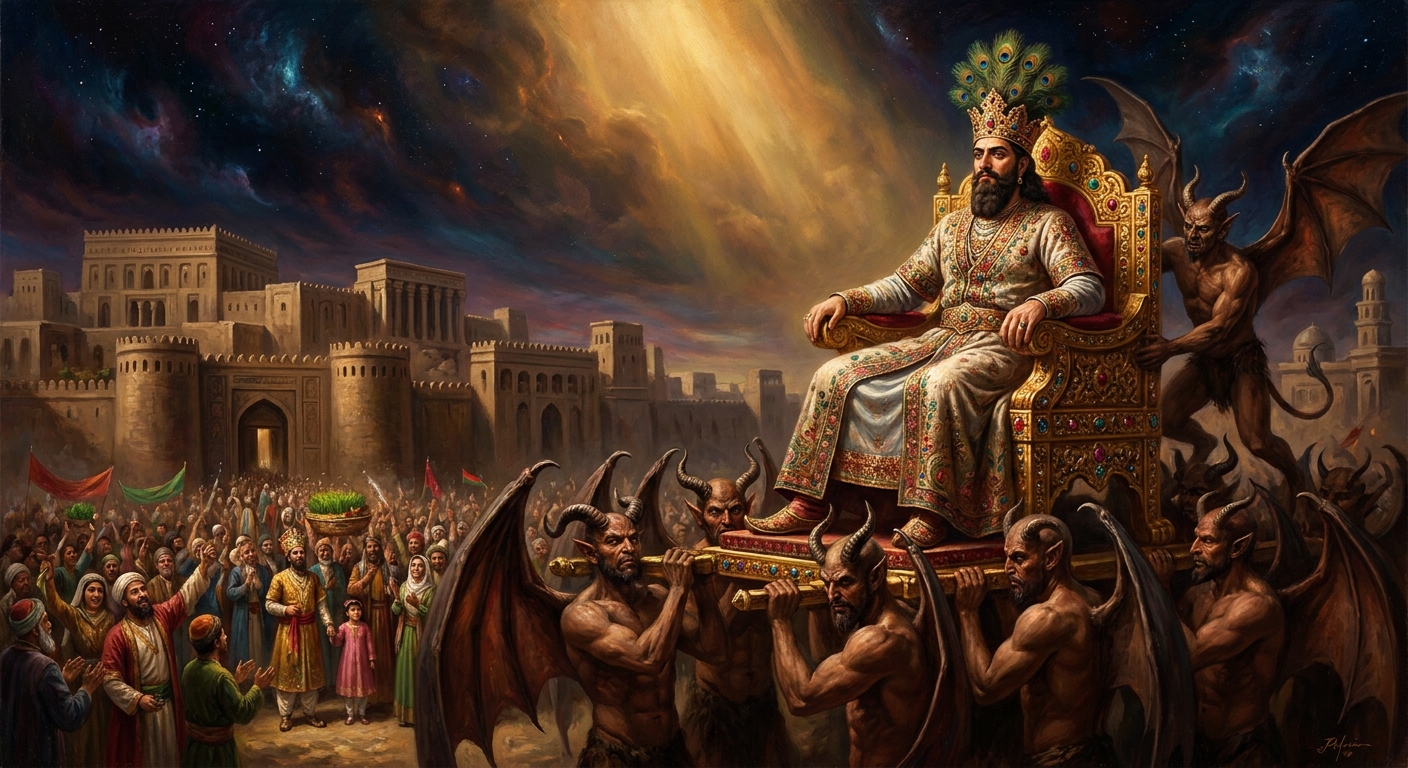
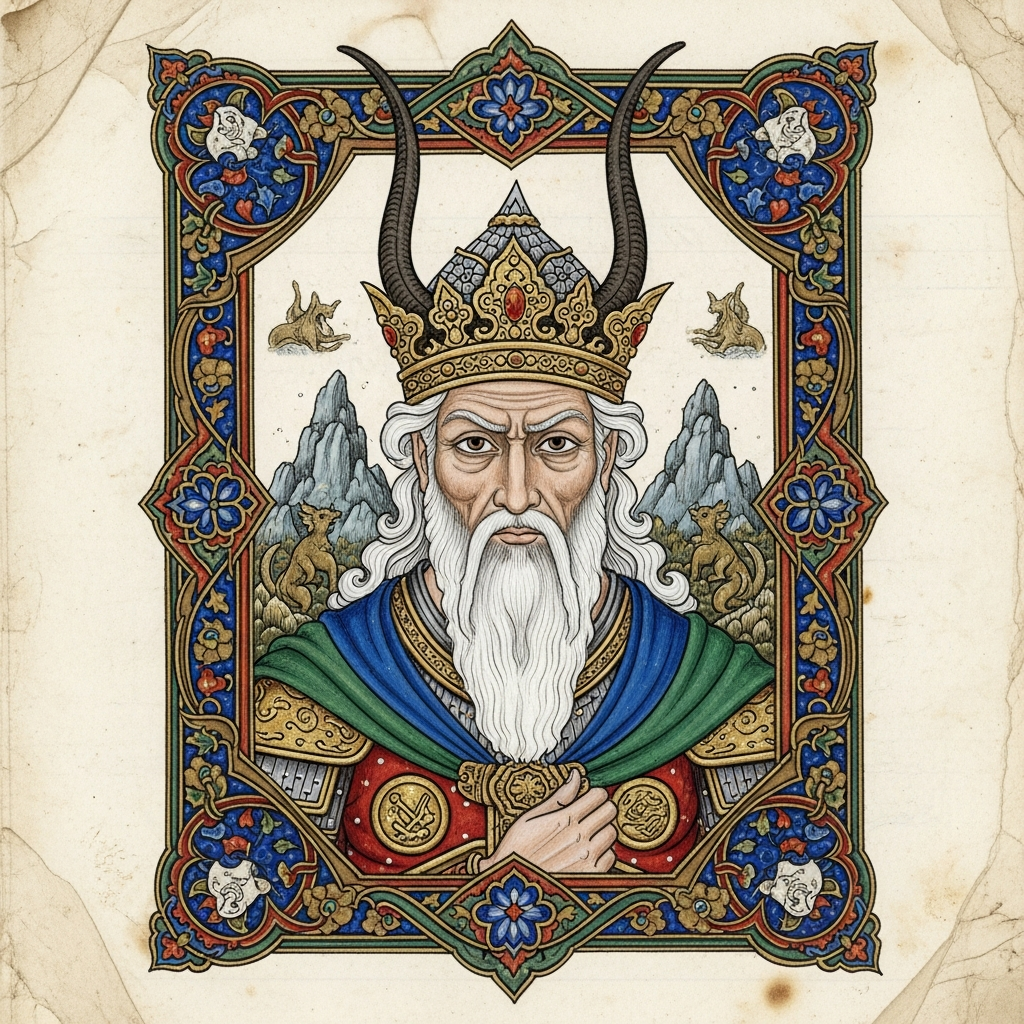
Jamshid rules 700 years of peace (Shahnameh). Under his reign, humans learn to forge, weave, build, distinguish the social orders, brew wine, observe Nowruz (Bundahishn). The world knows no death, no disease. Then pride breaks him. He declares: I made all this. The divine farr (royal aura) departs. Demons rise. Zahhak seizes the throne (Shahnameh). The Persian archetype: pride ends golden ages.
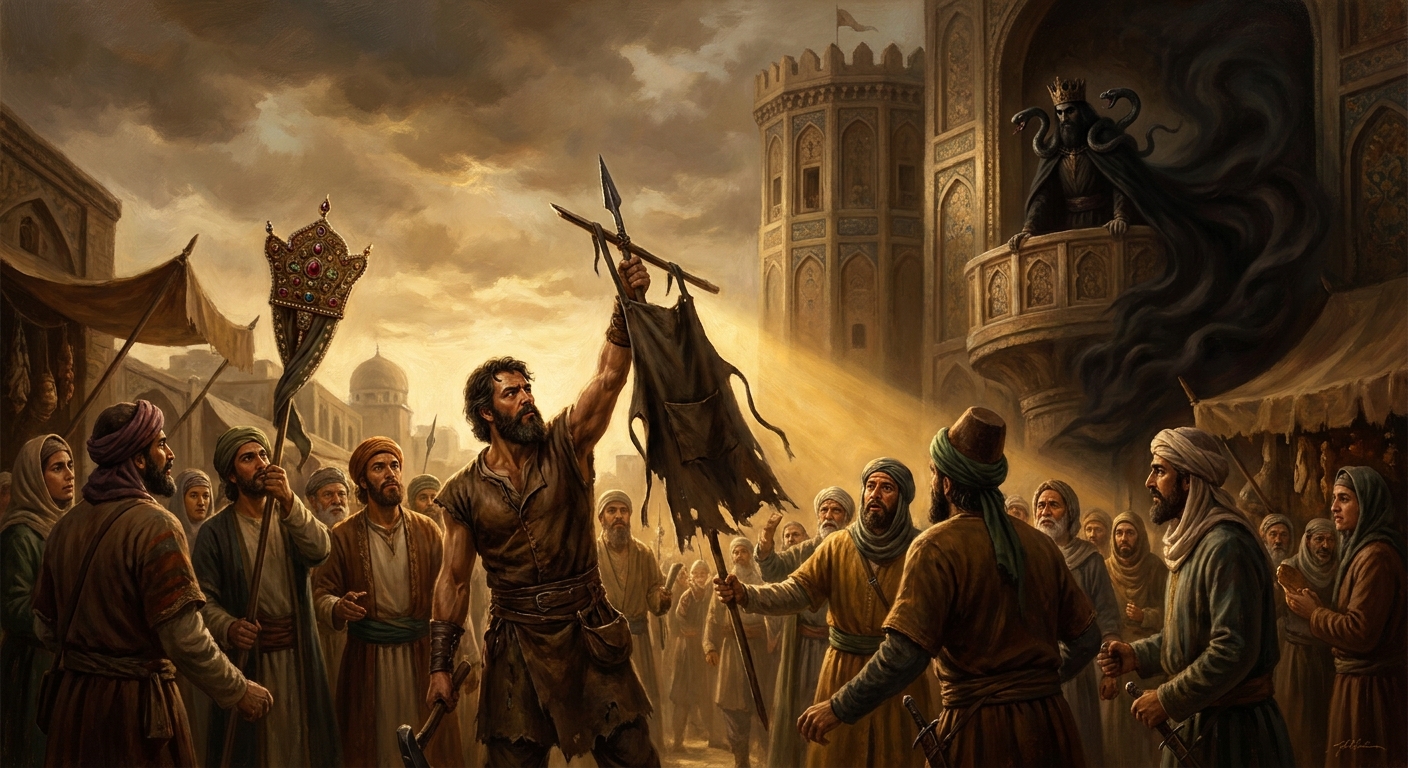
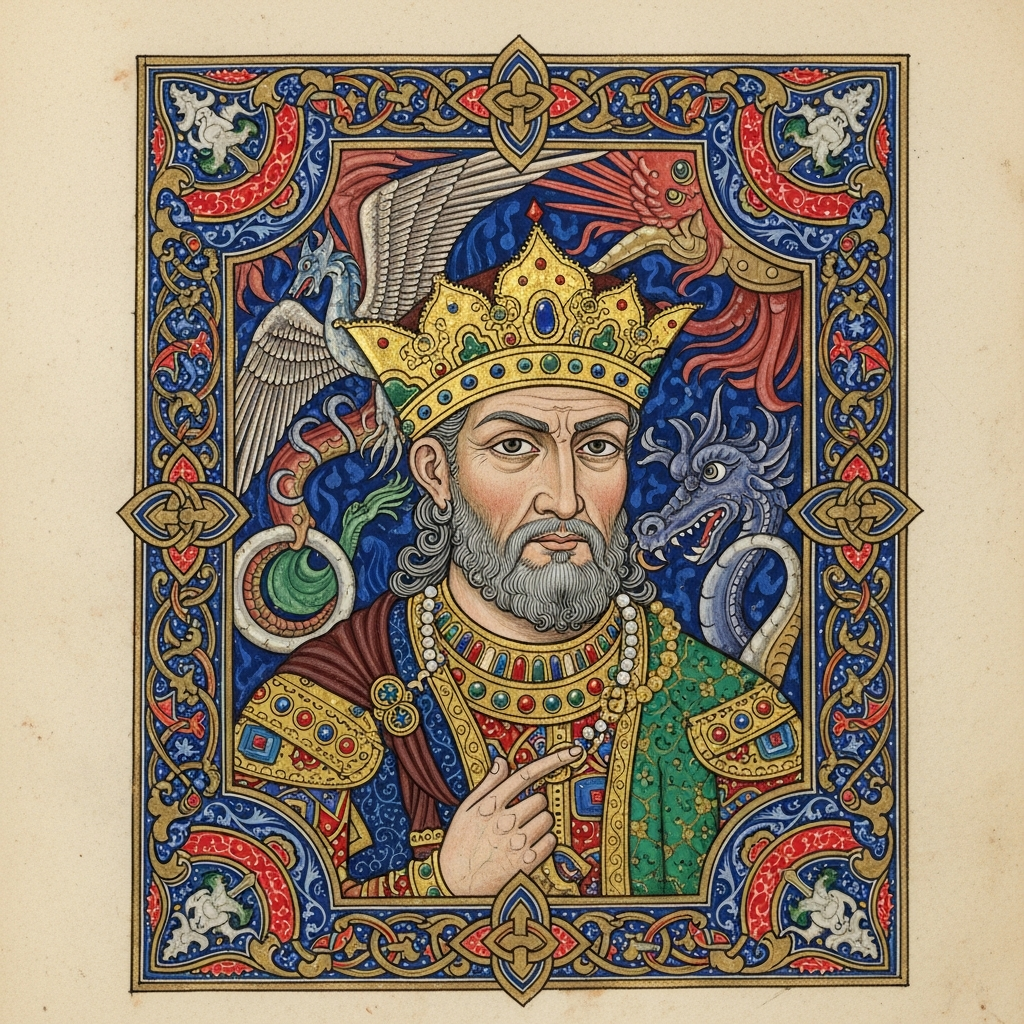
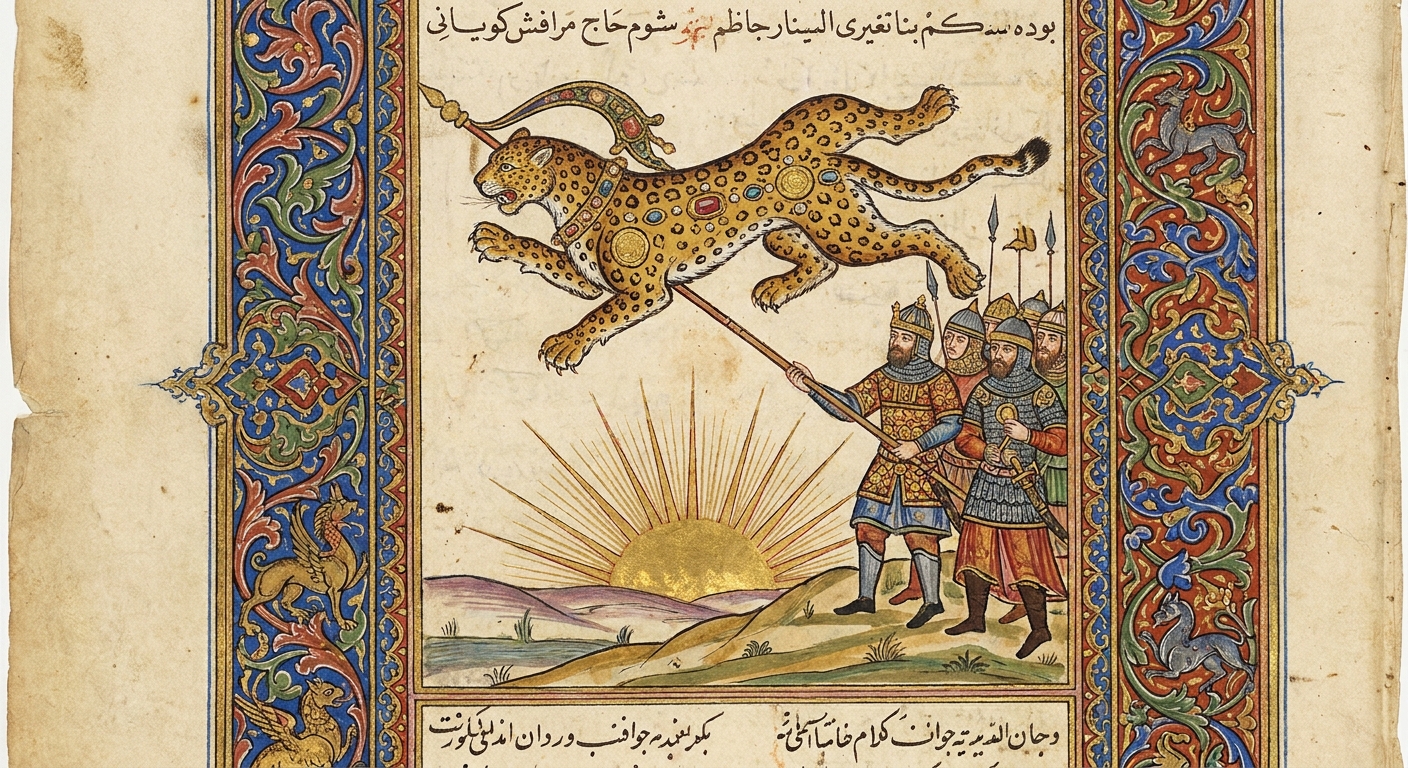
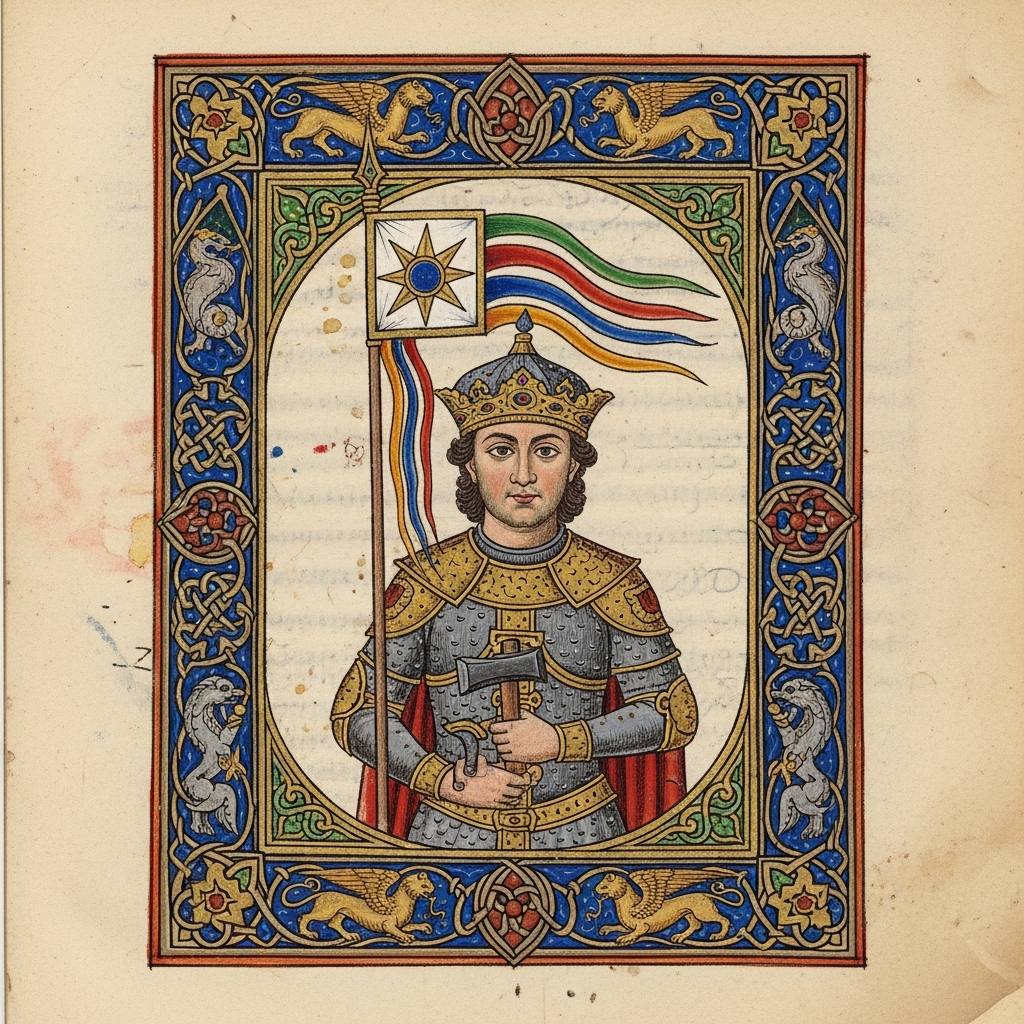
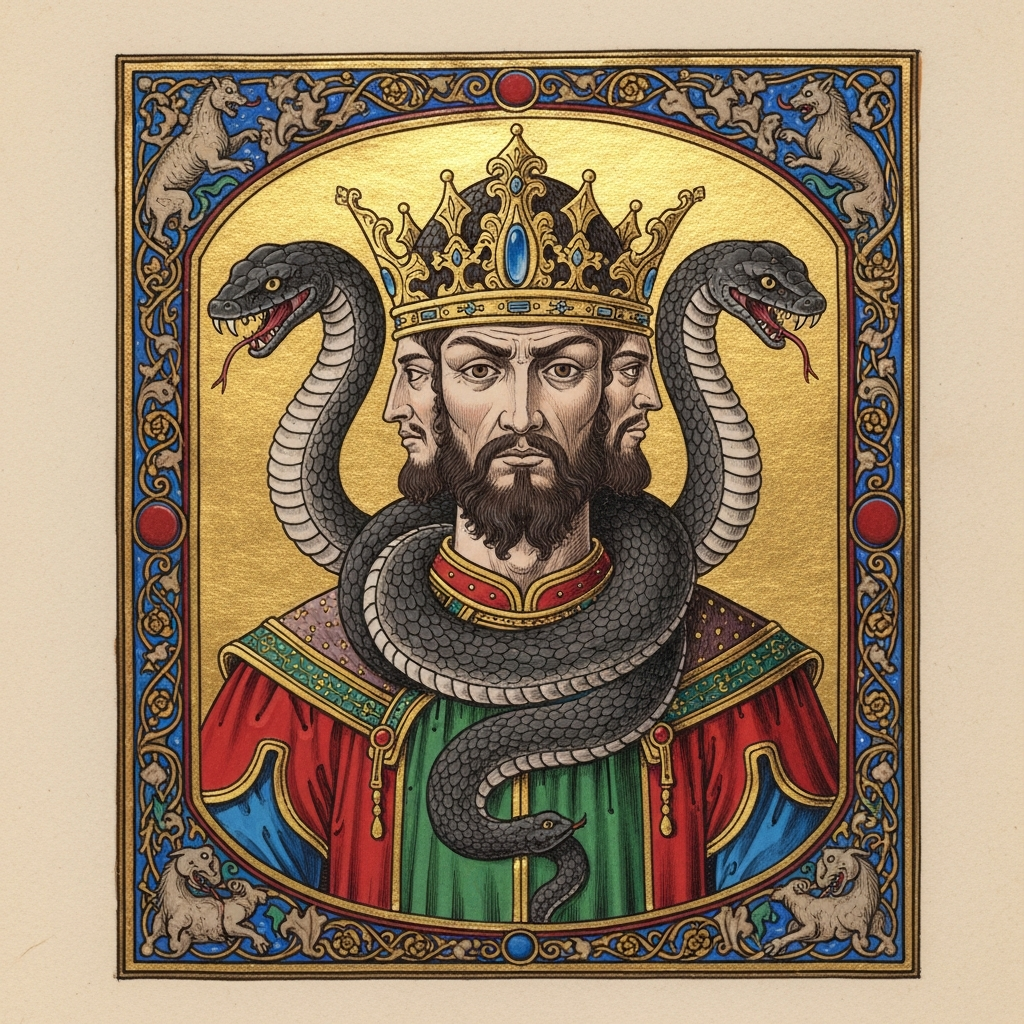
Zahhak’s thousand-year reign becomes a slaughterhouse (Shahnameh). Two black serpents grow from his shoulders after Iblis’s kiss; they hunger for brains of two young men daily or devour his own (Shahnameh). The blacksmith Kaveh, after losing seventeen of eighteen sons to the serpents, refuses further. He tears his leather apron from his body, ties it to a spear — the Derafsh-e Kaviani, banner of revolt — and rallies the people (Shahnameh). He finds Fereydun in hiding, crowns him, and breaks the tyrant, who is chained in Mount Damavand forever (Shahnameh). A smith’s apron becomes Persia’s imperial standard for two millennia. The Persian myth of revolution: the common man, not the prince, breaks tyranny.
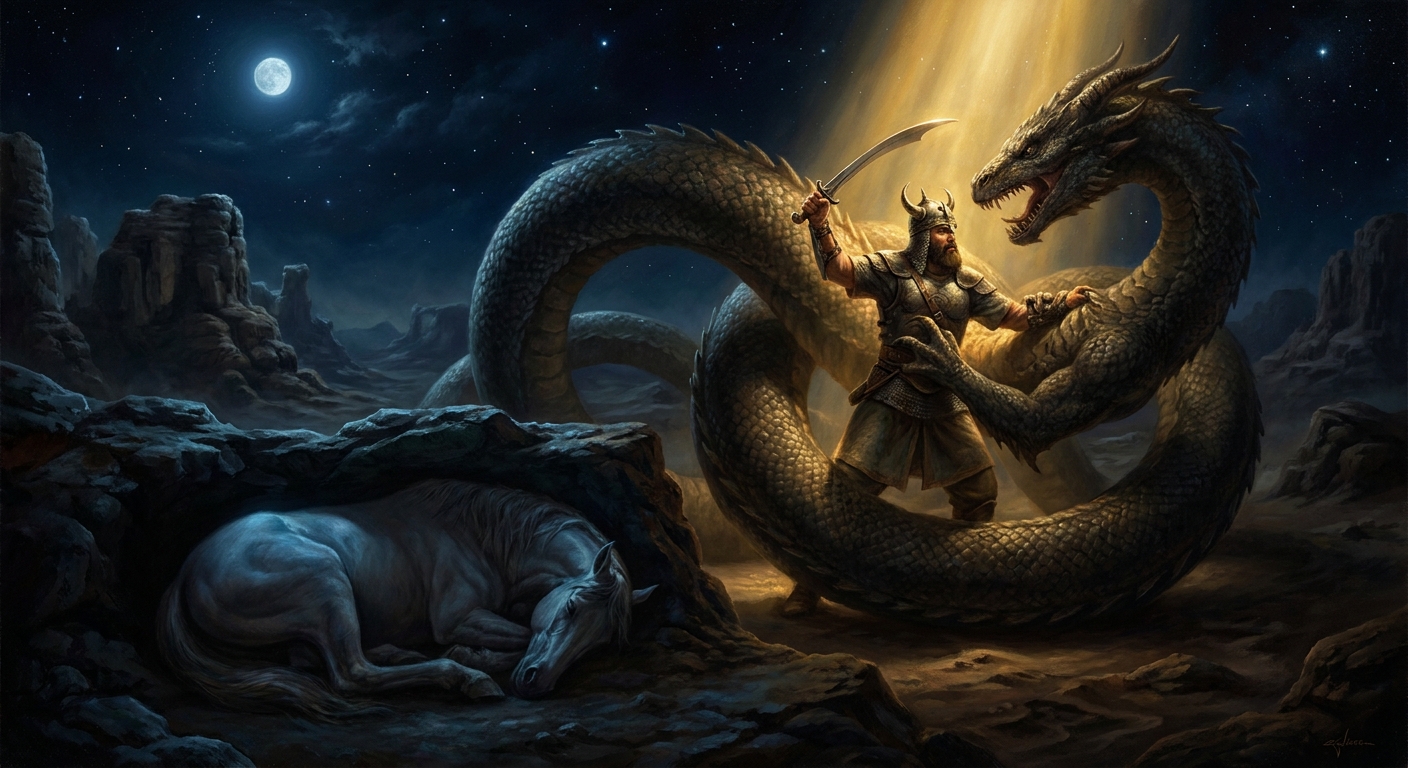
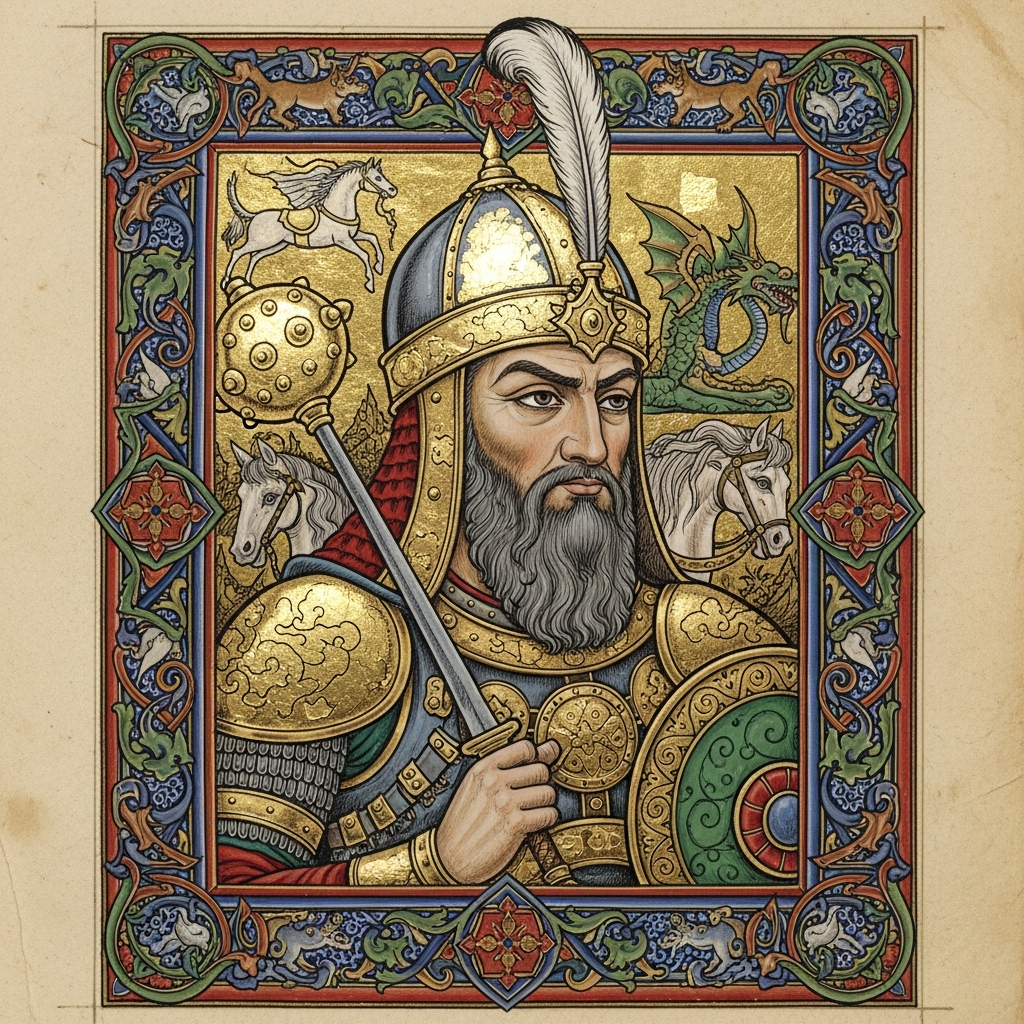
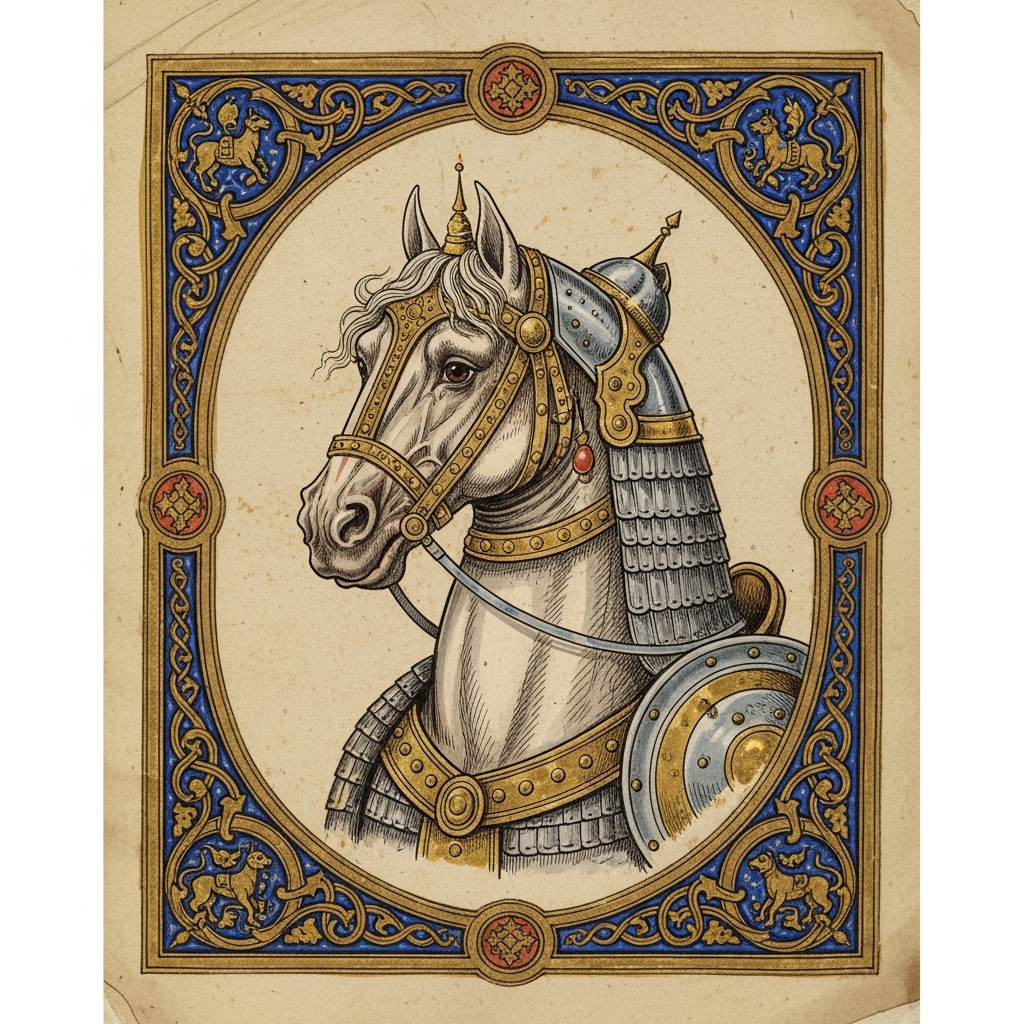
Rostam rescues the imprisoned Kay Kavus through the Haft Khan with his miraculous horse Rakhsh (Shahnameh). He slays a dragon that speaks, defeats a sorceress in fair form, captures the demon king Arzhang, blinds the White Demon of Mazandaran and uses the creature’s blood as medicine to restore the king’s eyesight (Shahnameh). The Seven Labors echo the Twelve Labors of Heracles or Gilgamesh — heroes ascending through cosmic perils. Rostam emerges the absolute warrior: stronger than kings, older than dynasties, the pillar that holds Iran upright when rulers crumble.
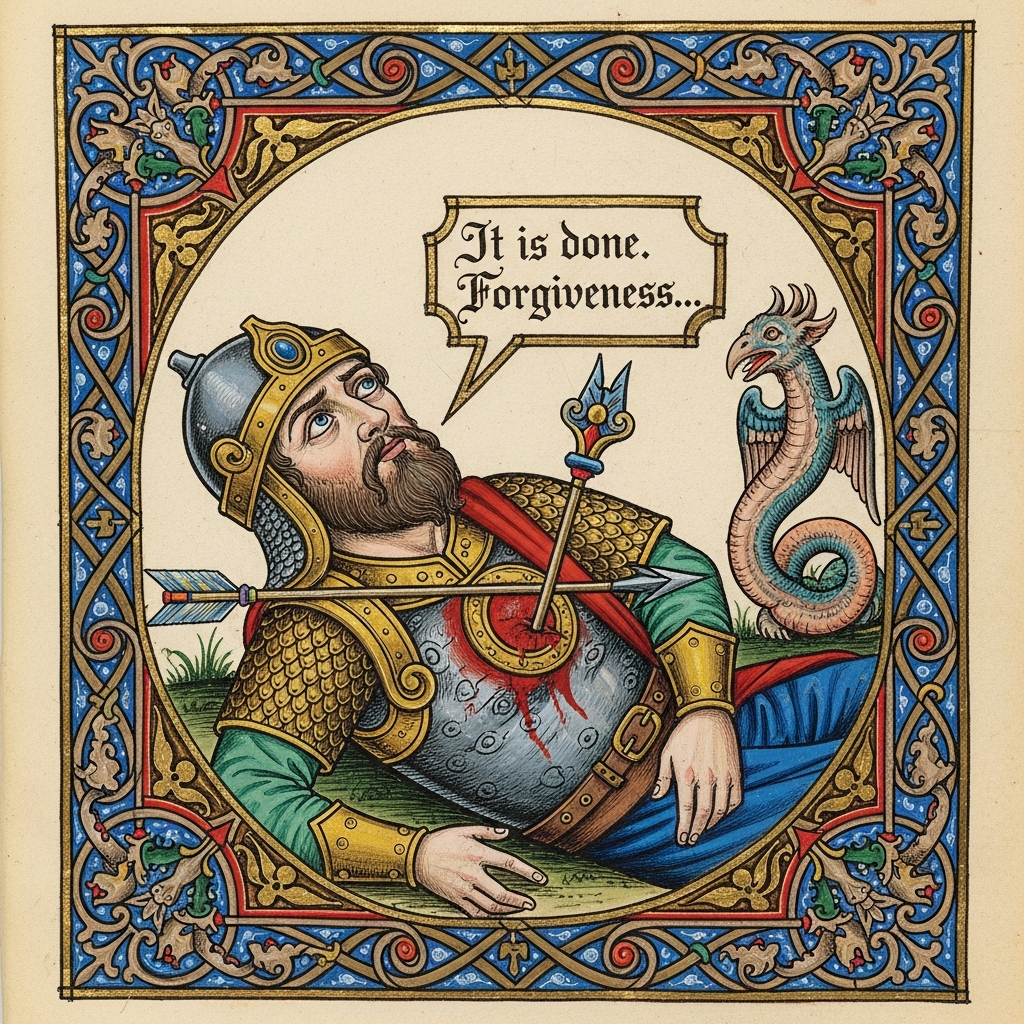
The most quoted passage in Persian literature (Shahnameh). Rostam fathers Sohrab in a single night with the princess Tahmineh, leaving an armband as recognition token (Shahnameh). The boy grows his father’s match — stronger, even — and rides at a Turanian army’s head to find Rostam, depose Kay Kavus, place his father on Iran’s throne (Shahnameh). Father and son meet unrecognized. They wrestle two days. On the third, Rostam throws him and drives a dagger through his heart (Shahnameh). Dying, Sohrab reveals the armband. No narrative moment in world literature hits harder. The Persian tragic vision — bakht (fate) outweighs any warrior’s strength — crystallizes here.
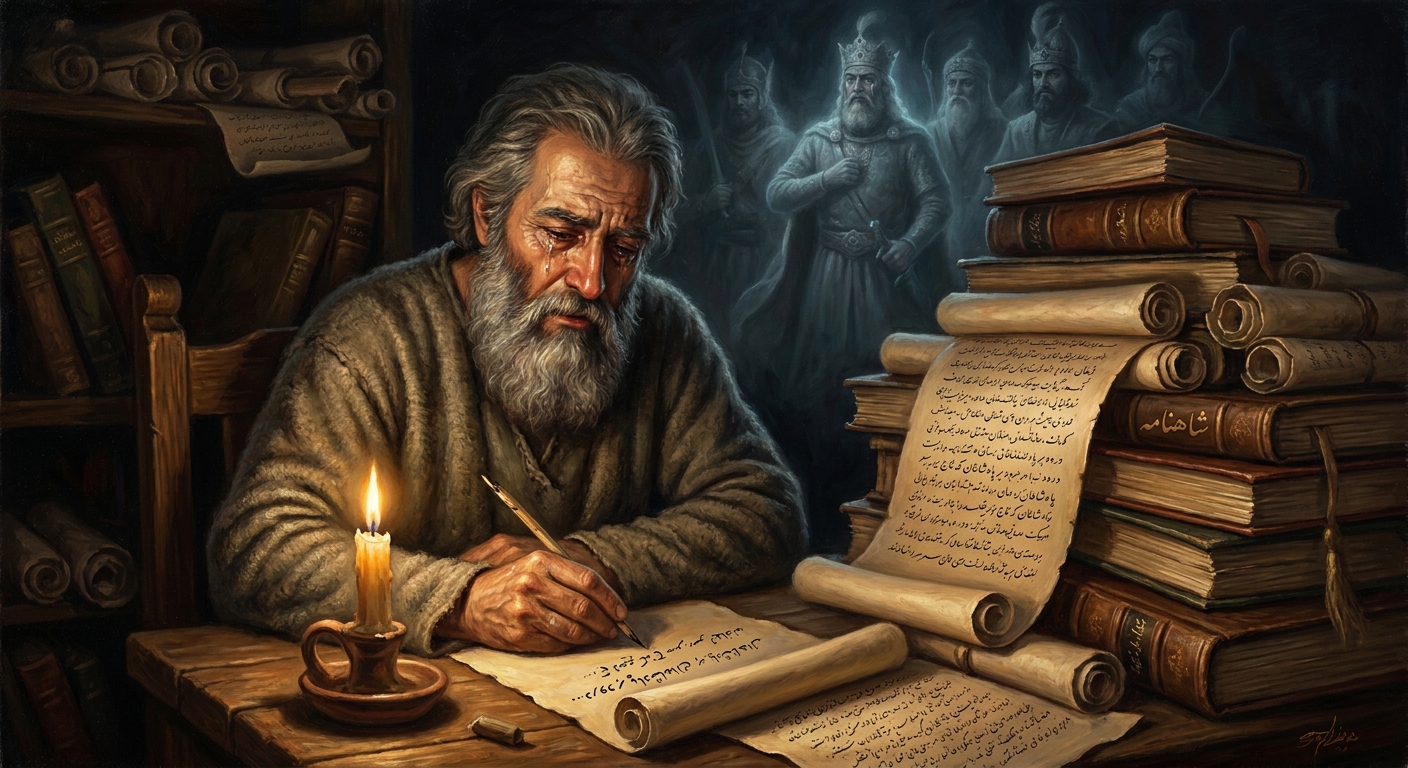
Thirty-three years in Tus. Sixty thousand couplets spanning creation through Sasanian collapse to Arab conquest (Shahnameh colophon). Ferdowsi dedicates the work to Sultan Mahmud of Ghazna, expecting gold coin per couplet. The sultan — a Sunni Turk wary of Ferdowsi’s Shia bent and pre-Islamic glorification — pays in silver (Nezami Aruzi, Chahar Maqala). Insulted, Ferdowsi gives it to a bath-keeper and ale-seller and writes a satire on the sultan. He dies in poverty (~1020 CE). Legend: the sultan repents, sends gold; the camel-train enters Tus’s gate as Ferdowsi’s funeral leaves it. True or not, history judges clearly: Ferdowsi saved Persian language, and with it, Persian soul. “I have brought Iran back to life with this Persian.” (Shahnameh, preface).
Timeline
| Era | Date | Event | Source |
|---|
| Mythic Pishdadian Dynasty | legendary | Keyumars, Hushang, Tahmuras, Jamshid — first kings, civilizers | Shahnameh |
| Jamshid’s Golden Age | mythic | 700 years of peace; pride brings collapse | Shahnameh |
| Zahhak’s Reign | mythic | 1,000 years of tyranny; serpents grow from shoulders | Shahnameh |
| Kaveh’s Revolt | mythic | Blacksmith raises apron as Derafsh-e Kaviani; Fereydun crowned | Shahnameh |
| Mythic Kayanian Dynasty | legendary | Kay Kavus, Kay Khosrow, Kay Goshtasp | Shahnameh |
| Rostam’s Seven Labors | mythic | Hero rescues Kay Kavus from White Demon of Mazandaran | Shahnameh |
| Rostam and Sohrab | mythic | Father kills unrecognized son in single combat | Shahnameh |
| Death of Rostam | mythic | Treachery of half-brother Shaghad; pit of spears | Shahnameh |
| Achaemenid Empire | 550-330 BCE | Cyrus, Darius, Xerxes build world’s largest empire yet | Herodotus; Behistun Inscription |
| Alexander’s Conquest | 330 BCE | Persepolis burns; Achaemenids fall | Arrian; Plutarch |
| Parthian Empire | 247 BCE - 224 CE | Arsacid dynasty revives Persian culture under Greek rule | classical sources |
| Sasanian Empire | 224-651 CE | Last pre-Islamic Persian empire; Khwaday-Namag compiled | Tabari; Sasanian inscriptions |
| Khwaday-Namag | ~6th c. CE | Middle Persian Book of Lords; seed of Shahnameh | Sasanian court |
| Arab Conquest | 636-651 CE | Battle of Qadisiyya; Yazdegerd III killed fleeing east | Tabari; Baladhuri |
| Persian Linguistic Revival | 9th-10th c. | New Persian emerges as cultural defiance | Samanid court |
| Daqiqi’s Fragment | ~975 CE | Earlier poet begins versified Iranian epic; assassinated | Shahnameh preface |
| Ferdowsi Begins Shahnameh | ~977 CE | Inherits Daqiqi’s project in Tus | Ferdowsi’s preface |
| Shahnameh Completed | ~1010 CE | 60,000 couplets; longest epic by single author | Shahnameh colophon |
| Ferdowsi’s Death | ~1020 CE | Dies in poverty after sultan’s underpayment | Nezami Aruzi |
| Mongol Invasion | 1219-1258 | Iran devastated; Baghdad sacked | Juvayni; Rashid al-Din |
| Ilkhanid and Timurid Manuscripts | 14th-15th c. | Great illustrated Shahnameh copies produced | Demotte Shahnameh |
| Safavid Dynasty | 1501-1722 | Twelver Shia Islam state faith; imperial Shahnameh (~1525-35) | Safavid court records |
| Qajar Dynasty | 1796-1925 | Qajar Iran; coffeehouse Shahnameh recitation thrives | Naqqali tradition |
| Pahlavi Era | 1925-1979 | Reza Shah revives pre-Islamic symbols; Cyrus celebrations 1971 | Pahlavi archives |
| Islamic Revolution | 1979 | Pahlavis fall; Islamic Republic founded | revolutionary records |
| Naqqali UNESCO Listing | 2011 | Persian epic storytelling inscribed as Intangible Heritage | UNESCO ICH |
| Present | 2026 | Shahnameh central to Iranian identity | living tradition |
Persian Mythology — The Epic of Heroes and Cosmic Struggle
The Shahnameh (The Book of Kings), composed by the poet Ferdowsi in the 10th century CE, stands as one of the world’s longest epic poems and the definitive source of Persian mythology. Unlike the biblical and Zoroastrian theological traditions, the Shahnameh presents mythology through the lens of heroic human drama: kings, warriors, and legendary figures caught between duty, pride, and fate. The narrative spans thousands of years, from the creation of the world to the Islamic conquest of Persia, weaving together cosmology, history, and tragedy into a single coherent epic. Its most celebrated moment is the tragedy of Rostam and Sohrab — a father kills his own son unknowingly in combat, a scene compared in emotional weight to the sacrifice of Isaac in the Bible and the tragedy of Oedipus in Greek literature. The Shahnameh’s central philosophical tension involves the conflict between divine will (daena), human pride (khodi), and tragic circumstance — heroes are not punished by the gods but by the inexorable logic of fate and their own decisions.
The Hierarchy of Persian Heroes
flowchart TB
    subgraph KINGS["Legendary Kings"]
        K1["<b>JAMSHID</b><br/>The Glorified King<br/>Ruled 700 years"]
        K2["<b>ZAHHAK</b><br/>The Tyrant<br/>Serpents on shoulders<br/>Ruled 1000 years"]
        K3["<b>FEREYDUN</b><br/>The Liberator<br/>Chained Zahhak"]
        K4["<b>KAY KAVUS</b><br/>The Ambitious King<br/>Tried to fly to heaven"]
    end

    subgraph HEROES["The Legendary Heroes"]
        H1["<b>ROSTAM</b><br/>The Greatest Warrior<br/>Seven Labors"]
        H2["<b>SOHRAB</b><br/>Rostam's Son<br/>The Tragic Child"]
        H3["<b>KAVEH</b><br/>The Blacksmith<br/>Sparked the Revolt"]
    end

    subgraph MYTHICAL["Mythical Beings"]
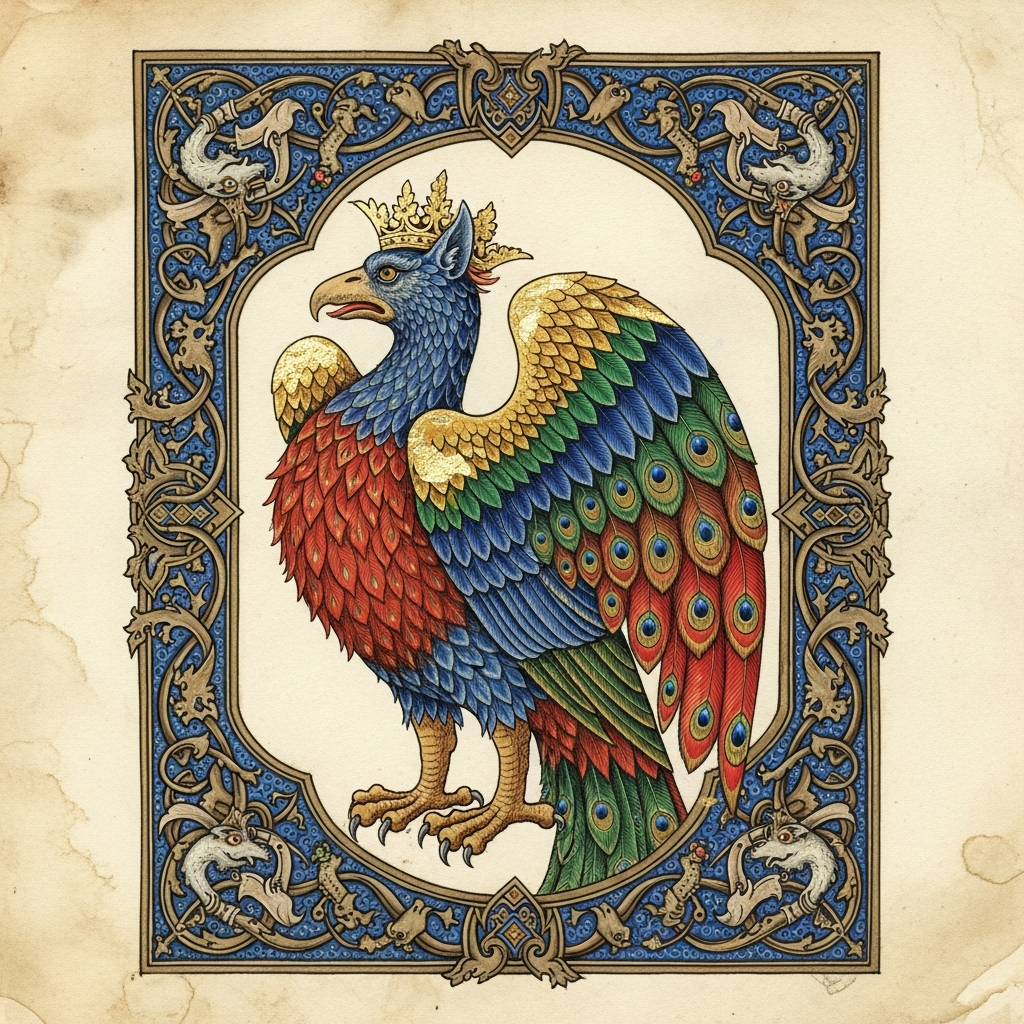
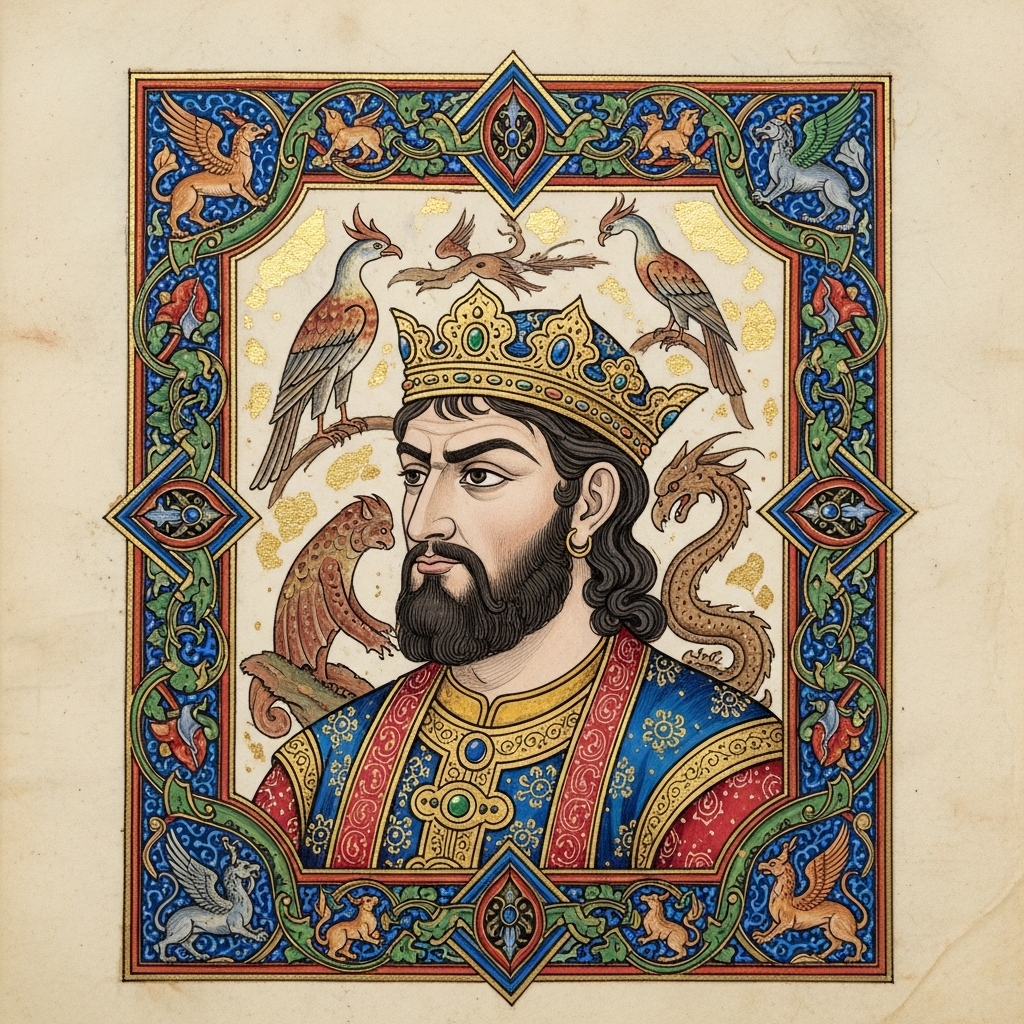
        M1["<b>SIMORGH</b><br/>Benevolent Bird<br/>Lives on Tree of Knowledge"]
        M2["<b>DIV-E SEPID</b><br/>The White Demon<br/>Powerful and cunning"]
        M3["<b>RAKHSH</b><br/>Rostam's Horse<br/>Legendary steed"]
    end

    subgraph SACRED["Sacred Objects"]
        S1["<b>DERAFSH KAVIANI</b><br/>The Blacksmith's Apron<br/>Became the Royal Standard"]
    end

    KINGS --> HEROES
    HEROES --> MYTHICAL
    MYTHICAL --> SACRED

    style KINGS fill:#8b4513,color:#fff
    style HEROES fill:#daa520,color:#000
    style MYTHICAL fill:#cd853f,color:#fff
    style SACRED fill:#ffd700,color:#000
The Tragic Scene: Rostam and Sohrab — Father Kills Son Unknowingly
This moment in the Shahnameh stands as one of the greatest tragedies in world literature, comparable in emotional and literary weight to:
- The Sacrifice of Isaac (Genesis 22) — Abraham nearly sacrifices his beloved son, but at the moment of truth, God intervenes and stays his hand. Rostam has no such mercy; his blow falls.
- Oedipus Rex (Sophocles) — Oedipus unknowingly kills his father and marries his mother, only learning the truth after the deed is done. Rostam’s ignorance is similarly tragic.
- The Death of Baldr (Norse mythology) — The beloved god is killed through the agency of those who love him, through deception and mischance.
- The Death of Patroclus (Homer’s Iliad) — Achilles’s beloved companion is killed by Hector, driving Achilles to a frenzy of grief and revenge.
The scene unfolds as follows:
-
Sohrab’s Quest — Sohrab, raised in obscurity, hears tales of his father Rostam and travels to Persia to meet him and test himself against the greatest warrior in the world. He does not know that the great Rostam is his father; he seeks to surpass him or at least prove himself worthy.
-
The Challenge — Sohrab challenges the champions of Persia to single combat, defeating each one. Word reaches Rostam, who is older now and less inclined toward battle, but honor compels him to fight. The two meet on the battlefield, and neither knows the identity of the other.
-
The Combat — The battle is fierce. Sohrab is younger and faster; Rostam is stronger and more experienced. Twice they wrestle and grapple, and the earth trembles with their struggle. Neither can gain a decisive advantage through skill alone. Eventually, Rostam tricks Sohrab, throwing him to the ground through a maneuver of deception rather than pure strength.
-
The Fatal Moment — With Sohrab pinned beneath him, Rostam drives his spear through his son’s body. But as the light fades from Sohrab’s eyes, the young warrior speaks his last words: “Father, I am your son. You have killed me. I came seeking you, hoping to embrace you and to serve you as a son should serve his father. Instead, I die by your hand, and you die in your grief when you learn what you have done.”
-
The Recognition and Grief — Rostam demands proof, thinking Sohrab delirious. Sohrab, with his last breath, tells him of a seal (a signet ring) that Rostam gave to Sohrab’s mother before he left her, and which Sohrab has worn next to his heart. Rostam tears open Sohrab’s armor and finds the seal — his own seal, proof beyond doubt that he has killed his own son.
-
The Lament — Rostam’s grief is absolute and consuming. He weeps so intensely that he becomes ill, withdrawn from the world. He composes elegies for his son, cursing his own strength, his invulnerability, his fate. He has conquered every foe, endured every trial, yet he could not protect the one person he should have loved most.
The tragedy lies not in any moral failure on Rostam’s part (he did not know) but in the inexorable nature of fate and the isolation that strength brings. Rostam’s greatest gift — his invulnerability, his power, his warrior’s skill — becomes the instrument of his deepest tragedy. The father and son, seeking each other across the world, find each other only at the moment of death.
This scene encodes a universal truth about heroism and tragedy: the hero is defined by strength and action, yet true heroism requires vulnerability, connection, and the willingness to be changed by love. Rostam’s invulnerability cannot protect him from this.
Cosmic Themes in the Shahnameh
The Shahnameh is fundamentally about the question: Can mortals escape their fate? Kings and heroes struggle against destiny, yet the Shahnameh suggests that the struggle itself is what gives life meaning, even when the outcome is predetermined.
The Shahnameh traces the rise and fall of dynasties: the Pishdadian dynasty (the oldest kings), the Kayanid dynasty (greatest kings, including Jamshid), the Ashkani dynasty (Parthian), and finally the Sassanid dynasty (historical). Each dynasty has its great heroes and its tyrants, and the pattern repeats — wise kings build kingdoms, proud kings bring ruin, heroes overthrow tyrants and establish justice, and the cycle continues.
The Shahnameh shows how ordinary objects can become sacred and eternal: Kaveh’s apron becomes the Derafsh Kaviani; a spear becomes the symbol of a dynasty; a horse becomes the companion of legends. This transformation reflects the Persian belief that the material and spiritual worlds interpenetrate.
Notably, the Shahnameh centers on male heroes and kings, yet women appear at crucial points: Sohrab’s mother (unnamed in many versions) is the cause of the tragedy; the foreign women whom heroes marry connect Persia to other lands; female demons and beings of power appear in various episodes. The epic’s treatment of the feminine is complex — women are often passive objects whose role is to bear heroes, yet they also carry immense symbolic weight.
Cross-Tradition Connections
The Shahnameh draws on Zoroastrian cosmology (the conflict between good and evil, the ultimate triumph of good) but presents it through human heroes rather than divine beings. Zahhak’s serpents echo the demon Azi Dahaka of Zoroastrianism; Simorgh appears in both traditions; the motif of the tyrant and the liberator is central to both.
Both the Iliad and Odyssey of Homer and the Shahnameh of Ferdowsi center on heroic warriors, epic quests, and the struggle between human fate and divine will. Both feature tragic family separations (Achilles and Patroclus, Rostam and Sohrab). Both present war as glorious yet devastating.
Rostam’s “Seven Labors” parallel the quests of Arthurian knights; the gathering of heroes around a king (as in the court of King Arthur) parallels the gathering of heroes around the Persian kings. Both traditions center on codes of honor and the tension between individual heroism and loyalty to a lord.
The Mahabharata and the Shahnameh share the motif of warriors fighting unknowingly against their own family members (Karna is killed by his brother Arjuna without either knowing their kinship). Both are epic poems of vast scope, blending mythology, history, and philosophy.
Sources and Further Reading
-
Ferdowsi, Shahnameh (The Book of Kings, c. 1010 CE) — The foundational epic poem in New Persian. The Dick Davis translation (Shahnameh: The Persian Book of Kings, Penguin Classics, 2006) is widely considered the finest English translation, capturing both the narrative power and the poetic structure of the original Persian verse.
-
Zoroastrian Texts — The Avesta and its major sections (Yasna, Yashts, Vendidad, Visperad) and Pahlavi commentaries (Zend) contain the theological and cosmological background to the Shahnameh’s world.
-
Pahlavi Texts — Bundahishn (Creation), Denkard (Acts of Religion), Arda Viraf Namag (Book of Arda Viraf), Zatspram — essential for understanding Sasanian-era tradition and cosmology.
-
Sasanian Inscriptions & Historical Records — Inscriptions from the Sasanian period and references in classical historians (Herodotus, Plutarch, Tabari).
-
Mary Boyce, Zoroastrians: Their Religious Beliefs and Practices, 1979 — Authoritative study of Zoroastrian theology and practice, providing the religious and cosmological context for Persian myth.
-
Dick Davis (translator), Shahnameh: The Persian Book of Kings, 2006 (Penguin Classics) — The most widely respected English verse translation; includes substantial introduction and notes on sources.
-
Ehsan Yarshater (ed.), Encyclopaedia Iranica (ongoing publication, 1985-present) — Comprehensive, multi-volume reference for all aspects of Iranian history, culture, and literature. Individual articles on Ferdowsi, the Shahnameh, Zoroastrianism, and specific figures and events cited throughout.
-
Jerome W. Clinton, The Tragedy of Sohrab and Rostam (University of Washington Press, 1987) — Detailed literary and cultural analysis of the most famous episode in the Shahnameh.
-
Classical Sources: Herodotus (Histories, Book 1), Plutarch (Life of Artaxerxes), Strabo’s Geography; Behistun Inscription (Darius I); Tabari (History of the Prophets and Kings).
Entity Count
12 Primary Entities
| Entity | Rank | ATK | DEF | SPR | SPD | INT |
|---|
| Rostam | S (95) | 95 | 88 | 75 | 80 | 85 |
| Sohrab | A (82) | 82 | 75 | 60 | 85 | 70 |
| Simorgh | A (90) | 70 | 85 | 90 | 88 | 95 |
| Zahhak | A (80) | 80 | 85 | 15 | 70 | 75 |
| Kaveh | C (72) | 45 | 50 | 72 | 60 | 65 |
| Jamshid | A (85) | 70 | 75 | 85→20 | 60 | 90 |
| Fereydun | A (85) | 85 | 82 | 80 | 75 | 80 |
| Div-e Sepid | B (78) | 78 | 76 | 30 | 70 | 72 |
| Kay Kavus | C (40) | 55 | 60 | 45 | 50 | 40 |
| Rakhsh | B (95) | 70 | 80 | 50 | 95 | 60 |
| Derafsh Kaviani | Sacred | — | 100 | 95 | — | — |
| Sohrab & Rostam Battle | Scene | — | — | — | — | — |
Last updated: 2026-04-24
Bestiary Compendium Entry: Persian Mythology
 MYTHIC
  RARE
RARE 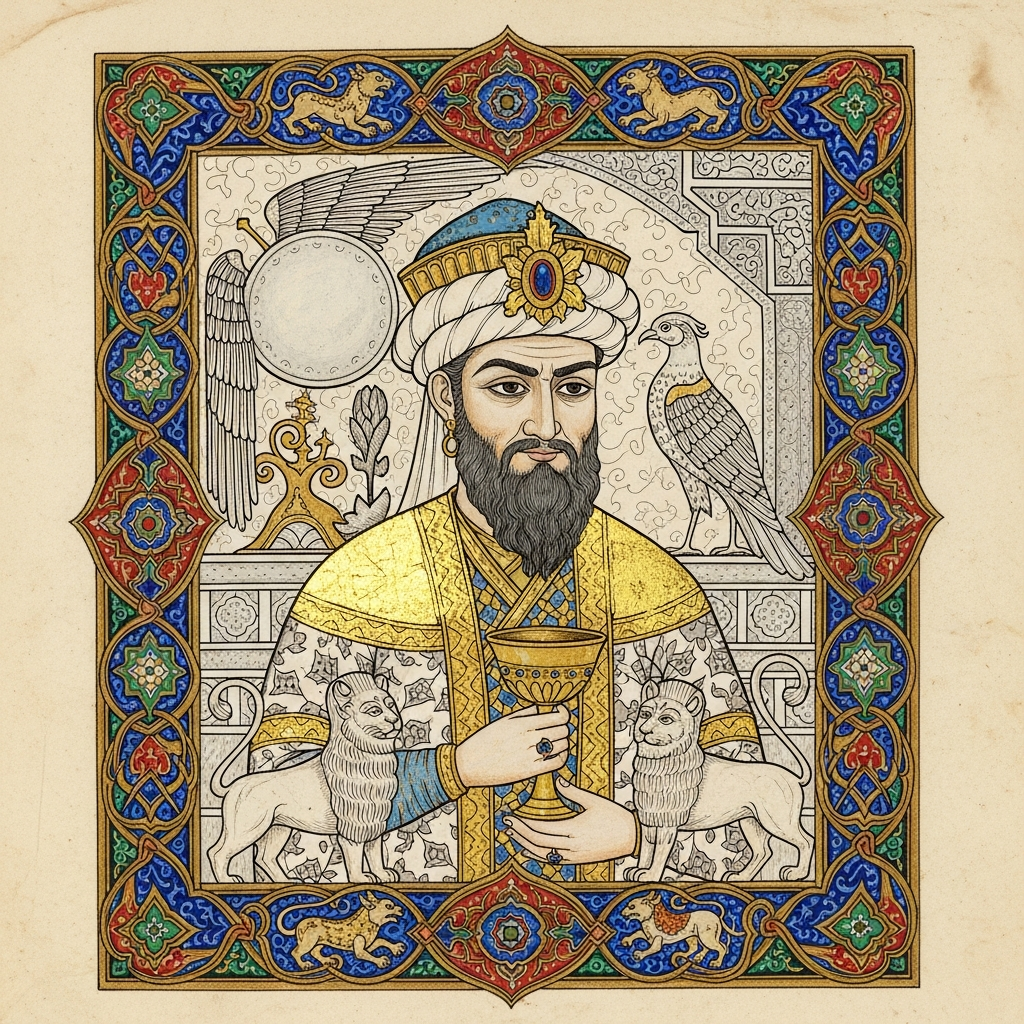 LEGENDARY
  RARE
RARE 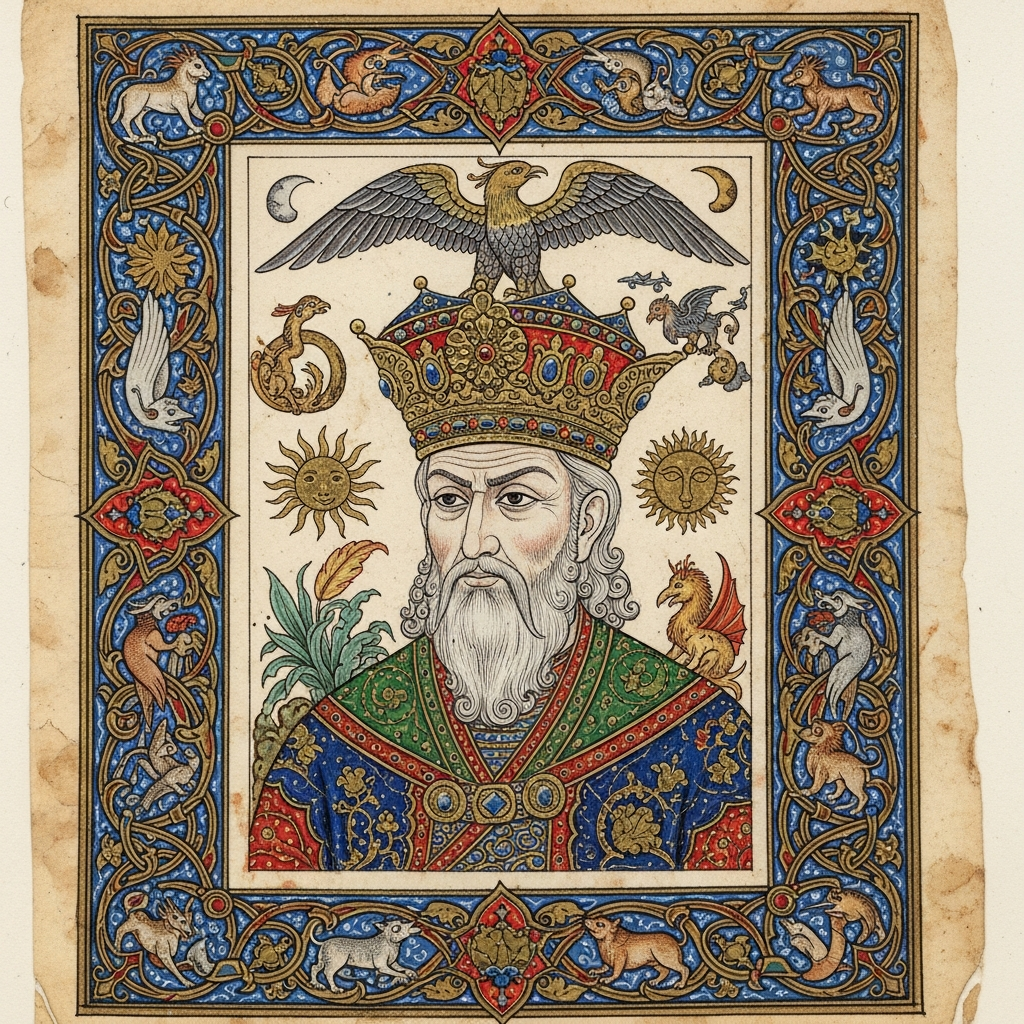
 LEGENDARY
  LEGENDARY
  RARE
RARE