Combat Profile
Hammer of Rebellion
Kaveh strikes with righteous fury, empowering allies to rise against tyranny and gain temporary strength proportional to their collective resolve.
Voice of the Downtrodden
Kaveh's presence bolsters the courage of the oppressed, granting nearby allies +15% resistance to fear and despair effects.
Physical strength (ATK and DEF are low); vulnerable to direct combat
“I am a blacksmith. I have no armor, no army, no divine heritage. But I have had enough. My sons were taken by Zahhak for sacrifice. I tie my leather apron to a lance and carry it into battle. If others will follow, we shall be free.” — Kaveh
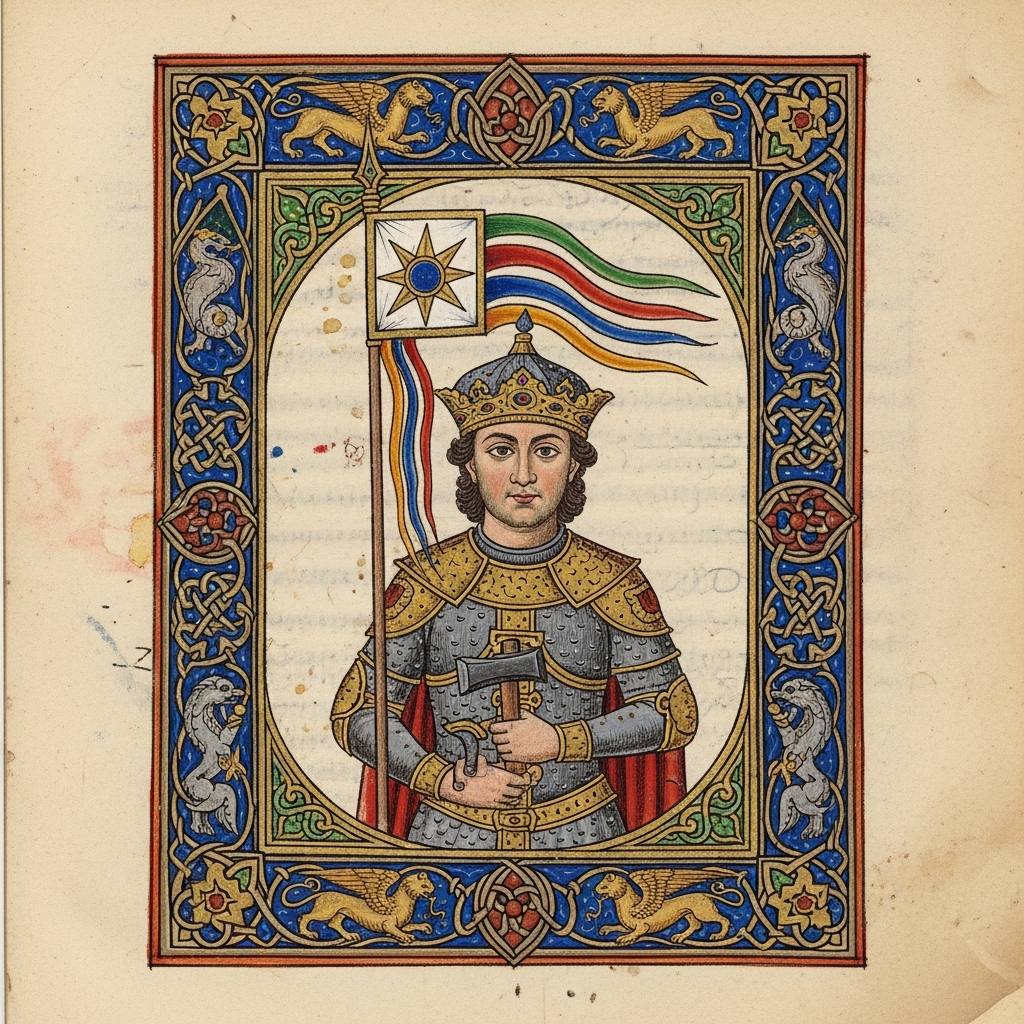
Kaveh is perhaps the most striking figure in the Shahnameh for what he lacks: divine ancestry, superhuman strength, or any of the markers of legendary heroism. He is a blacksmith, a craftsman, a man of the people. Yet when Zahhak’s tyranny becomes unbearable — when the tyrant’s serpents consume Kaveh’s own sons — he rises up. He tears off his leather apron, ties it to a spear, and carries it as a banner into battle, calling on the people of Persia to resist their oppressor.
His call is answered. The people rise with him, and though Kaveh himself is no match for the great warriors of the age, his courage and his banner inspire a movement that eventually topples Zahhak. The leather apron of Kaveh becomes the Derafsh Kaviani, the royal standard of Persia, carried in front of the armies of every righteous king that follows. A simple craftsman’s apron becomes the symbol of national resistance and righteous rule.
Kaveh’s stats reflect this reality: his ATK (45) and DEF (50) are modest — he is not a warrior in the classical sense. But his SPR (72) is formidable because his courage awakens the spiritual resistance of an entire people. His INT (65) reflects the cunning needed to inspire and organize collective action.
Kaveh represents the biblical figure of the “common man called by God” — more akin to Gideon (who defeated the Midianites not through strength but through faith and strategy) than to a classical hero like Samson or David.
Biblical Parallel: Gideon (common man called to lead a revolt; defeats a tyranny through courage and strategy, not strength); Moses (leads the oppressed against a tyrant); Deborah (woman who calls a nation to war); the widow who gives her last coins to the temple (spiritual worth exceeds material wealth).
Cross-Tradition Connections: Jean Valjean (the craftsman who leads the oppressed); Spartacus (the common slave who sparked a revolution); figures of popular uprising across mythology and history.
2 min read
Any great warrior in single combat; overwhelming military force
Ferdowsi, *Shahnameh*