The Story
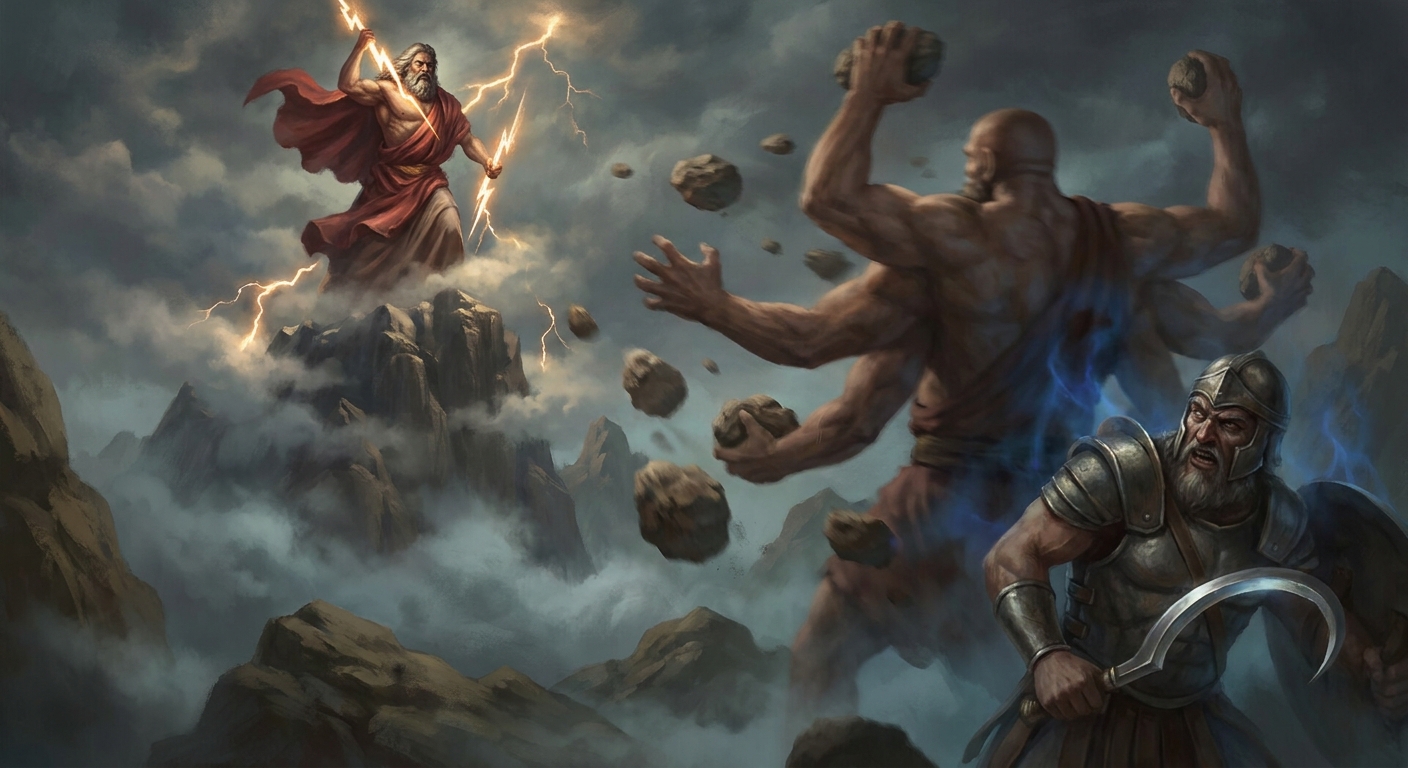
Greek religion is the strangest case in the bestiary: it is simultaneously dead as practice — nobody has burned a hecatomb to Olympian Zeus in sixteen centuries — and the most alive mythology on earth. Its gods staff our planets, its heroes name our anxieties (Oedipal, narcissistic, Promethean), its plot structures load every novel and superhero film. Christianity won the late-Roman world; Greek myth won everything else.
The narrative arc:
Bronze Age Aegean (~2000-1100 BCE): Mycenaean Greeks worship recognizable Olympians centuries before the classical age. Linear B tablets (~1400-1200 BCE) — accounting records, not myths — name di-we (Zeus), e-ra (Hera), po-se-da-o (Poseidon), a-ta-na (Athena), di-wo-nu-so (Dionysus). The pantheon predates Homer by seven centuries (Ventris & Chadwick, 1973). The Trojan War, if historical, falls here (~1200 BCE).
The Greek Dark Age (~1100-800 BCE): Palace civilization collapses. Writing vanishes. Bards (aoidoi) sing the old stories at hearth-fires across illiterate centuries. When Greeks resume writing (~800 BCE), the gods and heroes have been reshaped by 300 years of oral retellings.
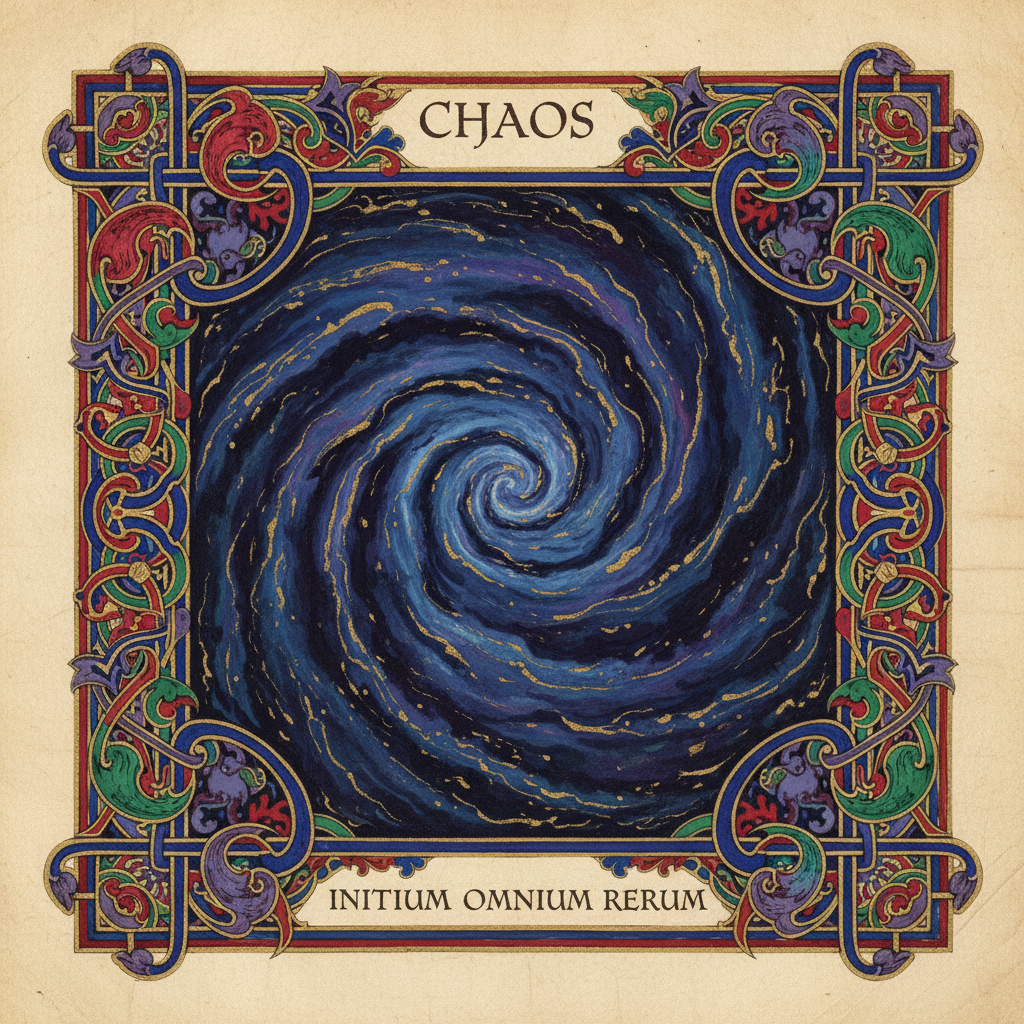
Homer and Hesiod (~750-700 BCE): The Iliad and Odyssey crystallize oral tradition into written form (traditionally attributed to Homer, probably a composite). Hesiod’s Theogony imposes genealogical order on chaos: Chaos begets Gaia, Gaia bears Ouranos, Ouranos is castrated by Kronos, Kronos falls to Zeus (Theogony 116-206). This genealogy becomes canonical.
Archaic and Classical Greece (~750-323 BCE): No central church, scripture, or priesthood — but Panhellenic festivals bind the city-states. The Olympic Games open in 776 BCE (Hippias of Elis, cited in Pausanias 5.8.6). Delphi’s Oracle advises kings and the anxious. The Eleusinian Mysteries offer initiates a better afterlife. Athenian tragedy (Aeschylus, Sophocles, Euripides) stages the gods and asks hard questions. Philosophy — Socrates, Plato, Aristotle — then asks whether they exist at all.
Hellenistic Spread (323 BCE - 1st century BCE): Alexander plants Greek cities from Greece to the Indus. Greek religion blends with Egyptian (Isis), Persian (Mithras), and Babylonian cults. Mystery religions proliferate. The gods grow cosmopolitan, philosophical.
Roman Absorption (1st century BCE - 4th century CE): Rome conquers Greece militarily, is conquered religiously in return: Zeus becomes Jupiter, Aphrodite becomes Venus, Hermes becomes Mercury. Vergil and Ovid Latinize the Greek myths (Aeneid, Metamorphoses). The Empire’s official cult is functionally Greco-Roman.
Christianization (1st-4th century CE): Christianity, born in the Greek-speaking East, competes for two centuries. After Constantine converts (312 CE), the state crushes pagan practice. Temples close, festivals ban, schools shutter (Eusebius, Life of Constantine 3.54-58). In 393 CE, Theodosius silences Delphi’s Oracle (Theodosian Code 16.10). After roughly a thousand years of unbroken speech, the gods stop answering.
Survival as Literary Canon (5th century CE - present): Christianity displaces Greek religion as practice but not as story. Monastic scribes copy Homer, Plato, Hesiod — texts of the defeated religion. The Renaissance makes them bedrock of Western art. Freud names complexes after heroes. Tolkien, Rowling, fantasy crib from the Theogony. NASA names rovers after Olympians.
Today: A small Hellenismos (Hellenic Polytheism) movement revives Olympian worship since the 1990s, recognized by Greece as legal religion (2017). Most “practitioners” are scholars, novelists, screenwriters, and gamers. The gods no longer demand sacrifice. They ask only to be remembered.
Pivotal Events
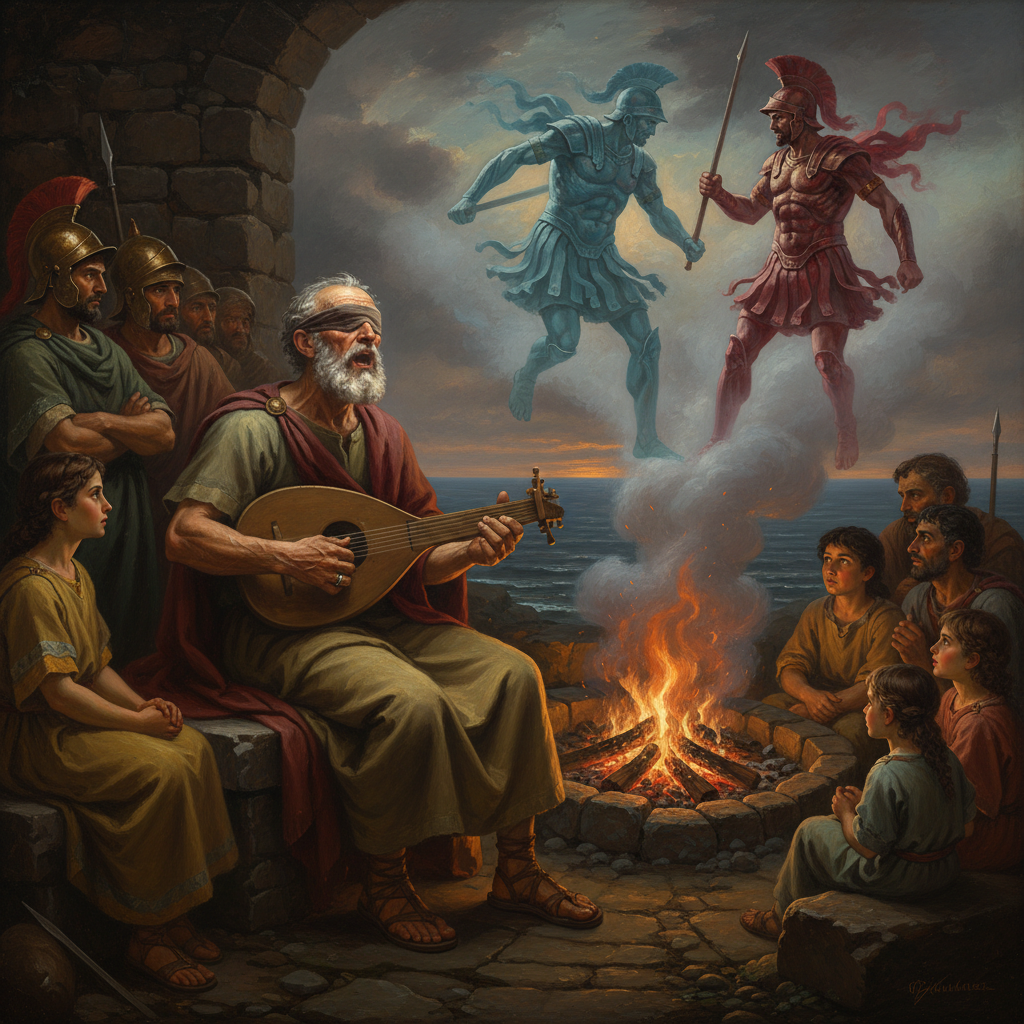
Whether Homer was one bard, a guild, or crystallized oral tradition (~750 BCE), the result is identical: two epics that became Greek civilization’s Bible (Iliad 1.1-7, Odyssey 1.1-10). The Iliad furnishes a heroic ethic (kleos, glory undying), mortality rendered sharp (Achilles choosing fame over obscure longevity at Iliad 9.413), gods rendered quarrelsome and human. The Odyssey offers homecoming, marriage, the prototype quest. Greek children memorized Homer as Jewish children memorized Torah. Plato banned him from his ideal city (Republic 3.398d) because the poet was the curriculum. Without Homer: no Greek religion, only scattered cults. Homer made the gods family.
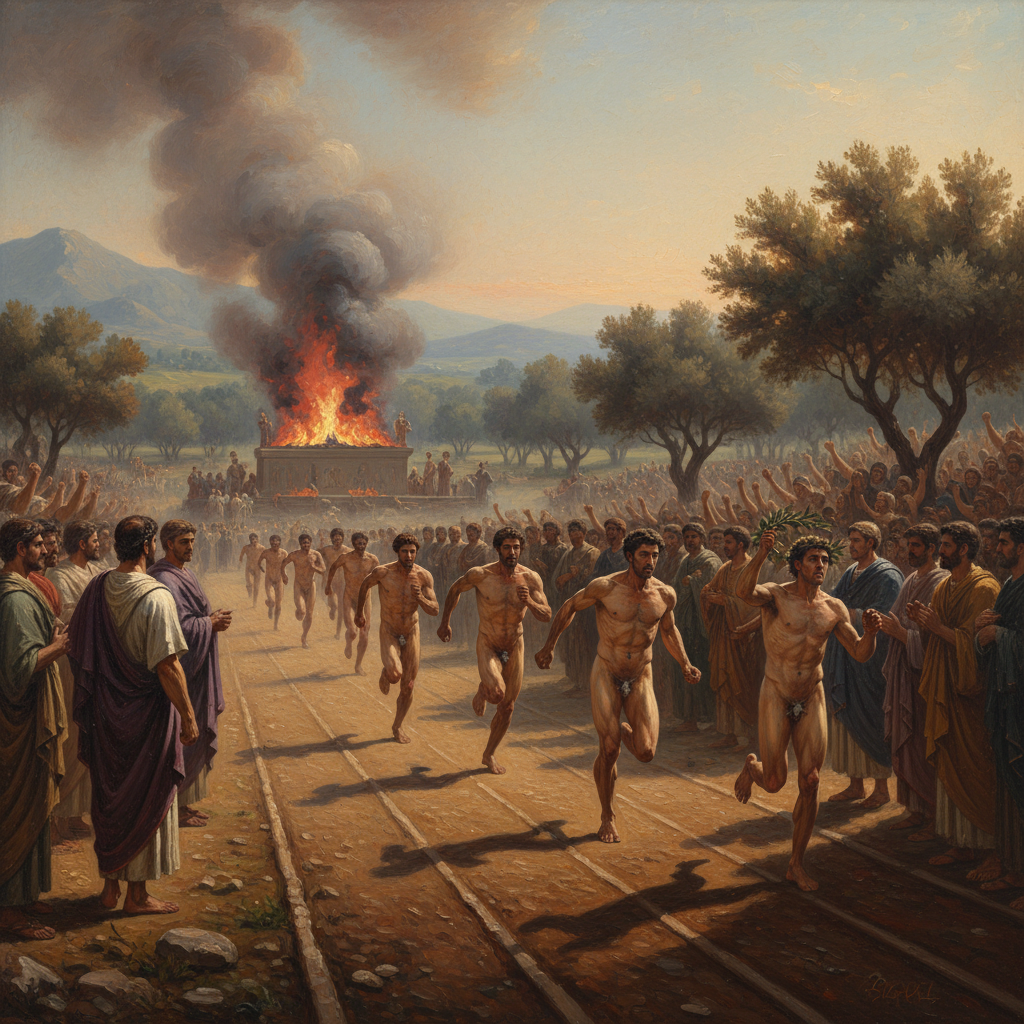
Greece had no political unity — Athens, Sparta, Corinth, Thebes warred constantly — but possessed Panhellenic religious institutions. The Olympic Games (776 BCE, traditional) were greatest. Every four years, a sacred truce (ekecheiria) halted warfare so athletes could compete (Pausanias 5.9.5). Games were religious: sacrifice to Zeus, olive crowns from the sacred grove, chronology counted in Olympiads. The Games ran nearly twelve centuries (~293 iterations) until Theodosius banned them (393 CE) as pagan (Theodosian Code 16.10.12). The modern Olympics (1896) are Greek religion’s longest artifact outside literature.
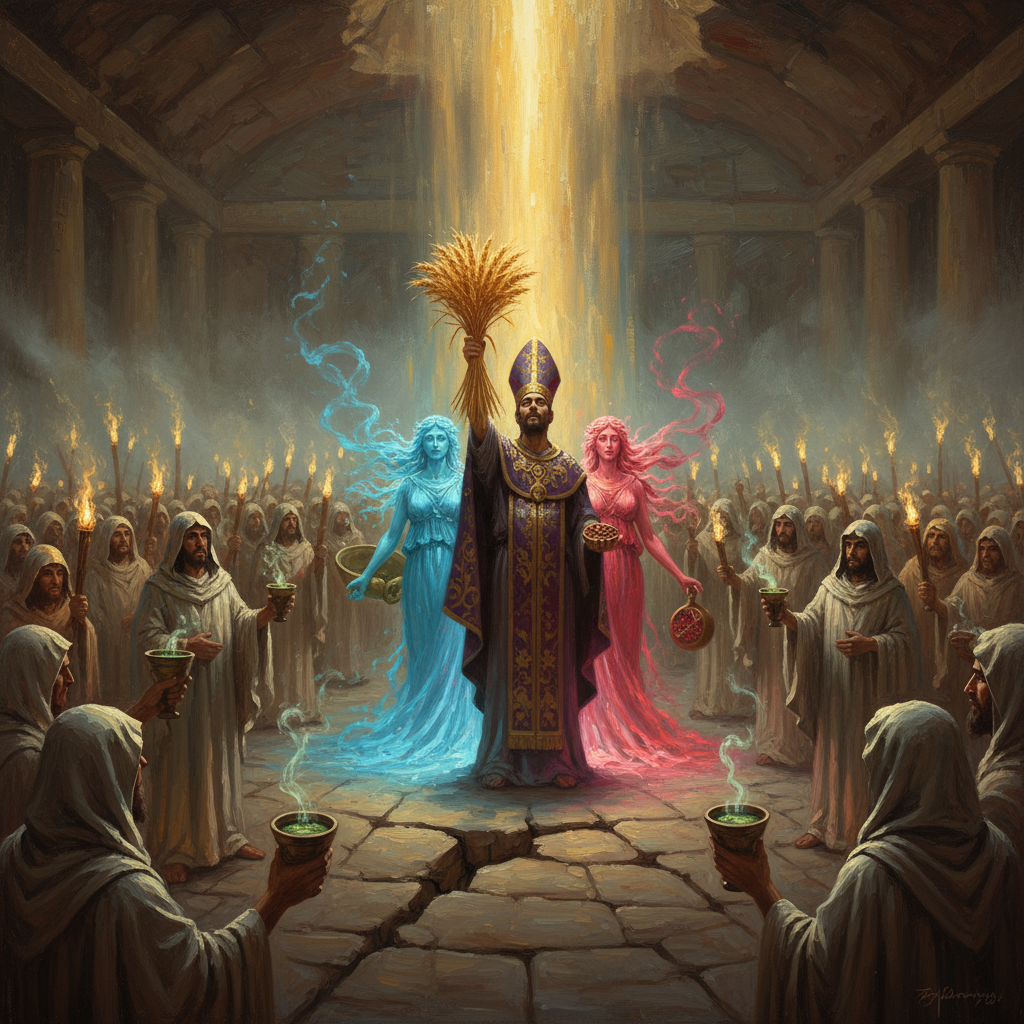
For two thousand years, Greece’s supreme religious experience was a secret rite at Eleusis, fourteen miles west of Athens (Hymn to Demeter 480-482). The myth: Hades abducts Persephone (Demeter’s daughter); Demeter’s grief kills harvests; compromise: Persephone spends half the year below, half above (Theogony 769-779). The mystery: initiates fasted, drank kykeon (barley-mint, possibly ergot), processed by torchlight, and witnessed something in the Telesterion, forbidden on pain of death to describe (Pausanias 1.38.6). Initiates (Plato, Cicero, Marcus Aurelius, Athens’s intelligentsia) emerged claiming death no longer terrified them. The Mysteries were antiquity’s most successful afterlife-cult. Christian decree closed them (392 CE). The secret holds.
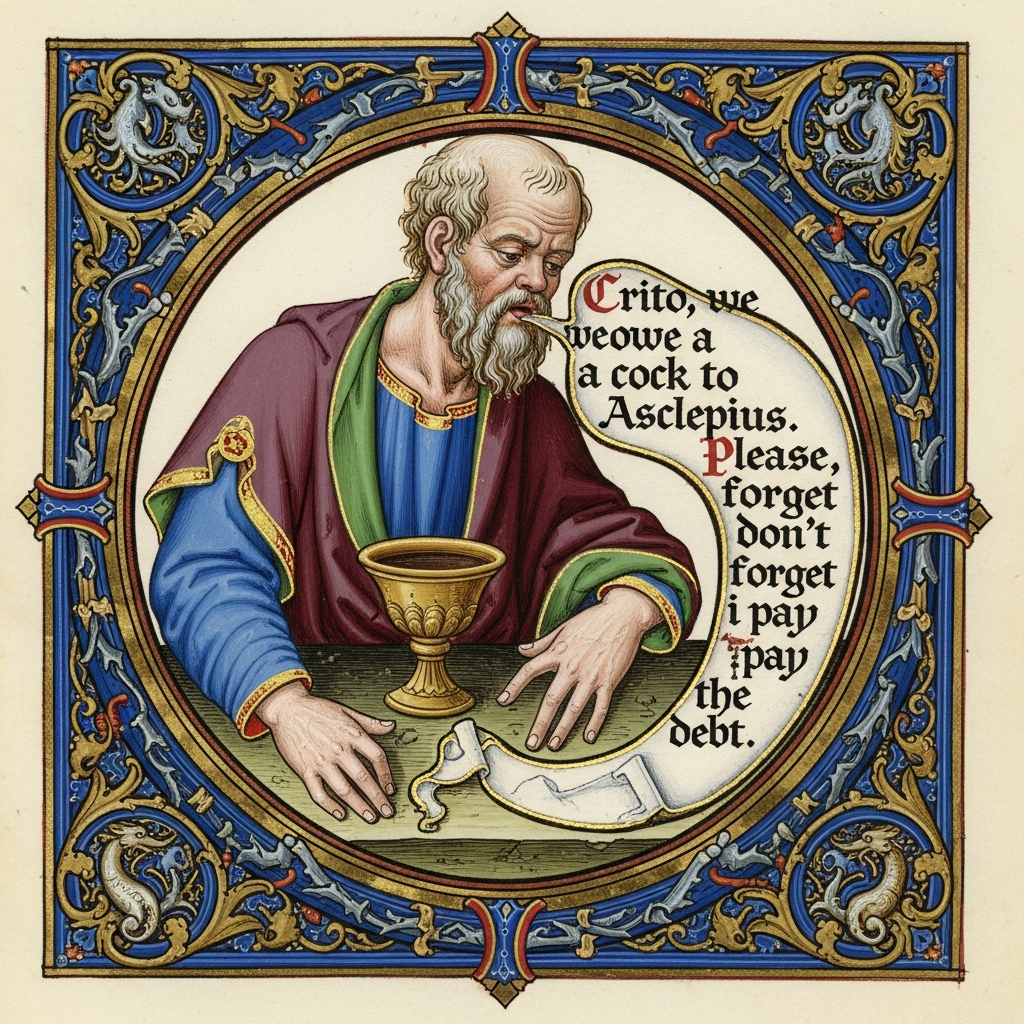
Spring 399 BCE: An Athenian jury convicted Socrates of impiety and corrupting the youth, sentenced him to hemlock (Plato, Apology 24b-c). He could have fled. He drank (Phaedo 116b-117a). Socrates’s death marks the moment Greek religion’s most lethal internal critic becomes a martyr-saint. His questions (“Is something pious because the gods love it, or do they love it because it is pious?”) corrode the transactional model (do ut des, I give that you might give) (Plato, Euthyphro 10a). Plato builds theology around an unchanging Good behind the Olympians (Republic 6.509b). Aristotle posits an Unmoved Mover nothing like Zeus (Metaphysics 12.7). Stoics and Epicureans strip the gods of personality. By Christianity’s arrival, Greek philosophy has already dismantled Greek religion from within. Socrates is the hinge.
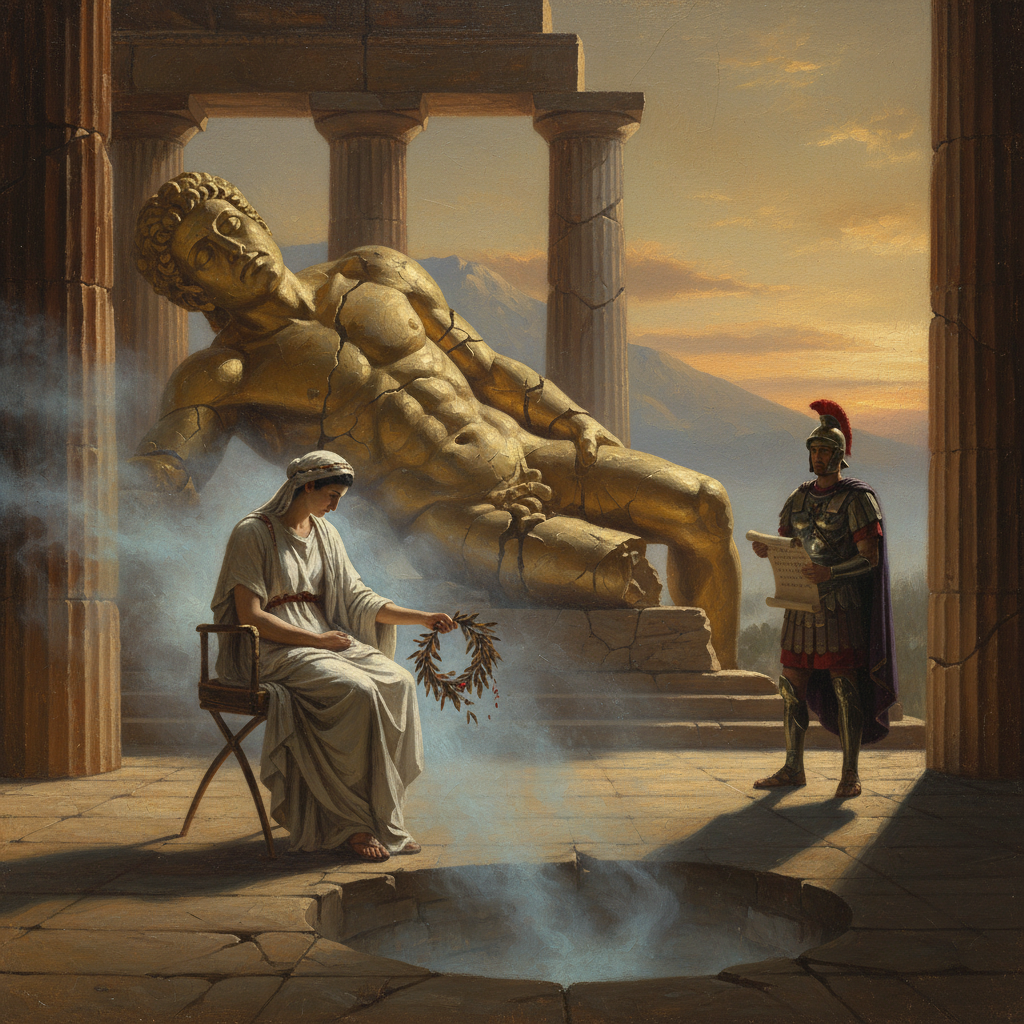
Delphi’s Oracle was Greece’s closest thing to a direct line to the divine for a thousand years. The Pythia, seated over a chasm in Apollo’s temple, inhaled chthonic vapors (geology confirms ethylene seeps) and delivered cryptic prophecies that shaped colonies, wars, private lives (Pausanias 10.24.4-5). Croesus, Alexander, Rome itself consulted her. In 393 CE, Theodosius issued the decree: temples closed, sacrifices banned, oracles silenced (Theodosian Code 16.10). The Pythia’s last recorded prophecy, to Julian’s envoy, reads as epitaph: “Tell the king that the carved hall has fallen to the ground. Phoebus no longer has a roof, no prophetic laurel, no speaking spring. The water is silent.” (Cedrenus, Compendium Historiarum) After a millennium of speech, the gods stopped answering. Greek religion ends here.
Timeline
| Era | Date | Event | Source |
|---|
| Mycenaean | ~1700-1100 BCE | Bronze Age Aegean civilization; Linear B tablets name Zeus, Hera, Poseidon, Athena, Dionysus | Linear B tablets, Knossos & Pylos |
| Trojan War (traditional) | ~1200 BCE | Achaean expedition against Troy (if historical) | Iliad; archaeology of Hisarlik |
| Greek Dark Age | ~1100-800 BCE | Palace civilization collapses; oral epic tradition transmits the gods | archaeology |
| Adoption of Alphabet | ~800 BCE | Greeks adapt Phoenician script; literacy returns | inscriptions |
| First Olympic Games | 776 BCE | Panhellenic festival of Zeus founded at Olympia | Hippias of Elis |
| Homer’s Iliad & Odyssey | ~750 BCE | The epics are composed/written down | textual tradition |
| Hesiod’s Theogony | ~700 BCE | Cosmogony and divine genealogy systematized | Hesiod |
| Archaic Period | 800-480 BCE | City-states (poleis), colonization, lyric poetry, Pre-Socratics | Herodotus |
| Founding of Delphic Oracle (institutional) | ~800 BCE | Apollo’s oracle at Delphi becomes Panhellenic | Pausanias |
| Persian Wars | 499-449 BCE | Greek victory; rise of Athens | Herodotus |
| Classical Period | 480-323 BCE | Athenian tragedy, philosophy, Parthenon (447-432 BCE) | Thucydides; Plato |
| Death of Socrates | 399 BCE | Executed by Athenian jury for impiety | Plato, Apology, Phaedo |
| Plato’s Academy | ~387 BCE | Founded in Athens; runs until 529 CE | Diogenes Laertius |
| Aristotle’s Lyceum | 335 BCE | Founded in Athens | Diogenes Laertius |
| Conquests of Alexander | 336-323 BCE | Greek culture and gods spread from Egypt to the Indus | Arrian |
| Hellenistic Period | 323-31 BCE | Syncretism with Egyptian, Persian, Babylonian cults; mystery religions flourish | Plutarch |
| Roman Conquest of Greece | 146 BCE | Sack of Corinth; Greece becomes a Roman province | Polybius |
| Vergil’s Aeneid | 19 BCE | Greek myth Latinized for Roman empire | Vergil |
| Ovid’s Metamorphoses | 8 CE | Comprehensive Greco-Roman mythography | Ovid |
| Constantine’s Conversion | 312 CE | Christianity becomes imperially favored | Eusebius |
| Theodosius’s Decree | 391-392 CE | Pagan worship outlawed; Eleusinian Mysteries closed | Theodosian Code 16.10 |
| Oracle of Delphi Closed | 393 CE | The Pythia’s last prophecy; Apollo silenced | Cedrenus, Compendium Historiarum |
| Olympic Games Banned | 393 CE | Theodosius ends the games after ~1,170 years | Theodosian Code |
| Closing of Plato’s Academy | 529 CE | Justinian shuts the last pagan philosophical school | Agathias |
| Renaissance Recovery | 1400-1600 CE | Humanists recover Greek texts; mythology re-enters Western art | Bruni, Ficino |
| Modern Hellenismos | 1990s-present | Revived Greek polytheist movement; recognized in Greece (2017) | Supreme Council of Ethnikoi Hellenes |
 MYTHIC