Combat Profile
Titanomachy
Unleash primordial fury to deal massive damage and permanently alter battlefield structure, reflecting the cosmic wars that shaped existence.
Eternal Foundation
Possess immense durability and resistance to divine intervention, embodying the ancient cosmic order that predates Olympus.
Immobility; bound to his task forever
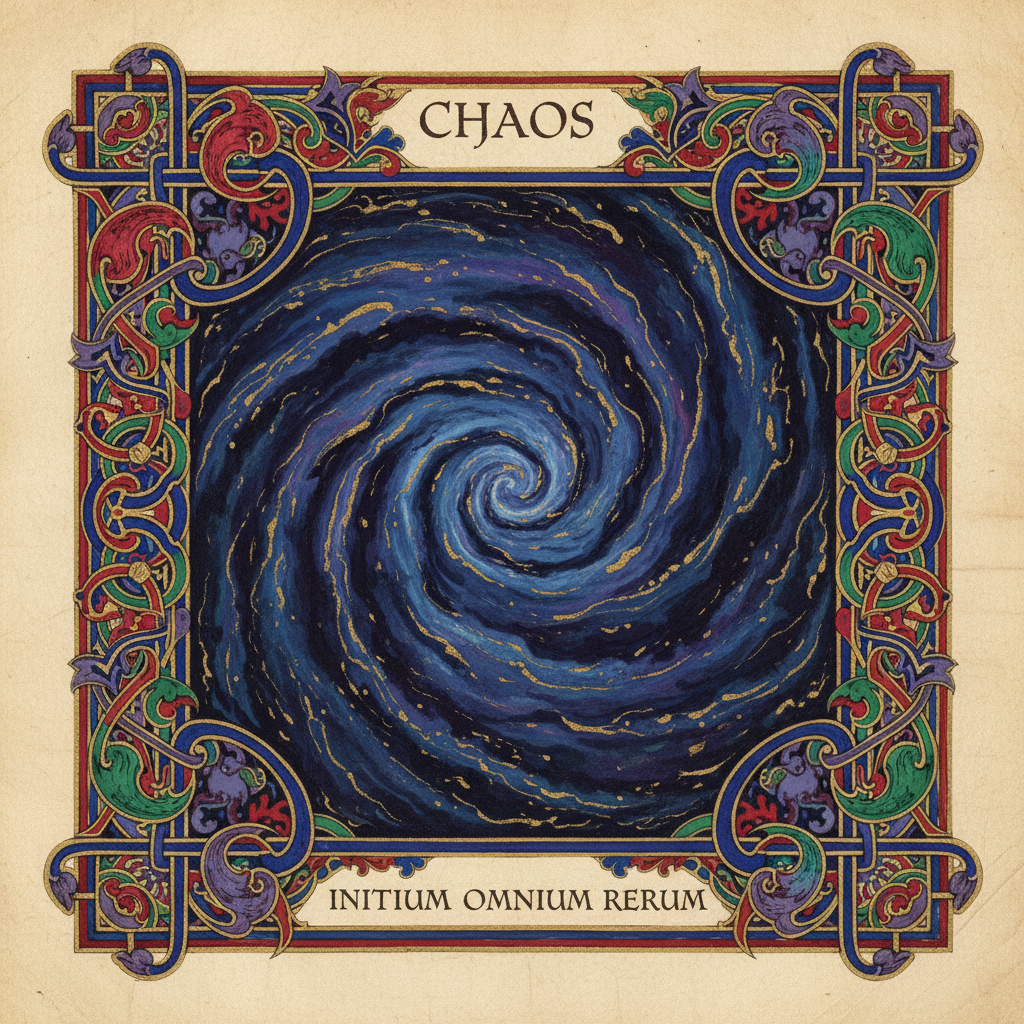
“First of all Chaos came into being.” — Hesiod, Theogony
Chaos is not a being so much as a state — the yawning void, the gap before anything existed. From Chaos emerged Gaia (Earth), Tartarus (the Abyss), and Eros (Desire), the first differentiation of reality into substance. The parallel to Genesis 1:2 is striking: “The earth was formless and void, and darkness was over the face of the deep (tehom).” Both traditions begin with a featureless abyss from which ordered creation emerges by the action of a higher principle (Theogony 116-125; Genesis 1:2). In Genesis, God’s Spirit moves over the waters; in Hesiod, Eros (the principle of attraction and generation) enables the primordials to produce offspring. Chaos is not evil — it is the raw material of existence, the blank page before the story.
Biblical Parallel: Genesis 1:2 — tohu wa-bohu (formless and void); tehom (the deep). The Babylonian parallel is Tiamat, the chaos-sea. All three traditions agree: before creation, there was undifferentiated void.
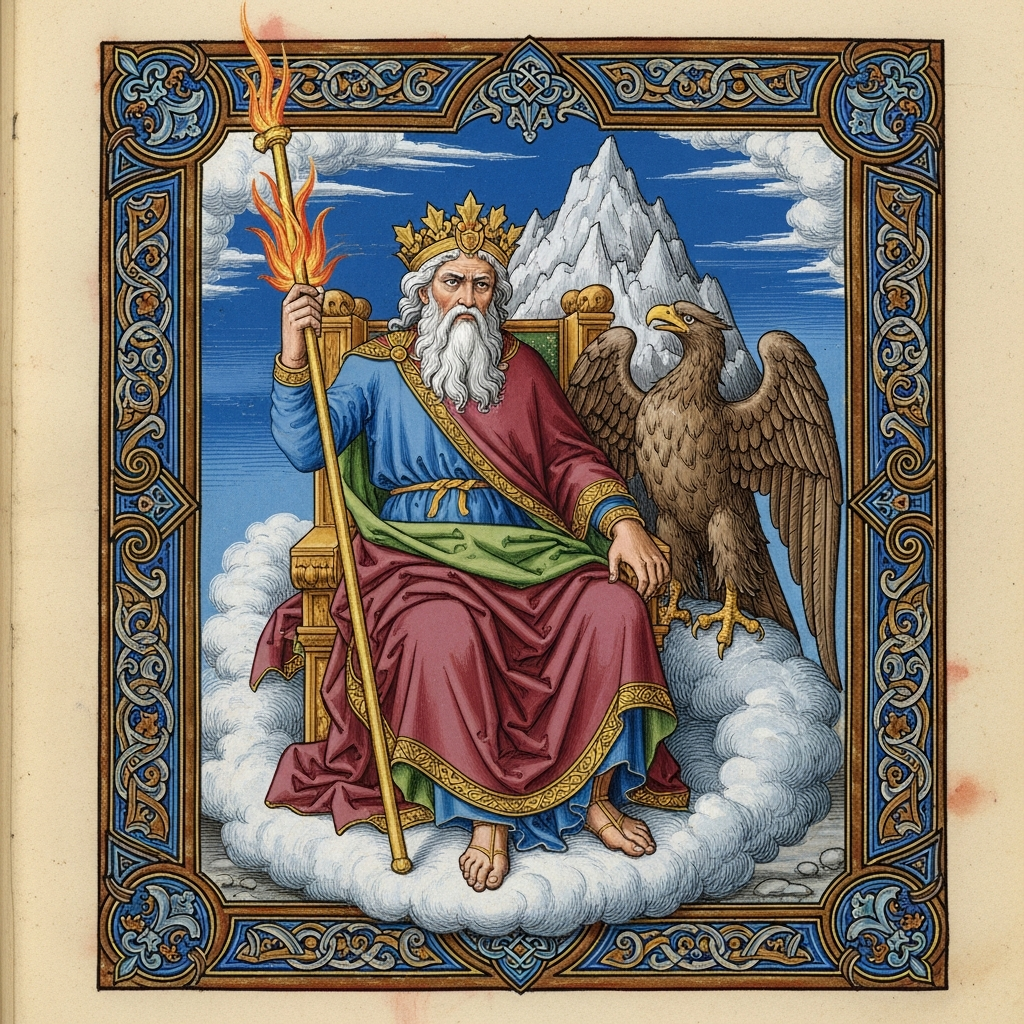
“I gave mortals fire, and from it they shall learn many arts.” — Aeschylus, Prometheus Bound
Prometheus stole fire from the gods and gave it to humanity, enabling civilization — agriculture, metalworking, the arts (Theogony 565-570). Zeus punished him by chaining him to a rock in the Caucasus, where an eagle devoured his liver every day, the organ regenerating each night for eternal torment (Prometheus Bound 1-115). This is the most direct parallel to the Watchers of 1 Enoch: the fallen angels who descended to Mount Hermon and taught humanity forbidden knowledge — metallurgy, cosmetics, astrology, weaponry — and were chained in darkness as punishment (1 Enoch 10:4-6). Both narratives encode the same anxiety: knowledge that elevates humanity is knowledge that angers heaven. The key difference: Prometheus is a hero. The Watchers are villains. Greek culture celebrates the transgressor who benefits humanity; the Enochic tradition condemns the transgressor who corrupts it.
Biblical Parallel: The Watchers (1 Enoch 6-10), especially Azazel, who taught humans metalworking and was bound hand and foot in the desert. Also: the serpent in Eden, who offers knowledge and is punished for it.
“Great Kronos swallowed each child as it came forth from the womb to the mother’s knees.” — Hesiod, Theogony
Kronos received a prophecy that one of his own children would overthrow him, so he devoured each one at birth — Hestia, Demeter, Hera, Hades, Poseidon (Theogony 453-506). Rhea hid the youngest, Zeus, and substituted a stone wrapped in cloth. Zeus grew up in secret, returned, forced Kronos to vomit up his siblings, and overthrew him. The parallel to Herod’s Massacre of the Innocents (Matthew 2:16-18) is unmistakable: a king, warned by prophecy that a child will displace him, kills children to prevent it. The child is hidden, grows up elsewhere, and returns to fulfill the prophecy. Kronos also parallels Moloch — the devouring god who consumes children as sacrifice (Leviticus 18:21, 2 Kings 23:10). The motif of the child-devouring tyrant appears across Near Eastern mythology because it encodes a universal political truth: power destroys what it cannot control.
Biblical Parallel: Herod and the infants (Matt 2:16-18); Moloch (Lev 18:21); Pharaoh ordering the death of Hebrew firstborns (Exod 1:16).
“Atlas, through hard constraint, upholds the wide heaven with unwearying head and arms.” — Hesiod, Theogony
Atlas was condemned by Zeus to hold up the sky (ouranos) at the western edge of the world for eternity — a punishment for fighting on the side of the Titans in the Titanomachy (Theogony 517-520). He cannot rest, cannot leave, cannot die. This parallels the punishment of the fallen angels in the Enochic tradition: the Watchers are bound in chains of darkness, held in the valleys of the earth until the Day of Judgment (1 Enoch 10:4-6, 2 Peter 2:4, Jude 1:6). Both traditions envision cosmic prisoners — once-powerful beings frozen in eternal torment as a warning. Atlas’s punishment is physical (bearing the sky); the Watchers’ is spatial (imprisoned in Tartarus/darkness). The theological function is identical: rebellion against the supreme god results in irrevocable, eternal confinement.
Biblical Parallel: The Watchers chained in darkness (1 Enoch 10, Jude 1:6, 2 Peter 2:4); the binding of Satan for 1,000 years (Rev 20:2).
3 min read
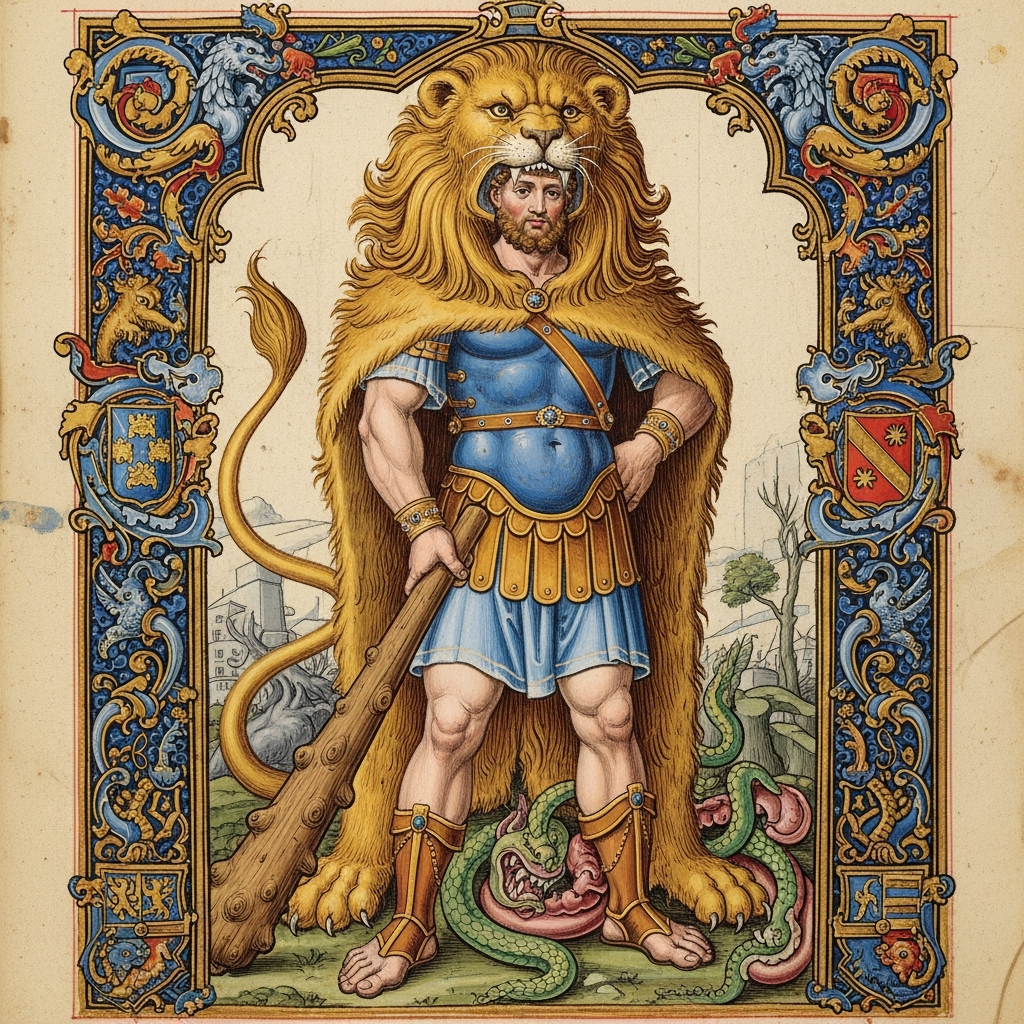
Heracles (briefly takes his burden); Perseus (turns him to stone)
Hesiod, *Theogony* 517-520; Homer, *Odyssey* 1.52