Combat Profile
Divine Slayer
unleash a devastating strike empowered by Olympian heritage that pierces through monstrous hide and immortal flesh alike
Heroic Lineage
descendants of gods gain enhanced strength, divine favor in combat, and resistance to mortal weapons and curses
Relies on divine gifts (shield, sword, helm); mortal vulnerability
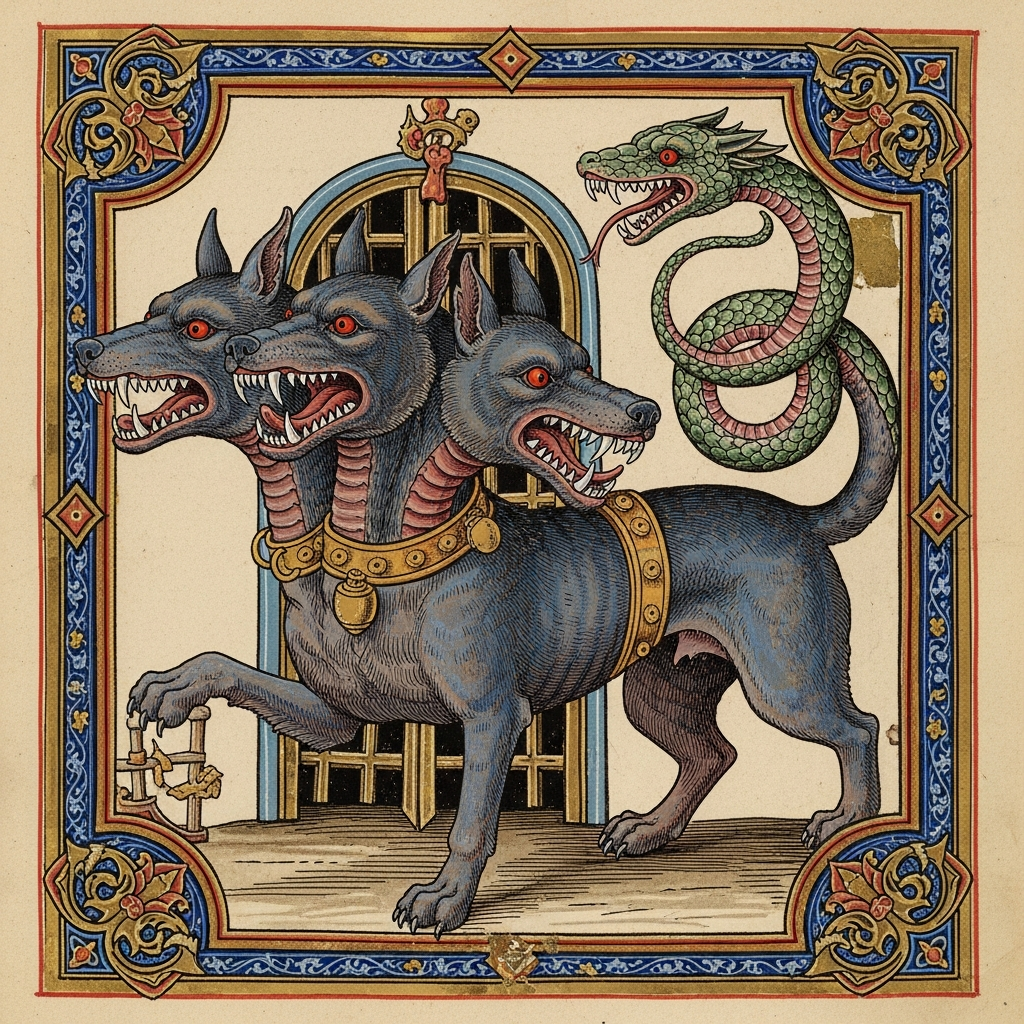
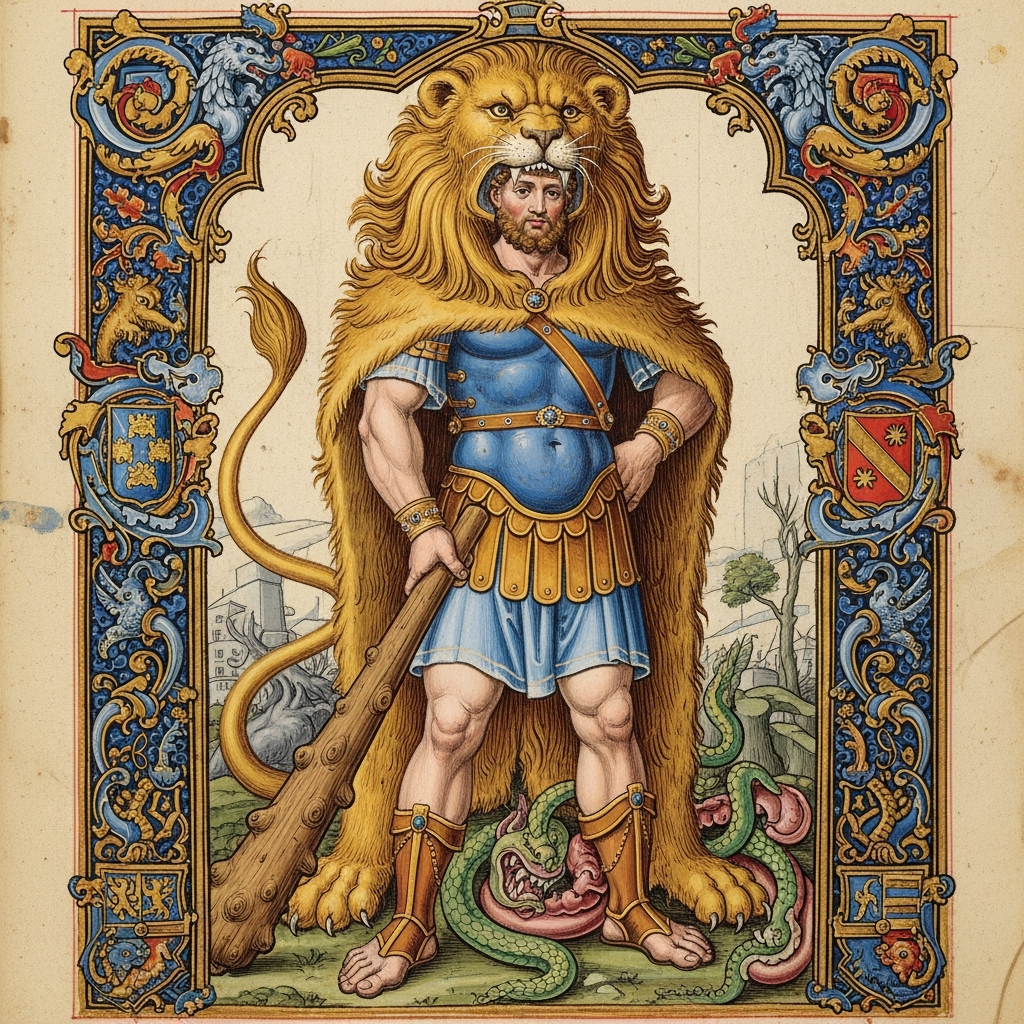
“He descended to Hades and brought back Cerberus, and then he ascended to Olympus to live among the gods.” — Apollodorus
Heracles is the son of Zeus and a mortal woman (Alcmene) — a divine-human hybrid who suffered, labored, descended to the underworld, conquered death, and ascended to heaven to sit among the gods (Apollodorus, Bibliotheca 2.5.12). The parallels to Christ are obvious and were debated in antiquity. But Heracles also parallels the Nephilim of Genesis 6:4: “The sons of God came in to the daughters of men, and they bore children to them. These were the mighty men of old, men of renown.” Heracles IS a “mighty man of renown” — born of a divine father and mortal mother, possessed of superhuman power. The 12 labors parallel Christ’s trials and temptations; the descent to Hades parallels the harrowing of hell (1 Peter 3:19); the ascension to Olympus parallels Christ’s ascension (Acts 1:9). But Heracles achieves deification through physical strength and suffering; Christ achieves it through obedience and sacrifice. Heracles earns his place; Christ reveals his nature.
Biblical Parallel: The Nephilim (Gen 6:4); the divine-human nature of Christ; the descent to hell (1 Peter 3:19); the ascension (Acts 1:9); the 12 labors vs. Christ’s trials.
“He looked back — and in that instant, all his labor was undone.”
Orpheus descended to Hades to rescue his dead wife Eurydice. His music charmed Cerberus, the Furies, and Hades himself, who agreed to release Eurydice on one condition: Orpheus must not look back until they reached the surface (Metamorphoses 10.1-63). He looked back. She vanished forever. This is the most poignant parallel to two biblical narratives. First: Christ’s harrowing of hell (1 Peter 3:19, the Apostles’ Creed: “he descended to the dead”) — but Christ succeeds where Orpheus fails. Christ descends, liberates the captive souls, and does not look back. Second: Lot’s wife (Genesis 19:26), who was commanded not to look back at the destruction of Sodom and did, becoming a pillar of salt. The backward glance is a mythological constant: the test of faith is to trust what lies ahead without clinging to what is behind (Luke 9:62). Orpheus failed it. Lot’s wife failed it. Christ did not.
Biblical Parallel: The harrowing of hell (1 Peter 3:19, Apostles’ Creed); Lot’s wife looking back (Gen 19:26); the theme “no one who puts his hand to the plow and looks back is fit for the kingdom” (Luke 9:62).
“He cut off Medusa’s head and from her neck sprang Pegasus.”
Perseus, son of Zeus, slew the Gorgon Medusa with divine weapons (Athena’s polished shield, Hermes’s sickle, Hades’s helm of invisibility) and rescued Andromeda from a sea-monster (ketos) (Apollodorus, Bibliotheca 2.4.2-3). This is the dragon-slayer archetype that reappears throughout biblical and Christian tradition: Michael slaying the dragon (Rev 12:7-9), St. George slaying the dragon, David slaying Goliath. The pattern is always the same: a young, seemingly outmatched hero defeats a monstrous threat through divine aid. Perseus uses gods’ weapons; David uses a sling and God’s name (1 Samuel 17:45); Michael uses the authority of heaven. The sea-monster (ketos) that threatens Andromeda also parallels Leviathan (Job 41, Psalm 74:14) and Rahab (Isaiah 51:9) — the chaos-beast that threatens creation and must be slain by divine power.
Biblical Parallel: Michael vs. the dragon (Rev 12:7-9); David vs. Goliath (1 Sam 17); St. George; Leviathan and Rahab as chaos-monsters.
3 min read
Medusa (his great kill); Cetus (the sea monster)
Apollodorus, *Bibliotheca*; Ovid, *Metamorphoses* 4-5