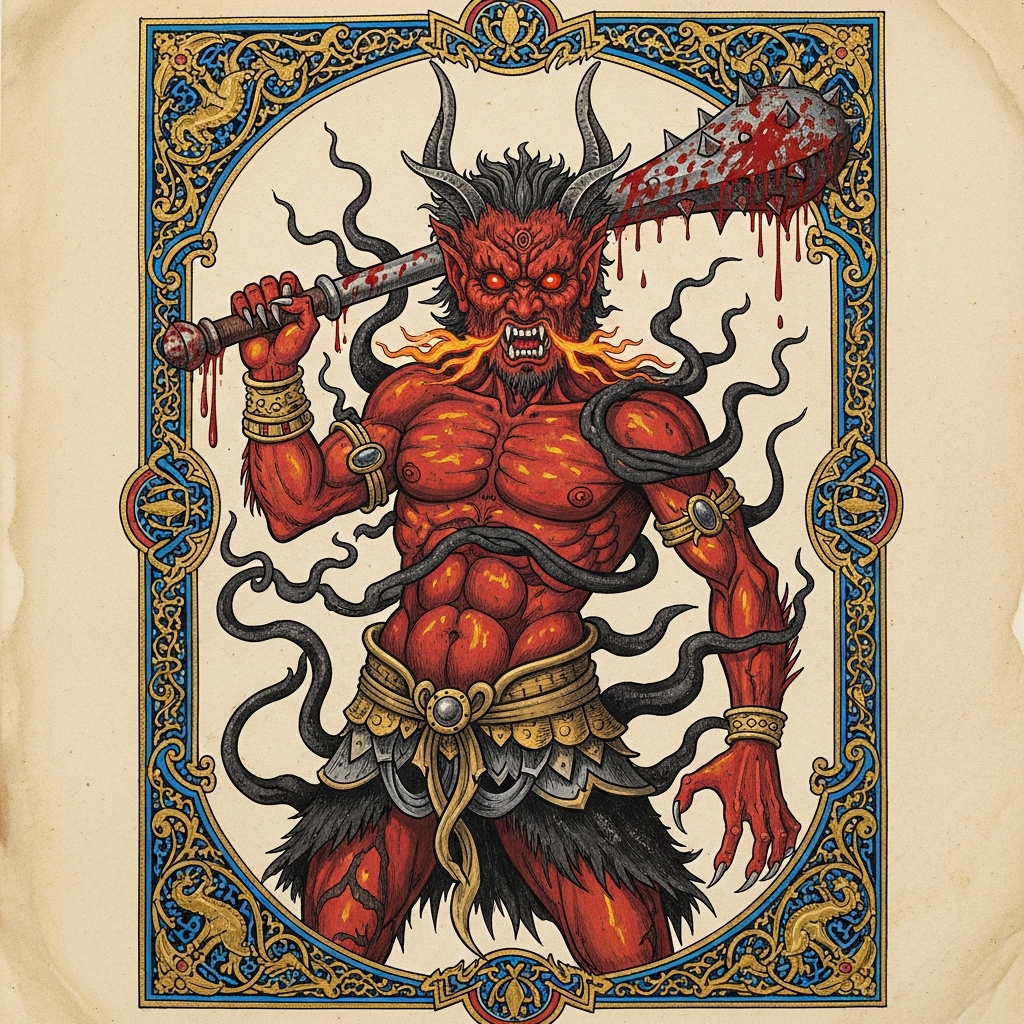
Combat Profile
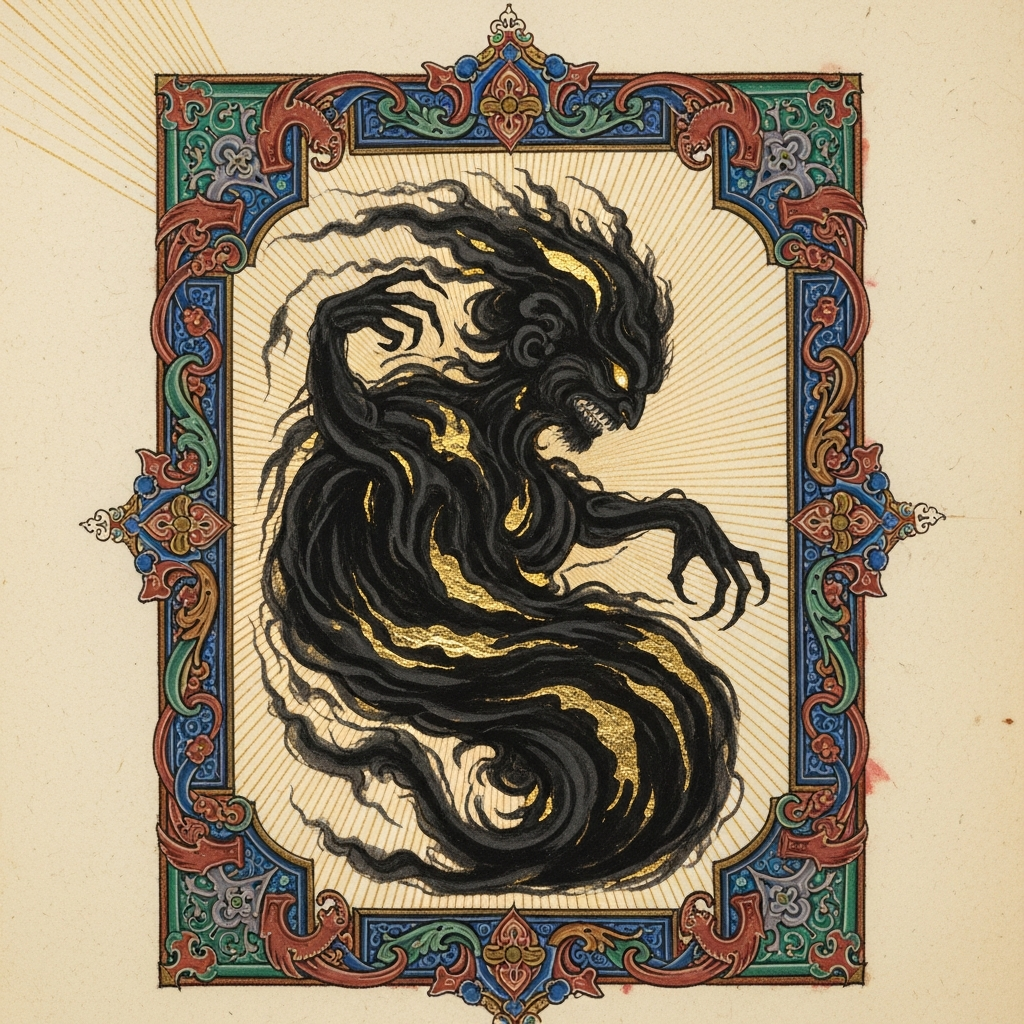
Wrath Incarnate
unleashes a devastating storm of violence that multiplies in fury with each blow struck, dealing escalating damage until battle's end
Daevic Nature
radiates an aura of bloodlust that weakens the resolve of all who face him, reducing their defenses and increasing their aggression
Sraosha (Obedience) -- his direct opponent
“Aeshma of the bloody mace, Aeshma the fiend of fiends, who rages against the righteous.” — Vendidad 10:9
Lore: Aeshma Daeva (“Demon of Wrath”) is the arch-daeva of fury, violence, and rage. He carries a bloody mace and drives humans to murder, war, and cruelty. He is the most aggressive of the daevas, and his name literally means “wrath” or “fury.” His opponent is Sraosha, the angel of obedience and discipline. This is the most direct etymological link between Zoroastrian and Jewish demonology. The name “Aeshma Daeva” became “Ashmadai” in Aramaic, which became Asmodeus in Greek — the demon who kills Sarah’s seven husbands in the Book of Tobit and is bound by Raphael. The name traveled directly from Persian to Jewish literature.
Parallel: → Asmodeus (Tobit 3:8, 17). The name is literally derived from Aeshma Daeva. This is not a parallel — it is the same demon crossing cultural boundaries. This is the single clearest proof of Zoroastrian influence on Jewish demonology.
1 min read
Peace, patience, obedience
Vendidad 10:9, 19:43; Yasht 17; Denkard