Contents
Ahti rules the waters of Finland — lakes, rivers, and the dark sea — and he is not entirely friendly. He tangles nets, pulls fishermen under, hoards the fish when he is displeased. Lemminkäinen traveled to his realm and did not return easily. His wife Kyllikki tried to hold him. The water always called louder.
- When
- Pre-Christian Finnish oral tradition, collected 19th century CE
- Where
- The lakes and rivers of Finland · Ahtola, the sea-king's coral hall beneath the water
The lakes of Finland do not simply hold water.
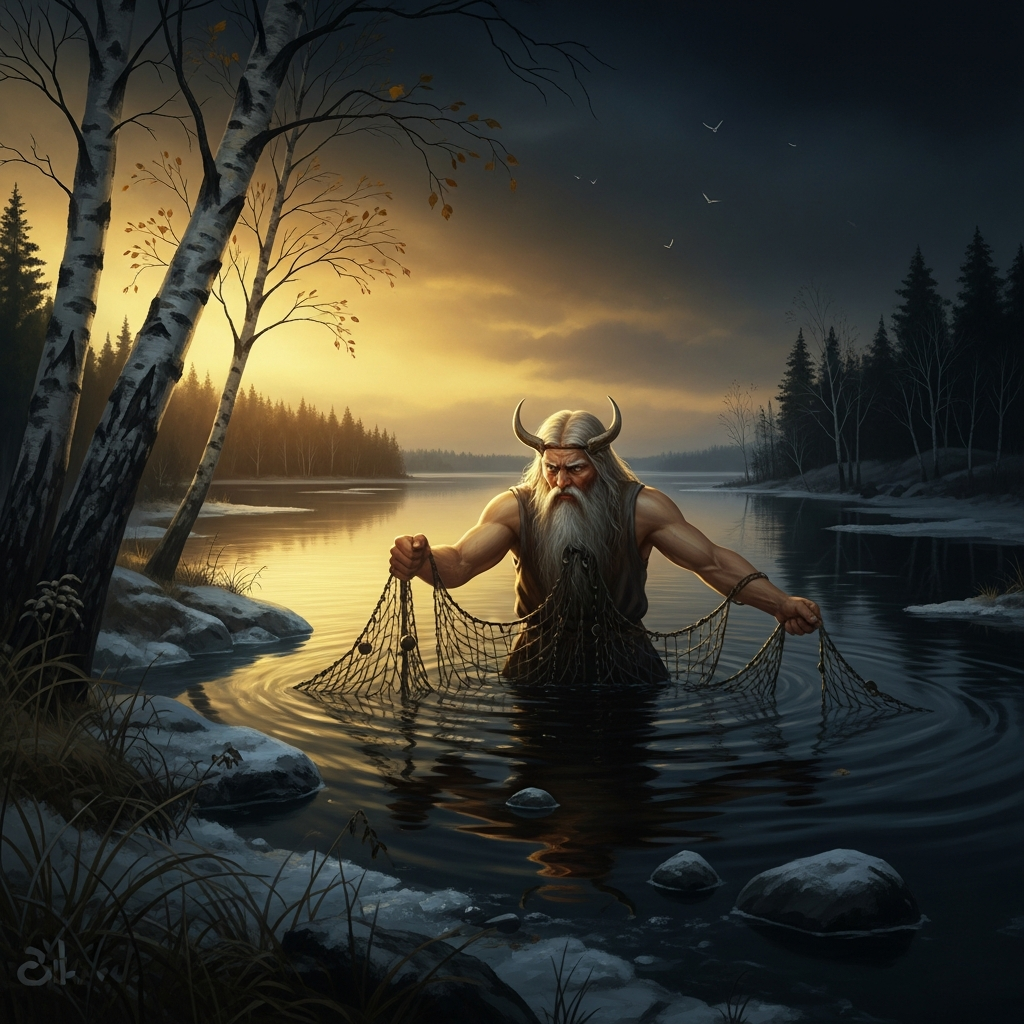
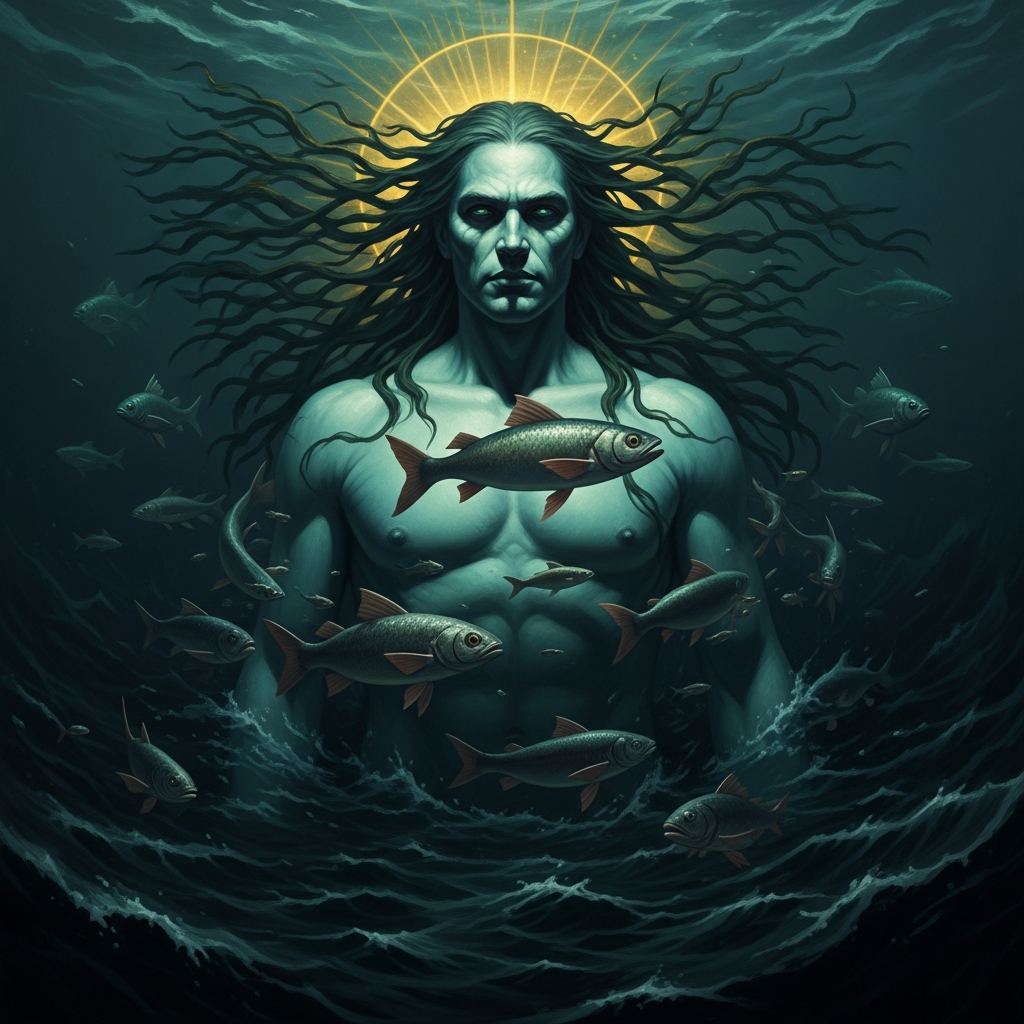
They are under governance. Ahti — also called Ahto, Ahtola (his palace), sometimes identified with Vellamo, his wife, who is the water’s surface to his depth — is the king of the waters, and he is the particular kind of king who does not make himself easy to forget. He tangles nets. He stills the waters when the nets go in and fills them when the net is already on shore. He pulls down the overconfident. He rewards the patient and the correctly-worded.
The Kalevala gives him specific physical characteristics: he is the Ahto of the waves, described as living in a coral hall at the bottom of the sea, his hair loose and waterlogged, his beard tangled with water-weeds. He is not monstrous. He is the lord of a territory, and the territory is cold and dark and full of things that will kill you.
Lemminkäinen’s relationship with Ahti’s waters is a case study in overconfidence.
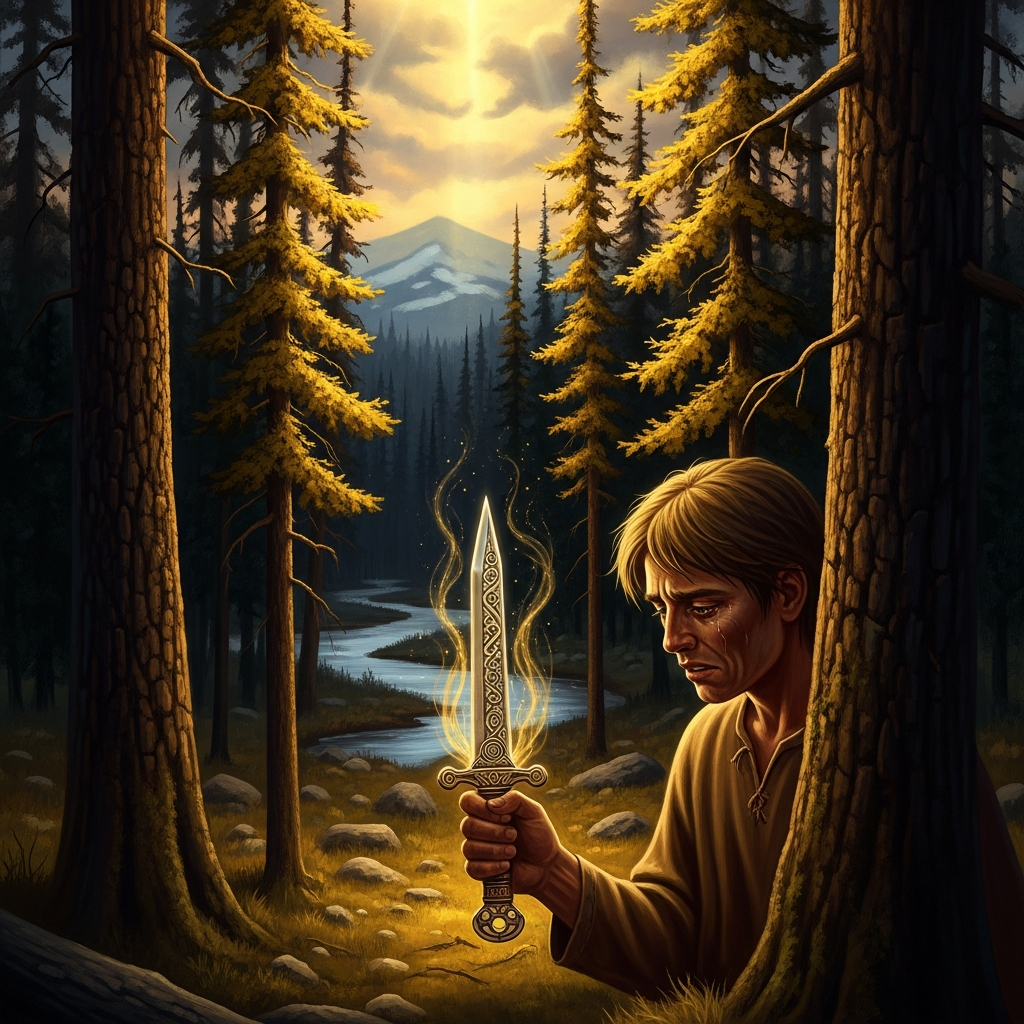
Lemminkäinen is the Kalevala’s most reckless hero — handsome, boastful, capable, and repeatedly nearly dead as a consequence of his own recklessness. His wife Kyllikki extracted a promise from him: he would not go to war. He extracted one from her: she would not go to dances. Both promises were broken. Lemminkäinen left for the far north, to Pohjola, the dark land beyond the horizon.
On the way, or on a later journey, he came to the river of Tuonela — the river that runs around the realm of the dead, the Finnish underworld. He was there to capture the swan of Tuonela, which is the most dangerous errand in Finnish myth because it requires passing the border between living and dead.
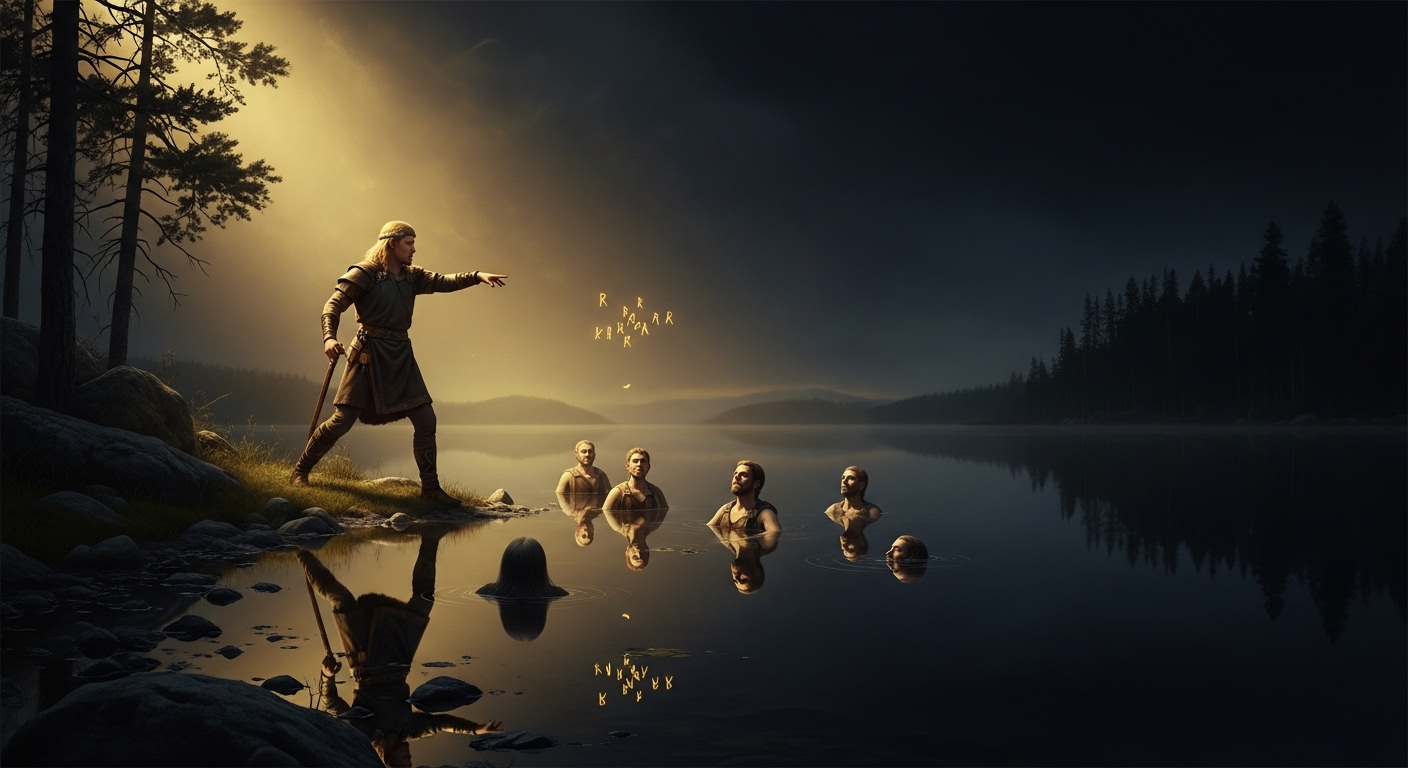
He was killed in the water. Dismembered. His pieces scattered in the black river.
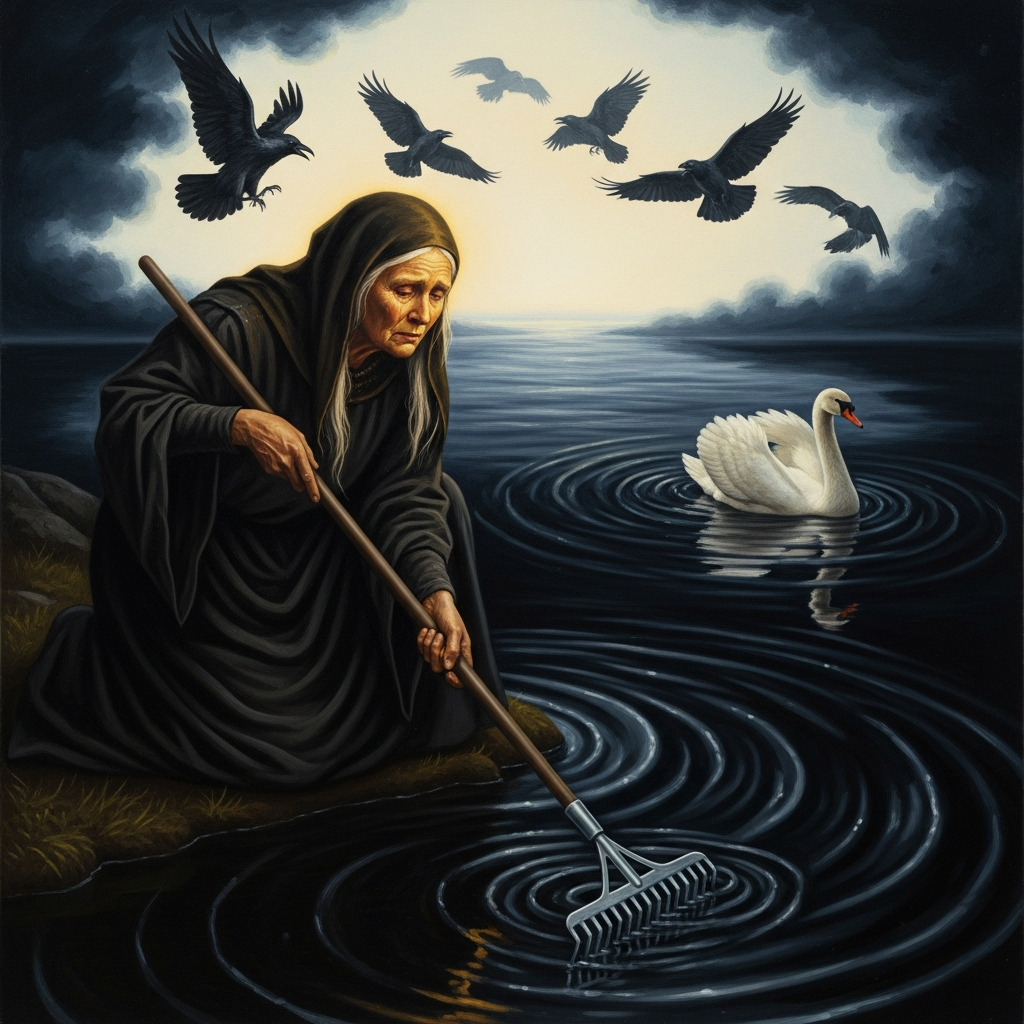
His mother, who had the gift of knowing when her son was in danger, took a rake and raked the river bottom. Piece by piece, she recovered him. She put him back together and breathed life into him. He returned.
The water of Tuonela had him and gave him back. This is the logic of Ahti’s realm: the water keeps what falls into it, but the keeping is not permanent if you know the right procedures for retrieval.
The fishing spell in the Kalevala is a negotiation with Ahti directly.
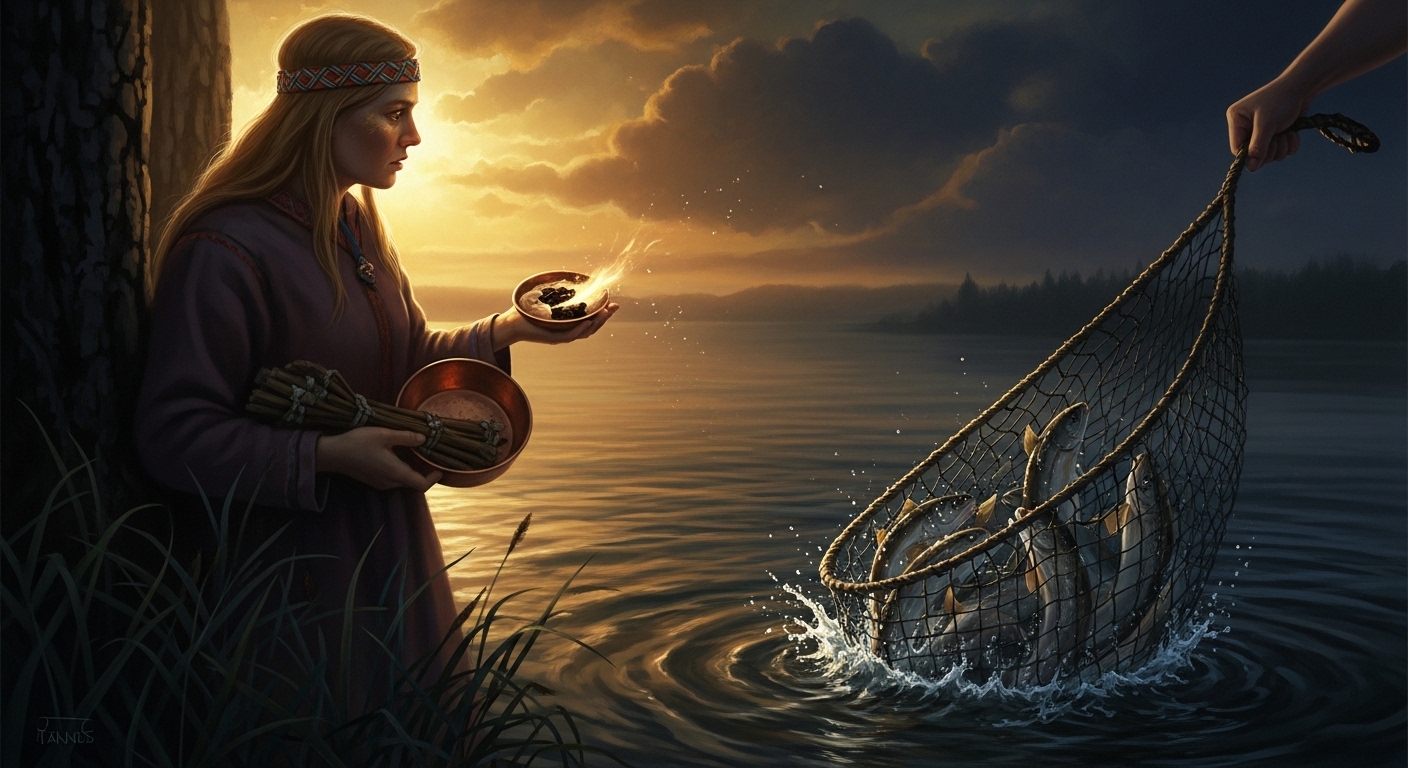
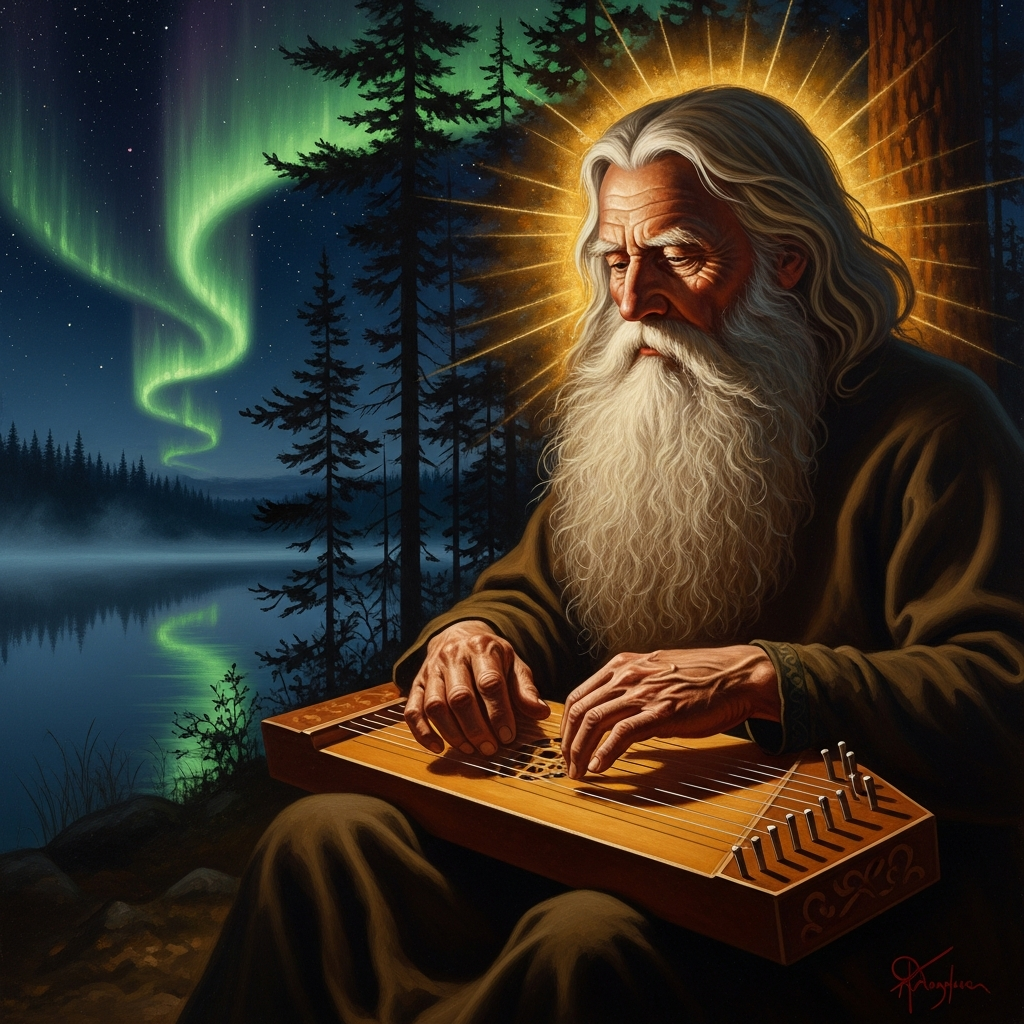
Väinämöinen, the ancient sage, the singer whose magic is the oldest in the world, spends considerable effort in the early runos on the question of fish. He fishes. He needs to fish. And the fish are in Ahti’s waters. The spells Väinämöinen uses — summoning the pike, compelling the perch to the net — are addressed to the water-king’s domain as much as to the fish themselves.
The structure of the magical negotiation is characteristic of Finnish folk practice: you address the being who owns the resource. You acknowledge his ownership. You request access. You specify what you want and why you deserve it. Pine-tar and copper and the right words, spoken at the right time, in the right direction.
The net comes up full when the negotiation is correct. It comes up empty when it is not. Ahti does not explain which element was wrong.
Ahti’s wife Vellamo has a different temperament.
She is the queen of the water-spirits, associated more with the surface of the water — its shimmer, its reflection, its illusive mirror quality — while Ahti is associated with the depths. In some traditions she is kind, willing to help the careful fisherman. In some she is as unpredictable as the water itself.
Together they are the Finnish conception of water as inhabited space: not a resource but a territory, not a background but a kingdom. The Finnish respect for water — which outsiders sometimes read as aesthetic or environmental — has a theological dimension. You do not go to a lake carelessly. You do not fish without acknowledgment. The lake has a lord.
He may not answer you.
But he is listening.
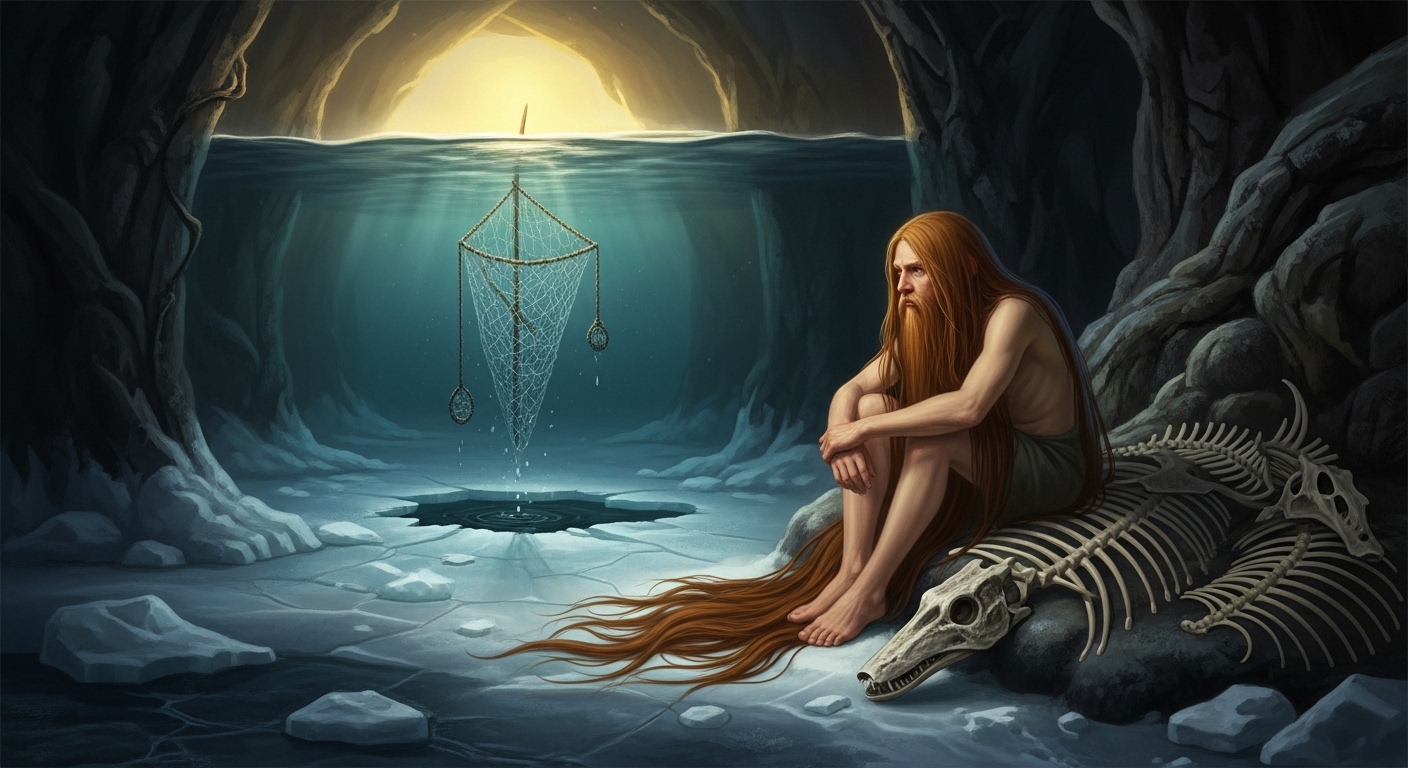
The waters of Finland are frozen for months each year. The ice is thick enough to walk on, to drive on, to build on. The ice-fishing hole cut through that ice is the portal to Ahti’s kingdom: a square aperture in the white surface, dark water below, and the line dropping into the cold dark where the pike hold still.
Every Finnish child who has sat over an ice-fishing hole has sat at the border of Ahti’s realm.
He keeps what he keeps.
He gives up what he gives up.
The line goes down, and you wait, and you try to want the right amount, and you try to have used the right words, and the cold gets into your fingers and you wait.
Scenes
Echoes Across Traditions
Entities

Sources
- Kalevala, Elias Lönnrot ed. (1849), Runos 1, 11-15, 29-30
- Finnish folk traditions collected in the Suomen Kansan Vanhat Runot
- Martti Haavio, Suomalainen mytologia (Finnish Mythology, 1967)