Combat Profile
Origin-Song
Sings the *synty* (origin-words) of any element, creature, or affliction; once sung, Väinämöinen gains absolute command over that thing for the duration of the song
Old Wisdom
Born aged after 730 years in the womb, Väinämöinen ages no further; he cannot be intimidated by youth, fooled by novelty, or surprised by any pattern that has occurred before
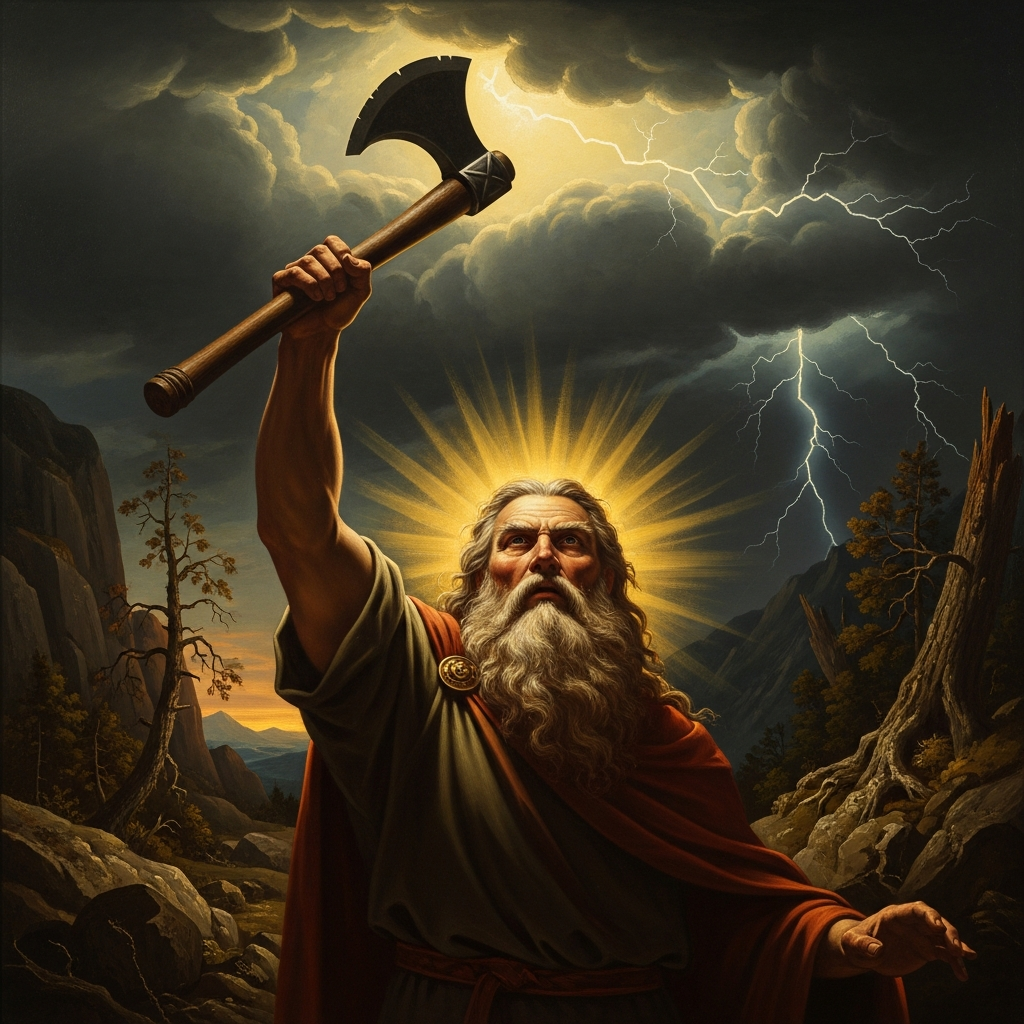
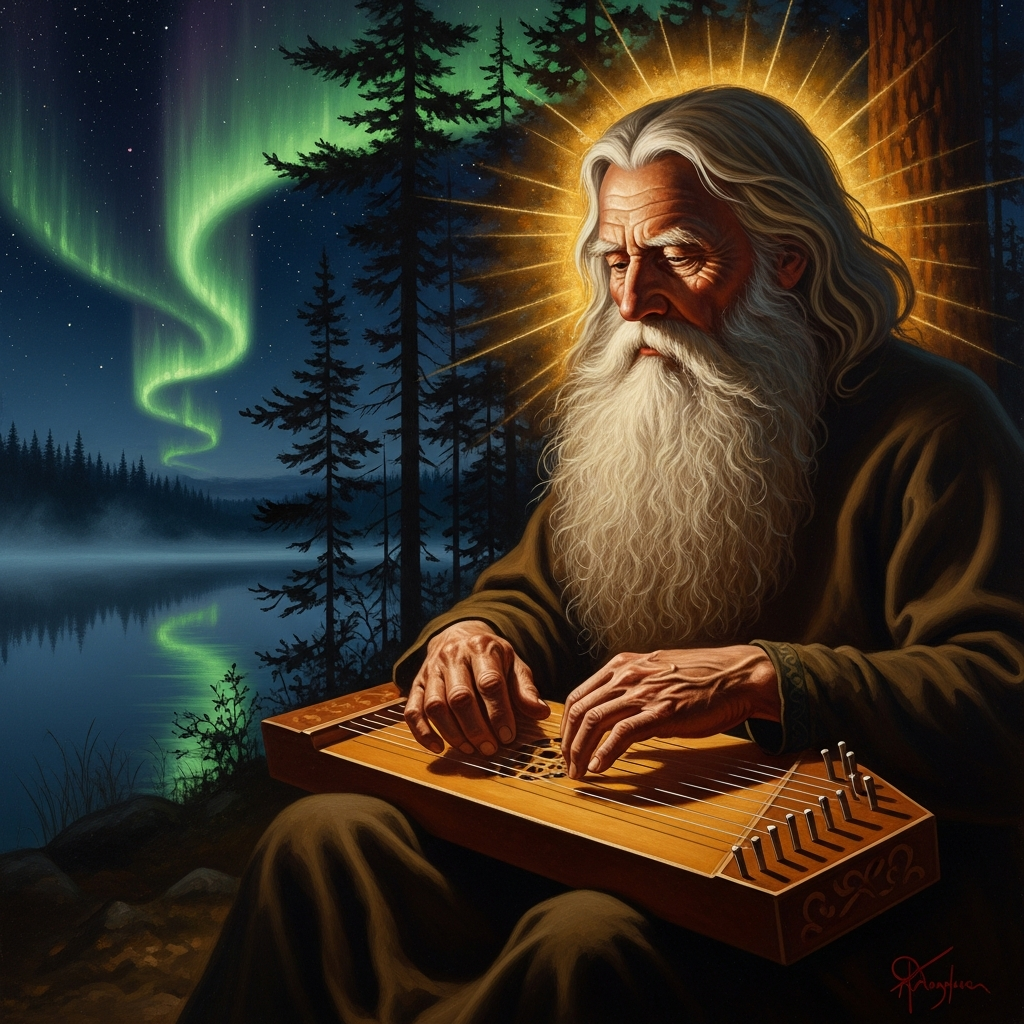
Väinämöinen is the central hero of the Kalevala and the oldest figure in Finnish mythology — a shaman-bard born of the air-maiden Ilmatar after a 730-year gestation, emerging into the world already old, white-bearded, and full of ancient knowledge. He is not a warrior in the conventional sense; his weapons are the kantele (the five-stringed Finnish zither, which he invents from the jawbone of a giant pike) and the spell-song. With these he calms storms, charms beasts, opens the gates of Tuonela, and out-sings the boastful young Joukahainen until the rival sinks up to his neck in a swamp and must promise his sister Aino as ransom for his life.
Väinämöinen embodies the central virtue of Finnish religion: tieto, knowledge. He does not impose his will on the world; he learns the world’s true names, its origin-songs, its hidden patterns, and through that learning gains command. He is repeatedly humbled, especially in love (Aino drowns rather than marry him; the Maiden of Pohjola rejects him; Marjatta’s son inherits his throne), and he ends the Kalevala by sailing away in a copper boat, promising to return when his people need him again. He is the Finnish Arthur, the Finnish Merlin, and the Finnish Odin, all in one figure.
Biblical Parallels: Väinämöinen parallels Solomon as the wise king whose wisdom commands the natural world (1 Kings 4:33 — Solomon “spoke of trees, beasts, birds, reptiles, fish”). His sailing away into exile, with the promise to return when needed, echoes the Christian eschatological parousia and the Arthurian “once and future king.” His invention of the kantele parallels Jubal as “the father of all who play the harp and pipe” (Genesis 4:21). His final replacement by Marjatta’s miraculously-conceived son is a transparently Christianizing addition by Lönnrot’s redaction.
Cross-Tradition: Closely parallels Norse Odin (the wandering shaman-bard of word-magic, similarly old and one-eyed in some traditions), Greek Orpheus (the singer who can charm beasts and open the underworld), Welsh Taliesin (the master-bard of supernatural knowledge), and the shamans of Siberian and Sami traditions from which the Kalevala tradition partly derives.
2 min read