Hitchhiker's Guide to Religion
Finnish

Tuonetar

Finnish Uralic shamanic tradition, pre-Christian; documented in *Kalevala* oral tradition c. 500–1800 CE; central to Finnish shamanic underworld-journey mythology Karelia and Finland; the *Tuonela* underworld concept is specifically Finno-Ugric, distinct from both Norse and Slavic underworld traditions
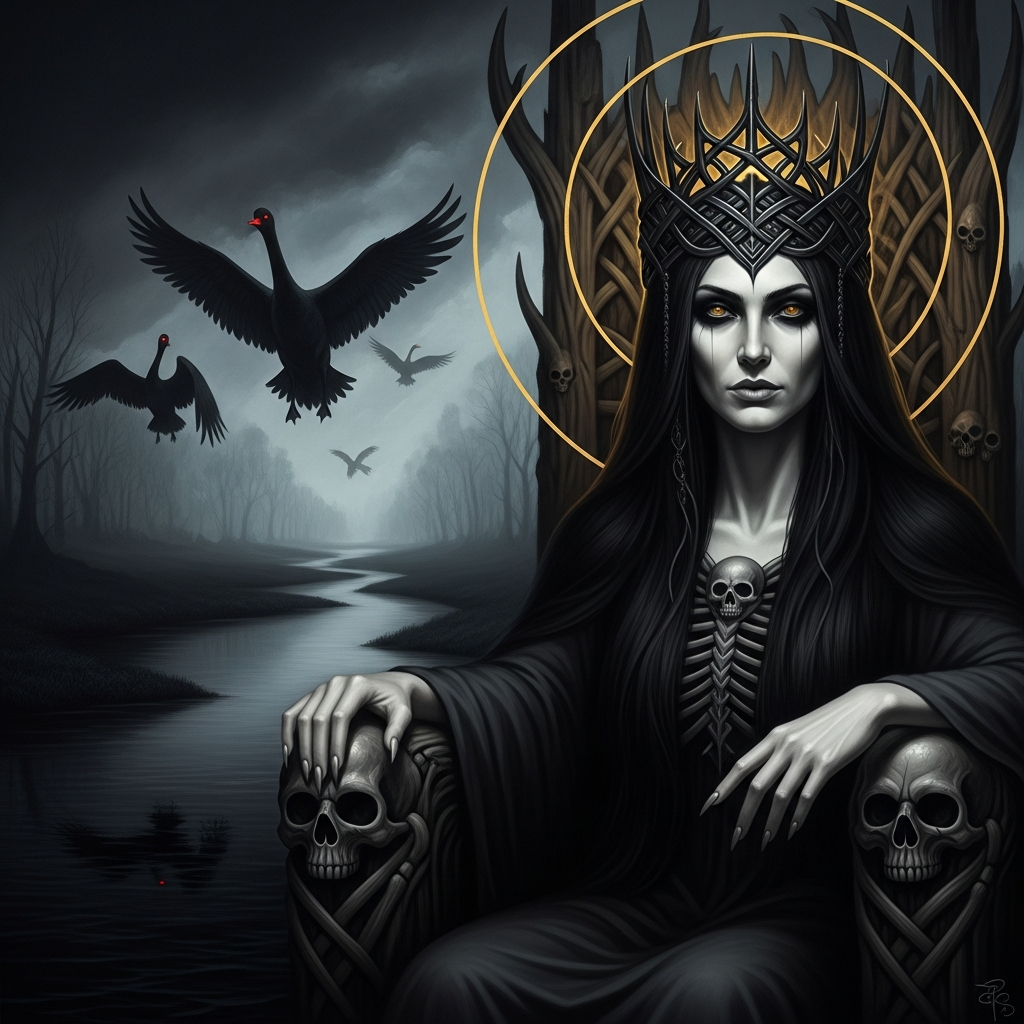
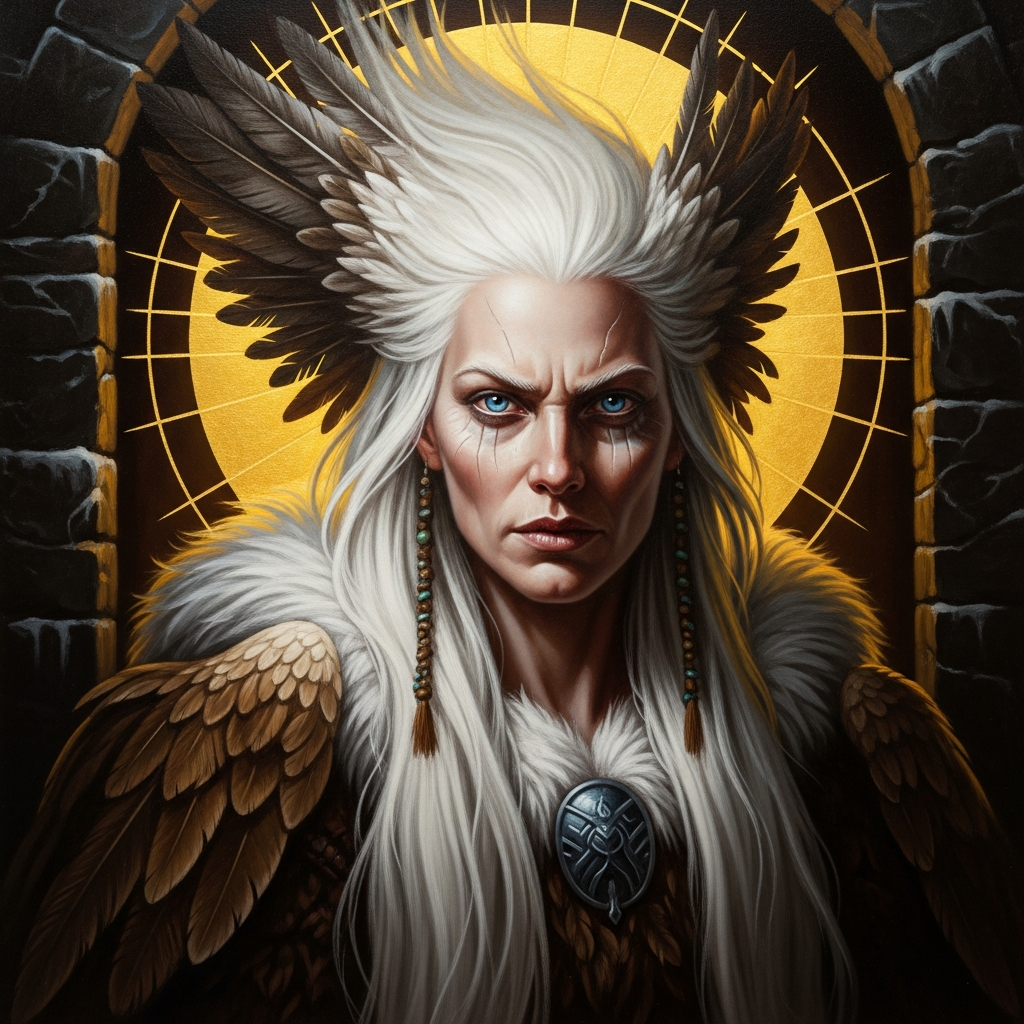
Portrait of Tuonetar
Combat
ATK 6
DEF 9
SPR 10
SPD 4
INT 9
Element Death
Role Sovereign
Rarity Legendary
Threat Extreme
LCK 4
ARC 10
Special Beer of Tuoni — Tuonetar offers any visitor a drink of beer infused with worms, snakes, and lizards; those who drink are bound to her realm permanently unless they can name the *synty* of the drink itself
Passive Iron-Net Sovereignty — Tuonetar's son guards the river of Tuonela with an iron net that catches all souls; only shamans who can transform themselves into vipers, fish, or birds can pass through
Epithets "Queen of Tuonela" (Finnish: *Tuonetar*, "Daughter/Queen of Tuoni"); "Hostess of the Dead"; "The Crone Below"
Sacred Animals Black swan (*joutsenet* — the swans that swim the river of Tuonela, whose silence is death); viper (the shape Väinämöinen took to escape her net); pike (in the dark waters of Tuonela)
Sacred Objects Beer infused with worms, snakes, and lizards (the hospitality-trap she offers visitors); the iron net stretched across the river of Tuonela to catch escaping souls; her hall beneath the earth
Sacred Colors Black (the river of Tuonela, lightless); grey (the dead who inhabit her realm); white (bones in the dark)
Sacred Number 3 (three sons she has guarding the underworld; three types of things in her poisoned beer: worms, snakes, lizards)
Consort(s) Tuoni (husband, king of Tuonela — a shadowy, largely silent figure who is mentioned but rarely acts; Tuonetar is the more vivid presence)
Sacred Sites Tuonela (the Finnish underworld — the silent dark land beneath the earth, reached by crossing the black river); the River of Tuonela (*Tuonelan joki*, black, slow, cold)
Festivals Funeral rites (*vainajien muistaminen*, "remembrance of the deceased") acknowledge her realm; offerings at graves to maintain good relations with her kingdom; Kekri (autumn festival of the dead, November)
Iconography Hooked-nose ancient crone in a dark hall, offering a beer cup to arriving souls; river of black water in the background with iron nets stretched across; dead souls wading in silence
Period Uralic shamanic tradition, pre-Christian; documented in *Kalevala* oral tradition c. 500–1800 CE; central to Finnish shamanic underworld-journey mythology
Region Karelia and Finland; the *Tuonela* underworld concept is specifically Finno-Ugric, distinct from both Norse and Slavic underworld traditions

Tuonetar is the queen of Tuonela, the underworld — wife of Tuoni, mother of Tuonen tytti (the Daughter of Death), and mistress of the silent black river that separates the living from the dead. She is described as a hooked-nose, withered crone, but she is also a hostess who serves beer to her son-in-law’s guests and presides over the afterlife with grim courtesy. Her realm is not a hell of torment; it is a cold, dim, silent kingdom where the dead are housed beneath the earth, the living can visit only through enormous shamanic effort, and almost no one returns.

Väinämöinen famously visits Tuonela seeking three forgotten words for a spell; Tuonetar offers him hospitality, invites him to drink beer, and very nearly traps him there. Only by transforming into a viper and slipping through the iron net her son has set across the river does Väinämöinen escape. Tuonetar’s hospitality is genuine, but it is also a trap — the underworld is full of small invitations that, once accepted, become irrevocable.

Biblical Parallels: Tuonetar parallels Sheol/Hades-as-place more than as person — the cold, silent kingdom of the dead. The closest biblical figure is the personified Death and Hades of Revelation 6:8, riding the pale horse, and the figure of Death in 1 Corinthians 15:55 (“O death, where is thy sting?”). The hospitality-trap pattern echoes Persephone’s eating the pomegranate.

Cross-Tradition: Direct cousin of Norse Hel (queen of the non-heroic dead, also half-living half-dead in appearance), Greek Persephone (queen of the underworld, but with a redemptive return-cycle Tuonetar lacks), Mesopotamian Ereshkigal (queen of the underworld in the Descent of Inanna), and Egyptian Nephthys. The “hooked-nosed crone-queen of the cold dead” is a Eurasian archetype that may go back to Mesolithic shamanic religion.


1 min read
Combat Radar

ATK DEF SPR SPD INT
← Back to Finnish