Combat Profile
Sampo Forge
Given the proper materials and three days at the forge, Ilmarinen can create any artifact requested; the resulting object is permanently magical and produces something beneficial endlessly
Hammerer of the Sky
Ilmarinen's craftsmanship cannot be matched by any other smith mortal or divine; his hammer-strikes never glance, his metal never cracks, and his work bears flaws only he can perceive
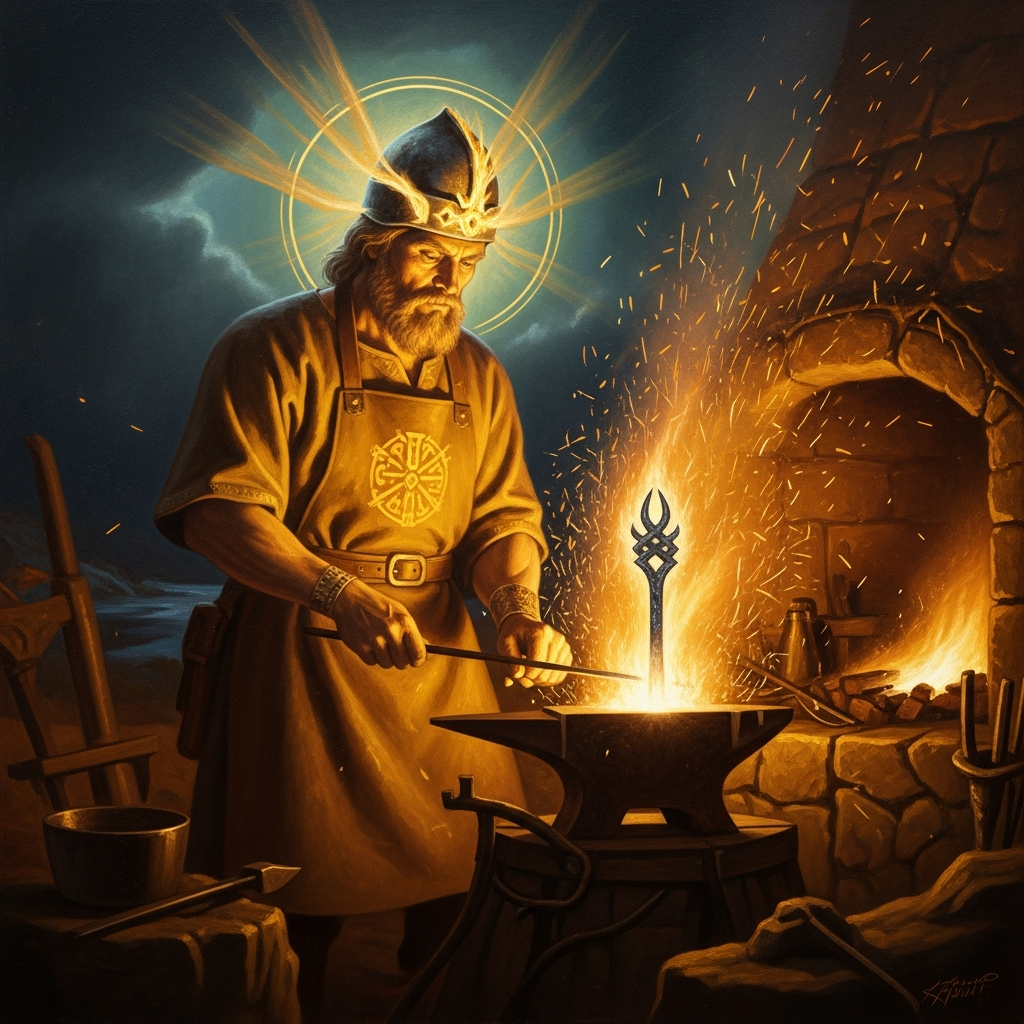
Ilmarinen is the divine smith, the eternal hammerer who forged the dome of the sky itself — and you can still see his hammer-marks on the firmament if you look carefully, says the Kalevala. He is taciturn where Väinämöinen is voluble, practical where Väinämöinen is mystical. He works at the forge for days without sleep, sweat running into the iron, and at his hands the metal does what it is told. His greatest creation is the Sampo, the mill of plenty that he forges as bride-price for the Maiden of Pohjola — a labor of three days during which the forge produces, in succession, a golden bow, a copper ship, a gold-and-silver heifer, and a golden plough, all of which Ilmarinen rejects and casts back into the fire because they have flaws he can see and no one else can. Only the fourth attempt, the Sampo itself, satisfies him.
Ilmarinen’s tragedy is romantic. The Maiden of Pohjola rejects him after he forges the Sampo; later, when he wins her, she is killed; he forges a replacement woman of gold and silver, but she cannot warm in his arms and he abandons the project in despair. He is the patron of all human craftsmen — the figure invoked when the smith fires up the forge, when iron is bent to purpose, when the work demands more skill than strength.
Biblical Parallels: Ilmarinen parallels Tubal-Cain, “the forger of all instruments of bronze and iron” (Genesis 4:22), and Bezalel, “filled with the Spirit of God, with skill, ability and knowledge in all kinds of crafts” to build the Tabernacle (Exodus 31:1-5). His forging of the sky-dome echoes the divine craftsman tradition surrounding the cosmos itself (Psalm 19:1, “the heavens declare the glory of God; the skies proclaim the work of his hands”). His failed creation of a golden bride is a striking parallel to the Pygmalion story and to the rabbinic legends of the Golem.
Cross-Tradition: Direct cousin of Hephaestus and Vulcan (lame divine smiths of the Mediterranean), Norse Wayland (Völundr) and the dwarf-smiths Sindri and Brokkr, Vedic Tvastri (the divine artificer who forges Indra’s thunderbolt), and Egyptian Ptah. The “divine smith who forges the cosmic mill/weapon” is a deep Indo-European and Uralic archetype.
2 min read