Combat Profile
Volcanic Wrath
Vulcan's anger manifests as wildfire, conflagration, or volcanic eruption; the destruction is geographically focused but absolute, and only continued propitiation prevents the next outbreak
Master of Destructive Fire
Where Vulcan is properly venerated, fires are contained quickly and rarely spread; where his rites have lapsed, every spark threatens to become a city-destroying inferno
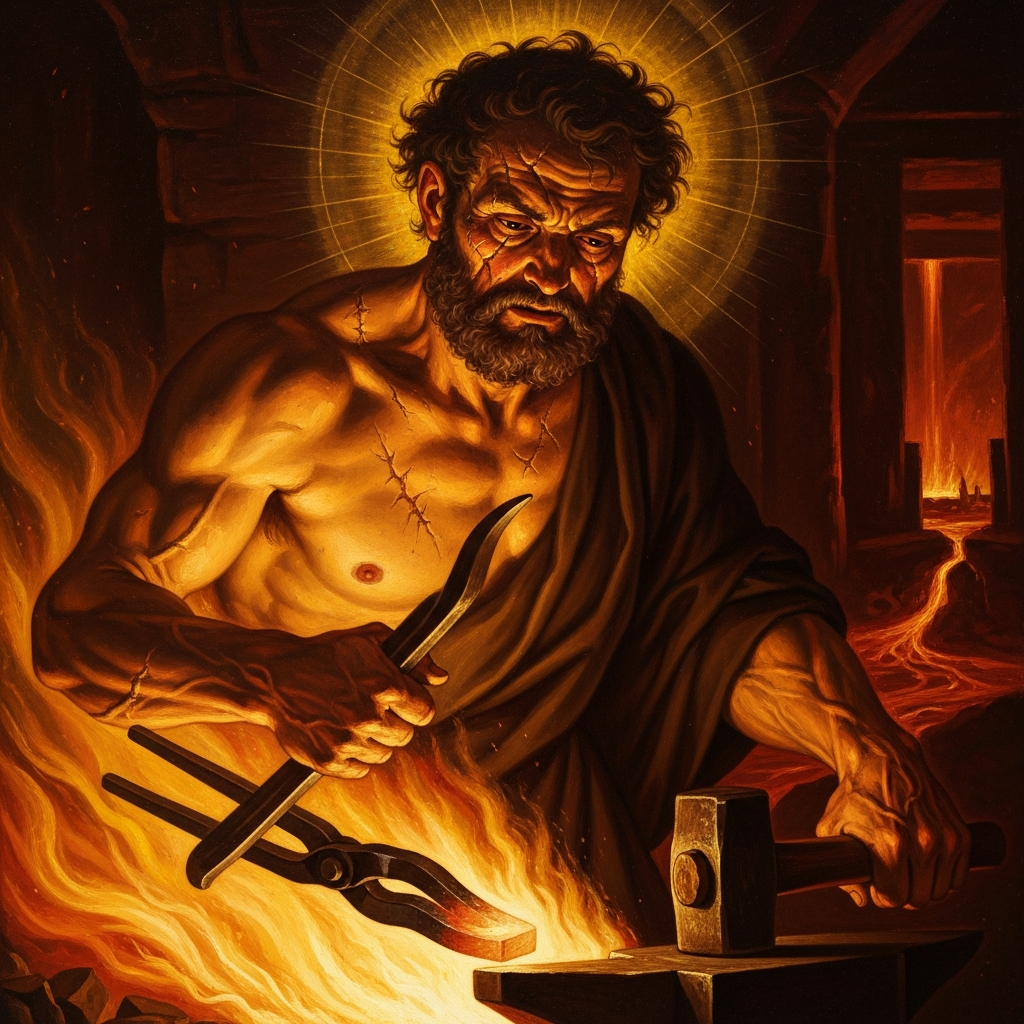
Vulcan is the god of fire and the forge, but where his Greek counterpart Hephaestus is a craftsman first and a destroyer secondarily, Vulcan is a destroyer first — the god of destructive fire (Vulcanus quietus “quiet Vulcan” was the propitiated, contained fire; Vulcanus mulciber “Vulcan the softener” was the tame forge-fire; but Vulcan’s primary identity was the conflagration, the wildfire, the volcanic eruption). His Italian origins — the volcanoes of Sicily, the volcanic mythology of Etna and Vesuvius — gave him a far more dangerous character than the Mediterranean smith-god tradition.
His major festival, the Vulcanalia (August 23), was celebrated by throwing live fish into a bonfire as substitute-sacrifices for human lives — Vulcan was offered the fish so he would not require the lives of Romans in summer fires. His temples were typically located outside the city walls, because his fire was too dangerous to be invited inside. He was the god of fire-control as much as of fire itself: the deity to whom you prayed when your house was burning, when the granary smoldered, when the wildfire approached the city. The eruption of Vesuvius in 79 CE — which destroyed Pompeii and Herculaneum — happened on the day after the Vulcanalia, leading to widespread feeling that the god had not been adequately propitiated.
Biblical Parallels: Vulcan’s destructive-fire aspect parallels the divine fire of judgment — the fire and brimstone destroying Sodom (Genesis 19:24), the fire from heaven consuming Elijah’s altar (1 Kings 18:38), and especially the eschatological fire of 2 Peter 3:10 (“the elements will be destroyed by fire”). His forge aspect parallels Tubal-Cain (Genesis 4:22) and Bezalel (Exodus 31). The destructive aspect of divine fire is far more biblically prominent than the productive aspect.
Cross-Tradition: Parallels Greek Hephaestus (his official equivalent), but more dangerous. Parallels Norse Surtr (the fire-giant who ends the world in flame) more than the smith-god Vulcan resembles. Vedic Agni in his destructive aspect (the wildfire-god). Hindu Shiva’s tandava (cosmic destructive dance). Hawaiian Pele (the volcano goddess of unpredictable wrath).
2 min read