Combat Profile
Wheel's Turn
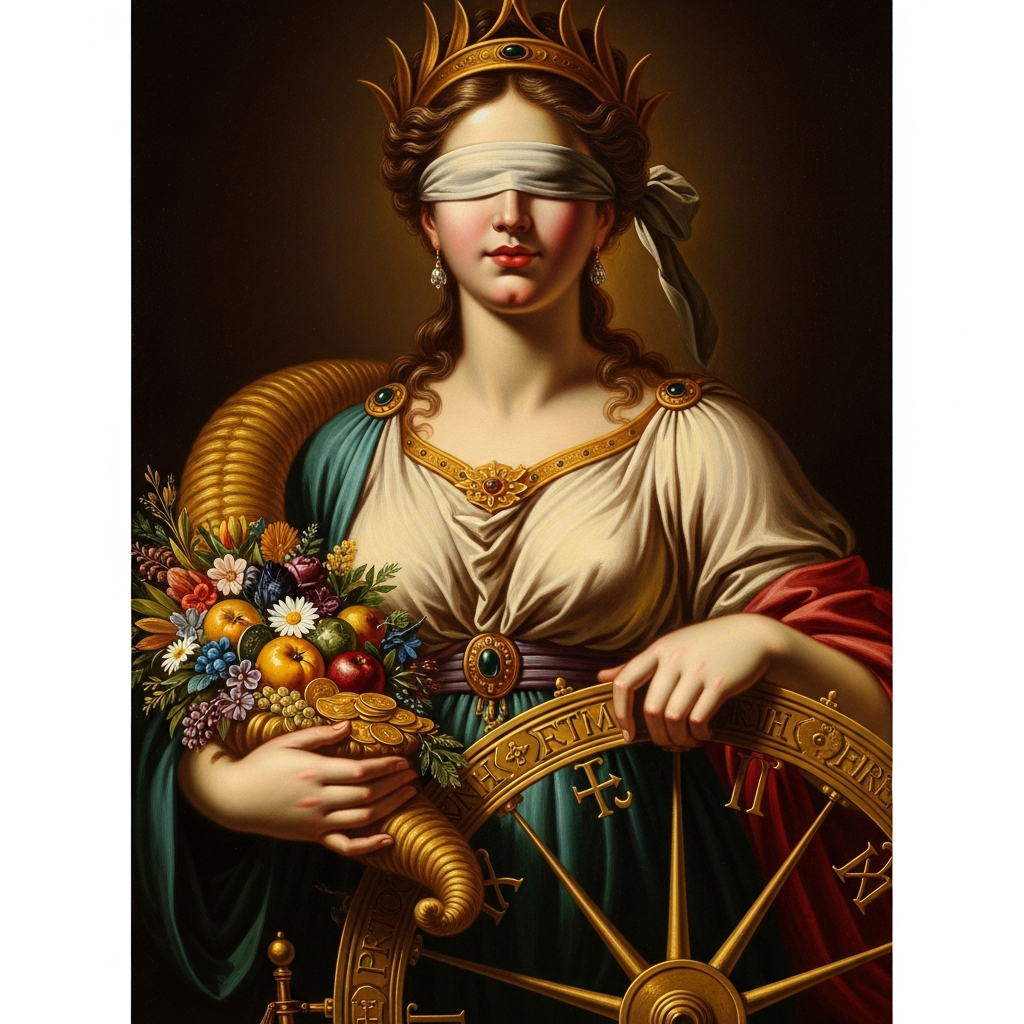
Fortuna spins her wheel; the result is decided by her caprice rather than by skill, virtue, or merit. The lucky receive sudden elevation; the favored fall without warning
Fortune's Gift
Mortals favored by Fortuna succeed beyond their merits and survive disasters that should have killed them; mortals abandoned by her fail despite competence and are ruined by tiny mistakes
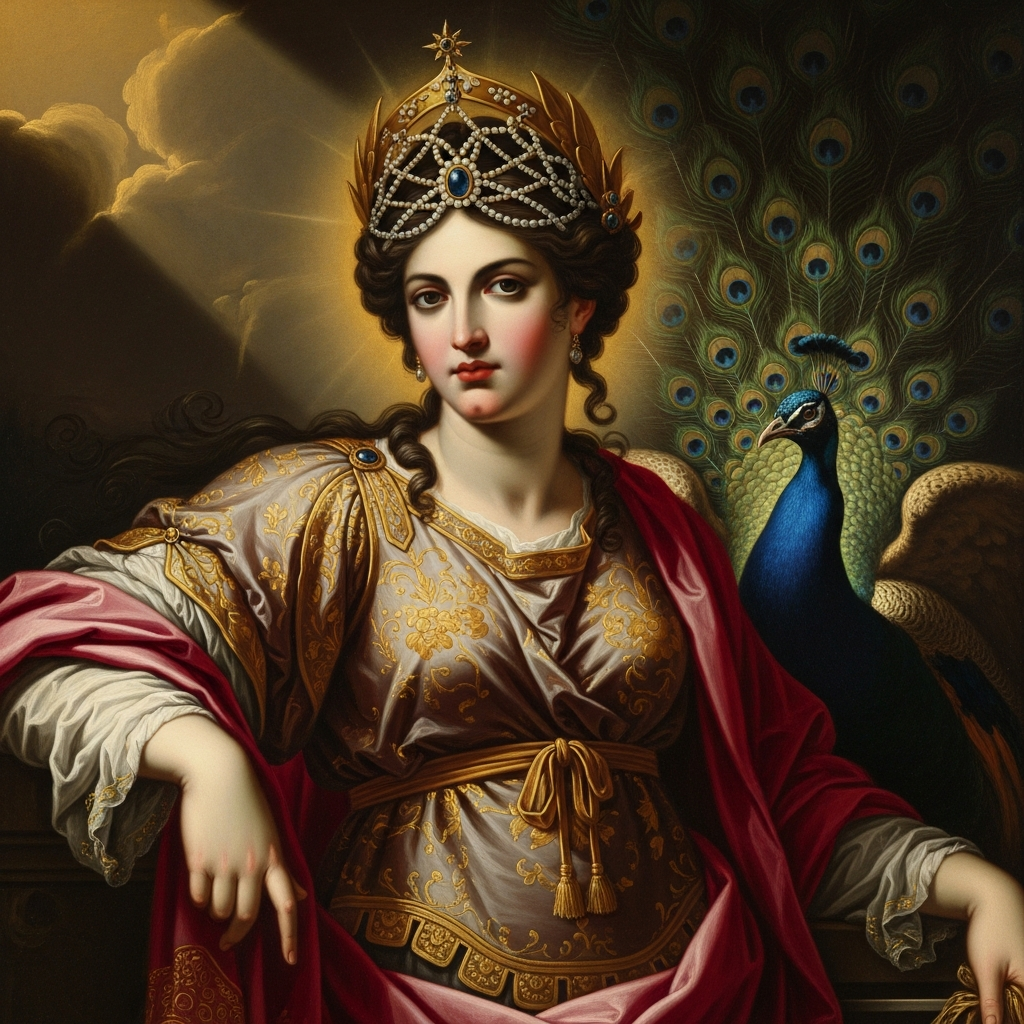
Fortuna is the goddess of luck, fortune, and chance — and she is more important in Roman religion than the simple translation suggests. Fortuna is not random luck; she is the power that determines outcomes, especially the outcomes that human skill and virtue cannot fully control. She is depicted with a wheel (the rota Fortunae) — the famous wheel of fortune that lifts a man up to power and prosperity, then turns and casts him down — and with a cornucopia and a rudder, signifying her gifts of plenty and her steering of human affairs.
Fortuna had many cult-aspects: Fortuna Primigenia (Fortuna the First-Born, an oracular cult at Praeneste), Fortuna Muliebris (Fortuna of Women), Fortuna Virilis (Fortuna of Men), Fortuna Annonaria (Fortuna of the grain-supply), Fortuna Redux (Fortuna of the safe return). She was the deity who acknowledged what every Roman knew: that even the most virtuous and competent man could be ruined by circumstances beyond his control, and the most undeserving could rise. Stoic philosophy taught indifference to Fortuna’s gifts; popular religion taught propitiation. Both responses were Roman.
Biblical Parallels: Fortuna is theologically incompatible with the Hebrew Bible, which insists that nothing is truly random — “the lot is cast into the lap, but its every decision is from the LORD” (Proverbs 16:33). The Hebrew tradition replaces Fortuna with Yahweh’s providence: outcomes that look like luck are actually divine decisions. Yet the experience of arbitrary fortune is acknowledged in Ecclesiastes 9:11 — “the race is not to the swift, nor the battle to the strong… but time and chance happen to them all” — which sounds Stoic precisely because Ecclesiastes engages directly with the theological problem Fortuna embodies.
Cross-Tradition: Parallels Greek Tyche (her direct counterpart, also depicted with a rudder and cornucopia), Hindu Lakshmi (goddess of fortune, prosperity, and luck), Japanese Daikokuten and Ebisu (gods of commercial fortune), Norse Wyrd (the personified force of destiny), and the Chinese Cai Shen (god of wealth). The “wheel of fortune” iconography became central to medieval Christian moral allegory (Boethius’s Consolation of Philosophy, the De casibus tradition) — Fortuna is one of the few major Roman deities to survive into Christian art with her name and attributes intact.
2 min read