Combat Profile
Laurel of Victory
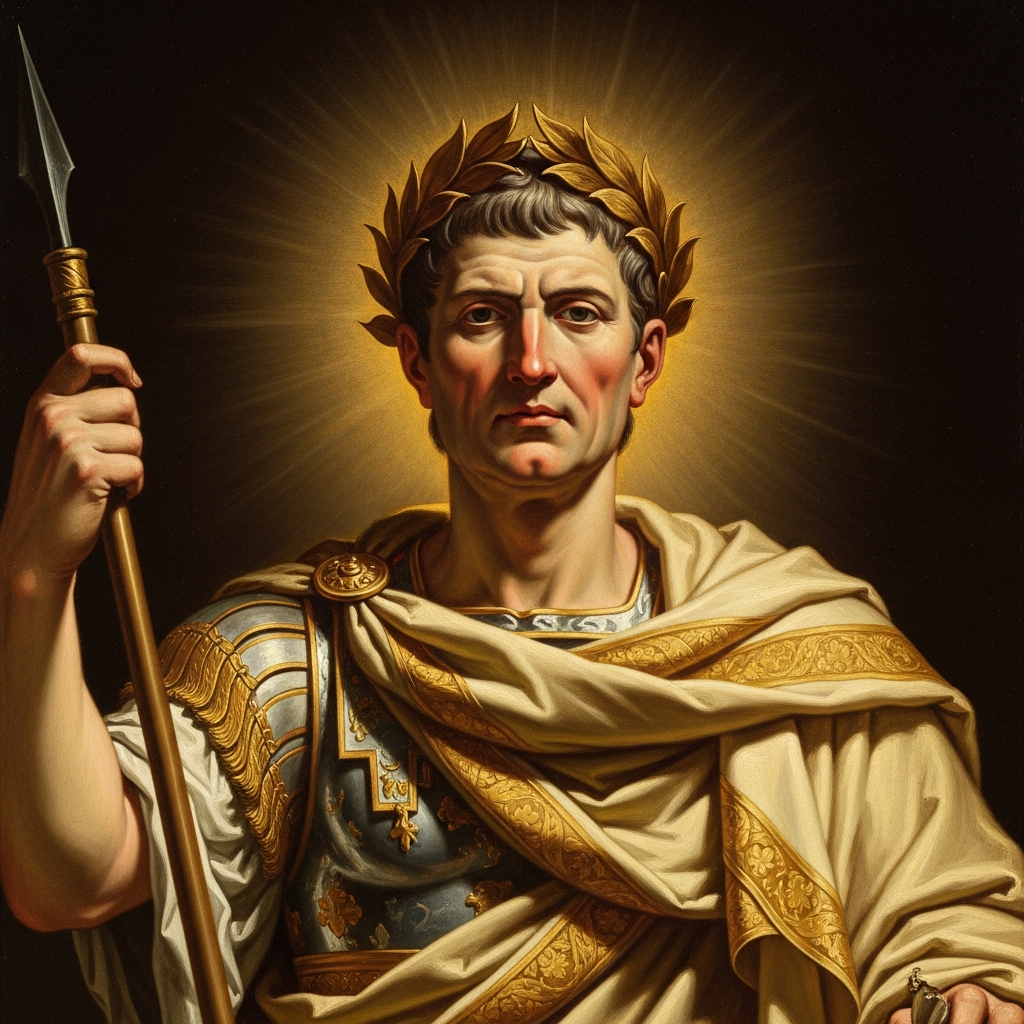
Victoria crowns the victor; the wreathed warrior gains immortality of memory (their deeds are preserved in song and history) and the army receives a permanent boost to morale and prestige
Crowner of Champions
Where Victoria's statue stands and her rites are observed, the city's wars more often end in successful outcome; her absence correlates with strategic disasters and shameful peace-treaties
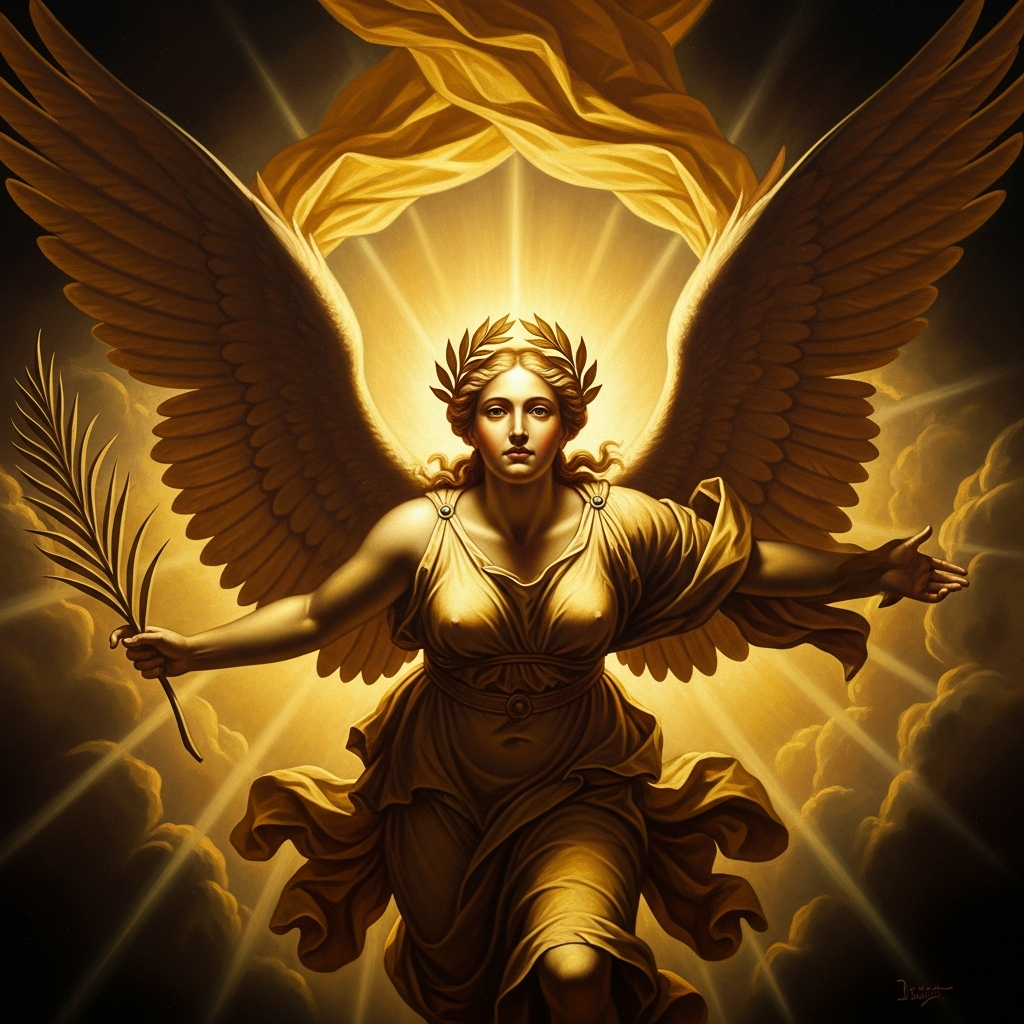
Victoria is the goddess of victory — a winged figure who alights on the standards of victorious armies, crowns generals with laurel, and is invoked at every Roman triumph. She is identical in iconography and function to the Greek Nike, and the equivalence was recognized from earliest contact. Her cult, however, became distinctively Roman in the imperial period: Victoria was the guarantor of imperial legitimacy, and her statue in the Senate house (the Altar of Victory) was the focus of one of the last major political-religious controversies of late antiquity (the late-fourth-century debate over its removal, championed by the pagan senator Symmachus and opposed by the Christian Ambrose).
Victoria is the deified abstraction of successful outcome. She does not cause victory directly — Mars and skill cause victory — but she rewards victory with permanence, with public memory, with the laurel-wreath that converts the moment of triumph into eternal renown. She is the deity of kleos in its Roman form: the immortality conferred by successful great deeds.
Biblical Parallels: Victoria parallels the personified salvation (yeshua) of the Hebrew Bible — the divine deliverance that comes in moments of crisis. Christ’s crown of laurel is supplanted in Christian iconography by the crown of thorns, then by the imperial Christ-as-Pantokrator with diadem; the iconography of “the crowned victor” is consistent. Paul’s “I have fought the good fight, I have finished the race… henceforth there is laid up for me a crown of righteousness” (2 Timothy 4:7-8) explicitly Christianizes Victoria’s iconography.
Cross-Tradition: Direct counterpart of Greek Nike (Νίκη, “Victory”). Parallels Hindu Jaya (personification of victory), Norse Sigyn in some interpretations (Sigyn = “victory-friend”), and the Buddhist Vijaya. The winged victory is iconographically one of the most recognizable images of the ancient Mediterranean and survived into modern military iconography (the Statue of Liberty’s torch and crown derive partly from Victoria/Nike imagery, as does the Charging Bull’s “Fearless Girl” pose).
1 min read