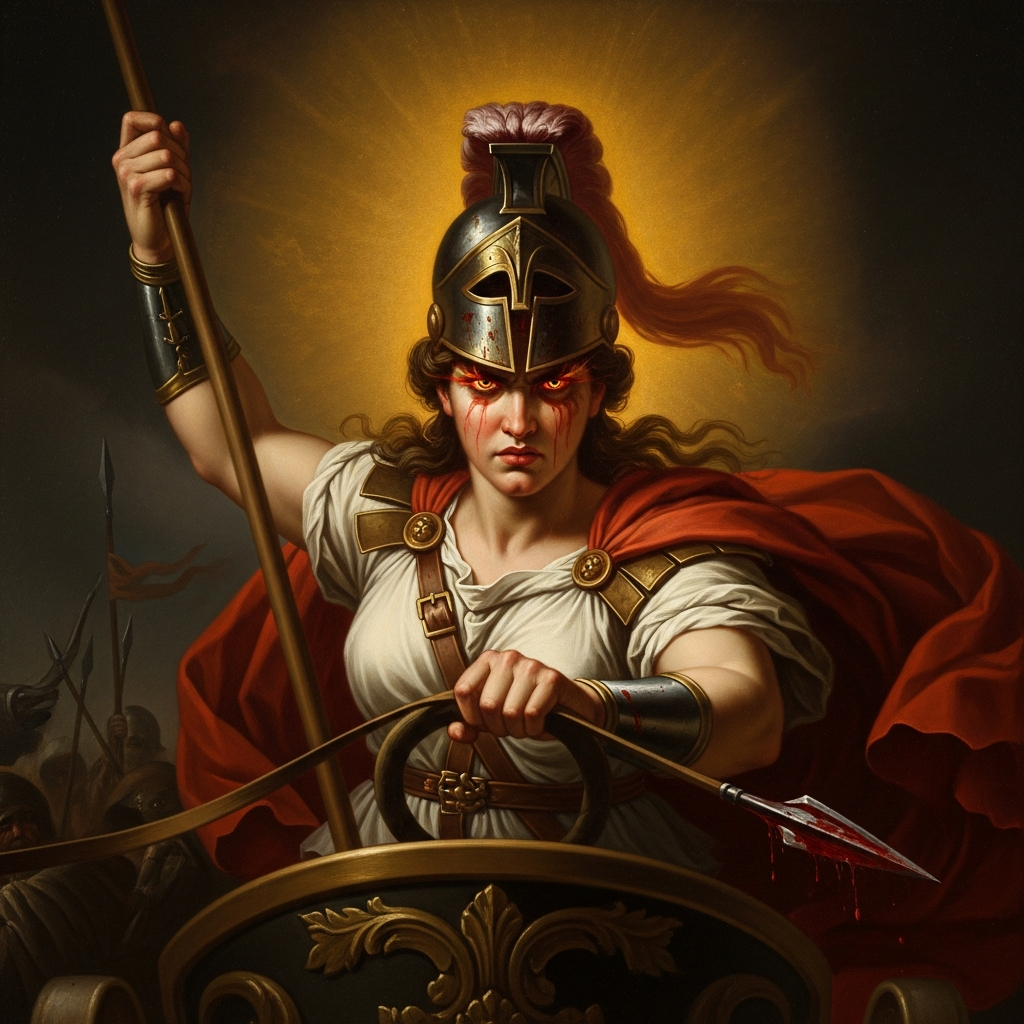
Combat Profile
Battlefield Fury
Bellona's possession grants warriors superhuman aggression and pain-tolerance; troops fight beyond their wounds and refuse to retreat, but the surviving warriors must endure ritual purification afterward or suffer madness
Driver of War
Bellona inflames the chariot of Mars and the legions of Rome; armies serving under her aegis cannot be persuaded to negotiate and treat surrender as worse than death
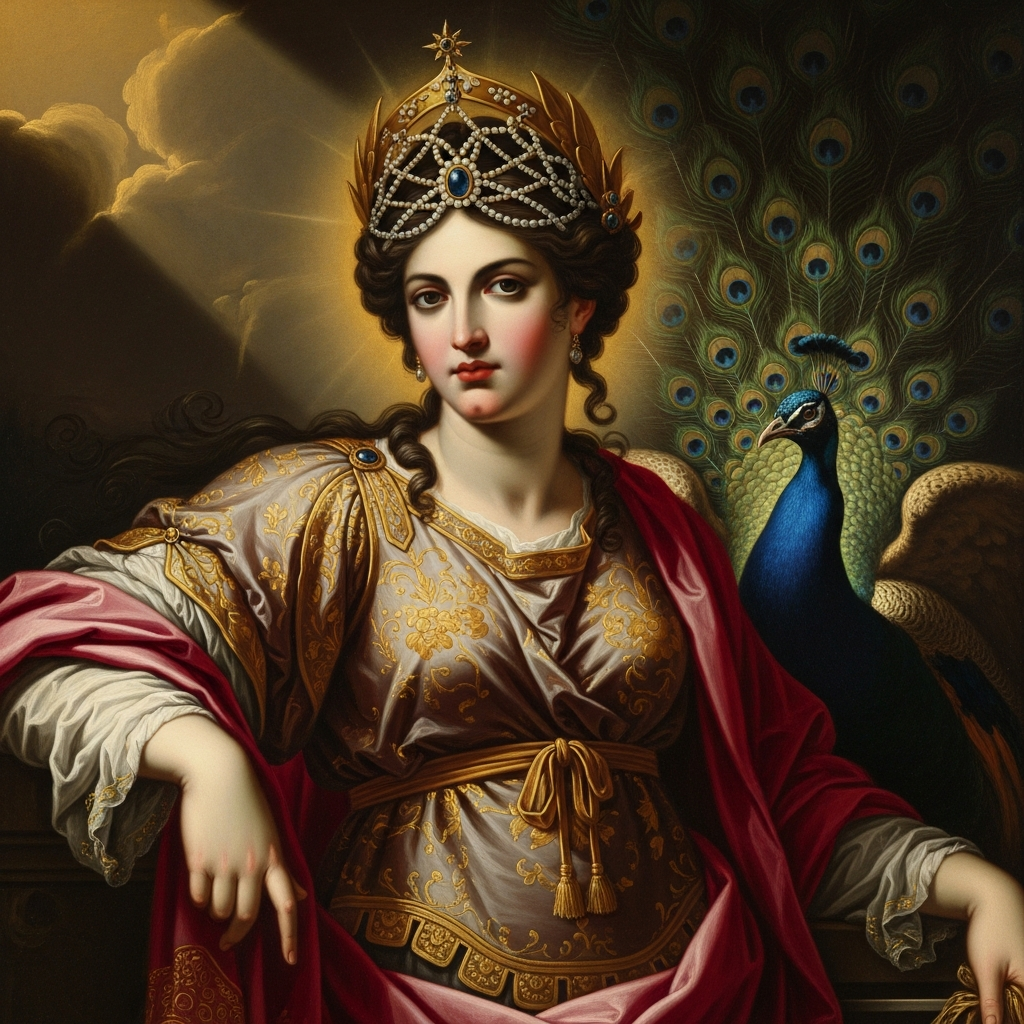
Bellona is the goddess of war — a fierce, blood-spattered war-deity, sister or wife of Mars, who drives his chariot in battle and embodies the fury and chaos of the battlefield. She is older than the Greek influence on Roman religion: she may have originated as the Sabine Vacuna or as an indigenous Italic war-goddess later identified with the imported Anatolian Mā, in either case predating the Roman identification with Greek Enyo.
Her temple stood outside the city walls (because, like Vulcan, her power was too dangerous to bring inside), and the Senate met there to receive foreign ambassadors who had not been granted entry to Rome — making Bellona’s temple the official site of all Roman declarations of war and reception of war-related diplomacy. Her priests, the Bellonarii, were known for ecstatic self-mutilation (in the imported Anatolian variant of the cult), gashing their arms and shoulders during her festivals and offering the blood. She represents the fury of war as Mars represents the discipline.
Biblical Parallels: Bellona has no clean biblical parallel — Hebrew religion has no female war-deity. The fury-of-battle is sometimes ascribed to Yahweh (Isaiah 63:1-6, the “winepress of wrath”) or to a possessed mortal warrior (Samson, the Judges in their war-trances), but never personified as a goddess. The closest equivalent might be the personified Wrath of Romans 1:18.
Cross-Tradition: Parallels Greek Enyo (Ares’s sister, war-goddess of equal fury), Egyptian Sekhmet (lion-headed war-and-plague goddess), Hindu Durga and Kali (especially Kali in her bloody-battlefield aspect), Norse Valkyries collectively (battle-fury personified), and Celtic Morrigan (the war-goddess who appears as a crow over the battlefield).
1 min read